





Zestaw obrazów 2019
zdjecie1.jpg
zdjecie2.jpg
zdjecie3.jpg
zdjecie4.jpg
zdjecie5.jpg
zdjecie6.jpg
2019_1.JPG
2019_2.JPG
2019_4.JPG
Światowe
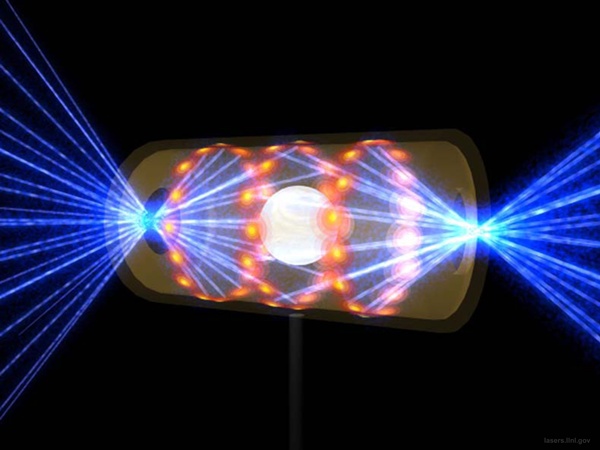 Ignition research continues at the giant laser facility, but the end of the calendar year looks like a more significant date than that set by Congress.
Staff at the National Ignition Facility (NIF) say that work to generate inertial confinement fusion with energy gain will continue as planned, despite the end of the official “ignition campaign” last week.
September 30 saw the expiration of an arbitrary “deadline” for achieving ignition that was set by US Congress, prompting speculation about the future of the laboratory, whose primary function is to simulate the physics of nuclear weapons, but for which fusion energy has become another long-term development target.
Just before that date, which marked the end of the US government’s financial year rather than anything of more scientific significance, a New York Times article suggested that the failure to meet the ignition goal could have “serious repercussions” for not only the giant Lawrence Livermore National Laboratory project (estimated cost so far: $5 billion), but federal financing of “big science” in general. A follow-up editorial in the same newspaper added that Congress would need to look hard at whether either of the “stockpile stewardship” or long-term energy goals could be pursued on a smaller budget.
NIF officials have long expressed their confidence that the system will eventually succeed in “bringing star power to Earth”, as a giant banner at the facility puts it, and told optics.org earlier this year that it was “tantalizingly close” to that goal. But others, including those working on the rival magnetic confinement approach to fusion, are more skeptical, doubting that the laser technique will ever work on a scale that makes for a practical energy source.
A memorandum to the Department of Energy dated July 19 added fuel to that skepticism, even though advisor and memo author David Crandall wrote that the functionality of the laser, its diagnostics, optics and targets – as well as the laser operations performed by the NIF team - were all “outstanding”.
The problem was that the same memo also noted that “considerable hurdles” must still be overcome to reach the ignition goal, or to observe unequivocally the phenomenon of alpha heating – a key element of the fusion process. Given those issues, Crandall and his fellow reviewers said that the probability of demonstrating ignition before the end of this year was now “extremely low”, and that even the less ambitious goal of showing unambiguous alpha heating would be “challenging”.
“While no reviewer thought ignition likely before December 31, 2012, some thought the intermediate goal of measurable alpha heating (increasing the neutron yield) might be achieved within that time, and several expressed optimism about achieving ignition at NIF within a few years,” concluded the memo.
Model problems
According to the same document, the reason has nothing to do with NIF not working to its specifications – on the contrary, the 192-beam system is actually outperforming expectations in many areas. The key problem seems to be that the “hohlraum” ignition target and its interaction with the laser is not behaving in the way that physical models had predicted.
“The coupling of the laser through the radiation inside the hohlraum to the capsule is less efficient than expected and the physical ablation process is somewhat different than expected - resulting in a lower implosion velocity than is predicted to be required for ignition,” the review panel wrote.
NIF told optics.org that it was working to resolve what it called the “remaining few issues” towards achieving ignition in its current campaign. According to officials, that campaign has so far been able to demonstrate the fundamental conditions required to achieve ignition – though, crucially, not all at the same time.
“Achieving ignition conditions requires four things,” the lab explained. “An implosion velocity of 370 km/second, creating a symmetrical hot spot at the center of the target, proper plasma mix and uniform compression.”
On the question of alpha heating, NIF says that alpha particles have been produced from fusion reactions, and have compressed fuel to a sufficient density to re-deposit energy.
However, the lab concedes that its experiments have not yet produced the kind of results that had been predicted in its models, and said that it was continually refining these as more experimental data was collected. It is also working to produce even higher laser energy pulses (of 2 MJ, compared with the 1.8 MJ thought to be sufficient) as one way to overcome the less efficient coupling between the laser and hohlraum than was initially expected.
In demand
“September 30 marked the end of the National Ignition Campaign, but does not mark the end of ignition research or an expiration of the value of the facility,” said officials. Highlighting the scientific value of the system, they added: “As a measure of its success, there are now requests from its user communities for more than 500 experiment days in 2013, about twice the NIF capacity. Requests for use of NIF extend for many years into the future.”
As things stand, NIF will be able to continue operations as planned through fiscal year 2013, though its funding beyond that remains to be determined by future government budget cycles.
Responding to the reaction to the expiration of the Congress “deadline” in some quarters, the lab stressed the unpredictable nature of the work, saying: “Ignition experiments on NIF are continuing steps in a well-managed and deliberate scientific program, not the ‘pass/fail’ event that it has become - and one that should be tied to the process of discovery science and the expansion of knowledge, not fiscal year boundaries.”
In fact, it looks like the end of this calendar year could turn out to be a much more significant date than September 30, in terms of NIF’s future direction and the ambitious goal of harnessing “star power” on Earth. Crandall’s memo raises the prospect that NIF will take on a quite different role if experimental results and computer models for ignition continue to contradict each other.
The memo states that if alpha heating and “further substantial progress” towards ignition is not demonstrated before the end of December, the ignition program should be redirected to a “broader and more balanced research program” – suggesting that the pursuit of fusion power will take a back seat.
Mike Hatcher
Editor in Chief of optics.org
For more information visit: www.optics.org
 Good news, denizens of Earth: If the findings from two premier research labs are to be believed, commercial nuclear fusion is feasible — and could arrive sooner than expected.
The first breakthrough comes from Sandia National Laboratories (the same engineers who brought us the fanless heatsink). At SNL, a research team has been working on a new way of creating fusion called magnetized liner inertial fusion (MagLIF). This approach is quite similar to the National Ignition Facility at the LLNL in California, where they fuse deuterium and tritium (hydrogen isotopes) by crushing and heating the fuel with 500 trillion watts of laser power. Instead of lasers, MagLIF uses a massive magnetic pulse (26 million amps), created by Sandia’s Z Machine (a huge X-ray generator), to crush a small cylinder containing the hydrogen fuel. Through various optimizations, the researchers discovered a MagLIF setup that almost breaks even (i.e. it almost produces more thermal energy than the electrical energy required to begin the fusion reaction).
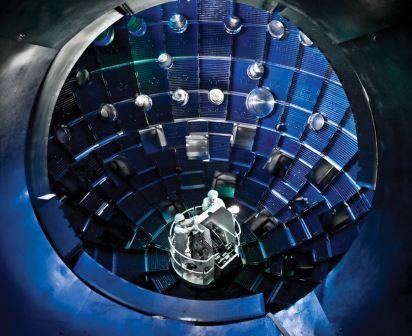
Probably more significant is news from the Joint European Torus (JET), a magnetic confinement fusion facility in the UK. JET is very similar to the ITER nuclear fusion reactor, an international project which is being built in the south of France. Whereas NIF and Sandia create an instantaneous fusion reaction using heat and pressure, ITER and JET confine the fusing plasma for a much longer duration using strong magnetic fields, and are thus more inclined towards the steady production of electricity. JET’s breakthrough was the installation of a new beryllium-lined wall and tungsten floor inside the tokamak — the doughnut-shaped inner vessel that confines 11-million-degrees-Celsius plasma (pictured above).
Carbon is the conventional tokamak lining (and the lining that had been chosen for the first iteration of ITER) but now it seems the beryllium-tungsten combo significantly improves the quality of the plasma. Hopefully this information will allow ITER to skip the carbon tokamak and jump straight to beryllium-tungsten, shaving years and millions of dollars off the project.
Moving forward, JET will actually try full-blown fusion with the optimum mix of deuterium and tritium (16 megawatts, for less than a second). At this point, JET is practically an ITER testbed, so its results from the next year or two will have a large impact on the construction of ITER’s tokamak, which should be completed by 2019.
Before today, magnetic confinement fusion was generally considered to be more mature and efficient than inertial confinement fusion — but Sandia’s new approach might change that. ITER is one of the world’s largest ongoing engineering projects (it’s expected to cost around $20 billion), and yet critics are quick to point out that we still don’t know if it will actually work. ITER isn’t expected to fuse D-T fuel until 2027 (producing 500 megawatts for up to 1,000 seconds) — and an awful lot can happen in 15 years. Still, the main thing is that we’re actually working on fusion power — when we’re talking about limitless, clean power, it’s probably worth investing a few billion dollars, even if it doesn’t work out.
Fusion reactors are some of the most beautiful constructions you’ll ever see, so be sure to check out our galleries of the National Ignition Facility and the Princeton Plasma Physics Lab.
For more information visit: www.peakoil.com
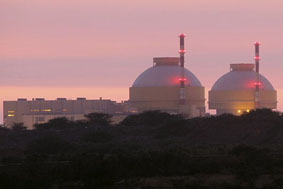 Countries, including India, are pooling resources to build a plant that runs on cleaner technology and abundant resources.
In the 1940s, attempts by the UK and the US to build the hydrogen bomb had a few useful byproducts, such as technologies that were able to use the power of the atom to generate electricity. The process of nuclear fission, which produces dangerous waste, was developed, and has been used since then to produce power the world over. Sadly, the other technological byproduct of the hydrogen bomb—nuclear fusion, which uses abundantly available fuel sources and emits no harmful radiation—never quite made the cut.
But this is fast changing. After the Fukushima disaster in March 2011, conventional nuclear plants that use fission technology are being shuttered in many parts of the world. The rush for the Holy Grail has begun. Activity to prove that fusion is feasible and economically viable has picked up, and new breakthroughs are speeding things up.
India, with its huge power deficit, is among the countries that have taken the lead in developing these technologies. The government has sealed its commitment through a sanction of Rs 2,500 crore to seed research of nuclear fusion. The funds are expected to be increased, as the work spearheaded by the Department of Atomic Energy (DAE), grows. At the focus of much of this activity is one reactor being built in the south of France.
The $20 billion project that aims to generate just 500 MW, which could indeed change the world, is called Iter (Latin for ‘the way’). It is being built by a consortium of seven partners—the European Union, the United States, Russia, China, Korea, Japan and India—to demonstrate the viability of harnessing energy from nuclear fusion on the scale of a power station.
Before this project, electricity from nuclear fusion has been produced only in laboratories. As the host-partner of the project, the EU is the largest contributor with a 34 percent stake. India has taken up 9 percent, which will be executed by the Gandhinagar-based Iter-India, a division of the Institute of Plasma Research. The seven partners will contribute in kind by bringing components to the project. In India, a lot of this work will be done by the private sector.
“Indian companies—both in the public and private sectors—with capabilities in nuclear and space industries are being awarded contracts,” says Shishir Deshpande, Iter-India project director. Nine large components, amounting to almost a tenth of the project, will be fabricated and sourced from India. The biggest of these, to build the cryostat—a 3,800 tonne pressure chamber the size of a 10-storey building—was awarded to Larsen & Toubro in August. The component, worth over Rs 1,000 crore, will be built in India and shipped to France in sections.
What it means for Indian firms
For L&T and MV Kotwal—board member and head of heavy engineering, who also spearheads the company’s ambitions in the nuclear industry—the Iter-India contract is a chance to establish the company’s reputation. L&T has sunk about Rs 1,800 crore in a forge shop at Hazira through a joint venture with Nuclear Power Corporation of India (NPCIL).
But nuclear projects are few and far between in the post-Fukushima era. Doubts have been raised about the viability of the shop that was set up for heavy forgings needed for nuclear and hydrocarbon reactors. The Iter cryostat will be fabricated at this facility. Kotwal says that with its current energy shortages, India simply cannot afford to stop working on nuclear energy.
Iter-India had awarded an earlier contract for the shielding vessel to Bangalore-based Avasarala Technologies. It is also working closely with TCS and Inox India for cryogenics, ECIL for power electronics, and several other vendors. Deshpande says their work will be subjected to international scrutiny and this will surely help the companies prove themselves and gain confidence. Most are looking for opportunities to step up their abilities to emerge as high-end, global suppliers in the nuclear business.
Over the next few years, more work will be contracted, including the work of building a lab in France for testing the systems.
India has had a nuclear fusion programme since 1986 and about 500 scientists have been working on various facets of it, Deshpande says.
Iter shares IP equally, so the partner countries can use the knowledge gained to set up their own demonstrator reactors at home. Deshpande and Iter-India hope that India can begin work on this as soon as gaps in its knowledge are bridged.
Deshpande says the fusion project could provide neutron sources for fission reactors. This could help fast-forward India’s thorium programme. India’s nuclear power was envisaged as a three-step programme; the final stage involved moving from uranium, of which we have limited reserves, to thorium, which is plentiful.
Fusion is something that was jokingly said to be ‘always the fuel of the future’. Lab experiments have now proved it is a viable concept. But practical problems of building and sustaining the process remain; materials that can withstand the heat and neutron damage need to be developed. But much of it is now in the realm of the possible. Energy-starved India would do well to push the process.
Source: Forbes India Magazine
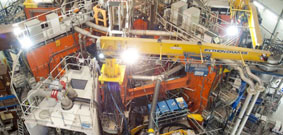 Latest results from the Joint European Torus (JET) fusion device are giving researchers increasing confidence in prospects for the next-generation ITER project, the international experiment that is expected to pave the way for commercial fusion power plants. Operation with a new lining inside JET has demonstrated the suitability of materials for the much larger and more powerful ITER device. Today Dr Francesco Romanelli, Leader of the European Fusion Development Agreement (EFDA) and JET Leader, will deliver a summary of the JET results at the IAEA Fusion Energy Conference in San Diego, U.S. This major fusion conference is held every two years and aims to discuss various options with the goal of building the first demonstration power plant before the middle of the 21st century.
JET, Europe’s premier magnetic confinement fusion facility, based at Culham, UK, has completed eleven months of tests to simulate the environment inside ITER and to prototype key components. For this purpose JET has been successfully transformed into a ‘mini-ITER’ with a wall made of the same materials – beryllium and tungsten – that ITER plans to use. Initial results will be summarised by Dr Francesco Romanelli, Leader of the European Fusion Development Agreement (EFDA) and JET Leader, at the IAEA Fusion Energy Conference in San Diego, U.S. on Monday 8 October.
At the heart of tokamak fusion reactors like JET is a ring-shaped vacuum vessel in which very hot plasma is confined using magnetic fields. Selecting the correct materials for the inner wall of this vessel is essential. Firstly to minimise ‘pollution’ when small amounts of wall materials enter the plasma, and secondly to prevent the fusion fuels from becoming trapped in the wall. ITER will use beryllium for the main wall and tungsten (with its higher melting point) for the floor of the chamber – the ‘divertor’ – where plasma is exhausted and heat loads are greatest. A 20-month engineering upgrade during 2010 and 2011 installed a new plasma-facing wall inside JET to validate these materials for ITER.
From the first test in August 2011, the beryllium and tungsten lining enabled more reliable plasmas to be produced. Crucially, researchers from the 27 European fusion laboratories which participate in JET have found that the amount of fuel being retained in the wall is at least ten times less than in the previous, carbon-based, configuration. The results achieved may lead ITER to drop plans for an initial phase of operation with carbon and adopt a beryllium-tungsten wall from the outset, bringing a significant saving in time and cost for the project.
Experiments at JET will restart in early 2013, with the goal of demonstrating further improvements in plasma performance, beyond expectations when scaled up to ITER. Looking further ahead, EFDA is already planning a full ‘dress rehearsal’ for ITER – an experimental campaign at JET using the optimum deuterium-tritium fuel mix that is needed for high-power fusion operation. JET is the only device currently able to run fusion plasmas with tritium, and exploiting these capabilities will be a crucial part of ITER preparations. ITER Director General Osamu Motojima praised the work being done at JET during a visit this summer and has been discussing collaborations with EFDA on future experiments.
Dr Francesco Romanelli said: “These results are very encouraging for ITER. JET is getting as close to ITER conditions as any present-day fusion device can. If this performance is scaled up, ITER will be successful and take a huge step towards the goal of commercial fusion power.
“JET has largely formed the basis for ITER’s design and is an ideal test-bed. We hope to open up new collaborations with ITER partners as we prepare for full deuterium-tritium tests in 2015. Already we are working with Indian colleagues on magnetic coils for suppressing plasma instabilities. I hope to build more partnerships so JET’s unique capabilities can be used for the benefit of the worldwide fusion programme.”
Source: EFDA
 Scientists at Portugal’s Instituto de Plasmas e Fusao Nuclear (IPFN) have made a dramatic twenty-fold improvement to the operation of their tokamak ISTTOK, by repeatedly reversing its plasma current to achieve stable AC operation – swirling it back and forth like Corridinho folk dancers.
“If we scale this achievement to JET, it represents a plasma discharge duration equivalent to the expected ITER run-time.” says IPFN physicist Ivo Carvalho. “We’ve moved our time-axis from milliseconds to seconds!”
Most tokamaks, such as JET, operate by propelling the plasma particles in a single direction around the donut-shaped vessel using the principle of electrical transformers, driven by the tokamak’s central (poloidal) electromagnet. Because this principle relies on the central or primary electromagnet having a changing magnetic field, it limits the pulse length; when the electromagnet reaches maximum current, the pulse has to stop, because the confinement of the plasma relies on this changing field.
However the Portuguese team have succeeded in switching the direction of the current quickly enough to allow the pulse to be continued, with the central electromagnet now driving current in the opposite direction. Of course the central magnet will eventually reach its maximum current – now in the reverse direction – at which stage the polarity is switched back to the original direction again. In all twenty half-cycles each of 25 milliseconds were achieved, driving the current back and forth, perhaps a little like the Portuguese Corridinho folk dancing pictured above.
ISTTOK has been experimenting with AC discharges for over a decade, but with a lack of control. The development by IFPN electronic engineers of new control and data acquision electronics with a lightning-fast control cycle of only 100 microseconds has provided the breakthrough that was needed. The new system is based on the ATCA standard (Advanced Telecommunications Computing Architecture) – the same hardware in use at JET in the vertical stabilisation system. The addition of a new magnetising power supply completed the setup which allows switching of the current direction quickly enough to prevent the plasma dissipating.
Studies of AC pulse operation in JET in the early nineties were limited by the requirement to restart the plasma at each reversal of the current direction. The ISTTOK results show that the plasma can be maintained for multiple AC cycles – when new power supplies are commissioned soon the Portuguese team expect to be able to improve the results further, well beyond the twenty cycles exhibited to date.
Source: EFDA
Informacje z Kraju
- 1
- 2
- 3
- 4
- 5
- 6
- 7
- 8
- 9
- 10
IFPiLM podczas Nocy Muzeów w Narodowym Muzeum Techniki
14-05-2026

16 maja 2026 roku Narodowe Muzeum Techniki w Warszawie stanie się miejscem spotkania historii nauki z technologiami przyszłości. W ramach tegorocznej Nocy Muzeów odwiedzający będą mogli zapoznać się m.in. z...
Czytaj więcejPolskie konsorcjum CeNTE ze statusem obserwatora w programie DONES
28-04-2026
Program DONES, jeden z kluczowych projektów wspierających rozwój energetyki fuzyjnej i badań w obszarze fizyki plazmy, wchodzi w kolejny etap rozwoju instytucjonalnego i technicznego. Podczas posiedzenia Komitetu Sterującego w Misawie...
Czytaj więcejIFPiLM partnerem Enterprise Europe Network
31-03-2026
23 marca 2026 r. Instytut Fizyki Plazmy i Laserowej Mikrosyntezy (IFPiLM) dołączył ze swoją ofertą technologiczną do grona podmiotów zrzeszonych w Europejskiej Sieci Przedsiębiorczości Enterprise Europe Network (EEN), zainteresowanych współpracą...
Czytaj więcejIFPiLM współtwórcą wystawy "E = mc² – wzór, który zmienił świat" w Narodowym Muzeum Techniki
18-02-2026

16 lutego 2026 roku w Narodowym Muzeum Techniki w Warszawie odbyło się uroczyste otwarcie dwóch nowych wystaw stałych. Instytut Fizyki Plazmy i Laserowej Mikrosyntezy im. Sylwestra Kaliskiego (IFPiLM) miał zaszczyt...
Czytaj więcejOdszedł prof. dr hab. Wojciech Nawrocik (1938–2026)
11-02-2026
Z głębokim żalem zawiadamiamy, że 9 lutego 2026 roku zmarł prof. dr hab. Wojciech Nawrocik – pierwszy dziekan Wydziału Fizyki i Astronomii Uniwersytetu im. Adama Mickiewicza w Poznaniu, wybitny specjalista...
Czytaj więcejGO4FUSION Capability Mapping Survey – termin do 21 stycznia 2026 r.
15-01-2026
Projekt GO4FUSION zaprasza europejskie organizacje działające w obszarze energii termojądrowej do udziału w badaniu Capability Mapping Survey (mapowanie kompetencji i potencjału). Celem ankiety jest przygotowanie kompleksowego przeglądu europejskich kompetencji w zakresie...
Czytaj więcejIFPiLM wspiera podopiecznych Centrum TPD "Helenów"
22-12-2025

Instytut Fizyki Plazmy i Laserowej Mikrosyntezy im. Sylwestra Kaliskiego (IFPiLM) od wielu lat angażuje się w działania na rzecz podopiecznych Centrum Rehabilitacji, Edukacji i Opieki TPD „Helenów” w Warszawie. 9 grudnia...
Czytaj więcejNaukowcy z IFPiLM uczestniczyli w kampanii eksperymentalnej na laserze GEKKO XII
20-11-2025

W dniach 10–14 listopada 2025 r. zespół naukowców z Instytutu Fizyki Plazmy i Laserowej Mikrosyntezy im. Sylwestra Kaliskiego (IFPiLM) w składzie: dr hab. Katarzyna Batani, dr Hanna Marchenko oraz dr...
Czytaj więcejZgłoś swój udział w 18. edycji Letniej Szkoły Fizyki Plazmy!
07-11-2025

Zapraszamy do udziału w 18. edycji Letniej Szkoły Fizyki Plazmy – Kudowa Summer School "Towards Fusion Energy", która odbędzie się 8–12 czerwca 2026 r. w Kudowie-Zdroju. Organizatorem wydarzenia jest Instytut...
Czytaj więcejOdszedł prof. dr hab. Zbigniew Kłos
05-11-2025
Z głębokim żalem zawiadamiamy, że 3 listopada 2025 roku zmarł prof. dr hab. Zbigniew Kłos – wybitny naukowiec, współtwórca i wieloletni dyrektor Centrum Badań Kosmicznych PAN. W latach 2008–2011 Profesor pełnił...
Czytaj więcejKonsultacje Strategic Research & Innovation Agenda (SRIA) – do 5 listopada 2025 r.
17-10-2025
Europejska Platforma Interesariuszy Fuzji Jądrowej (European Fusion Stakeholder Platform), powołana w ramach projektu GO4FUSION CSA, pracuje nad przygotowaniem Strategicznego Programu na rzecz przyszłego partnerstwa publiczno-prywatnego (PPP) w obszarze energii termojądrowej....
Czytaj więcejIFPiLM wziął udział w drugim spotkaniu technicznym w ramach projektu DONES Con-P1
17-10-2025
Instytut Fizyki Plazmy i Laserowej Mikrosyntezy (IFPiLM) wziął udział w drugim spotkaniu technicznym realizowanym w ramach projektu DONES Consolidation Phase 1 (DONES ConP1) współfinansowanego przez Komisję Europejską w ramach programu...
Czytaj więcejProf. Jan Badziak z IFPiLM w gronie World's Top 2% Scientists
15-10-2025
Prof. dr hab. Jan Badziak z Zakładu Fizyki Plazmy Laserowej i Gęstej Plazmy Namagnetyzowanej w Instytucie Fizyki Plazmy i Laserowej Mikrosyntezy znalazł się na prestiżowej liście Stanford/Elsevier Top 2% Scientists...
Czytaj więcej29. Festiwal Nauki z udziałem IFPiLM
10-10-2025

Podczas 29. Festiwalu Nauki w Warszawie, który odbył się w dniach 19–28 września 2025 roku, naukowcy z Instytutu Fizyki Plazmy i Laserowej Mikrosyntezy przeprowadzili lekcje dla uczniów klas 7–8 szkół...
Czytaj więcejPLASMA 2025 i 20-lecie Asocjacji Euratom–IFPiLM – podsumowanie wydarzenia
26-09-2025

W dniach 15–19 września 2025 roku w Warszawie odbyła się międzynarodowa konferencja naukowa PLASMA 2025 – International Conference on Research and Application of Plasmas, poświęcona badaniom, diagnostyce i zastosowaniom plazmy....
Czytaj więcejZ żalem żegnamy Profesora Jerzego Wołowskiego
25-09-2025

Z głębokim smutkiem przyjęliśmy wiadomość o śmierci prof. dr. hab. Jerzego Wołowskiego (1936–2025), wybitnego fizyka, wieloletniego pracownika Instytutu Fizyki Plazmy i Laserowej Mikrosyntezy, mentora i przyjaciela. Jerzy Wołowski urodził się w...
Czytaj więcej20. rocznica Asocjacji Euratom-IFPiLM (CeNTE): Obchody dwóch dekad koordynacji badań nad syntezą jądrową
16-09-2025

19 września 2025 roku, podczas międzynarodowej Konferencji PLASMA 2025 odbywającej się w Warszawie i poświęconej badaniom, diagnostyce i zastosowaniom plazmy, IFPiLM będzie obchodzić 20. rocznicę koordynacji badań nad syntezą jądrową...
Czytaj więcejUdział IFPiLM w 49. Zjeździe Fizyków Polskich w Katowicach
13-09-2025
Podczas 49. Zjazdu Fizyków Polskich, który odbył się w dniach 5–11 września 2025 roku w Katowicach, Instytut Fizyki Plazmy i Laserowej Mikrosyntezy (IFPiLM) był reprezentowany zarówno w gronie prelegentów, jak...
Czytaj więcejProf. Agata Chomiczewska powołana na zastępcę dyrektora ds. naukowych w IFPiLM
03-09-2025

Informujemy, że Minister Energii Miłosz Motyka z dniem 1 września 2025 roku powołał dr hab. Agatę Chomiczewską na stanowisko zastępcy dyrektora do spraw naukowych w Instytucie Fizyki Plazmy i Laserowej...
Czytaj więcejPubliczna obrona rozprawy doktorskiej mgr. inż. Przemysława Tchórza - 21 sierpnia 2025 roku
15-07-2025
Instytut Fizyki Plazmy i Laserowej Mikrosyntezy im. Sylwestra Kaliskiego zaprasza na publiczną obronę rozprawy doktorskiej mgr. inż. Przemysława Tchórza, która odbędzie się 21 sierpnia 2025 r. (czwartek) o godz. 12:00...
Czytaj więcejZawiadomienie o publicznej obronie rozprawy doktorskiej mgr. inż. Przemysława Tchórza
10-07-2025
Instytut Fizyki Plazmy i Laserowej Mikrosyntezy im. Sylwestra Kaliskiego zaprasza na publiczną obronę rozprawy doktorskiej mgr. inż. Przemysława Tchórza, która odbędzie się 21 sierpnia 2025 r. (czwartek) o godz. 12:00...
Czytaj więcejHistoryczne wydarzenie – Rada Naukowa Instytutu nadała stopień doktora habilitowanego
10-07-2025
Po raz pierwszy w historii Instytutu Fizyki Plazmy i Laserowej Mikrosyntezy im. Sylwestra Kaliskiego (IFPiLM) Rada Naukowa podjęła uchwałę w sprawie nadania stopnia doktora habilitowanego. Było to możliwe dzięki uzyskaniu...
Czytaj więcejNowy skład Rady Oddziału Fizyki Plazmy Europejskiego Towarzystwa Fizycznego
04-07-2025

W pierwszym kwartale 2025 roku przeprowadzono wybory do Rady Oddziału Fizyki Plazmy Europejskiego Towarzystwa Fizycznego (EPS Plasma Physics Division). Sześciu kandydatów z najwyższą liczbą głosów zostało wybranych do Zarządu, a...
Czytaj więcejOgłoszenie o postępowaniu konkursowym na stanowisko zastępcy dyrektora do spraw naukowych
30-06-2025
OGŁOSZENIE o postępowaniu konkursowym na stanowisko zastępcy dyrektora do spraw naukowychw Instytucie Fizyki Plazmy i Laserowej Mikrosyntezy im. Sylwestra Kaliskiego w Warszawie Działając na podstawie art. 27 ust. 1 ustawy z dnia...
Czytaj więcejZawiadomienie o kolokwium habilitacyjnym
30-06-2025
ZAWIADOMIENIE o kolokwium habilitacyjnym Dnia 4 lipca 2025 r. o godz. 11:00 odbędzie się kolokwium habilitacyjne dr Katarzyny Batani (Instytut Fizyki Plazmy i Laserowej Mikrosyntezy) w trybie hybrydowym. Określenie osiągnięcia będącego podstawą ubiegania...
Czytaj więcejNaukowcy z IFPiLM dzielą się wiedzą specjalistyczną w zakresie fuzji na 10. Kongresie Przemysłu Jądrowego Europy Środkowej i Wschodniej 2025
12-06-2025
Naukowcy z Instytutu Fizyki Plazmy i Laserowej Mikrosyntezy (IFPiLM) – dr inż. Natalia Wendler i dr inż. Paweł Gąsior – wzięli udział w panelu dyskusyjnym podczas 10. Kongresu Przemysłu Jądrowego...
Czytaj więcejIFPiLM na 3. Kongresie "Nauka dla Społeczeństwa"
29-05-2025

W dniach 25-26 maja 2025 roku w Dużej Auli Politechniki Warszawskiej odbyła się 3. edycja Kongresu "Nauka dla Społeczeństwa". Celem wydarzenia było pokazanie, że nauka to nie tylko praca w...
Czytaj więcejZaproszenie na 3. edycję Kongresu „Nauka dla Społeczeństwa” z udziałem IFPiLM
22-05-2025

W dniach 25–26 maja 2025 roku na terenie Politechniki Warszawskiej odbędzie się 3. edycja Kongresu „Nauka dla Społeczeństwa” – wydarzenia, które pokazuje, że nauka to nie tylko praca w laboratoriach,...
Czytaj więcejZapraszamy na 28. Piknik Naukowy!
06-05-2025

Instytut Fizyki Plazmy i Laserowej Mikrosyntezy (IFPiLM) zaprasza w sobotę, 10 maja, na swoje stoisko podczas 28. Pikniku Naukowego, organizowanego przez Polskie Radio i Centrum Nauki Kopernik. Tegoroczna edycja wydarzenia,...
Czytaj więcejPorozumienie o współpracy pomiędzy IFPiLM a Narodowym Muzeum Techniki
18-04-2025

17 kwietnia 2025 roku zostało podpisane porozumienie o współpracy pomiędzy Narodowym Muzeum Techniki (NMT) a Instytutem Fizyki Plazmy i Laserowej Mikrosyntezy (IFPiLM). Uroczyste spotkanie, z udziałem dyrektor IFPiLM dr hab. Moniki...
Czytaj więcejPolscy i francuscy naukowcy łączą siły w badaniach nad fuzją jądrową
28-03-2025

W dniach 24-25 marca 2025 roku w siedzibach IFJ PAN i Instytutu Francuskiego w Krakowie odbyło się spotkanie polsko-francuskie, którego celem była wymiana doświadczeń oraz rozwój współpracy naukowej między instytucjami...
Czytaj więcejOtwarcie likwidacji fundacji "Wspieranie Międzynarodowego Centrum Gęstej, Namagnesowanej Plazmy"
14-03-2025

OGŁOSZENIE O OTWARCIU LIKWIDACJI FUNDACJI "WSPIERANIE MIĘDZYNARODOWEGO CENTRUM GĘSTEJ, NAMAGNESOWANEJ PLAZMY"wraz z wezwaniem wierzycieli Podaje się do publicznej wiadomości, że w dniu 20 stycznia 2025 r. Rada Fundacji "WSPIERANIE MIĘDZYNARODOWEGO CENTRUM GĘSTEJ, NAMAGNESOWANEJ...
Czytaj więcejZapraszamy na międzynarodową konferencję na temat badań, diagnostyki i zastosowań plazmy – PLASMA 2025!
13-03-2025

Instytut Fizyki Plazmy i Laserowej Mikrosyntezy (IFPiLM) zaprasza na międzynarodową konferencję na temat badań, diagnostyki i zastosowań plazmy – PLASMA 2025, która odbędzie się w dniach 15-19 września 2025 roku...
Czytaj więcejEksperymentalna sesja badawcza w laboratorium Plasma-Focus PF1000U w ramach współpracy ICDMP
27-02-2025

W dniach 10–21 lutego 2025 r. w laboratorium Plasma-Focus PF-1000U przeprowadzono sesję eksperymentalną, w której, obok zespołu IFPiLM, uczestniczył trzyosobowy zespół pracowników naukowych z Politechniki Praskiej (ČVUT), kierowany przez prof....
Czytaj więcejPaliwa termojądrowe wykryte podczas demonstracji lasera na JET
11-02-2025

Naukowcy i inżynierowie z ośmiu krajów, w tym z Polski, z powodzeniem zademonstrowali zastosowanie laserów na tokamaku Joint European Torus (JET), udowadniając, że jest to opłacalna technologia pomiaru retencji paliwa...
Czytaj więcejPracownik IFPiLM nominowany do tytułu Osobowość Roku w kategorii Nauka
24-01-2025
Pracownik badawczo-techniczny mgr inż. Olgierd Cichorek z Laboratorium Plazmowych Napędów Satelitarnych w IFPiLM został nominowany do tytułu Osobowość Roku 2024 w kategorii Nauka. Kapituła Redakcji „Polskiej Metropolii Warszawskiej”, „Echa Dnia” i...
Czytaj więcejProf. Monika Kubkowska nowym dyrektorem IFPiLM
02-01-2025

Z przyjemnością informujemy, że Pani Minister Przemysłu Marzena Czarnecka z dniem 1 stycznia 2025 roku powołała dr hab. Monikę Kubkowską na stanowisko dyrektora Instytutu Fizyki Plazmy i Laserowej Mikrosyntezy im....
Czytaj więcejChristian Perez von Thun członkiem grupy ITPA w obszarze Pedestal & Edge Physics
31-12-2024
Dr Christian Perez von Thun z Zakładu Badań Plazmy Termojądrowej w Instytucie Fizyki Plazmy i Laserowej Mikrosyntezy został członkiem grupy International Tokamak Physics Activity (ITPA) w obszarze Pedestal & Edge...
Czytaj więcejPrzemysław Tchórz nowym co-Leaderem grupy roboczej WG2 w ramach COST Action PROBONO
23-12-2024

Przemysław Tchórz z Zakładu Fizyki i Zastosowań Plazmy Laserowej w Instytucie Fizyki Plazmy i Laserowej Mikrosyntezy został mianowany w ramach konkursu co-Leaderem grupy roboczej WG2: Experiments: Proton boron and Towards...
Czytaj więcejIFPiLM wspiera podopiecznych z Centrum Rehabilitacji, Edukacji i Opieki TPD „Helenów”
20-12-2024

Instytut Fizyki Plazmy i Laserowej Mikrosyntezy (IFPiLM) od lat angażuje się w pomoc podopiecznym z Centrum Rehabilitacji, Edukacji i Opieki TPD „Helenów” w Warszawie. W 2024 roku wsparcie Instytutu miało...
Czytaj więcejWykład naukowców z IFPiLM podczas Śląskiego Festiwalu Nauki w Katowicach!
25-11-2024

Dr hab. Agata Chomiczewska i dr inż. Natalia Wendler z Instytutu Fizyki Plazmy i Laserowej Mikrosyntezy (IFPiLM) wygłoszą wykład pt. „Synteza jądrowa – przełomowe wyniki badań, które mogą zmienić przyszłość...
Czytaj więcejModernizacja diagnostyki PHA i udział naukowców z IFPiLM w nowej kampanii na W7-X
24-10-2024

Zespół naukowców z Instytutu Fizyki Plazmy i Laserowej Mikrosyntezy (IFPiLM) przeprowadził znaczącą modernizację diagnostyki PHA (pulse-height analyzer), która jest obecnie aktywnie wykorzystywana na stellaratorze Wendelstein 7-X w ramach kampanii OP.2.2,...
Czytaj więcejOGŁOSZENIE
22-10-2024
Ogłoszenie o postępowaniu konkursowym na stanowisko dyrektora w Instytucie Fizyki Plazmy i Laserowej Mikrosyntezy im. Sylwestra Kaliskiego Działając na podstawie art. 24 ust. 2 ustawy z dnia 30 kwietnia 2010 r....
Czytaj więcejOd powstania lasera do fuzji jądrowej – zapraszamy na wykład dr Agnieszki Zaraś-Szydłowskiej
21-10-2024

Zapraszamy na wykład dr Agnieszki Zaraś-Szydłowskiej z Zakładu Fizyki i Zastosowań Plazmy Laserowej. Temat wystąpienia: Od powstania lasera do fuzji jądrowej: technologia, zastosowania i najnowsze osiągnięcia w świecie laserów Spotkanie odbędzie się...
Czytaj więcejZapraszamy na wykład o plazmowych napędach kosmicznych
27-09-2024

Zapraszamy na wykład mgr. inż. Macieja Jakubczaka z Laboratorium Plazmowych Napędów Satelitarnych. Temat wystąpienia: Nadniebny rejs - historia i przyszłość plazmowych napędów kosmicznych. Spotkanie odbędzie się 3 października 2024 r. o godz....
Czytaj więcejEksperymenty z mieszaniną paliw fuzyjnych stabilizują plazmę w reaktorach fuzyjnych
25-09-2024
Przyszłe elektrownie termojądrowe mogą doświadczać mniejszych strat energii w spalanej plazmie niż dotychczas przewidywano. Autorzy badania - naukowcy z konsorcjum EUROfusion, w tym dr Michał Poradziński z Instytutu Fizyki Plazmy...
Czytaj więcejRozwój AI w syntezie jądrowej – IFPiLM z nowym projektem badawczym
12-09-2024

Konsorcjum EUROfusion, wspierając postępy w badaniach nad energią z syntezy jądrowej, uruchomiło 15 nowych projektów badawczych, które angażują ekspertów z dziedziny data science z całej Europy. Projekty te wykorzystają największy...
Czytaj więcejWizyta naukowców z IFPiLM na budowie tokamaka ITER
21-06-2024
W ostatnim czasie dr hab. Agata Chomiczewska, prof. IFPiLM, oraz dr inż. Natalia Wendler wzięły udział w międzynarodowej konferencji Plasma Surface Interaction in Controlled Fusion Devices PSI-26 w Marsylii, podczas...
Czytaj więcejIFPiLM na Kongresie "Nauka dla Społeczeństwa"
19-06-2024

W dniach 9-10 czerwca 2024 roku w Auli Wielkiej Politechniki Warszawskiej odbył się 2. Kongres "Nauka dla Społeczeństwa" pod hasłem "Tak nauka w Polsce wpływa na życie każdego człowieka". Instytut...
Czytaj więcejPodsumowanie 17. edycji Letniej Szkoły Fizyki Plazmy w Kudowie-Zdroju
18-06-2024

Zakończyła się 17. edycja Letniej Szkoły Fizyki Plazmy Kudowa Summer School „Towards Fusion Energy”. W wydarzeniu zorganizowanym przez Instytut Fizyki Plazmy i Laserowej Mikrosyntezy (IFPiLM) w dniach 3-7 czerwca 2024...
Czytaj więcejInformacje ze Świata
- 1
- 2
- 3
- 4
- 5
- 6
- 7
- 8
- 9
- 10
In Memoriam — Professor Francesco Romanelli
24-03-2026

The world of fusion research mourns the loss of Professor Francesco Romanelli, a visionary scientist whose work helped bring humanity closer to clean, limitless energy. Over four decades, he explored...
Czytaj więcejIgniting the future: Breakthroughs in inertial confinement Fusion
25-07-2025

In December 2022, the National Ignition Facility (NIF) at Lawrence Livermore National Laboratory (USA) marked a historic milestone in fusion science: an experiment produced 3.15 MJ of fusion energy from 2.05 MJ of laser...
Czytaj więcejWendelstein 7-X sets new fusion performance records
04-06-2025

On May 22, 2025, the Wendelstein 7-X (W7-X) stellarator at the Max Planck Institute for Plasma Physics (IPP) in Greifswald concluded its latest experimental campaign with a major success: a...
Czytaj więcejEuropean tokamak sets new fusion plasma record
20-02-2025

On February 12, 2025, the WEST tokamak, located at CEA Cadarache in southern France, set a new world record by sustaining fusion plasma for 1,337 seconds, or over 22 minutes....
Czytaj więcejDr. Gianfranco Federici appointed as the new EUROfusion Programme Manager
17-12-2024
At the 49th General Assembly held in Barcelona, December 2024, Dr. Gianfranco Federici was elected as the new Programme Manager of EUROfusion. He succeeds Prof. Ambrogio Fasoli, who will return...
Czytaj więcejEUROfusion and F4E join forces for Europe’s fusion future
16-12-2024

EUROfusion and Fusion for Energy (F4E) have signed a Memorandum of Understanding (MoU) to advance fusion research and development in Europe. This agreement reinforces cooperation in...
Czytaj więcejJohn J. Hopfield and Geoffrey E. Hinton awarded the 2024 Nobel Prize in Physics
08-10-2024

John J. Hopfield and Geoffrey E. Hinton have been awarded the 2024 Nobel Prize in Physics "for foundational discoveries and inventions that enable machine learning with artificial neural networks." The Nobel...
Czytaj więcejWendelstein 7-X begins new experimental campaign
10-09-2024

The Wendelstein 7-X, the world’s most advanced stellarator, is launching a new experimental campaign after a year of intensive maintenance and upgrades. This phase, known as OP2.2, begins on 10...
Czytaj więcejITER's New Project Baseline: A Robust Path to Fusion Energy Research
04-07-2024

On 3 July, ITER Director-General Pietro Barabaschi presented the new project baseline, under evaluation by the ITER Organization's governing body. This plan aims to ensure a robust start to scientific...
Czytaj więcejITER Council Presents Updated Project Baseline
21-06-2024

The ITER Council convened this week for its 34th meeting, where nearly 100 attendees reviewed significant updates to the project baseline. The proposed changes aim to optimize the overall project...
Czytaj więcejEurope and Japan celebrate breakthrough in paving the way for fusion energy
01-12-2023

The prospect of harnessing fusion energy is closer. The successful operation of JT-60SA, the most powerful experimental device to date, built by Europe and Japan, is a landmark achievement for...
Czytaj więcejFirst plasma was successfully generated at JT-60SA
26-10-2023

A momentous achievement in the field of nuclear fusion has been accomplished by a collaborative team of engineers from Europe and Japan. They have successfully generated tokamak plasma for the...
Czytaj więcejThe Nobel Prize in Physics 2023
03-10-2023
Pierre Agostini, Ferenc Krausz and Anne L’Huillier are the winners of this year's Nobel Prize in Physics. It was awarded "for experimental methods that generate attosecond pulses of light for...
Czytaj więcejUS Lab Replicates Fusion Ignition Breakthrough
08-08-2023
The US National Ignition Facility (NIF) has achieved fusion ignition once again, building on its landmark 2022 success. This achievement, powered by hydrogen within a diamond capsule, signifies a major...
Czytaj więcejNew Programme Manager Elect announced by EUROfusion
20-07-2023
Professor Ambrogio Fasoli became the new EUROfusion Programme Manager Elect. The decision was made by EUROfusion General Assembly at the meeting on 18 July 2023. His tenure will officially commence...
Czytaj więcejEUROfusion stands in solidarity with research in Ukraine
24-02-2023

Today, as we commemorate the anniversary of the invasion of Ukraine by Russia, the EUROfusion consortium stands in solidarity with our Ukrainian member and research colleagues. EUROfusion remains committed to supporting...
Czytaj więcejEight-minute production of plasma with gigajoule energy turnover at Wendelstein 7-X
23-02-2023

Another target has been achieved only recently by the W7-X researchers, namely they managed to acquire an energy turnover of 1.3 gigajoules in the device, which is 17 times higher...
Czytaj więcejThe Nobel Prize in Physics 2022
04-10-2022

Alain Aspect, John F. Clauser and Anton Zeilinger are the winners of this year's Nobel Prize in Physics. It was awarded “for experiments with entangled photons, establishing the violation of...
Czytaj więcejNew experiments for fusion energy record breaker JET
27-09-2022

A new wave of fusion energy experiments on UK Atomic Energy Authority’s record-breaking Joint European Torus (JET) started this month. EUROfusion researchers are using the famous JET machine to conduct a...
Czytaj więcejITER appoints new Director-General
21-09-2022
Pietro Barabaschi has become the next Director-General of the ITER Organization as a result of the unanimous choice of the Council from among finalist candidates. In the transition period Dr....
Czytaj więcejStarting power plant design
07-07-2022

At a livestreamed Horizon EUROfusion event in Brussels on 5 July 2022, EUROfusion celebrated the start of conceptual design activities for Europe's first demonstration fusion power plant DEMO. This first-of-a-kind...
Czytaj więcejCelebration of achieving a crucial assembly milestone in the ITER Project
17-05-2022

This month, we have witnessed the successful lifting and lowering into the machine well of the first sub-section of the ITER plasma chamber. The weight of the component is the...
Czytaj więcejBurning plasma achieved in inertial fusion at the National Ignition Facility
15-02-2022
Obtaining a burning plasma is a critical step towards self-sustaining fusion energy. A burning plasma is one in which the fusion reactions themselves are the primary source of heating in...
Czytaj więcejHistoric milestone reached by JET scientists
20-01-2022

Iconic fusion energy machine JET – which reaches controlled temperatures 10 times hotter than the core of the sun – completed its 100,000th live pulse last night. Weighing 2,800 tonnes, the...
Czytaj więcejHorizon Europe Grant Agreement signed
20-12-2021

15 December 2021 saw the EUROfusion consortium signing the Grant Agreement under Horizon Europe, the European Framework Programme from 2021 – 2027, in an aim to launch comprehensive R&D approach...
Czytaj więcejExhibition brings fusion power to the people of Marseille
25-10-2021

The European research consortium EUROfusion presents a game-based exhibition blending art, science and technology to explore fusion energy and get visitors' input on how fusion could fit into society. Fusion, Power...
Czytaj więcejNagroda Nobla z fizyki 2021
06-10-2021
Laureatami tegorocznej Nagrody Nobla z fizyki zostali Syukuro Manabe, Klaus Hasselmann i Giorgio Parisi. Nagrodę przyznano im „za przełomowy wkład w zrozumienie złożonych systemów fizycznych”. Manabe i Hasselmann zostali uhonorowani „za...
Czytaj więcejNational Ignition Facility experiment puts researchers at threshold of fusion ignition
16-08-2021

On Aug. 8, 2021, an experiment at Lawrence Livermore National Laboratory’s (LLNL’s) National Ignition Facility (NIF) made a significant step toward ignition, achieving a yield of more than 1.3 megajoules...
Czytaj więcej"Chinese artificial sun" proves to be the hottest
01-06-2021
It turned possible for the Chinese scientists from Hefei to achieve a plasma temperature of 120 million degrees Celsius for 101 seconds. Thus they set a new world record about...
Czytaj więcejA solution provided by the UK experimental results at MAST
31-05-2021

The exhaust system proved commercially effective for fusion power plants thanks to the UK Atomic Energy Authority’s new MAST Upgrade experiment at CCFE. Culham scientists performing testing applied the Super-X system...
Czytaj więcejPrecision under the microscope for plasma impurity behaviour study
02-04-2021
How to track impurities such as titanium, iron, nickel, copper or tungsten migrating throughout fusion plasmas? It is possible that tiny hand-made pellets manage to perform this task. The study...
Czytaj więcejASDEX Upgrade celebrating its 30 anniversary of generating plasma
29-03-2021

30 years ago, on 21 March 1991, the ASDEX Upgrade experimental device at Max Planck Institute for Plasma Physics (IPP) in Germany generated its first plasma. The main aim of...
Czytaj więcejCompletion of the first phase of WEST operation
22-03-2021

The WEST experimental campaign which took place between the 27th of November and the 27th of January 2021 proved successful with testing of a significant number of ITER-like Plasma Facing...
Czytaj więcejFull design toroidal field reported successfully reached by JT-60SA
03-03-2021

The scientific world can boast about efficient energizing of the toroidal field magnet, which made it possible to attain its full magnetic field. Plasma inside the vessel will be generated...
Czytaj więcejPrototype of another ITER divertor proves successful thanks to efforts of the European team
10-02-2021
The team of engineers from the Research Instruments (RI), Germany, has successfully completed the ITER Inner-Vertical Target (IVT) prototype’s engineering phase. The very complex component was produced no matter how...
Czytaj więcejDEMO - the next step towards fusion energy production
07-01-2021

The recommendations of the DEMO expert panel will facilitate the implementation of the next step of the Roadmap aimed at the construction of the demonstration power plant. Review-based approach makes...
Czytaj więcejFirst plasma in the MAST spherical tokamak device
02-11-2020

We have recently seen the launch of the MAST Upgrade tokamak which produced the first plasma (the video is available on YouTube). This brings us closed to obtain safe low-carbon...
Czytaj więcejSoon we will witness a new experimental campaign on the WEST tokamak
29-10-2020

Similarly to the cycle of nature, winter is coming also in the field of science. Namely, the cool down of the 140 tons superconducting Toroidal Field magnet has started under...
Czytaj więcejEUROfusion joins Neutral Beam Test Facility
08-10-2020

A new Cooperation Agreement between the international ITER fusion project, the Italian Consorzio RFX and EUROfusion will allow European researchers from eight countries to join the Neutral Beam Test Facility...
Czytaj więcejThe assembly of the ITER experimental reactor has started
10-08-2020

Ten years after the start of construction in August 2010, ITER marked a new chapter in its long history. This historic moment was witnesses by distinguished guests, including French President...
Czytaj więcejPreparations are underway for a new experimental campaign on the W7-X stellarator
23-07-2020

In the recent newsletter published on the Max Planck Institute for Plasma Physics website you can learn more about the preparation of the Wendelstein 7-X stellarator for the next experimental...
Czytaj więcejJapanese-European fusion plant JT-60SA is complete
28-04-2020
The JT-60SA assembly was completed at the end of March 2020. This device, located at the National Institute for Quantum and Radiological Science and Technology at Naka in Japan, will...
Czytaj więcejJET researchers find 'win-win' scenario for future fusion reactors
01-04-2020

Recent experiments at JET (Joint European Torus, Culham) showed how to spread the heat load across different tiles by moving the 'strike point' (specific divertor tiles which spread the heat)....
Czytaj więcejWendelstein 7-X fusion device at Greifswald to be upgraded
30-03-2020

The Max Planck Institute for Plasma Physics (IPP) in Greifswald, Germany, is ready for new improvements of the Wendelstein 7-X stellarator facility which are needed to obtain higher heating power...
Czytaj więcejWielki tokamak HL-2M zacznie działać w Chinach w 2020 roku
11-12-2019
W listopadzie br. chińska agencja prasowa Xinhua poinformowała, że wielki tokamak HL-2M, nazywany „sztucznym Słońcem”, ma być uruchomiony w przyszłym roku w Południowo-Zachodnim Instytucie Fizyki w Chengdu. Zakłada się, że...
Czytaj więcejNagroda Nobla z fizyki
14-10-2019

Tegoroczną Nagrodę Nobla z fizyki otrzymali Kanadyjczyk James Peebles oraz dwóch Szwajcarów Michel Mayor i Didier Queloz za odkrycia, które pozwoliły zrozumieć historię i budowę Wszechświata. Połowę nagrody otrzymał James Peebles...
Czytaj więcejUK invests in domestic fusion plant
08-10-2019

The UK government has committed GBP220 million (USD270 million) over four years for the conceptual design of the Spherical Tokamak for Energy Production (STEP). The STEP programme aims to construct...
Czytaj więcejEUROfusion – F4E Collaboration Inked
16-09-2019
Fusion for Energy (F4E) in collaboration with EUROfusion, drafted an MoU with EUROfusion for the implementation of the reorganization of the Test Blanket Module and Breeding Blanket programme. This MoU...
Czytaj więcejReport from the 19th Coordinated Working Group Meeting
11-09-2019

This annual meeting was held at the headquarters of the Helmholtz Society in Berlin March 12–14, 2019. Roughly forty on-site and ten remote participants provided reports on collaborations, grouped into...
Czytaj więcejThe EU proposal 871124 - LASERLAB-EUROPE; evaluation results and the start of grant preparation
27-08-2019

The evaluation of the EU proposal 871124 - LASERLAB-EUROPE for a new EU contract for Laserlab-Europe, "Laserlab-5" is completed and the EC has just announced the result. The proposal reached...
Czytaj więcej |
 |
 |
 |
 |
 |
 |
 |


Projekty badawcze realizowane przez IFPiLM są finansowane ze środków Ministerstwa Edukacji i Nauki i Narodowego Centrum Nauki oraz ze środków Komisji Europejskiej na podstawie umowy grantowej No 101052200, w ramach Konsorcjum EUROfusion. Wsparcia finansowego udzielają także: Międzynarodowa Agencja Energii Atomowej, Agencja Fusion for Energy, Europejska Agencja Kosmiczna i Konsorcjum LaserLab.