




Zestaw obrazów 2019
zdjecie1.jpg
zdjecie2.jpg
zdjecie3.jpg
zdjecie4.jpg
zdjecie5.jpg
zdjecie6.jpg
2019_1.JPG
2019_2.JPG
2019_4.JPG

Galeria
Great NEWS: New neutron yield record at the NIF
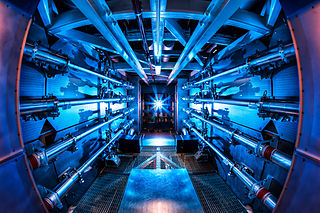 Early Saturday morning we fired a Deuterium-Tritium gas-filled Diamond capsule on the NIF. The laser used all 192 beams and delivered 1.24 Megajoules of ultraviolet laser light to the drive Hohlraum at a 350 Terawatts peak power in an ~10 nanosecond pulse.
Excellent data was obtained and for the first time ever we observed a DT neutron yield over 1E15 (early results are coming in at ~1.8E15) or approximately 5,000 Joules of neutron energy.
The yield is about twice the record we have ever produced.
Even better, the Yield over Clean, a measure of the quality of the implosion, was also very impressive and this was done with a relatively low laser energy, low laser power and low implosion velocity! Although much work remains, this bodes well for the first layered diamond experiments planned for September.
It's hard not to feel encouraged by the progress we've made with great new and planned diagnostic capabilities, promising results with diamond and high foot experiments, a team that is working extremely well together, and a go forward plan that, by and large, is well supported by the community.
FuseNet launches European Fusion Master and Doctorate Certificates
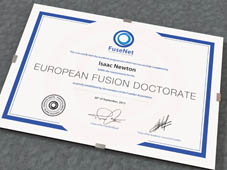 The FuseNet Association and its almost 40 members, are proud to open the subscription for the first round of awards for the European Fusion Master and Doctorate Certificates.
The certificates can be awarded to students who have done a MSc or PhD in fusion and can demonstrate that they covered the subject with sufficient depth and breadth. The criteria are designed to set a high standard, and as such the 'European Fusion Master and Doctorate' can be regarded as a mark of high quality.
Students with a Certificate have had a multi-disciplanary training and not only be well prepared for a career in fusion research, but also for a career outside this field, e.g. in high-tech industry.
The first round of applications is open now to all European students – with a tight deadline: 19 July, 2013.
The first 50 students that apply successfully (MSc and PhD, in order of application) will get an excursion to JET, and receive their Certificate in a festive ceremony at JET on September 26. So, if you finished your fusion studies recently, or know someone else who qualifies: you may apply here.
The academic criteria for the award of the certificate were developed by a broad academic committee under coordination of the European Fusion Education Network FuseNet, with support from the European Commission. They involve different blocks of topics that the students must have studied, as well as requirements on the final thesis.
The accreditation is in the hands of the Academic Council of FuseNet, chaired by Prof. Ambrogio Fasoli. The criteria can be downloaded here, it is easy to check if one complies. After the initial award ceremoeny, there will be two rounds of awards every year from now on. The application form for new certificates therefore remains open throughout the year.
- Apply for a European Fusion Master/Doctorate Certificate
- More information about the Academic Council of FuseNet
Source: FuseNet
LASERLAB-EUROPE Access Success Stories
Access Success Stories
Ever since the beginning of LASERLAB-EUROPE, one of its most important features has been the Transnational Access Programme. Up to now, about 1,200 scientists from institutions outside LASERLAB-EUROPE had access to LASERLAB facilities to perform their experiments. Proposals for Transnational Access are reviewed by an external and independent Access Selection Panel on the basis of scientific merit. Access to LASERLAB facilities is free of charge; travel and accommodation expenses of visits with a typical duration of two to six weeks are covered by the Programme.
Each access project has its unique history and benefits. In many cases, the host researchers are not only involved in assisting their guests, but form an integral part of the research project. As a result, the host institutions benefit directly from the programme. Through the years, many long-term research collaborations have been formed as a result of Transnational Access. On the following pages, we highlight a few particularly successful access projects. Tom Jeltes
Plasma interferometry diagnostic studies (PALS)
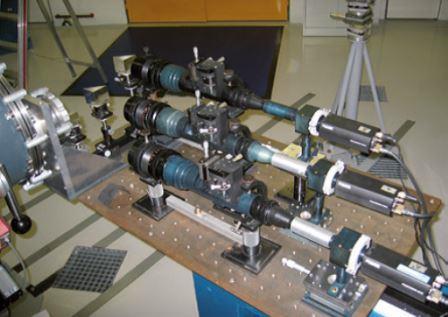
One of the longest-running and most productive access related collaborations is situated at the Prague Asterix Laser System (PALS). Starting more than a decade ago, Tadeusz Pisarczyk from the Institute of Plasma Physics and Laser Microfusion (IPPLM, Warsaw, Poland) has used his multi-frame laser interferometry system to study plasmas in numerous experiments at PALS. For this purpose, he developed a modular optical system which allows quick assembly of the interferometer, depending on the experimental requirements. Several other researchers have since used the Polish system, benefiting from PALS facilities and Pisarczyk’s expertise.
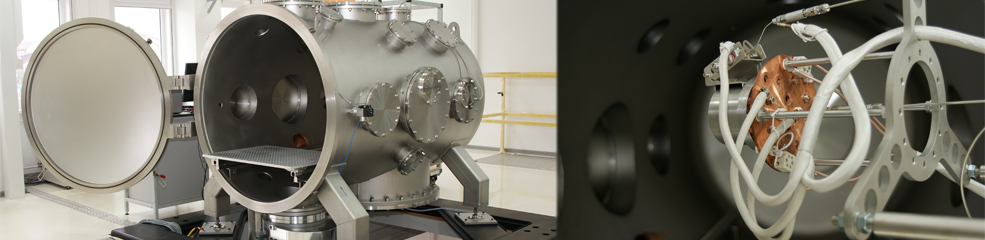
The idea of constructing multi-frame interferometric diagnostics has its origin in Pisarczyk’s first LASERLAB Access project at PALS, some ten years ago. In this experiment he adapted an automated single-frame polaro-interferometer to study plasma parameters. The experience gained during the installation of this system and the results obtained turned out to be sufficiently useful and convincing to encourage extension of this method to a multi-frame approach. This led to the construction of an interferometric system with the capability to record three independent interferometric images with an adjustable time delay in the range of 1-3 nanoseconds. Each channel was equipped with a high-resolution, high dynamic range CCD camera. All cameras were connected to a computer, which allowed for easy control of the data acquisition process and maximally automated the work required to process the recorded data. The successful implementation of a three-frame interferometer on PALS was expensive and included a great deal of complex technical work, and would not have been possible without strong support from the management of both PALS and IPPLM. The reason for this was that the components of this system had to be installed in the experimental chamber in such a way that they would not obstruct access to the chamber and could be used in parallel with other important diagnostic tools. For example, to this end a unique custom-designed lead-out of the diagnostic laser beams from the experimental chamber for different recording channels had to be constructed, using a system of prisms mounted on the window in the chamber door; when the door was opened, the prisms were removed, providing an unobstructed access to the chamber. Furthermore, the main subsystems of the interferometer (e.g., the delay line and the recording system) were designed as independent modules, with permanently mounted components, which allows for a quick assembly and disassembly of the interferometer, depending on the experimental requirements. Over the time sufficient experience was gained with the multi-frame interferometer for it to become a routine diagnostic tool, which had the advantage that it could also be used for training of undergraduate and postgraduate students. Presently two students – one Czech and the other from Pisarczyk’s Polish team – are working on PhD theses which rely on the multi-frame interferometry as a basic source of information on the parameters of the laser plasma.
30 years of JET – Paving the way for ITER’s take-off
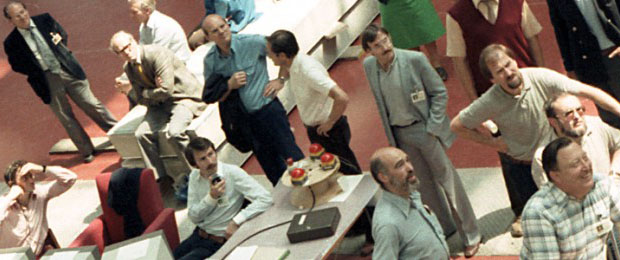
June marks the 30th anniversary of JET’s first plasma – the moment commemorated in the photo above. Amazingly JET at thirty years old is still at the forefront of fusion research, these days as a test bed for its successor, ITER – hence the theme for the celebrations: JET – Paving the Way to ITER’s Take-Off.
During celebrations people involved in JET from the very early days through to the present will assemble at Culham, to hear tales of JET and ITER’s early days, and their entertwined futures.
There will also be a reenactment of JET’s original pulse, using equipment from 30 years ago, juxtaposed with a modern pulse – hopefully more successful and clean than the original pulse’s extremely brief life.
And of course, to toast the success of toroidal geometry, doughnuts will be served.
Interviews with people present at JET’s first pulse
Source: EFDA
Journey to the centre of the torus
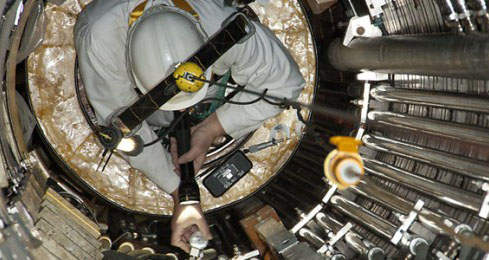 It sounds like a kind of gothic torture – being put in a large bucket and lowered into a 9m deep hole at the centre of a huge machine. But it’s all in a day’s work for JET’s inspection team, as part of maintenance of JET’s central magnet, the P1 solenoid.
The solenoid itself is made up of 1440 turns of copper, separated into 14 “pancakes” – sections of coils stacked on top of each other. During the course of experiments these carry up to 60 000 amps, and are subjected to huge magnetic forces, which causes them to shift around slightly. A set of spring-loaded keys pull the pancakes back into alignment, but over the course of thousands of plasma pulses you would expect these to wear and lose their precision.
“Actually no refurbishment was needed, even though this procedure was last done 8 years ago,” says project leader Michael Porton.
“In the intervening time, a number of key staff had retired, so we were partly re-learning how to do the work,” says Mr Porton. “It was very interesting – it’s not often you get to peer down the insides of JET!”
Not surprisingly pulling the large iron core out of the heart of JET and accurately measuring the rotation of the pancakes was a complex task, which involved cooperation from many different areas, such as the lifting team, and the photogrammetry team, whose expertise in locating and surveying the exact positions of the components was vital.
There were also safety contingencies developed – rescue plans, in case the gothic horror tale came true. But there was a happy ending to this tale, no rescues were needed and JET’s central solenoid is in great shape ready for another busy experimental campaign, beginning mid-July.
Source: EFDA


nsp_154.JPG)


nsp_154.JPG)


 |
 |
 |
 |
 |
 |
 |
 |
Media


Projekty badawcze realizowane przez IFPiLM są finansowane ze środków Ministerstwa Edukacji i Nauki i Narodowego Centrum Nauki oraz ze środków Komisji Europejskiej na podstawie umowy grantowej No 101052200, w ramach Konsorcjum EUROfusion. Wsparcia finansowego udzielają także: Międzynarodowa Agencja Energii Atomowej, Agencja Fusion for Energy, Europejska Agencja Kosmiczna i Konsorcjum LaserLab.