





Zestaw obrazów 2019
zdjecie1.jpg
zdjecie2.jpg
zdjecie3.jpg
zdjecie4.jpg
zdjecie5.jpg
zdjecie6.jpg
2019_1.JPG
2019_2.JPG
2019_4.JPG

Galeria
Engineering marvels turned into Lego
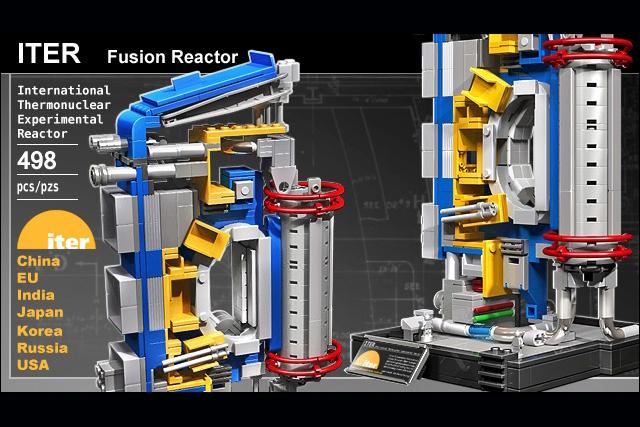 The not yet built giant fusion reactor ITER has recently entered a competition to have its own miniature model created as a commercially available Lego set.
Introducing his idea at the Lego Cuusoo website, started by Lego in 2008, graphic designer Andrew Clark has proposed a model of the ITER fusion reactor, set to become the biggest in the world, made of 498 Lego bricks including two micro figures for a sense of scale and detail.
Since the end of December 2013, people can vote for the Lego ITER model to help it get from paper to reality. If it reaches 10,000 votes until May 2014, it will be considered by the Lego team for manufacturing (lego.cuusoo.com)
It is not the first technology marvel competing at the Lego Cuusoo website. In 2012, NASA’s Martian rover Curiosity received the highest amount of votes and is already commercially available. The latest winner, selected in the autumn of 2013, is an exoskeleton suit for a tiny Lego man.
Among the current frontrunners are also several technology-inspired projects – for example a Lego Apple Store and the Apollo 11 lunar lander created in the memory of the deceased first man on the Moon Neil Armstrong. Both projects are nearing the 10,000 vote milestone, making them eligible for further consideration.
Authors of successful designs receive 1 per cent of the royalties.
Source: eandt.theiet.org
Triple-Threat Method Sparks Hope for Nuclear Fusion Energy
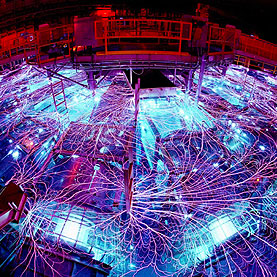 The Z machine at Sandia National Laboratories in New Mexico discharges the most intense pulses of electrical current on Earth. Millions of amperes can be sent towards a metallic cylinder the size of a pencil eraser, inducing a magnetic field that creates a force — called a Z pinch — that crushes the cylinder in a fraction of a second.
Since 2012, scientists have used the Z pinch to implode cylinders filled with hydrogen isotopes in the hope of achieving the extreme temperatures and pressures needed for energy-generating nuclear fusion. Despite their efforts, they have never succeeded in reaching ignition — the point at which the energy gained from fusion is greater than the energy put in.
But after tacking on two more components, physicists think they are at last on the right path. Researchers working on Sandia’s Magnetized Liner Inertial Fusion (MagLIF) experiment added a secondary magnetic field to thermally insulate the hydrogen fuel, and a laser to preheat it (see ‘Feeling the pinch’). In late November, they tested the system for the first time, using 16 million amperes of current, a 10-tesla magnetic field and 2 kilojoules of energy from a green laser.
“We were excited by the results,” says Mark Herrmann, director of the Z machine and the pulsed-power science center at Sandia. “We look at it as confirmation that it is working like we think it should.”
The experiment yielded about 1010 high-energy neutrons, a measure of the number of fusion reactions achieved. This is a record for MagLIF, although it still falls well short of ignition. Nevertheless, the test demonstrates the appeal of such pulsed-power approaches to fusion. “A substantial gain is more likely to be achieved at an early date with pulsed power,” says nuclear physicist David Hammer of Cornell University in Ithaca, New York, who co-wrote a 2013 US National Research Council assessment of approaches to fusion energy.
With its relatively slim US$5-million annual budget, MagLIF is a David next to two fusion Goliaths: the $3.5-billion National Ignition Facility (NIF) at Lawrence Livermore National Laboratory in California, and the €15-billion (US$20-billion) ITER experiment under construction in France. (Sandia has about $80 million to operate the Z machine each year, but it serves other experiments in addition to MagLIF.) The NIF squashes fuel capsules using nearly 2 megajoules of laser energy, and ITER will use 10,000 tons of superconducting magnets in a doughnut-shaped ‘tokamak’ to hold a plasma in place to coax self-sustaining fusion.
Both of the big projects have run into problems. After a concerted two-year effort, NIF fell well short of achieving ignition by a 2012 deadline. Its fusion yields have since increased markedly — nearly 1016 neutrons were created in a recent shot, Herrmann says — but the more than $300-million-a-year program faces further budget cuts in 2014. Meanwhile, delays and budget overruns have become the norm at ITER. The facility is not expected to begin operations until 2027 — 11 years later than initially planned.
In addition to being cheaper, MagLIF seems to have technical advantages. The laser not only preheats the hydrogen fuel, but also makes it more conductive — and thereby more susceptible to the Z pinch. Furthermore, in a paper published late last year, MagLIF physicists showed evidence suggesting that the applied secondary magnetic field, as well as insulating the fuel, may have the happy side effect of stabilizing the cylinder as it implodes (T. J. Awe et al. Phys. Rev. Lett. 111, 235005; 2013). If so, that would cut down on hydrodynamic instabilities, which can disperse the energy and fuel before fusion can get going, says Stephen Slutz, a Sandia physicist who proposed the MagLIF system in 2009.
In the next few years, MagLIF scientists plan to turn up all three dials at their disposal. They can boost the Z machine to up to 27 million amperes; they can ramp up the magnetic field to as high as 30 tesla; and they plan to upgrade the laser to 8 kilojoules. They also aim to switch from fuel made of the hydrogen isotope deuterium to fuel containing both deuterium and another isotope, tritium — which should also lift yields. By 2015, they hope to achieve a yield of 1016 neutrons, or about 100 kilojoules — enough to show that ignition is within reach.
It could be crucial to make progress quickly. The US National Nuclear Security Administration, the division of the Department of Energy that funds the NIF, the Z machine and other laser fusion efforts, plans to deliver an assessment to Congress in 2015 about the future of these technologies. If MagLIF hits its 100-kilojoule goal, it could bolster an argument for upgrading the Z machine to 60 million amperes or more, which simulations suggest would be sufficient to reach ignition.
“We’re all hoping that they will, in fact, find success with their early shots to justify the construction of a larger machine,” says Hammer.
Source: scientificamerican.com
Euratom programme for nuclear research (2014 - 2018)
 The Council adopted the European Atomic Energy Community (Euratom) programme for nuclear research and training activities (16463/13 + COR 1).
The new programme allows for the continuity of nuclear research activities carried out under the current Euratom programme, which expires at the end of 2013. It is a part of the EU's research and innovation framework programme "Horizon 2020" (16939/13).
A simplified access to research projects and the same rules for participation will apply as in Horizon 2020.
The Euratom programme comprises two types of actions:
1. Indirect actions
Indirect actions to cover fusion energy research and research on nuclear fission, safety and radiation protection.
The fusion energy research activities will also include some activities contributing to the achievement of the construction of ITER (International Thermonuclear Experimental Reactor), a major experimental facility to demonstrate the scientific and technical feasibility of fusion power. Even though, differently from the past, the EU contribution to ITER will be channelled through the joint undertaking for ITER "Fusion for Energy". The activities of that joint undertaking are regulated by a separate legislative act.
2. Direct actions
Direct actions for activities of the Joint Research Centre (http://ec.europa.eu/dgs/jrc/index.cfm) in the field of nuclear waste management, environmental impact, safety and security.
The nuclear fission research activities are in line with the objective of enhancing the safety of nuclear fission and other uses of radiation in industry and medicine.
The activities of the JRC cover customer‑driven scientific and technological support for the formulation, development, implementation and monitoring of the Union's policies, with an enhanced focus on safety and security research. The JRC works as an independent reference centre of science and technology in the Union.
Euratom programmes are limited by the Euratom treaty to five years, whereas the general framework programmes for research and innovation last for seven years.
The budget of the Euratom programme is set at 1.6 billion euros in current prices for the years 2014 to 2018. Added to the global budget in Horizon 2020, makes Horizon 2020 the world's largest research programme reaching nearly a total investment of 80 billion euros.
The Euratom programme will continue to contribute to the implementation of the "Innovation Union" strategy, by enhancing competition for scientific excellence and accelerating the deployment of key innovations in the nuclear energy field, notably in fusion and nuclear safety, and will contribute to tackling energy and climate change challenges. In this way it will underpin the creation of an European Research Area.
The Fusion for Energy family gains a new member
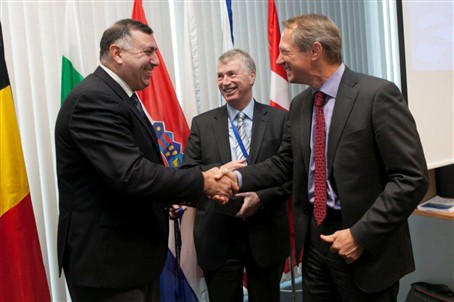 Fusion for Energy (F4E) welcomed a new addition to the family this week. Following its accession to the European Union on 1 July 2013, Croatia attended this week’s meeting of F4E’s Governing Board for the first time. Joining the existing 27 EU Member States, Switzerland and the European Commission, Croatia becomes the 30th member of F4E. “We are very pleased that Croatia is being represented at the Governing Board and that Croatian industry and research organisations are already expressing interest in working with F4E” said Mr Stuart Ward, Chair of F4E’s Governing Board.
Professor Henrik Bindslev, who has served as F4E’s Director since January 2013, informed the Governing Board about progress with the construction of the international ITER fusion energy project, for which Europe is the largest contributor. “We are making steady progress and establishing close partnerships with industries from all corners of Europe to make ITER a reality”, said Professor Bindslev. He added that “We started pouring concrete at the beginning of December for the foundations of the building which will house the ITER fusion device – this is another important milestone”. “We have also made excellent progress with the fabrication of the superconducting magnets” he added.
Among the most important decisions taken this week, the Governing Board adopted F4E’s work programme for 2014 and the associated budget of almost EUR 900 million, the vast majority of which will be used to finance contracts and grants with European industry and research organisations related to the construction of ITER. Mindful of the importance of staying within the overall European budget for ITER construction, the Governing Board approved reductions in areas of F4E’s longer-term programme that do not directly impact on its international obligations towards the ITER project.
The Governing Board also approved a number of amendments to the founding statutes of F4E. In addition to the assignment of voting rights to Croatia, the amendments will optimise the responsibilities of the committees that supervise F4E and allow for more durable, long-term partnerships with European fusion research laboratories who have, thanks to the European fusion programme, built up much of the expertise needed to make ITER a success.
Finally, the Governing Board welcomed the progress being made by F4E to reinforce its partnerships with industry and European fusion research laboratories. Professor Bindslev noted that “We have been listening attentively to industry and I am confident that we have made a number of improvements that will ensure that working on ITER with F4E does not only present exciting scientific and technical challenges but also attractive commercial opportunities”.
The summary of decisions and output documents from the Governing Board meeting are accessible here.
Background
The Governing Board is responsible for the supervision of F4E in the implementation of its activities. It makes recommendations and takes decisions on a wide range of matters, such as adopting the financial regulation and its implementing rules, adopting the annual work programmes and budgets, approving the annual accounts and annual activity reports, as well as adopting rules on industrial policy, intellectual property rights and the dissemination of information in agreement with the European Commission. Each member of F4E is represented in the Governing Board by two representatives, one of which has scientific or technical expertise in the areas related to its activities. For further information, consult our webpage.
Source: F4E
Despite Budget cuts fusion funding secured
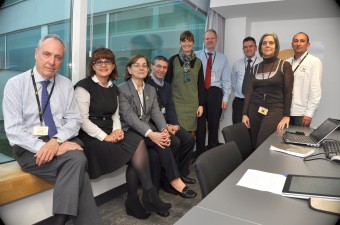 Last month European Fusion researchers received good news from Brussels. After months of negotiations between the European Parliament and the European Commission the research and innovation budget was agreed on. EFDA and JET Leader, Francesco Romanelli, was pleased with the support being shown to the present European fusion programme “We have been working hard to shape the programme to the requirements of Horizon 2020. Despite some cuts to the proposed budget in the EFDA Roadmap to the realisation of fusion energy the approval of the EU fusion budget has marked a crucial milestone. We can now build our activities in Horizon 2020 on solid ground.”
Of great importance for European Fusion Laboratories in general and for the Joint European Torus, JET, in particular was the news that, within the research budget, funds were sufficient for a vibrant programme of activities, including the strong support of JET to ITER.
And if a demonstration of the crucial importance of JET was needed, it came, also last week, from the ITER Council. They announced that ITER would start with the same inner wall material as in JET. The decision will save ITER several hundred million Euros and was a direct consequence of successful experiments with the ITER-like wall in JET in recent years.
Lorne Horton, Head of the JET Department in EFDA commented: ‘The ITER Organization is continuously requesting support, knowing that the experiment has unique capabilities and a highly trained and experienced staff at their disposal. We want ITER to deliver what it is being built for.’
Source: EFDA


nsp_154.JPG)


nsp_154.JPG)


 |
 |
 |
 |
 |
 |
 |
 |
Media


Projekty badawcze realizowane przez IFPiLM są finansowane ze środków Ministerstwa Edukacji i Nauki i Narodowego Centrum Nauki oraz ze środków Komisji Europejskiej na podstawie umowy grantowej No 101052200, w ramach Konsorcjum EUROfusion. Wsparcia finansowego udzielają także: Międzynarodowa Agencja Energii Atomowej, Agencja Fusion for Energy, Europejska Agencja Kosmiczna i Konsorcjum LaserLab.