





Zestaw obrazów 2019
zdjecie1.jpg
zdjecie2.jpg
zdjecie3.jpg
zdjecie4.jpg
zdjecie5.jpg
zdjecie6.jpg
2019_1.JPG
2019_2.JPG
2019_4.JPG

Galeria
Poland’s industry and SMEs declare a strong interest in ITER
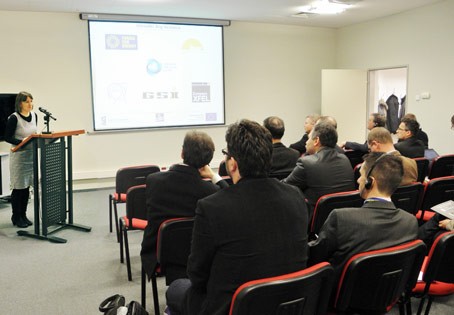 The business opportunities stemming from big science projects and the potential contribution of companies with their skills and expertise led Sylwia Wójtowicz, Poland’s Industrial Liaison Officer (ILO), to organise a one day seminar at Wroclaw Technology Park in order to showcase the ITER project together with the European Spallation Source. This was the second awareness day organised in the last three years and it came at the right time. Europe’s ITER procurement strategy has been outlined and contactors are actively looking for suppliers at different levels. The event managed to attract the interest of 30 representatives coming from the fields of services, cabling, IT and offered them information about the upcoming Calls for tender.
The plenary session opened with a presentation from Professor Maciej Chorowski, who highlighted the benefits that large scientific collaborations can yield to the economy and its operators. In this context, the ITER project was described as a true opportunity for fast track learning in new niche technologies with clear financial benefits in the long term. Anthony Courtial, representing F4E’s “Market policies, Analysis and Reporting” team, explained Europe’s contribution to ITER and elaborated on the different procurement packages that were of interest to the audience.
An online guided tour of the Industry and Associations portal was given to all participants focussing mainly on how to register and how to search for other business partners. One of the novelties of the seminar was a session called “Meet the company”, during which Polish companies presented to F4E their area of competence and capabilities in order to explore their potential contribution. The seminar concluded with meetings between different Polish companies exchanging contacts and understanding how they could complement each other’s skills.
To find out more about how your company could get involved in the ITER project, contact your Industrial Liaison Officer and keep checking the F4E website and theIndustry and Associations portal for any updates.
Source: F4E
IFERC and GÉANT collaboration paves the way for data highway in fusion research
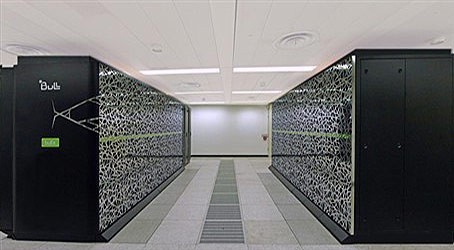 As of 9 April 2013 GÉANT, the world’s leading high-speed research and education network managed and operated by DANTE in Cambridge, UK, will be providing data links to the International Fusion Energy Research Centre (IFERC), in Rokkasho, Japan. IFERC hosts the Helios supercomputer, a system with a compute power exceeding 1 PFlops and attached to a storage capacity of 50 PB. The Helios supercomputer is provided and operated by the French Alternative Energies and Atomic Energy Commission (CEA), France and is a Fusion for Energy (F4E) resource.
GÉANT is supplying a 10 Gbps (10 Gigabits per second) link to connect Helios with scientists involved in ITER and DEMO, the demonstration fusion reactor which is considered the follow-on project of ITER.
It is hoped, after the first fusion plasmas of ITER in Cadarache, France, planned for 2020 and beyond, that DEMO, an industrial demonstration fusion reactor, will lead to full-scale fusion energy reaching the commercial market in the second half of the century.
Massive data sets
HELIOS is producing vast amounts of data, which need to be shared with scientists all over the world. Via the Japanese National Research and Education Network (NREN) SINET, IFERC is connected to the pan-European GÉANT network, and to all European NRENs, like RENATER, DFN, SWITCH, JANET and many others), supporting the research activities for fusion in Europe.
The GEANT-provided link is a 10Gbps connection between Geneva and Washington, matching the 10Gbps link between Japan and Washington provided by SINET. It will enable researchers in Europe to access this dedicated supercomputer in Japan. It may eventually be used to complement also the network resources allocated to other large scale projects, such as the CERN LHC experiment.
Roberto Sabatino Business Solutions consultant says: “The combination of major new scientific projects like IFERC and the use of supercomputers like Helios is creating an explosion of data for which we need to be ready. The provision of a 10Gbps link is a first and crucial step to support the data networking needs in the global search for cleaner, sustainable energy and to assist scientists in their ground-breaking work.”
Transporting high-volumes of traffic
Together with ever-growing data sets, greater collaboration in areas such as energy and genetics is driving a growing demand to access shared central databases of information across research disciplines, exponentially increasing network traffic. In the past, the most practical method for transferring bulk data from geographically dispersed clusters and end users was to physically ship disks by courier. With high speed networks such as GÉANT, data from many different sources can quickly be shared and analysed leading to accelerated results.
Europe’s vision for - sustainable energy
The ITER project is funded by and run by seven parties – Europe (contributing 45% of the cost), India, Japan, China, Russia, South Korea and the US. DEMO studies are carried out by individual ITER members, and in the case of Japan and Europe, jointly in the IFERC, in the framework of the Broader Approach Agreement. The investment in fusion research is in line with the EU’s focus for Horizon 2020 to find new and convincing solutions to the societal challenge of secure, clean and efficient energy. GÉANT is seen as an essential component in driving European ICT and for Europe to remain competitive in dealing with society’s grand challenges.
Susana Clement Lorenzo, F4E Group Leader for IFERC says: “Helios users are running codes ranging from fundamental physics in hot ITER plasmas to technology and engineering calculations so as to build components in very challenging environments as expected in DEMO. Supercomputers are crucial in solving these complex problems and good data communication channels such as the high-speed GÉANT network can provide the essential links to help scientists all over the world to analyse their findings. Ultimately, all these initiatives will bring us a step closer to fusion as a potential energy source.”
Big science reliant on high-speed networks
IFERC joins many other big science projects supported by GÉANT which are changing the way the world collaborates. Examples include CERN’s Large Hadron Collider and global projects addressing climate change, medical diagnosis, bioinformatics and deep space research.
To see a short clip on the Helios supercomputer click here
To see a short clip on GÉANT click here
Source: F4E
F4E Summer Studentships 2013 now open for applications
 Interested in a career in fusion? Want to gain practical experience in a European working environment? The F4E summer studentship programme could be the perfect opportunity for you!
If you are an EU or Swiss national, aged between 18-25 years, following university studies and with a good knowledge of at least two Community languages (one of which should be English), you are eligible to apply. The summer studentship programme, which is now in its fourth year, provides short-term training at the F4E offices in Barcelona in order to promote awareness, knowledge and understanding of F4E’s role in the ITER project and within the European context.
The duration of the summer studentship will be two to three months, with the programme running between June and September. F4E summer students will be remunerated and may receive an allowance for travel expenses.
Applications should be submitted in English using F4E’s online tool. The deadline for submission is 29/04/2013 at midday CET. After the closing time, the database will no longer be accessible.
The online application process starts upon clicking “CLICK TO APPLY” button on the following page:
http://fusionforenergy.europa.eu/careers/studentships.aspx
Applicants must register their applications online through the F4E Studentship Application tool by creating a valid F4E user account, duly filling in all the requested mandatory fields marked with an asterisk and submitting the following two documents:
- http://fusionforenergy.europa.eu/global/images/bulletDBlue.gif); color: rgb(102, 102, 102); padding-left: 12px; line-height: normal;">
- A detailed Europass curriculum vitae in English which can be obtained at the following address:
http://europass.cedefop.europa.eu/en/documents/curriculum-vitae - A motivation letter of two pages maximum in English
Please note that the online application tool is the only acceptable means of sending in applications.
For enquiries and requests for further documentation, email the Ten adres pocztowy jest chroniony przed spamowaniem. Aby go zobaczyć, konieczne jest włączenie w przeglądarce obsługi JavaScript..
Source: F4E
Applying physics, teamwork to fusion energy science
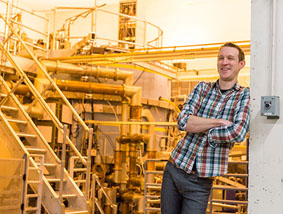 As an undergraduate engineering student, Zach Hartwig was introduced to the methods, procedures and practices that form an engineer’s toolkit. But, he recalls, his real interest was in “the principles the tools were built on, the fundamental physics that lay behind them.” So he switched majors and became a physicist, spending the next few years working in particle physics before joining the MIT NSE doctoral program.
Working at NSE’s Plasma Science and Fusion Center (PSFC), Hartwig has led the development of a groundbreaking materials diagnostic system that will help advance nuclear fusion as a practical energy source. And in the process, he has cultivated his true passion — “a mixture of nuclear physics and materials science with a bit of engineering thrown in.”
The work exemplifies NSE's increasing focus on interdisciplinary projects that support worldwide development of commercial fusion power plants utilizing tokamak reactors, like PSFC’s Alcator C-Mod. Tokamaks have made huge strides in functionality, successfully using magnetic fields to confine plasmas where lighter elements fuse into heavier ones, as they do in the core of stars, at temperatures of up to 100 million degrees C.
One important area of inquiry is the interaction between the confined plasma and the materials inside the tokamak's high-vacuum chamber. “The plasma and the chamber walls are a coupled system,” explains Hartwig. “C-Mod’s wall tiles and other plasma-facing components are made from robust refractory metals, like molybdenum, but we’re pushing their material limits by exposing them to enormous heat, charged-particle, and neutron fluxes that can cause severe surface modifications.”
Understanding how these components behave during ongoing reactor operation is intimately tied to several grand challenges still facing fusion — maintaining and controlling steady-state burning plasmas, mitigating deleterious effects of plasma-material interactions, and minimizing required maintenance. But until now, it has been effectively impossible to make routine, comprehensive measurements of plasma-facing materials in the hostile and inaccessible environment of a tokamak chamber.
Hartwig’s five-year project, conceived by NSE Professor Dennis Whyte and executed with help from nearly 100 NSE scientists, engineers, machinists, and students, solves the problem by directing a beam of deuterons (particles comprised of one proton and one neutron) from a linear accelerator into the tokamak, where it can be magnetically steered to strike any desired point.
The deuterons prompt nuclear reactions with the component material, generating high-energy neutrons and gamma rays, which can be measured by specially positioned detectors near the reactor chamber. “That tells us an enormous amount about the surface they came from, and lets us reconstruct surface properties we’re interested in,” explains Hartwig, “Nobody’s ever looked at these things so comprehensively inside the vacuum vessel.”
While Hartwig cautions that the diagnostic hardware and its associated computational modeling component must still fully prove themselves, the technology has the potential to become standard equipment for magnetic-confinement systems worldwide. It’s a vindication for Whyte’s vision, and for the diverse group of skilled contributors.
“Until this project, I hadn’t really appreciated what it means to be part of a cohesive team, the synergy. It’s impressive,” says Hartwig.
Hartwig supplements his research with substantial work in fusion-related outreach and communications. In addition to giving tours and talks at the PSFC, he has developed an overview presentation covering technical, economic, environmental, and safety aspects of fusion, delivering it to high-school students, university energy and business groups, and other audiences.
He also organized a 2012 trip for 11 NSE fusion students to Washington, DC, where they met with 30 House and Senate offices. On the agenda: the need to maintain a world-leading domestic fusion energy research program amidst tightening federal budgets and increased U.S. commitments to international fusion experiments. In this environment, says Hartwig, scientists must actively communicate the value of their work to the public and policymakers and make the case for ongoing funding.
“It’s increasingly important for scientists to understand the policy environment,” notes Hartwig, who is considering service as a science advisor in government post-doctorate. “Policymakers rarely meet young scientists. If you show up, tell them about your work and why it's important, and thank them for supporting it, that personal connection makes quite a big impact.”
Source: MIT Nuclear Science & Engineering.
Building the world’s largest nuclear fusion reactor
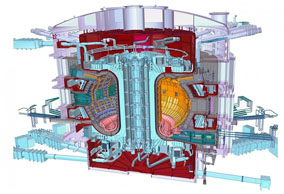 BARCELONA — Ground is now breaking in Cadarache, France, for the 18-billion-euro research facility dedicated to determine if the process that powers the sun can be harnessed to power our future without creating nuclear waste, causing meltdowns or producing carbon dioxide emissions.
The first nuclear fusion experiment of this magnitude, the International Thermonuclear Experimental Reactor project promises to produce almost as much energy as the typical nuclear fission plant. Combining 28 years of research from nations representing 80 percent of the world’s GDP, ITER will be, by far, the largest international partnership to explore if the fusion of nuclei gives off bursts of energy that could more safely light Europe and beyond.
Today and tomorrow, SmartPlanet will discuss this project that has the research and investment of the European Union, the United States, China, South Korea, Japan, India and the Russian Federation, as we attempt to answer what fusion energy is, whether it’s safe and a feasible alternative to oil and gas, and how the public is reacting.
The seemingly endless search for an alternative to oil and a desire to stop greenhouse gas emissions has led to the founding of this multinational consortium to “find the way,” which is whatiter means in Latin. “ITER is just the way to find out if this is the next step in our energy mix,” says Aris Apollonatos, communications leader of the EU branch of the project, Fusion for Energy. Construction is set to end by 2020, with the first successful reaction planned for the same year. While figures seem to vary, as the ITER website explains, “”It’s impossible to be more precise in estimating the cost of the project,” it looks like the construction will cost about 13 billion euros, withanother 5 to 6 billion to run the reactor and research.
What exactly is fusion? Modeled after the process by which the stars, including the sun, are powered, fusion is a process in which light atoms are fused together at extremely high temperatures — 150 million degrees Celsius, or ten times the heat of the Sun — until they turn into the less-talked-about fourth stage of matter, plasma. This really hot plasma, in turn, gives off energy. In the case of the ITER project, the hydrogen isotope deuterium, which is obtained from water, and the lithium-derived radioactive hydrogen isotope tritium are fused together at these extreme temperatures. The end result is the formation of a helium nucleus, a neutron and a lot of energy.
One fusion reactor is predicted to produce 7 billion kilowatt-hours of energy a year — less thanthe typical fission nuclear reactor, which generates about 12.2 billion kilowatts per year. On the other hand, while the fission reactor is usually between 30 and 45 percent efficient, the ITER fusion reactor is expected to produce ten times the amount of of energy needed to power it. Of course, as one retired nuclear power plant employee puts it, “Pure efficiency is virtually never the reason a particular type of generating plant is chosen. In the case of fusion, the minimal radioactive waste is the Holy Grail.”
Fusion is classified as a renewable energy resource because it produces no carbon dioxide in its output — however, you still need high-voltage electricity to heat it up. Since it relies mostly on extracts from sea water, “it doesn’t have to be the same game as with oil,” Apollonatos says, referring to the endless geo-political struggle over that Texas tea. “Many of the regions of the world that supply our energy are geographically remote and some may be politically unstable.”
The biggest question with atomic energy, of course, is: Will it be safe? The scope and scale of the ITER experiment has never been attempted before, as this kind of fusion has only produced megawatts of power for seconds at a time in small labs, but Apollonatos is certain of ITER’s safety. ITER and fusion are hugely different from the Fukushima power plant and those other nuclear fission reactors powering France and much of the world. Fission, like its name suggests, separates particles in a reaction that can create energy, but which can sometimes be uncontrollable. Fusion forces particles to join and should also produce energy, however, Apollonatos assures that, if anything goes wrong, the plasma cools itself, automatically stopping the process. He says there is no risk of meltdown or runaway reactions.
He also says that “The fusion fuel primary material is completely different,” than that is used in fission-based nuclear reactors. The hydrogen isotopes deuterium and tritium were chosen not just because of their wide availability, but because they don’t have a long-term legacy of radioactive waste and should be released from regulatory control and potentially recycled 100 years after ITER is inevitably closed. Nuclear reactors are typically open for only 21 to 30 years, and ITER is only intended for research anyway.
Cadarache is also located in a more geographically stable place than, for example, Fukushima, Japan. Signifying France and the consortium’s confidence in the safety of the project, ITER will sit around the corner from one of France’s active nuclear reactors. ITER is also the first nuclear fusion facility to have gone through the highest level of checks and to be given approval by the French nuclear ministry. “The red tape is terribly high, even more than fission because we are making history,” Apollonatos says. “ITER is the only [fusion experiment] that has met that scale or scope” that would be required to have this level of approval, he explains.
The internationalization of “fusion energy research for peaceful purposes” dates back to 1985, when the U.S., the then Soviet Union, the European Community and Japan created the Atomic Energy Agency. By 2007, China, India and South Korea had come on board in the shared research and economic commitment to form ITER, a joint effort to develop this renewable energy source.
Fusion for Energy, which will provide about 45 percent of the total ITER funding, is focused on this goal of limiting European dependence on foreign energy. Europe is very keen on developing energy that utilizes readily available natural resources — like the 70 percent of the earth covered in water and the minerals from the Earth’s crust — instead of continuing the status quo, in which Europe is importing about half its energy, mostly oil and gas. If current trends continue, Europe is set to import 70 percent of its energy by 2030.
Originally, Spain, France and Japan were bidding to host ITER. Cadarache, France was ultimately chosen as the location over Tarragona, Spain because — while Spain is known for its exploration of a broad range of energy resources, from its three nuclear power plants and its more common electromagnetic dams to being a leader in renewable energy research — France has a history as a leader in nuclear energy dating back to the time of de Gaulle. Plus, France simply has more money to invest into ITER.
While France won out on location, Spain received the authorization to award the contracts for the work, including the main administrative office located in Barcelona, which led to 436 new jobs. Spain has 14 contracts totaling 200 million euros. Two of these winning bids went to COMSA and Ferrovial, two of Spain’s largest construction companies that have been forced to downsize dramatically since 2008. Spain is in charge of building the infrastructure of the small ITER village of 39 buildings. France will head the building of the reactor itself.
Overall, the ITER project is set to create nearly 4,000 jobs, mostly for the French, Spanish and Japanese, who were the third bidders for the project location and who were promised at least 20 percent of the researcher jobs.
Japan will also prepare for the next step down the road, when the research from ITER will be applied at their still-to-be-built demonstration power plant, which will work to transfer any fusion-fueled power to electricity grids and, ultimately, to the public.
Read Global Observer colleague Bryan Pirolli’s take on how the public is reacting to the somewhat quiet building of the ITER reactor.
Source: SmartPlanet


nsp_154.JPG)


nsp_154.JPG)


 |
 |
 |
 |
 |
 |
 |
 |
Media


Projekty badawcze realizowane przez IFPiLM są finansowane ze środków Ministerstwa Edukacji i Nauki i Narodowego Centrum Nauki oraz ze środków Komisji Europejskiej na podstawie umowy grantowej No 101052200, w ramach Konsorcjum EUROfusion. Wsparcia finansowego udzielają także: Międzynarodowa Agencja Energii Atomowej, Agencja Fusion for Energy, Europejska Agencja Kosmiczna i Konsorcjum LaserLab.