





Zestaw obrazów 2019
zdjecie1.jpg
zdjecie2.jpg
zdjecie3.jpg
zdjecie4.jpg
zdjecie5.jpg
zdjecie6.jpg
2019_1.JPG
2019_2.JPG
2019_4.JPG

Galeria
'Superradiant' laser created for first time
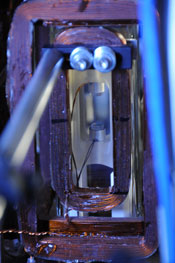 A new type of laser in which light is emitted collectively by several atoms at the same time – rather than just one – has been unveiled by physicists in the US. Their "superradiant" laser, which is based on a concept first described in 1954 by the US physicist Robert Dicke, has the potential to be up to 1000 times more stable than the best conventional visible lasers. It could therefore be used to boost the performance of the most advanced atomic clocks, although much more development work will be needed before that goal is fulfilled.
A tiny bit of fission in the giant fusion machine
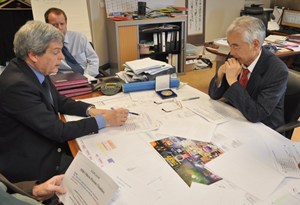 Counting the number of neutrons produced by fusion reactions inside a burning plasma gives a precise indication of how much fusion power is being generated.
You’re made of fusion fuel
 Fusion fuels produce four million times as much energy, per gram, as coal. It seems a surprising fact, given that the fuel seems so unassuming: hydrogen, the most common element in the universe, one of the main constituents of our own bodies.
“Mirror Station”: Jülich Develops Optical Components for ITER
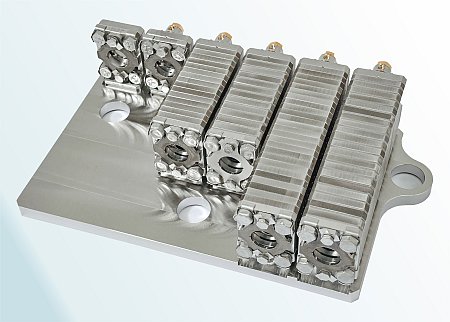 An international working group coordinated by Forschungszentrum Jülich has completed a new mirror system for the ITER fusion reactor – the next great leap in worldwide fusion research – and for its successors. The system referred to as a "mirror station" has shutters that open and close automatically to protect optical components from being contaminated by particle flows in the vacuum vessel. The researchers have been testing the practical applicability of the module in the USA since mid-March.
Hybrid operation achieved
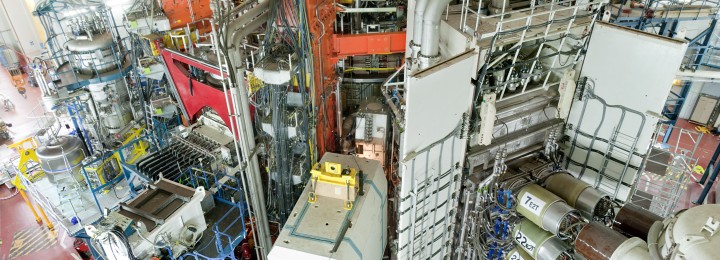 Since last week's report there has been good progress in implementing the new capabilities of JET. Neutral beam heating power has now reached 21MW and routinely and reliably operated at 16 to 18MW.


nsp_154.JPG)


nsp_154.JPG)


 |
 |
 |
 |
 |
 |
 |
 |
Media


Projekty badawcze realizowane przez IFPiLM są finansowane ze środków Ministerstwa Edukacji i Nauki i Narodowego Centrum Nauki oraz ze środków Komisji Europejskiej na podstawie umowy grantowej No 101052200, w ramach Konsorcjum EUROfusion. Wsparcia finansowego udzielają także: Międzynarodowa Agencja Energii Atomowej, Agencja Fusion for Energy, Europejska Agencja Kosmiczna i Konsorcjum LaserLab.