





Zestaw obrazów 2019
zdjecie1.jpg
zdjecie2.jpg
zdjecie3.jpg
zdjecie4.jpg
zdjecie5.jpg
zdjecie6.jpg
2019_1.JPG
2019_2.JPG
2019_4.JPG

Galeria
Set the controls for the heart of the plasma
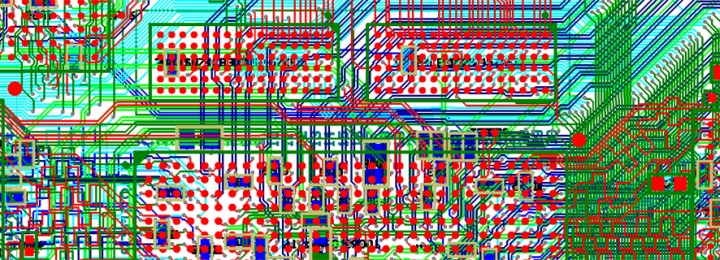 Soon scientists at JET will be able to probe further into the 150 million degree core of the plasma than they ever have before. This unprecedented view is thanks to a newly refurbished X-ray detection system, KX1, which is just about to be put into action.
What they are looking for is contamination of the plasma by tungsten from the newly installed wall tiles. While the light metal beryllium was used for most of the tiles, tungsten was chosen for where JET's plasma touches the walls, as it is the metal with the highest melting point (3422 degrees Celsius). However tungsten also has the unfortunate characteristic of having many electrons, which emit radiation out of the plasma as they bounce around between levels, thereby sapping the fusion experiment's energy. Hydrogen isotopes – fusion fuel – make up the bulk of the plasma, but they do not cause energy leakage via this process. This is because their single electron is stripped off by the heat of the plasma. Similarly beryllium does not contribute much to energy loss either, as it has only four electrons, which are readily removed in the hot environment.
However stripping off all 74 electrons from a tungsten atom is a bigger task – it has 74 protons in the nucleus binding them. Even in JET's plasmas of over 100 million degrees, more than a third of tungsten's electrons are typically still attached, jumping around absorbing energy and re-emitting it. It is the energy coming from these inner-shell transitions in tungsten that the new system can see, in the X-ray region of the spectrum. In particular the system is precisely tuned to detect the X-rays from tungsten that has lost 46 of its electrons, a species which occurs in the core of the plasma.
Before reaching the new detectors the X-rays travel along a 20 metre pipe and are then dispersed by a crystal. The X-rays create ionisation in a small cell containing a mixture of argon and carbon dioxide, which generates a tiny electrical signal which is amplified fed into a computer system. The new system is extremely fast, sampling every 10 nanoseconds, so it generates one hundred spectra in each second, each composed of a million data points. This amounts to around one quarter of a terabyte of data generated every second. As this volume of data would be impractical to store, a major part of the project has been developing a sophisticated electronic processing system (part of which is pictured above). The system is based on field programmable gate arrays and can filter and analyse the raw data in real time. A feature of the new system is that it provides additional frequency analysis, on top of the crystal's dispersion, which allows the separation of tungsten spectral line from the background radiation.
The final tests of the system are being performed by a team from the Polish association IPPLM who developed it. The information yielded by KX1 will reveal the spread of tungsten throughout the core of the plasma, vital information for evaluating the performance of JET's new ITER-Like Wall.
IPPLM is the Polish signatory to the European Fusion Development Agreement.
Source: EFDA
Laser for minimally invasive brain surgery developed
 Researchers from the Max Born Institute for Nonlinear Optics and Short Pulse Spectroscopy (MBI) were involved in the development of a table-top solid-state laser system that could cut brain tissue with unprecedented precision. The achievement is a result of an interdisciplinary EU project that involved partners from seven European countries.
36% of the electricity market for fusion
 Will fusion come too late? Won't other technologies already have a stranglehold on the energy market? Or will fusion make a viable contribution to the energy market? These are the important considerations that EFDA's socio-economic research into fusion (SERF) project addresses.
The next six months will be crucial
 There are good reasons why the European Union supports, and will continue to support, ITER.
Black holes turn up the heat for the Universe
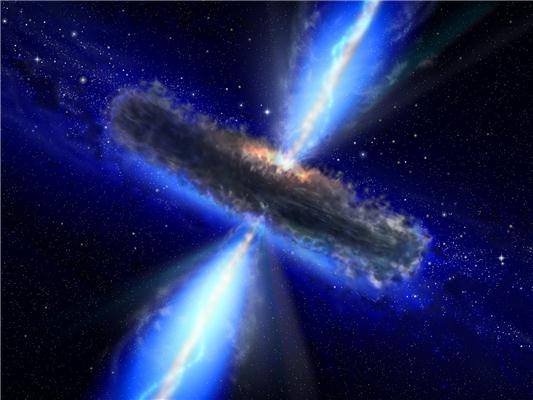 HITS astrophysicists discover a new heating source in cosmological structure formation
So far, astrophysicists thought that super-massive black holes can only influence their immediate surroundings. A collaboration of scientists at the Heidelberg Institute for Theoretical Studies (HITS) and in Canada and the US now discovered that diffuse gas in the universe can absorb luminous gamma-ray emission from black holes, heating it up strongly. This surprising result has important implications for the formation of structures in the universe. The results have just been published in "The Astrophysical Journal" and "Monthly Notices of the Royal Astronomical Society".
Every galaxy hosts a supermassive black hole at its center. Such black holes can emit high-energy gamma rays and are then called blazars. Whereas other radiation such as visible light and radio waves traverses the universe without problems, this is not the case for high-energy gamma rays. This particular radiation interacts with the optical light that is emitted by galaxies, transforming it into the elementary particles electrons and positrons. Initially, these elementary particles move almost at the speed of light. But as they are slowed down by the ambient diffuse gas, their energy is converted into heat, just like in other braking processes. As a result, the surrounding gas is heated efficiently. In fact, the temperature of the gas at mean density becomes ten times higher, and in underdense regions more than one hundred times higher than previously thought.
Source: AlphaGalileo


nsp_154.JPG)


nsp_154.JPG)


 |
 |
 |
 |
 |
 |
 |
 |
Media


Projekty badawcze realizowane przez IFPiLM są finansowane ze środków Ministerstwa Edukacji i Nauki i Narodowego Centrum Nauki oraz ze środków Komisji Europejskiej na podstawie umowy grantowej No 101052200, w ramach Konsorcjum EUROfusion. Wsparcia finansowego udzielają także: Międzynarodowa Agencja Energii Atomowej, Agencja Fusion for Energy, Europejska Agencja Kosmiczna i Konsorcjum LaserLab.