





Zestaw obrazów 2019
zdjecie1.jpg
zdjecie2.jpg
zdjecie3.jpg
zdjecie4.jpg
zdjecie5.jpg
zdjecie6.jpg
2019_1.JPG
2019_2.JPG
2019_4.JPG

Galeria
The latest progress from the ITER site
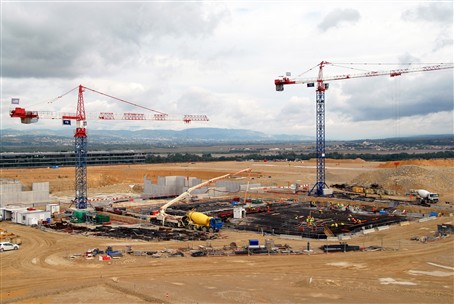 On the ITER platform, work is progressing well on the Assembly Hall of the Tokamak complex area.
This 57 metre high building, located next to the Tokamak pit, will host the two 750 tonnes cranes that will assemble the components of the ITER machine.
On 20 September 2012, the first structural concrete was poured in one of the three galleries by GTM (VINCI Group contractor). It was considered a big step forward linked to the foundations works.
It all started back in April 2012, where 500 boreholes (soil investigations to detect any void in the rock) preceded the impressive phase of excavation. Scrapers and shovels dug to 2.5 metres deep to extract close to 12,000 m3 of soil. During summer, the blinding concrete pouring activities kicked off in order to flat level the surface and make way for the reinforcement activities that will end up using 1,400 tonnes of steel! The foundations works are expected to end by March next year.
The basemat design, measuring 2.2 metres thick in the perimeter and 1.2 metres thick in the centre, integrates openings for electrical galleries, drainage, piping and tunnels that will be connected to the Tokamak complex building. According to Miguel Curtido, F4E’s Technical Project Officer, “it will be the first time that we will have to coordinate the work of two contractors working in parallel and very close proximity in order to be comply with our planning”. In fact, other tunnels and precipitation drainage activities will be performed in parallel with works on the Assembly Hall foundations. ‘’Good coordination will be one of the daily challenges for the next years due to the complexity of the project and our commitment to deliver on time‘’ he added.
Source: F4E
Fusion project struggles to put the pieces together
 Contracting woes may cause further delays for €15 billion ITER effort.
The world's largest scientific project is threatened with further delays, as agencies struggle to complete the design and sign contracts worth hundred of millions of euros with industrial partners, Nature has learned.
ITER is a massive project designed to show the feasibility of nuclear fusion as a power source. The device consists of a doughnut-shaped reactor called a tokamak, wrapped in superconducting magnets that squeeze and heat a plasma of hydrogen isotopes to the point of fusion. The result should be something that no experiment to date has been able to achieve: the controlled release of ten times more energy than is consumed.
That's the dream. But so far, ITER has been consuming mostly money and time. Since seven international partners signed up to the project in 2006, the price has roughly tripled to around €15 billion (US$19.4 billion), and the original date of completion has slipped by four years to late 2020. Many of the delays and cost increases have come from an extensive design review, which was completed in 2009 (see 'Fusion dreams delayed').
Now, sources familiar with the project warn that the complex system for buying ITER's many pieces could put the project even further behind schedule. Rather than providing cash, ITER's partners have pledged 'in kind' contributions of pieces of the machine. Magnets, instruments and reactor sections will arrive from around the world to be cobbled together at the central site in St-Paul-lès-Durance in southern France. Because no one body holds the purse strings, designs for the machine's components face a tortuous back-and-forth between the central ITER Organization and national 'domestic agencies', which ensure that local companies secure contracts for ITER's components.
Nowhere is the problem more pronounced than the tokamak, the central structure that will eventually house ITER. The construction of the building is meant to be contracted out by Fusion for Energy (F4E), Europe's domestic agency. But the ITER Organization could not tell the agency what needed to be built, says Rem Haange, ITER's technical director, until it received data from the other domestic agencies on the numerous systems and subsystems that the building must house. That process was seriously behind schedule when Haange arrived in 2011, he says. "Not a single piece of data had been given by the domestic agencies."
Haange says, however, that the project remains firmly on schedule, and he is racing to make up for lost time. A task force of engineers is working through the tokamak building design floor-by-floor to finalize it. "We have a deadline for every floor level, and we are just about making it," he says. The final design will be finished in March next year, but to keep the project on schedule, F4E must tender the construction contract by the end of this year.
Contract compromises
F4E is also encountering trouble on another key contract, for the giant poloidal field coils that will wrap around the girth of the machine. The coils are among the largest in ITER, and the bottommost ones must be completed before the machine can be assembled. The ITER Organization authorized procurement of the coils in 2009, but F4E's tender received just a single, joint bid from the French firm Alstom and the German company Babcock Noell.
F4E rejected the bid because it came in far above the agency's cost expectations, according to multiple sources, who declined to be named because of the sensitivity of the bidding process. Isabelle Tourancheau, a spokeswoman for Alstom, said that the bid had failed after "long and difficult technical and commercial negotiations". Aris Apollonatos, a spokesperson for F4E, says that the contract will now be broken into seven parts to make it more attractive to competitors and put it back out to tender. A meeting earlier this month garnered interest from 27 companies, he says.
Despite the tight schedule, both Haange and Apollonatos say that they will not ask for more time at next month's ITER council meeting in Cadarache, France. "We remain committed to delivering on all fronts and in line with the ITER schedule," Apollonatos says. Haange says that Osamu Motojima, director-general of the ITER Organization, is already looking at "simplified assembly", a further stripping-down of the already bare-bones first version of the machine, to keep the project on track. "We will ask for more time only if it is absolutely necessary," Haange says.
But holding onto the date for start-up may delay the first power-producing experiments, now scheduled for late 2027 or early 2028. Those experiments require a radioactive isotope of hydrogen called tritium to be produced on site. The necessary tritium plant may have to be delayed to keep to the current budget and schedule, Haange says. That delay may be politically unacceptable, he says. "We will have to find ways of recovering potential time delays."
Source: nature.com
Fusion for Energy appoints Henrik Bindslev as new Director
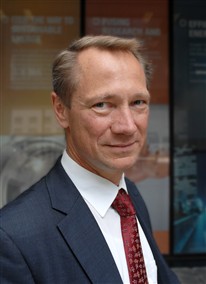 Henrik Bindslev has been appointed today as the new Director of the European Joint Undertaking for ITER and the Development of Fusion Energy (Fusion for Energy). He is currently the Vice Dean for Research at Aarhus University, Faculty of Science and Technology.
Stuart Ward, Chair of the Fusion for Energy Governing Board, took the opportunity to congratulate Henrik Bindslev on his new position and thanked all members of the Board for their collaboration taking together this important decision.
"I am honoured to have been appointed Director of Fusion for Energy at a time that Europe’s contribution to ITER enters a decisive stage and rapid progress will be made on all fronts. It is the moment to engage actively with Europe’s industry and fusion community to honour our commitment to this prestigious international project" said Bindslev.
Henrik Bindslev has been engaged in energy research for more than 20 years and has considerable experience in research management, both in Denmark and internationally. He is currently Vice Dean for research at Aarhus University, Faculty of Science and Technology and past Chair of the European Energy Research Alliance (EERA). He is a delegate to the European Strategy Forum on Research Infrastructures (ESFRI) and Chairman of ESFRI’s Energy Strategy Working Group. Previously, he was the Director of Risø DTU, the Danish National Laboratory for Sustainable Energy, managing 700 members of staff.
He was educated at Denmark’s Technical University and completed a DPhil in Plasma Physics at the University of Oxford. He worked as a fusion researcher at different facilities including ten years at the Joint European Torus (JET), Europe’s biggest fusion research device, and has published more than 150 papers.
The Director is appointed by Fusion for Energy’s Governing Board for a period of five years, once renewable up to five years. The appointment is made on the basis of a list of candidates proposed by the European Commission after an open competition, following a publication in the Official Journal of the European Communities.
Source: F4E
A cool project
 One of the most interesting refurbishment tasks for JET this year is costing over half a million euros, extending the lifetime of JET and reducing operating costs.
The original construction of JET’s site cooling water system was carried out under two separate contracts. The pipework in the immediate area of the cooling towers passed its original design lifetime long ago and continued to work successfully. However, for the last four or five years it has been plagued with a series of chronic water leaks. This has not been enough to interrupt operations, but it was certainly sufficient to have a noticeable impact on running costs. Water leaking from the system has to be replaced with fresh water, which has to be specially treated before it can be used.
Remarkably, the pipes around the rest of the site are still in good condition, thanks to the choice of cast iron as opposed to mild steel in the corroded sections. It was originally hoped that the leaking pipes could be repaired using ‘trenchless technology’ where a leak-tight lining is installed inside the pipes without disturbing the ground. Several companies expressed an interest in the task, but in the end none of them tendered. Consequently a contract has been placed with a company to design, fabricate install and test about 200m of pipe as large as 700mm in diameter. Since August, trenches have been dug and much of the old pipework has been removed. It is being replaced by new pipes of the same material, carbon steel with a bitumen coating. These are likely to be serviceable for at least 20 years. This large operation has progressed according to plan, and by early November the task should be complete, pressure tests will have been carried out, and the performance of the system demonstrated against benchmark measurements that were taken on the old system.
Source: EFDA
Fusion Energy: One Step Closer to Breaking Even
 In the high-stakes race to realize fusion energy, a smaller lab may be putting the squeeze on the big boys. Worldwide efforts to harness fusion—the power source of the sun and stars—for energy on Earth currently focus on two multibillion dollar facilities: the ITER fusion reactor in France and the National Ignition Facility (NIF) in California. But other, cheaper approaches exist—and one of them may have a chance to be the first to reach “break-even,” a key milestone in which a process produces more energy than needed to trigger the fusion reaction.
Researchers at the Sandia National Laboratory in Albuquerque, New Mexico, will announce in a Physical Review Letters (PRL) paper accepted for publication that their process, known as magnetized liner inertial fusion (MagLIF) and first proposed 2 years ago, has passed the first of three tests, putting it on track for an attempt at the coveted break-even. Tests of the remaining components of the process will continue next year, and the team expects to take its first shot at fusion before the end of 2013.
Fusion reactors heat and squeeze a plasma—an ionized gas—composed of the hydrogen isotopes deuterium and tritium, compressing the isotopes until their nuclei overcome their mutual repulsion and fuse together. Out of this pressure-cooker emerge helium nuclei, neutrons, and a lot of energy. The temperature required for fusion is more than 100 million°C—so you have to put a lot of energy in before you start to get anything out. ITER and NIF are planning to attack this problem in different ways. ITER, which will be finished in 2019 or 2020, will attempt fusion by containing a plasma with enormous magnetic fields and heating it with particle beams and radio waves. NIF, in contrast, takes a tiny capsule filled with hydrogen fuel and crushes it with a powerful laser pulse. NIF has been operating for a few years but has yet to achieve break-even.
Sandia’s MagLIF technique is similar to NIF’s in that it rapidly crushes its fuel—a process known as inertial confinement fusion. But to do it, MagLIF uses a magnetic pulse rather than lasers. The target in MagLIF is a tiny cylinder about 7 millimeters in diameter; it’s made of beryllium and filled with deuterium and tritium. The cylinder, known as a liner, is connected to Sandia’s vast electrical pulse generator (called the Z machine), which can deliver 26 million amps in a pulse lasting milliseconds or less. That much current passing down the walls of the cylinder creates a magnetic field that exerts an inward force on the liner’s walls, instantly crushing it—and compressing and heating the fusion fuel.
Researchers have known about this technique of crushing a liner to heat the fusion fuel for some time. But the MagLIF-Z machine setup on its own didn’t produce quite enough heat; something extra was needed to make the process capable of reaching break-even. Sandia researcher Steve Slutz led a team that investigated various enhancements through computer simulations of the process. In a paper published in Physics of Plasmas in 2010, the team predicted that break-even could be reached with three enhancements.
First, they needed to apply the current pulse much more quickly, in just 100 nanoseconds, to increase the implosion velocity. They would also preheat the hydrogen fuel inside the liner with a laser pulse just before the Z machine kicks in. And finally, they would position two electrical coils around the liner, one at each end. These coils produce a magnetic field that links the two coils, wrapping the liner in a magnetic blanket. The magnetic blanket prevents charged particles, such as electrons and helium nuclei, from escaping and cooling the plasma—so the temperature stays hot.
Sandia plasma physicist Ryan McBride is leading the effort to see if the simulations are correct. The first item on the list is testing the rapid compression of the liner. One critical parameter is the thickness of the liner wall: The thinner the wall, the faster it will be accelerated by the magnetic pulse. But the wall material also starts to evaporate away during the pulse, and if it breaks up too early, it will spoil the compression. On the other hand, if the wall is too thick, it won’t reach a high enough velocity. “There’s a sweet spot in the middle where it stays intact and you still get a pretty good implosion velocity,” McBride says.
To test the predicted sweet spot, McBride and his team set up an elaborate imaging system that involved blasting a sample of manganese with a high-powered laser (actually a NIF prototype moved to Sandia) to produce x-rays. By shining the x-rays through the liner at various stages in its implosion, the researchers could image what was going on. They found that at the sweet-spot thickness, the liner held its shape right through the implosion. “It performed as predicted,” McBride says. The team aims to test the other two enhancements—the laser preheating and the magnetic blanket—in the coming year, and then put it all together to take a shot at break-even before the end of 2013.
Earlier this year, Slutz and his team published other simulations in PRL that showed that if a more powerful pulse generator was built to produce higher currents—say, 60 million amps—the system could achieve not just break-even, but high gain. In other words, the MagLIF could produce the kind of energy needed for a commercial fusion power plant.
“I am excited about Sandia discovering that magnetized target fusion … is a pathway to significant gain on the Z machine. We agree, and hope that their experiments get a chance to try it out,” says Glen Wurden, the magnetized plasma team leader at Los Alamos National Laboratory in New Mexico.
Daniel Clery, ScienceNOW
For more information visit: www.wired.com


nsp_154.JPG)


nsp_154.JPG)


 |
 |
 |
 |
 |
 |
 |
 |
Media


Projekty badawcze realizowane przez IFPiLM są finansowane ze środków Ministerstwa Edukacji i Nauki i Narodowego Centrum Nauki oraz ze środków Komisji Europejskiej na podstawie umowy grantowej No 101052200, w ramach Konsorcjum EUROfusion. Wsparcia finansowego udzielają także: Międzynarodowa Agencja Energii Atomowej, Agencja Fusion for Energy, Europejska Agencja Kosmiczna i Konsorcjum LaserLab.