





Zestaw obrazów 2019
zdjecie1.jpg
zdjecie2.jpg
zdjecie3.jpg
zdjecie4.jpg
zdjecie5.jpg
zdjecie6.jpg
2019_1.JPG
2019_2.JPG
2019_4.JPG

Galeria
NIF responds to fusion 'deadline' expiry
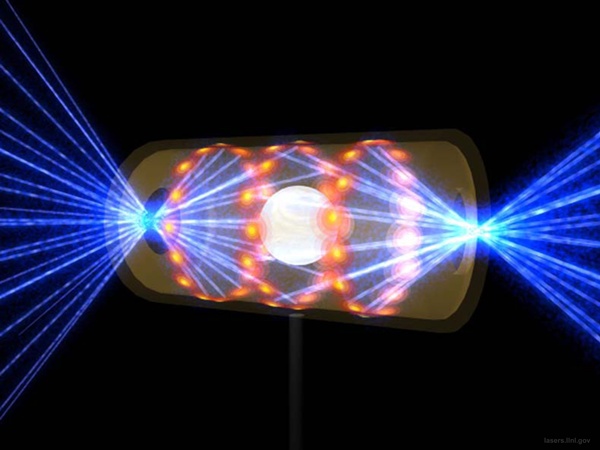 Ignition research continues at the giant laser facility, but the end of the calendar year looks like a more significant date than that set by Congress.
Staff at the National Ignition Facility (NIF) say that work to generate inertial confinement fusion with energy gain will continue as planned, despite the end of the official “ignition campaign” last week.
September 30 saw the expiration of an arbitrary “deadline” for achieving ignition that was set by US Congress, prompting speculation about the future of the laboratory, whose primary function is to simulate the physics of nuclear weapons, but for which fusion energy has become another long-term development target.
Just before that date, which marked the end of the US government’s financial year rather than anything of more scientific significance, a New York Times article suggested that the failure to meet the ignition goal could have “serious repercussions” for not only the giant Lawrence Livermore National Laboratory project (estimated cost so far: $5 billion), but federal financing of “big science” in general. A follow-up editorial in the same newspaper added that Congress would need to look hard at whether either of the “stockpile stewardship” or long-term energy goals could be pursued on a smaller budget.
NIF officials have long expressed their confidence that the system will eventually succeed in “bringing star power to Earth”, as a giant banner at the facility puts it, and told optics.org earlier this year that it was “tantalizingly close” to that goal. But others, including those working on the rival magnetic confinement approach to fusion, are more skeptical, doubting that the laser technique will ever work on a scale that makes for a practical energy source.
A memorandum to the Department of Energy dated July 19 added fuel to that skepticism, even though advisor and memo author David Crandall wrote that the functionality of the laser, its diagnostics, optics and targets – as well as the laser operations performed by the NIF team - were all “outstanding”.
The problem was that the same memo also noted that “considerable hurdles” must still be overcome to reach the ignition goal, or to observe unequivocally the phenomenon of alpha heating – a key element of the fusion process. Given those issues, Crandall and his fellow reviewers said that the probability of demonstrating ignition before the end of this year was now “extremely low”, and that even the less ambitious goal of showing unambiguous alpha heating would be “challenging”.
“While no reviewer thought ignition likely before December 31, 2012, some thought the intermediate goal of measurable alpha heating (increasing the neutron yield) might be achieved within that time, and several expressed optimism about achieving ignition at NIF within a few years,” concluded the memo.
Model problems
According to the same document, the reason has nothing to do with NIF not working to its specifications – on the contrary, the 192-beam system is actually outperforming expectations in many areas. The key problem seems to be that the “hohlraum” ignition target and its interaction with the laser is not behaving in the way that physical models had predicted.
“The coupling of the laser through the radiation inside the hohlraum to the capsule is less efficient than expected and the physical ablation process is somewhat different than expected - resulting in a lower implosion velocity than is predicted to be required for ignition,” the review panel wrote.
NIF told optics.org that it was working to resolve what it called the “remaining few issues” towards achieving ignition in its current campaign. According to officials, that campaign has so far been able to demonstrate the fundamental conditions required to achieve ignition – though, crucially, not all at the same time.
“Achieving ignition conditions requires four things,” the lab explained. “An implosion velocity of 370 km/second, creating a symmetrical hot spot at the center of the target, proper plasma mix and uniform compression.”
On the question of alpha heating, NIF says that alpha particles have been produced from fusion reactions, and have compressed fuel to a sufficient density to re-deposit energy.
However, the lab concedes that its experiments have not yet produced the kind of results that had been predicted in its models, and said that it was continually refining these as more experimental data was collected. It is also working to produce even higher laser energy pulses (of 2 MJ, compared with the 1.8 MJ thought to be sufficient) as one way to overcome the less efficient coupling between the laser and hohlraum than was initially expected.
In demand
“September 30 marked the end of the National Ignition Campaign, but does not mark the end of ignition research or an expiration of the value of the facility,” said officials. Highlighting the scientific value of the system, they added: “As a measure of its success, there are now requests from its user communities for more than 500 experiment days in 2013, about twice the NIF capacity. Requests for use of NIF extend for many years into the future.”
As things stand, NIF will be able to continue operations as planned through fiscal year 2013, though its funding beyond that remains to be determined by future government budget cycles.
Responding to the reaction to the expiration of the Congress “deadline” in some quarters, the lab stressed the unpredictable nature of the work, saying: “Ignition experiments on NIF are continuing steps in a well-managed and deliberate scientific program, not the ‘pass/fail’ event that it has become - and one that should be tied to the process of discovery science and the expansion of knowledge, not fiscal year boundaries.”
In fact, it looks like the end of this calendar year could turn out to be a much more significant date than September 30, in terms of NIF’s future direction and the ambitious goal of harnessing “star power” on Earth. Crandall’s memo raises the prospect that NIF will take on a quite different role if experimental results and computer models for ignition continue to contradict each other.
The memo states that if alpha heating and “further substantial progress” towards ignition is not demonstrated before the end of December, the ignition program should be redirected to a “broader and more balanced research program” – suggesting that the pursuit of fusion power will take a back seat.
Mike Hatcher
Editor in Chief of optics.org
For more information visit: www.optics.org
Clean, limitless fusion power could arrive sooner than expected
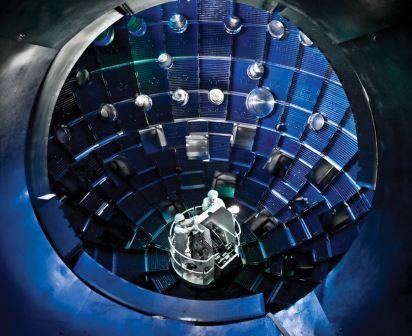 Good news, denizens of Earth: If the findings from two premier research labs are to be believed, commercial nuclear fusion is feasible — and could arrive sooner than expected.
The first breakthrough comes from Sandia National Laboratories (the same engineers who brought us the fanless heatsink). At SNL, a research team has been working on a new way of creating fusion called magnetized liner inertial fusion (MagLIF). This approach is quite similar to the National Ignition Facility at the LLNL in California, where they fuse deuterium and tritium (hydrogen isotopes) by crushing and heating the fuel with 500 trillion watts of laser power. Instead of lasers, MagLIF uses a massive magnetic pulse (26 million amps), created by Sandia’s Z Machine (a huge X-ray generator), to crush a small cylinder containing the hydrogen fuel. Through various optimizations, the researchers discovered a MagLIF setup that almost breaks even (i.e. it almost produces more thermal energy than the electrical energy required to begin the fusion reaction).
Probably more significant is news from the Joint European Torus (JET), a magnetic confinement fusion facility in the UK. JET is very similar to the ITER nuclear fusion reactor, an international project which is being built in the south of France. Whereas NIF and Sandia create an instantaneous fusion reaction using heat and pressure, ITER and JET confine the fusing plasma for a much longer duration using strong magnetic fields, and are thus more inclined towards the steady production of electricity. JET’s breakthrough was the installation of a new beryllium-lined wall and tungsten floor inside the tokamak — the doughnut-shaped inner vessel that confines 11-million-degrees-Celsius plasma (pictured above).
Carbon is the conventional tokamak lining (and the lining that had been chosen for the first iteration of ITER) but now it seems the beryllium-tungsten combo significantly improves the quality of the plasma. Hopefully this information will allow ITER to skip the carbon tokamak and jump straight to beryllium-tungsten, shaving years and millions of dollars off the project.
Moving forward, JET will actually try full-blown fusion with the optimum mix of deuterium and tritium (16 megawatts, for less than a second). At this point, JET is practically an ITER testbed, so its results from the next year or two will have a large impact on the construction of ITER’s tokamak, which should be completed by 2019.
Before today, magnetic confinement fusion was generally considered to be more mature and efficient than inertial confinement fusion — but Sandia’s new approach might change that. ITER is one of the world’s largest ongoing engineering projects (it’s expected to cost around $20 billion), and yet critics are quick to point out that we still don’t know if it will actually work. ITER isn’t expected to fuse D-T fuel until 2027 (producing 500 megawatts for up to 1,000 seconds) — and an awful lot can happen in 15 years. Still, the main thing is that we’re actually working on fusion power — when we’re talking about limitless, clean power, it’s probably worth investing a few billion dollars, even if it doesn’t work out.
Fusion reactors are some of the most beautiful constructions you’ll ever see, so be sure to check out our galleries of the National Ignition Facility and the Princeton Plasma Physics Lab.
For more information visit: www.peakoil.com
After Nuclear fission, India experiments with fusion
 Countries, including India, are pooling resources to build a plant that runs on cleaner technology and abundant resources.
In the 1940s, attempts by the UK and the US to build the hydrogen bomb had a few useful byproducts, such as technologies that were able to use the power of the atom to generate electricity. The process of nuclear fission, which produces dangerous waste, was developed, and has been used since then to produce power the world over. Sadly, the other technological byproduct of the hydrogen bomb—nuclear fusion, which uses abundantly available fuel sources and emits no harmful radiation—never quite made the cut.
But this is fast changing. After the Fukushima disaster in March 2011, conventional nuclear plants that use fission technology are being shuttered in many parts of the world. The rush for the Holy Grail has begun. Activity to prove that fusion is feasible and economically viable has picked up, and new breakthroughs are speeding things up.
India, with its huge power deficit, is among the countries that have taken the lead in developing these technologies. The government has sealed its commitment through a sanction of Rs 2,500 crore to seed research of nuclear fusion. The funds are expected to be increased, as the work spearheaded by the Department of Atomic Energy (DAE), grows. At the focus of much of this activity is one reactor being built in the south of France.
The $20 billion project that aims to generate just 500 MW, which could indeed change the world, is called Iter (Latin for ‘the way’). It is being built by a consortium of seven partners—the European Union, the United States, Russia, China, Korea, Japan and India—to demonstrate the viability of harnessing energy from nuclear fusion on the scale of a power station.
Before this project, electricity from nuclear fusion has been produced only in laboratories. As the host-partner of the project, the EU is the largest contributor with a 34 percent stake. India has taken up 9 percent, which will be executed by the Gandhinagar-based Iter-India, a division of the Institute of Plasma Research. The seven partners will contribute in kind by bringing components to the project. In India, a lot of this work will be done by the private sector.
“Indian companies—both in the public and private sectors—with capabilities in nuclear and space industries are being awarded contracts,” says Shishir Deshpande, Iter-India project director. Nine large components, amounting to almost a tenth of the project, will be fabricated and sourced from India. The biggest of these, to build the cryostat—a 3,800 tonne pressure chamber the size of a 10-storey building—was awarded to Larsen & Toubro in August. The component, worth over Rs 1,000 crore, will be built in India and shipped to France in sections.
What it means for Indian firms
For L&T and MV Kotwal—board member and head of heavy engineering, who also spearheads the company’s ambitions in the nuclear industry—the Iter-India contract is a chance to establish the company’s reputation. L&T has sunk about Rs 1,800 crore in a forge shop at Hazira through a joint venture with Nuclear Power Corporation of India (NPCIL).
But nuclear projects are few and far between in the post-Fukushima era. Doubts have been raised about the viability of the shop that was set up for heavy forgings needed for nuclear and hydrocarbon reactors. The Iter cryostat will be fabricated at this facility. Kotwal says that with its current energy shortages, India simply cannot afford to stop working on nuclear energy.
Iter-India had awarded an earlier contract for the shielding vessel to Bangalore-based Avasarala Technologies. It is also working closely with TCS and Inox India for cryogenics, ECIL for power electronics, and several other vendors. Deshpande says their work will be subjected to international scrutiny and this will surely help the companies prove themselves and gain confidence. Most are looking for opportunities to step up their abilities to emerge as high-end, global suppliers in the nuclear business.
Over the next few years, more work will be contracted, including the work of building a lab in France for testing the systems.
India has had a nuclear fusion programme since 1986 and about 500 scientists have been working on various facets of it, Deshpande says.
Iter shares IP equally, so the partner countries can use the knowledge gained to set up their own demonstrator reactors at home. Deshpande and Iter-India hope that India can begin work on this as soon as gaps in its knowledge are bridged.
Deshpande says the fusion project could provide neutron sources for fission reactors. This could help fast-forward India’s thorium programme. India’s nuclear power was envisaged as a three-step programme; the final stage involved moving from uranium, of which we have limited reserves, to thorium, which is plentiful.
Fusion is something that was jokingly said to be ‘always the fuel of the future’. Lab experiments have now proved it is a viable concept. But practical problems of building and sustaining the process remain; materials that can withstand the heat and neutron damage need to be developed. But much of it is now in the realm of the possible. Energy-starved India would do well to push the process.
Source: Forbes India Magazine
New JET results tick all the boxes for ITER
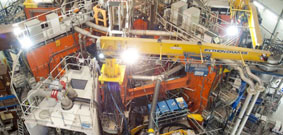 Latest results from the Joint European Torus (JET) fusion device are giving researchers increasing confidence in prospects for the next-generation ITER project, the international experiment that is expected to pave the way for commercial fusion power plants. Operation with a new lining inside JET has demonstrated the suitability of materials for the much larger and more powerful ITER device. Today Dr Francesco Romanelli, Leader of the European Fusion Development Agreement (EFDA) and JET Leader, will deliver a summary of the JET results at the IAEA Fusion Energy Conference in San Diego, U.S. This major fusion conference is held every two years and aims to discuss various options with the goal of building the first demonstration power plant before the middle of the 21st century.
JET, Europe’s premier magnetic confinement fusion facility, based at Culham, UK, has completed eleven months of tests to simulate the environment inside ITER and to prototype key components. For this purpose JET has been successfully transformed into a ‘mini-ITER’ with a wall made of the same materials – beryllium and tungsten – that ITER plans to use. Initial results will be summarised by Dr Francesco Romanelli, Leader of the European Fusion Development Agreement (EFDA) and JET Leader, at the IAEA Fusion Energy Conference in San Diego, U.S. on Monday 8 October.
At the heart of tokamak fusion reactors like JET is a ring-shaped vacuum vessel in which very hot plasma is confined using magnetic fields. Selecting the correct materials for the inner wall of this vessel is essential. Firstly to minimise ‘pollution’ when small amounts of wall materials enter the plasma, and secondly to prevent the fusion fuels from becoming trapped in the wall. ITER will use beryllium for the main wall and tungsten (with its higher melting point) for the floor of the chamber – the ‘divertor’ – where plasma is exhausted and heat loads are greatest. A 20-month engineering upgrade during 2010 and 2011 installed a new plasma-facing wall inside JET to validate these materials for ITER.
From the first test in August 2011, the beryllium and tungsten lining enabled more reliable plasmas to be produced. Crucially, researchers from the 27 European fusion laboratories which participate in JET have found that the amount of fuel being retained in the wall is at least ten times less than in the previous, carbon-based, configuration. The results achieved may lead ITER to drop plans for an initial phase of operation with carbon and adopt a beryllium-tungsten wall from the outset, bringing a significant saving in time and cost for the project.
Experiments at JET will restart in early 2013, with the goal of demonstrating further improvements in plasma performance, beyond expectations when scaled up to ITER. Looking further ahead, EFDA is already planning a full ‘dress rehearsal’ for ITER – an experimental campaign at JET using the optimum deuterium-tritium fuel mix that is needed for high-power fusion operation. JET is the only device currently able to run fusion plasmas with tritium, and exploiting these capabilities will be a crucial part of ITER preparations. ITER Director General Osamu Motojima praised the work being done at JET during a visit this summer and has been discussing collaborations with EFDA on future experiments.
Dr Francesco Romanelli said: “These results are very encouraging for ITER. JET is getting as close to ITER conditions as any present-day fusion device can. If this performance is scaled up, ITER will be successful and take a huge step towards the goal of commercial fusion power.
“JET has largely formed the basis for ITER’s design and is an ideal test-bed. We hope to open up new collaborations with ITER partners as we prepare for full deuterium-tritium tests in 2015. Already we are working with Indian colleagues on magnetic coils for suppressing plasma instabilities. I hope to build more partnerships so JET’s unique capabilities can be used for the benefit of the worldwide fusion programme.”
Source: EFDA
Making progress by going backwards… and forwards
 Scientists at Portugal’s Instituto de Plasmas e Fusao Nuclear (IPFN) have made a dramatic twenty-fold improvement to the operation of their tokamak ISTTOK, by repeatedly reversing its plasma current to achieve stable AC operation – swirling it back and forth like Corridinho folk dancers.
“If we scale this achievement to JET, it represents a plasma discharge duration equivalent to the expected ITER run-time.” says IPFN physicist Ivo Carvalho. “We’ve moved our time-axis from milliseconds to seconds!”
Most tokamaks, such as JET, operate by propelling the plasma particles in a single direction around the donut-shaped vessel using the principle of electrical transformers, driven by the tokamak’s central (poloidal) electromagnet. Because this principle relies on the central or primary electromagnet having a changing magnetic field, it limits the pulse length; when the electromagnet reaches maximum current, the pulse has to stop, because the confinement of the plasma relies on this changing field.
However the Portuguese team have succeeded in switching the direction of the current quickly enough to allow the pulse to be continued, with the central electromagnet now driving current in the opposite direction. Of course the central magnet will eventually reach its maximum current – now in the reverse direction – at which stage the polarity is switched back to the original direction again. In all twenty half-cycles each of 25 milliseconds were achieved, driving the current back and forth, perhaps a little like the Portuguese Corridinho folk dancing pictured above.
ISTTOK has been experimenting with AC discharges for over a decade, but with a lack of control. The development by IFPN electronic engineers of new control and data acquision electronics with a lightning-fast control cycle of only 100 microseconds has provided the breakthrough that was needed. The new system is based on the ATCA standard (Advanced Telecommunications Computing Architecture) – the same hardware in use at JET in the vertical stabilisation system. The addition of a new magnetising power supply completed the setup which allows switching of the current direction quickly enough to prevent the plasma dissipating.
Studies of AC pulse operation in JET in the early nineties were limited by the requirement to restart the plasma at each reversal of the current direction. The ISTTOK results show that the plasma can be maintained for multiple AC cycles – when new power supplies are commissioned soon the Portuguese team expect to be able to improve the results further, well beyond the twenty cycles exhibited to date.
Source: EFDA


nsp_154.JPG)


nsp_154.JPG)


 |
 |
 |
 |
 |
 |
 |
 |
Media


Projekty badawcze realizowane przez IFPiLM są finansowane ze środków Ministerstwa Edukacji i Nauki i Narodowego Centrum Nauki oraz ze środków Komisji Europejskiej na podstawie umowy grantowej No 101052200, w ramach Konsorcjum EUROfusion. Wsparcia finansowego udzielają także: Międzynarodowa Agencja Energii Atomowej, Agencja Fusion for Energy, Europejska Agencja Kosmiczna i Konsorcjum LaserLab.