





Zestaw obrazów 2019
zdjecie1.jpg
zdjecie2.jpg
zdjecie3.jpg
zdjecie4.jpg
zdjecie5.jpg
zdjecie6.jpg
2019_1.JPG
2019_2.JPG
2019_4.JPG

Galeria
WEGA fusion experiment passed on to the USA
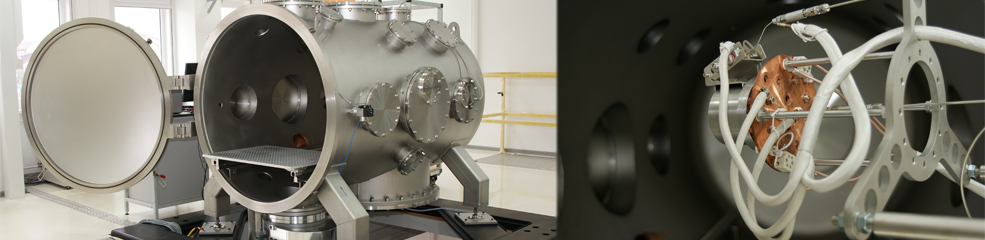
 The small WEGA fusion device at Max Planck Institute of Plasma Physics (IPP) in Greifswald is being handed over to the University of Illinois in Urbana-Champaign. The "Wendelstein-Experiment in Greifswald für die Ausbildung" (Wendelstein Experiment in Greifswald for Training) is making room for the Wendelstein 7-X large-scale device. Urbana is succeeding Greifswald, Stuttgart and Grenoble as fourth site for the sturdy device.
WEGA has been in operation at IPP Greifswald since 2001. The small, but versatile fusion device was used for training students and young scientific personnel to bridge the time till completion of the Wendelstein 7-X large-scale device. At the end of 2013 its time was up and WEGA had to be shut down; its place was needed for setting up the technical equipment for Wendelstein 7-X.
"This was a good opportunity for the University of Illinois", states the division head responsible at IPP, Professor Dr. Robert Wolf. "It was just at this time that the Center for Plasma Material Interactions (CPMI) were looking for a small plasma device." The transfer agreement was signed by IPP in mid-September 2014. Illinois are taking the responsibility and meeting the cost of dismantling WEGA, transporting it to the USA and re-assembling it at CPMI. Under its new name, HIDRA (Hybrid Illinois Device for Research and Applications), the device will continue to be used for plasma physics and fusion research. "We were very fortunate", says CPMI Director Professor David Ruzic, who sees numerous application possibilities for the device, including in particular investigation of the interaction between the plasma and wall material of the plasma vessel. The objective of fusion research is to develop a power plant that, like the sun, derives energy from fusion of atomic nuclei.
Transfer of WEGA is one of several constituents of American-German collaboration around Wendelstein 7-X. In 2011 the USA had already set up a three-year cooperation project with IPP whereby scientists from the fusion institutes at Princeton, Oak Ridge and Los Alamos contributed with equipment and studies valued at about ten million dollars for building Wendelstein 7-X. In return, the United States will become partner in the research programme of the German device, a collaboration for which a new 500,000 dollar programme was set up for US universities.
Little WEGA is likewise a member of the Wendelstein family at IPP. It can look back upon an eventful past: Under the name "Wendelstein Experiment in Grenoble for the Application of Radio Frequency Heating" it was commissioned in 1975 as a joint German-French-Belgian project. Scientists from IPP at Garching and Centre d´Etudes Nucléaires at Grenoble had jointly planned, built and operated WEGA. After a seventeen-year stopover at the University of Stuttgart the device started up again at IPP Greifswald in 2001.
WEGA provided much of the new personnel of the branch institute, established in 1994, with their first experience of a plasma experiment. New heating antennas, diagnostics and control equipment for big-brother Wendelstein 7-X were tested on the adaptable WEGA device. It was the subject of two bachelor, two master, 13 diploma and six PhD theses. "At the age of almost 40 years, WEGA is certainly one of the longest-living fusion experiments, if not the longest ever", says Professor Wolf, who together with the WEGA team is happy that the sturdy device still has a future. "In presumably three weeks it will start out on its hitherto longest journey – this time even across the Atlantic."
Source: phys.org
F4E signs contracts for the Blanket First Wall full-scale prototype
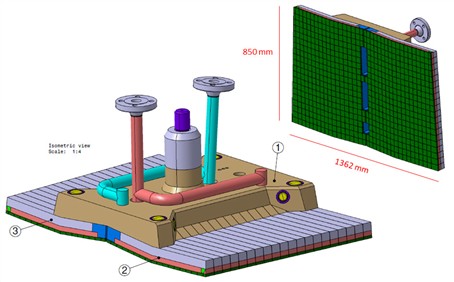 With the semi-prototype of the Blanket First Wall completed earlier this year, F4E is moving full-speed ahead and has just completed the signing of the contracts related to the manufacturing of the first full-scale prototypes. As this is a technically-challenging project which requires hitherto unknown technology and in order to mitigate risks and maintain competition until the series production, F4E has signed contracts with three different entities, namely Atmostat (ALCEN group, France), AREVA (France) and a consortium which consists of AMEC (United Kingdom), Iberdrola (Spain) and MIB (Spain). Each of these companies is to manufacture a prototype of a Blanket First-Wall panel, as well as carry out specific industrialisation studies for the fabrication of the series of the 215 panels and present a cost and schedule assessment.
The First Wall consists of 6-10 mm thick beryllium tile panels of 1 m x 1.5 m which are fixed to a bi-metallic support structure made from a 15-25 mm thick Copper Chromium Zirconium (CuCrZr) alloy bonded using Hot Isostatic Pressing (HIP) to a 40-50 mm thick 316L (N) stainless steel backing plate – together these components form the Blanket modules. The Blanket is the part of the ITER machine that acts as a first barrier and protects the vacuum vessel, which is the heart of the ITER machine, from the neutrons and other energetic particles that are produced by the hot plasma. The First Wall consists of 440 panels, of which F4E will provide about half and depending on the location of the modules in the Blanket, different design parameters are necessary. During operation, the ITER First Wall panels will be cooled by pressurised water.
“We are happy work on the Blanket First Wall continues to move forward”, says Francesco Zacchia, Blanket First Wall coordinator in the F4E In-Vessel Project Team dealing with the management of the contracts. “We now look forward with anticipation to the delivery which is foreseen for early 2017 and will qualify the successful companies to participate in a future F4E Call for tender for the manufacturing of the actual ITER Blanket First Wall”.
Source: F4E
Iterative processes
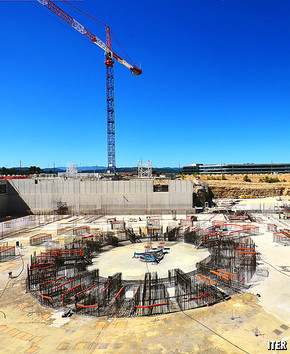 A big nuclear-fusion project attempts to move from design to construction.
HERE is one way to squeeze energy from nuclear fusion: create and contain a roiling soup of ionised hydrogen atoms known as a plasma, and heat it to ten times the temperature of the sun’s core. Some of the fast-moving atomic nuclei will bash together with enough oomph to fuse. Gather the energy from fast-moving particles created in these collisions and you have a limitless (for hydrogen is abundant), comparatively clean energy source. It is an idea conceived in the 1950s, but yet to be born in a laboratory.
Here is one way that might make it happen: gather an international consortium of the fusion-minded, including the European Union, America, China, India, Japan, Russia and South Korea. Conspire to build a 23,000-tonne doughnut-shaped vessel called a tokamak, that is wrapped with 80,000km of superconducting wire, all to contain the plasma magnetically and, for the first time, produce fusion energy continuously. Call it the International Thermonuclear Experimental Reactor; shorten the name to ITER for better PR. And farm out the design to the seven “domestic agency” partners, each completely in charge of the procurement and production of their bit (they will all have to agree to any changes, though, as the design of this technological beast inevitably evolves).
It sounds wonderfully egalitarian, in a technocratic sort of way. Timelines are slippery things, though, so delays will occur and costs will go up. That makes for more delays. Partners may drop out and come back as the political will to pay for the project comes and goes.
The story of ITER has become a tale of these shortcomings. The first of its components arrived at the reactor’s site in Cadarache, in the south of France, earlier this month, just as the foundations were finished. In the next week or so construction should start on the walls that will house its core: the doughnut-shaped vacuum vessel. Perhaps tellingly, no one can say exactly when even that will happen. There has already been a 30-month delay in the manufacture of the vacuum vessel. The most recently published schedule says the first plasma will be created in the vacuum vessel in 2020. That will now have to slip to 2023 or 2024, but the revised official schedule will not be published until mid-2015. The overall cost? Also unknown, but it is sure to surpass by a considerable sum the current official estimate of $20 billion.
The factors that have hobbled ITER from the start have not been concerns of nuclear physics or large-scale engineering. They have been problems of leadership and project management. Few would now argue that the initial design was adequate, or that the seven domestic agencies should have been allowed to have the absolute control they got over the bits of it they worked on. As delays and dissent cropped up within the domestic agencies, ITER’s management kept the other agencies in the dark, and stuck too long to timelines that were never feasible.
Most embarrassingly, a management assessment from last October that was leaked earlier this year derided the organisation along all these lines, and added that the project lacked a “nuclear safety culture”. America withheld 12% of its ITER funding this year, pending the implementation of every one of the assessment’s recommendations. A dissenting subcommittee of the Senate has proposed a budget that would see America pull out altogether next year, as it did in 1999 (it came back into the fold in 2003).
ITER’s core philosophy is to share between countries the risks, efforts and rewards of trying to crack the fusion-power problem—costs and delays be damned. The idea is that if the project proves successful, any of the domestic agencies involved should then be able to build its own version with the knowledge collaboratively gained.
Consensus among the ITER faithful is that it will accomplish its stated goal of extracting 500 megawatts of power from a continuously fusing plasma—about ten times as much power as is put in. Scientifically, nothing seems to stand in the way of this. But consider the National Ignition Facility, a star-crossed American effort to use lasers rather than magnetic fields to create fusion. It looked certain, on paper, that if engineers built a laser of a given size (the world’s largest, by some margin) and fired it at a target of a prescribed shape and composition, the result would be a net gain of energy. The laser and the targets were made; fusion “break-even”, however, was not. The facility has now switched its focus to “nuclear-stockpile stewardship” (modelling the behaviour of atom bombs).
What looks good according to the equations is thus not always—or even often—what works best in reality. But if ITER wants even the chance to test the science, it will first have to solve, in a comprehensive fashion, its human problems.
Source: economist.com
The 10 million-piece nuclear puzzle
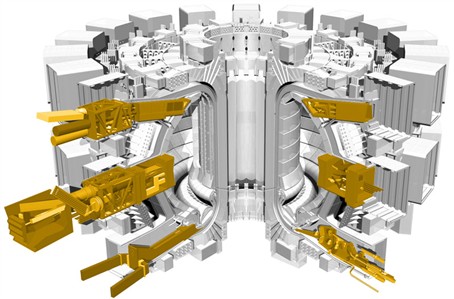
 The project to build a demonstration fusion power reactor relies on hundreds of individual suppliers. It is the ITER Organization’s job to coordinate all of their contributions.
The seven members of the ITER project share the responsibility of building the ITER machine and facilities. It is the largest global research effort on nuclear fusion ever undertaken.
Ninety percent of contributions will be delivered in-kind. Members (China, EU, India, Japan, Russia, South Korea and the USA) will deliver components for the Tokamak and plant systems directly to the ITER Organization in France. Designing, manufacturing, transporting and assembling the 10 million components of the project, many of which are of exceptional size and weight, pose logistics and managerial challenges of colossal proportions.
ITER sought an off-the-shelf solution to manage the supply chain for components that are being manufactured and procured all over the world.
ITER also wanted cost-effective software that could bring in industry standards and best practices. Intergraph, engineering enterprise software provider for the power and nuclear sectors, among others, was awarded the contract to provide the software and services supporting the Assembly and Operation division of the ITER project. ITER contracted Intergraph to supply and implement off-the-shelf solutions to help manage construction, materials management, commissioning/testing, technical document and data management, as well as to bring industry best practice for these systems to ITER. These products also had to integrate seamlessly with existing ITER software, such as ITER Document Management,Engineering Data Base (EDB, including ITER's engineering tools) and SAP.
SmartPlant® Materials (SPMat) is able to track, trace and manage all components and parts of the ITER site in compliance with nuclear safety regulation. The tool will link on-site inventory management with construction planning to maximize cost-efficiency and avoid construction disruption.
SPMat will provide ITER Organization with central storage of logistics information and make possible effective management of logistics activities. The material catalogue specifications, bill of materials (BOM) and material take-off (MTO) requisitions, and procurement, tracing, warehousing and inspections information will all be centralized in SP Materials. This will enable each department or function to access whatever materials logistics data is needed for a task in the format most appropriate to that task. SP Materials configuration was delivered in May and is expected to continue acceptance testing until October, although in the meantime it is being used in a production environment for activities such as materials receiving.
All material deliveries to the ITER site will be loaded into SPMat. It will manage all materials for both domestic agency in-kind contracts and ITER Organization in-cash contracts with suppliers (see figures).
To help with these materials management processes in SPMat, interfaces have already been developed and tested between SPMat and EDB, SPMat and SAP as well as SPMat and the shipping data that will be provided by logistics provider Daher.
The data for all material deliverables that will arrive at the ITER site in Cadarache, France needs to be captured at the source (the supplier) and tracked through data received from Daher. When the delivery trucks arrive at site, the data in SPMat should match the delivery details and allow planning for final inspections and warehousing. A big focus of SPMat is on tracking and tracing of all materials from the source supplier to the ITER site.
This materials management process means that the materials in the SPMat warehouses are ready to interface with the next Intergraph product being implemented, SmartPlant Construction (SPC). SPC manages workface planning and interfaces to the project-assembly schedule in Primavera project management software. The Field Installation Work Packs in SPC (downloaded from Primavera) will interface with SPMat to determine the status of required materials and, when available, will automatically reserve the material, ready for automatic issuing to construction.
The main challenges for this part of the project were different states of design maturity in the components and an adequate 3D model for construction. Component and part numbering, BOM definition at each lifecycle stage, a central and common catalogue and specification are currently being defined and created. The tool will also be integrated with numerous other applications, including SAP.
As of April 2014, most of the project design and detailed design is ready and the first components are being manufactured. Component arrival will slowly ramp up during 2014 and 2015 and reach full speed from 2016. Initially, only two or three people will be trained to use SPMat, although technical staff, domestic agencies and IO suppliers will be able to access the information via a portal and by running specific reports in SPMat. As the shipping volume grows, new users will be properly trained by the core team as needed.
The next step is to proceed with the implementation of SmartPlant Construction and to integrate the systems.
Inventory management will be integrated with the construction planning before the first on-site installation and assembly start in 2015. SmartPlant Construction will be used to schedule, organize, track and report on assembly activities on-site (machine and systems) by browsing through the 3D model. The technical information and documentation will be centralized and managed using Intergraph product SmartPlant for Owner Operators.
Accurate and effective materials management and construction will pave the way for assembly activities, which have been carefully planned in a schedule that contains 40,000 lines for machine assembly alone. Assembly operations will require 1.5 million man hours extending over a period of four years, before arriving to the crucial point of testing the facilities and the Tokamak.
Surce: neimagazine.com
F4E collaborates with IDOM on high tech ITER systems
 A multimillion contract for engineering integration of many state of the art instruments that will measure the biggest plasma generated by a fusion device has been signed between F4E and IDOM ADA, the Advanced Design and Analysis division of IDOM, a multinational company specialising in engineering, architecture and consultancy services based in Spain.
The value of the contract is in the range of 20 million EUR and is expected to run for at least four years. IDOM ADA will work with instrument designers in several public European fusion laboratories as well as experts in Japan, India, China and the US to deliver designs for the systems integration. Professor Henrik Bindslev, Director of F4E, emphasized that “through this contract we are seeing a clear example of knowledge transfer from laboratories to industry. Europe’s contribution to ITER, has been a catalyst encouraging the two poles of knowledge and competitiveness to work closer. A new chapter in the field of Diagnostics is opening that will help us analyse the ITER plasma, monitor it and improve our understanding of physics”. Mr. Fernando Querejeta, President of IDOM, stated that “we are very proud of the opportunity that we have been given to collaborate in what most likely will be the most important research project of the XXI century in the field of energy and engineering. This contract is another big step in our already important activity as science system providers for large scientific installations and instruments”.
The role of Diagnostics in ITER
The Diagnostics system will help us understand what exactly will be happening in the machine during the fusion reaction. Thanks to it we will able to study and control the plasma behaviour, measure its properties and extend our understanding of plasma physics. In simple terms, the system will act as the eyes and ears of the scientists offering them insight thanks to a vast range of cutting edge technologies. ITER will rely on approximately 50 diagnostic instruments that will offer experts an unparalleled view of the entire plasma and ensure the smooth operation of the machine. Given the duration of the plasma pulse, which will be 100 times longer than any fusion device currently in operation, the strong fluctuation levels and the extreme environment in the vessel, the diagnostic system will act as the guardian of the safe and sound operation of ITER.
Europe is responsible for roughly 25% of all Diagnostics in ITER.
The scope of this contract
This contract will deliver a comprehensive engineering design integrating around 20 diagnostics instruments into five of the ports giving access to the ITER plasma. In-vessel metallic containers will also be designed through this contract in order to protect the diagnostic equipment from the fierce plasma temperatures that may reach 150 million °C, and shield other parts of the machine from neutron radiation. The metallic shields will weigh between 5 tonnes and 20 tonnes each and will have to cope with extreme conditions like the high vacuum, colossal electromagnetic forces and high heat fluxes. In addition, other structures will be designed to house diagnostic instruments that will be mounted onto the Divertors cassettes of the machine, and even outside the vacuum vessel, as well as specialist flanges providing water and electrical connections to the diagnostic instruments whilst preserving the ITER vacuum.
Source: F4E


nsp_154.JPG)


nsp_154.JPG)


 |
 |
 |
 |
 |
 |
 |
 |
Media


Projekty badawcze realizowane przez IFPiLM są finansowane ze środków Ministerstwa Edukacji i Nauki i Narodowego Centrum Nauki oraz ze środków Komisji Europejskiej na podstawie umowy grantowej No 101052200, w ramach Konsorcjum EUROfusion. Wsparcia finansowego udzielają także: Międzynarodowa Agencja Energii Atomowej, Agencja Fusion for Energy, Europejska Agencja Kosmiczna i Konsorcjum LaserLab.