



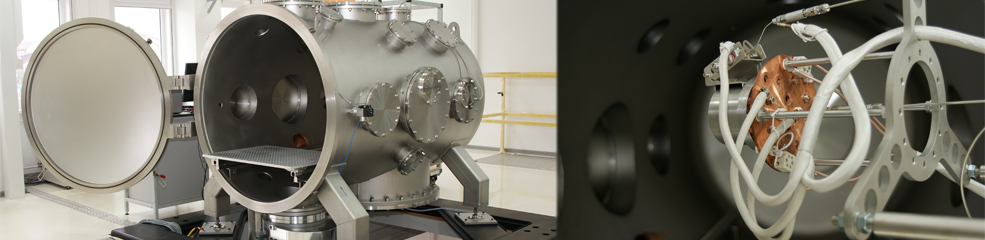


Zestaw obrazów 2019
zdjecie1.jpg
zdjecie2.jpg
zdjecie3.jpg
zdjecie4.jpg
zdjecie5.jpg
zdjecie6.jpg
2019_1.JPG
2019_2.JPG
2019_4.JPG

Gallery
 In an energy-hungry world, nuclear fission and fusion are often mentioned as alternatives to fossil fuels. But which one is better? In this episode, Scientific American's Michael Moyer melts down the facts to get at the core of the issue.
Source: ScientificAmerican
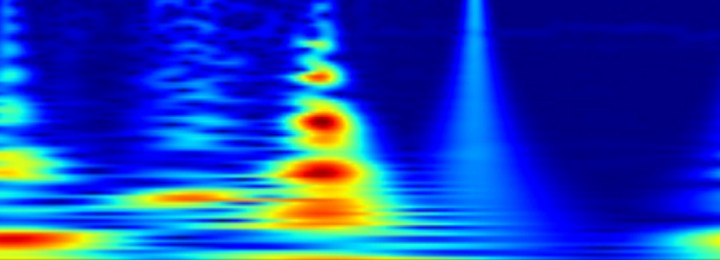 The JET project represents all of Europe, ITER represents over half of the world's population, but the Golem project in the Czech Republic goes even further. It is a fusion experiment for everyone in the world! Golem is a training tokamak in the Czech Technical University that has been set up to allow students to learn how to run a fusion experiment from anywhere in the world, over the internet.
 A group of six Italian scientists from the ENEA Institutes of Plasma Physics in Milano and Frascati arrived in the Institute of Plasma Physics and Laser Microfusion in Warsaw, Poland for a two-day-visit (9th and 10th May 2012 ) to discuss details of the future cooperation in plasma and fusion related scientific research. A few days before the visit a bilateral contract on cooperation between IPPLM and ENEA had been agreed. The Institute of Plasma Physics and Laser Microfusion signed the agreement on behalf of itself and eight other Polish institutions engaged in plasma and fusion research in Poland, there are as follow: Warsaw University of Technology (WUT), National Centre for Nuclear Research, Otwock-Świerk (NCNR), Wrocław University of Technology (WrUT), Institute of Nuclear Physics PAS (IFJ PAN), Opole University (OU), AGH University of Science and Technology, Cracow (AGH), Institute of Bioorganic Chemistry PAS – Poznań Supercomputing and Networking Centre (PSNC), West Pomerania University of Technology, Szczecin (WPUT), Maritime University of Szczecin (MUS).
After two days of fruitful discusion, the participants concluded that the possible fields of future scientific cooperation range from plasma modelling, diagnostics, inertial fusion, materials for ITER and DEMO.
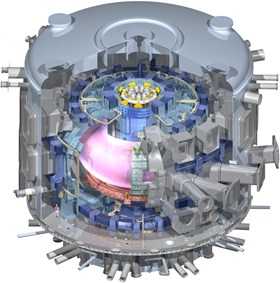 On its way to full deuterium-tritium operation, ITER will experiment with a succession of "non-nuclear" plasma fuels.
Spread over a period of roughly seven years, hydrogen, helium (with a variable proportion of hydrogen) and deuterium campaigns—interspersed with maintenance and upgrade periods—will provide operators with the necessary know-how to run the machine, commission its components, and control its plasma before entering nuclear operation.
 It's finals season, so you may not be able to get your experiments done at JET. Not because the scientists neglect their duties and sneak off to watch the football, but because JET is not allowed to run.


nsp_133.JPG)


nsp_133.JPG)


 |
 |
 |
 |
 |
 |
 |
 |
Media


Research projects carried out at the IPPLM are funded by the Polish Ministry of Education and Science, the National Science Centre and by the European Commission within the framework of EUROfusion Consortium under grant agreement No 101052200. Financial support comes also from the International Atomic Energy Agency, European Space Agency and LaserLab Consortium as well as from the Fusion for Energy Agency.