





Zestaw obrazów 2019
zdjecie1.jpg
zdjecie2.jpg
zdjecie3.jpg
zdjecie4.jpg
zdjecie5.jpg
zdjecie6.jpg
2019_1.JPG
2019_2.JPG
2019_4.JPG

Gallery
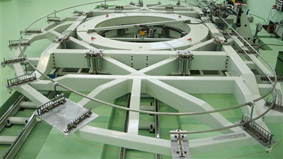 The winding line, to be used for winding the superconducting Toroidal Field (TF) coils which produce the magnetic field that confines the plasma in the ITER tokamak, is now ready. It is the first time a winding line with such impressive dimensions – 40 metres long, 20 metres wide, 5 metres high – has been built and it gives the opportunity to carry out winding trials which have never been undertaken before: it is the first time a full-size trial winding turn of a large dummy conductor has been carried out.
Located in F4E supplier ASG premises in Italy (ASG is part of a consortium which also includes Iberdrola and Elytt), the winding line will have the task of winding the superconducting coil cables into a D-shaped double spiral called a double pancake. The 7-tonne heavy superconductor coil will be delivered to ASG on spool in a single 760 metre length, so the first task of the winding line will be to unspool and straighten the cable, after which the cable will be cleaned and sandblasted. A continuous length of around 760 metres of superconductor cable will be used and shaped into the 12 metres long and 9 metres wide double pancake, which will then be heat treated at over 650 °C in a specially constructed inert atmosphere oven. After electrical insulation, the double pancake will finally be transferred into the grooves of the stainless steel radial plates, thus forming the double pancake module. As it is necessary that the double pancake fits precisely into the radial plate groove, it is vital to control that the trajectory of the conductor in the double pancakes is very accurate. This is why the winding line is required to achieve a precision on the bending of the conductor of a few tens of parts per million: a very demanding target considering its large dimensions (although the successful result during winding of the trial full size turn has demonstrated the capability of the winding line to achieve the required precisions). After insertion into the radial plates, each double pancake module will be impregnated with epoxy resin, stacked in groups of seven and jointed electrically to form the so-called winding packs. These winding packs will be inserted into stainless steel cases which will be welded in order to form the crucial TF coils.
For the moment, the winding line will however continue to be tested. In total, 70 superconductor lengths are needed to produce the ten TF coils to be procured by F4E (Japan will contribute an additional nine TF coils). They will be produced by five different suppliers, so each type of superconductor will have a slightly different mechanical behavior and therefore, individual tests with prototypes of each superconductor type will have to be carried out in the winding line during the next few months before starting the real production. The final qualification, to take place in the Autumn, will consist of winding a real superconducting cable into a full size double pancake prototype.
Another large machine, a large inert atmosphere oven, which measures 48x20x5 metres and which will be used to carry out the heat treatment of the double pancakes, is also in its final installation phase in ASG premises. The oven will be able to heat-treat up to three double pancakes at a time. After the successful completion of the leak test, carried out in order to verify the capability of the furnace to keep the concentration of impurities during the heat treatment below the required threshold of tens of parts per million, the oven is now in the final phase of the installation. The assembly of external components (electrical connections, sensors, piping, fans and vacuum pumps) is currently being completed and the final testing should start at the end of July.
With the winding line and the oven ready to be used, the main and most complex machinery for the production of the superconductors has been completed.
Source: fusionforenergy.europa.eu
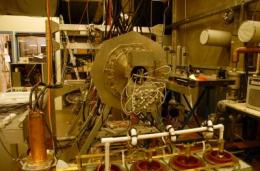 A University of Washington lab has been working for more than a decade on fusion energy, harnessing the energy-generating mechanism of the sun. But in one of the twists of scientific discovery, on the way the researchers found a potential solution to a looming problem in the electronics industry.To bring their solution to market two UW engineers have launched a startup, Zplasma, that aims to produce the high-energy light needed to etch the next generation of microchips. "In order to get smaller feature sizes on silicon, the industry has to go to shorter wavelength light," said Uri Shumlak, a UW professor of aeronautics and astronautics. "We're able to produce that light with enough power that it can be used to manufacture microchips." The UW beam lasts up to 1,000 times longer than competing technologies and provides more control over the million-degree plasma that produces the light. For more than four decades the technology industry has kept up with Moore's Law, a prediction that the number of transistors on a computer chip will double every two years. This trend has allowed ever-smaller, faster, lighter and less energy-intensive electronics. But it's hit a roadblock: the 193-nanometer ultraviolet light now being used cannot etch circuits any smaller.
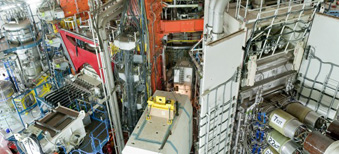 Cleanliness is the key to many aspects of operation of a tokamak like JET, in common with other ultra-high vacuum systems. Since you can not gain access to the inside of the torus, a technique called ‘glow discharge cleaning‘ is used in most machines to clean the walls of the vacuum vessel.
 Soon scientists at JET will be able to probe further into the 150 million degree core of the plasma than they ever have before. This unprecedented view is thanks to a newly refurbished X-ray detection system, KX1, which is just about to be put into action.
What they are looking for is contamination of the plasma by tungsten from the newly installed wall tiles. While the light metal beryllium was used for most of the tiles, tungsten was chosen for where JET's plasma touches the walls, as it is the metal with the highest melting point (3422 degrees Celsius). However tungsten also has the unfortunate characteristic of having many electrons, which emit radiation out of the plasma as they bounce around between levels, thereby sapping the fusion experiment's energy. Hydrogen isotopes – fusion fuel – make up the bulk of the plasma, but they do not cause energy leakage via this process. This is because their single electron is stripped off by the heat of the plasma. Similarly beryllium does not contribute much to energy loss either, as it has only four electrons, which are readily removed in the hot environment.
However stripping off all 74 electrons from a tungsten atom is a bigger task – it has 74 protons in the nucleus binding them. Even in JET's plasmas of over 100 million degrees, more than a third of tungsten's electrons are typically still attached, jumping around absorbing energy and re-emitting it. It is the energy coming from these inner-shell transitions in tungsten that the new system can see, in the X-ray region of the spectrum. In particular the system is precisely tuned to detect the X-rays from tungsten that has lost 46 of its electrons, a species which occurs in the core of the plasma.
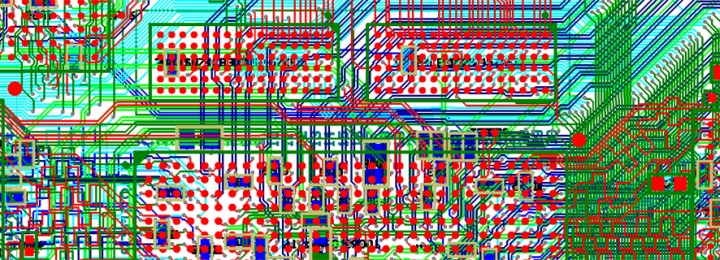
Before reaching the new detectors the X-rays travel along a 20 metre pipe and are then dispersed by a crystal. The X-rays create ionisation in a small cell containing a mixture of argon and carbon dioxide, which generates a tiny electrical signal which is amplified fed into a computer system. The new system is extremely fast, sampling every 10 nanoseconds, so it generates one hundred spectra in each second, each composed of a million data points. This amounts to around one quarter of a terabyte of data generated every second. As this volume of data would be impractical to store, a major part of the project has been developing a sophisticated electronic processing system (part of which is pictured above). The system is based on field programmable gate arrays and can filter and analyse the raw data in real time. A feature of the new system is that it provides additional frequency analysis, on top of the crystal's dispersion, which allows the separation of tungsten spectral line from the background radiation.
The final tests of the system are being performed by a team from the Polish association IPPLM who developed it. The information yielded by KX1 will reveal the spread of tungsten throughout the core of the plasma, vital information for evaluating the performance of JET's new ITER-Like Wall.
IPPLM is the Polish signatory to the European Fusion Development Agreement.
Source: EFDA
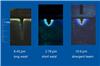 Researchers from the Max Born Institute for Nonlinear Optics and Short Pulse Spectroscopy (MBI) were involved in the development of a table-top solid-state laser system that could cut brain tissue with unprecedented precision. The achievement is a result of an interdisciplinary EU project that involved partners from seven European countries.


nsp_133.JPG)


nsp_133.JPG)


 |
 |
 |
 |
 |
 |
 |
 |
Media


Research projects carried out at the IPPLM are funded by the Polish Ministry of Education and Science, the National Science Centre and by the European Commission within the framework of EUROfusion Consortium under grant agreement No 101052200. Financial support comes also from the International Atomic Energy Agency, European Space Agency and LaserLab Consortium as well as from the Fusion for Energy Agency.