





Zestaw obrazów 2019
zdjecie1.jpg
zdjecie2.jpg
zdjecie3.jpg
zdjecie4.jpg
zdjecie5.jpg
zdjecie6.jpg
2019_1.JPG
2019_2.JPG
2019_4.JPG

Gallery
 To create fusion, you need a very different world to the one we live in. It needs to be six orders of magnitude hotter and six orders of magnitude less dense – and the result is six orders of magnitude more energy than most everyday processes.
The temperature required for fusion is over 100 million degrees. In the heat of Oxfordshire summer outside JET it might even reach 25 degrees Celsius, or 298 degrees Kelvin – which some people find hot – but it is still 6 orders of magnitude colder than the core of a fusion plasma.
One might expect that the pressure in a fusion tokamak must be very high – similar to the core of the sun. In fact it’s the opposite: the optimum density for fusion is about 106 times less than that of our atmosphere. The reason for this surprising fact is that higher density means more collisions between particles. Of course collisions between ions are good, because they are what leads to fusion. However when the ions in the plasma collide with electrons, energy is lost. This is because of a process known as bremsstrahlung, or “braking radiation”, which refers to radiation that is caused by charged particles changing direction – for example during a collision. In a plasma at the extreme temperatures required for fusion, the high speed of the electrons means they emit X-rays when they collide with a nucleus; if the density gets too high, there are so many collisions that the energy of the plasma is lost due to all the resulting X-rays.
Having created an environment six orders of magnitude hotter and six orders of magnitude less dense than our everyday world, the result is energy in quantities six orders of magnitude greater than most common processes. Plasma physicists measure energy in electron volts – in other words the energy that one electron would acquire if powered by a one volt battery. Batteries are powered by chemical processes – by combining a number of electrochemical cells we can create powerful batteries such as those in a car, which have a voltage of 12 volts. Burning coal creates about four electron volts. But the products of the fusion, powered by nuclear processes, have a staggering 17.6 million electron volts. In other words you would need to connect well over a million car batteries to give particles the same amount of energy as that released when deuterium and tritium fuse.
So it seems the conclusion to draw is that, although achieving fusion sometime seems six orders of magnitude harder than burning fossil fuel, it will be a milliion times better in the long run!
Source: EFDA
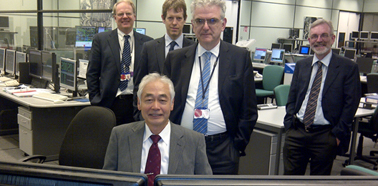
The Director General of ITER, Osamu Motojima has praised work done at JET during a visit there on Wednesday the 11th of July. “It’s encouraging to see the results from JET’s ITER-Like Wall that have been achieved in such a short space of time” he said during a presentation to staff, continuing that “ITER is dependent on the success of JET.”
Motojima-san visited JET with two senior staff, Director of Plasma Operation, David Campbell, and Senior Scientist in Plasma Confinement Alberto Loarte. To a packed lecture hall Motojima-san outlined ambitious plans to keep the ITER project on schedule, while Dr Campbell spoke of the science challenges for ITER. “We are keen to work very closely with the JET team on issues such as disruptions, ELMs and melting studies” he said. “The work JET is producing is of a high level. It is extremely impressive and will be important for the exploitation of ITER. I encourage you to carry on along the same path.”
An objective for the visit was to discuss possible future collaborations between ITER and JET. At the last ITER Council meeting, it was agreed that ITER should join the IEA implementing agreement on Cooperation on Tokamak Programs. The agreement provides a legal framework for participation of ITER Organisation staff in experiments on JET that are targeted at addressing specific issues of interest to ITER. Thus, the Director General’s visit allowed timely discussions on how to deepen collaborations between JET and ITER.
Source: EFDA
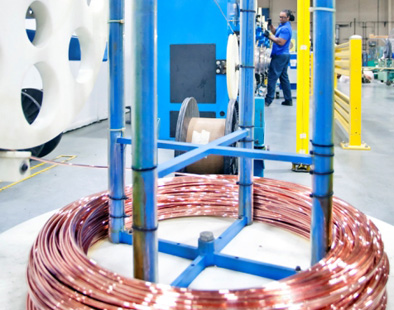
The U.S. ITER project office has thus far awarded funding and subcontracts with a total value, including options, of up to $767 million to U.S. companies, universities and DOE laboratories. Funding for the U.S. portion of the ITER project comes from the DOE’s Office of Science through U.S. ITER at the DOE’s Oak Ridge National Laboratory in Oak Ridge, Tenn.“These funds support manufacturing, engineering, and other high tech jobs in the United States,” said Ned Sauthoff, who leads the team executing the U.S. contributions to ITER. “U.S. companies are also winning contracts from other ITER members—about $75 million so far, with more opportunities in the near future.”
 It was a landmark day on the 26th June, as the neutral beam injection heating system broke its previous record for input power, reaching 25 megawatts during four separate pulses. It is the culmination of three years work upgrading the beam system during the 2009 – 2011 shutdown and then commissioning the new system in parallel with a protection system to ensure the new power levels do not damage the vessel.
The neutral beam injection system is the most powerful of JET’s four heating systems. The concept is similar to the way that a steam jet in a cappuccino maker heats milk: high energy deuterium beams are injected into the vessel, which collide with the plasma particles, thereby heating them. The JET cappuccino maker however has 8 beam lines on each side of the torus, which accelerate particles with voltages over 100 kilovolts. Although only 14 of the 16 beams were used, the resulting power was enough to heat milk for 350 cappuccinos per second!
JET’s barista on the day was of course Italian – session leader Dr Domenico Frigione from the Italian Association ENEA, He was in charge of experiments investigating instabilities at the edge of the plasma known as edge localised modes (ELMs), which expel bursts of energy out of the plasma. The experiments used infrared cameras to measure the heating effect on the wall of the vessel ELMs, especially in the lower part of the vessel, known as the divertor, where the plasma touches the tiles for the purpose of removing waste and contaminants. “The heat load in the divertor is an important consideration for ITER,” said Dr Frigione, “and so special permission was granted to push the wall temperatures to higher levels, around 1200 degrees Celsius.” Experiments explored methods for spreading the heat load, by changing or moving the area of the plasma that contacts the wall, or seeding this area of the plasma with impurities such as nitrogen.
“Experiments like this are a planned risk” said Dr Frigione. “It is difficult to come out of these pulses, the beam power needs to be reduced in steps to prevent us landing too suddenly, but we achieved it safely.”
Source: EFDA
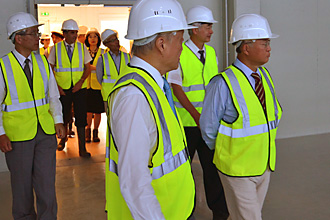 At the ITER headquarters in Cadarache, France, where the world's largest fusion reactor experiment is being constructed to demonstrate fusion's commercial viability, IAEA Director General Yukiya Amano received a briefing on the project's progress on Friday, 6 July 2012.
The briefing included a tour of the on-going construction site, including the poloidal field coils winding facility, the tokamak pit and the anti-seismic pads. The IAEA has supported ITER since its inception in 1985 as a collaborative research project between the European Union, Japan, the former Soviet Union and the United States.
New Source of Energy
Fusion is the process that powers the stars and occurs when atoms are heated until they fuse into new elements, releasing large amounts of energy. Fusion requires no fossil fuels, emits no greenhouse gases and generates no long-lived nuclear waste. Fusion power promises to be an abundant, safe and environmentally sustainable energy source.
A detailed explanation of the ITER project and photos of the IAEA Director General's tour are available on the ITER Website.
Nuclear Power After Fukushima
The future of energy production was also the topic of a session of the Les Rencontres Économiques d'Aix-en-Provence 2012, in which the Director General participated on Saturday, 7 July 2012. The session considered the global changes in energy use and production, especially since the accident at the Fukushima Daiichi Nuclear Power Plant in March 2011.
The Director General said that the Fukushima accident, the most severe accident since Chernobyl, caused deep public anxiety and damaged confidence in nuclear power. In contrast to the aftermath of the Chernobyl accident, nuclear power plant construction is continuing, a trend the Director General attributed to the increasing global demand for energy, as well as concerns about climate change, volatile fossil fuel prices and security of energy supply.
Wake-up Call
"Fukushima was a wake-up call for all countries with nuclear power and governments have responded with a new focus on nuclear safety," said Director General Amano. He noted that the goal of the IAEA Action Plan on Nuclear Safety, adopted by the IAEA Member States in September 2011, is to "make nuclear power as safe as humanly possible by doing everything to prevent a severe accident", which includes undertaking nuclear power plants stress tests to assess how well plants are likely to withstand severe natural hazards, including earthquakes and tsunamis.
Strengthening Safety
Following the Fukushima nuclear accident, the Director General said that new defensive structures are being built at many nuclear facilities throughout the world and backup electrical power sources are being given better protection. In addition, measures are being taken to assure that water is available for cooling even under severe accident conditions, while emergency preparedness and response capabilities are being strengthened. The IAEA's programme of peer reviews - under which multinational expert teams led by the Agency assess the operational safety of a country's nuclear power reactors, the effectiveness of its nuclear regulators, or its emergency preparedness - has also been significantly strengthened.
Key Lesson Learned
The Director General emphasized that one of the internationally recognized lessons of the Fukushima Daiichi accident was "the vital importance of an effective, independent nuclear regulatory body." He noted that the IAEA is helping countries to review their regulatory effectiveness and make changes where necessary.
International Cooperation
The Director General said that "the global response to the Fukushima Daiichi accident reflects a deeper realization by governments that nuclear safety transcends borders and that more effective international cooperation is vital. The IAEA will play the leading role in shaping a safer nuclear future throughout the world."
Background
ITER
ITER, initially named the International Thermonuclear Experimental Reactor, is a fusion research "mega-project" supported by China, the European Union, India, Japan, Korea, Russia and the United States.
Source: iaea.org


nsp_133.JPG)


nsp_133.JPG)


 |
 |
 |
 |
 |
 |
 |
 |
Media


Research projects carried out at the IPPLM are funded by the Polish Ministry of Education and Science, the National Science Centre and by the European Commission within the framework of EUROfusion Consortium under grant agreement No 101052200. Financial support comes also from the International Atomic Energy Agency, European Space Agency and LaserLab Consortium as well as from the Fusion for Energy Agency.