





Zestaw obrazów 2019
zdjecie1.jpg
zdjecie2.jpg
zdjecie3.jpg
zdjecie4.jpg
zdjecie5.jpg
zdjecie6.jpg
2019_1.JPG
2019_2.JPG
2019_4.JPG

Gallery
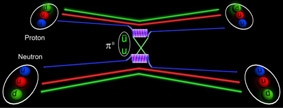 One of the most puzzling things about fusion is that two positively charged particles, deuterium and tritium could possibly stick together. Surely they should repel each other and fly apart?
This question first arose with the discovery of the structure of the atom in the early twentieth century. Scientists postulated that there had to be another, stronger force holding nuclei together. It was not for fifty years that this imaginatively named “Strong Force” would be fully understood – by which point it was realised that nucleons (the generic term for protons and neutrons) were each made up of three smaller particles, quarks. This theory, named quantum chromodynamics, proposed that the charged quarks inside protons and neutrons are held together by “colour” – a similar mechanism to electrical charge except instead of the two charges of electricity (positive and negative), it is based around attraction between three colours, making it considerably more complex. In an analogy with quantum electrodynamics, which explained electrical force as the transmission of photons, the strong force is transmitted by particles called gluons, which – unlike photons – cannot exist outside subatomic particles. This same theory predicted the existence of the Higgs Boson, whose existence has been confirmed only this year at the Large Hadron Collider.
One question remains: if gluons, which transmit the strong force, cannot exist outside nucleons, then it would seem impossible for the strong force to bind a proton to a neutron, unless the particles actually overlap. However, although the attraction between nucleons is strong enough to exceed the electrical repulsion at distances less than 1.7 femtometers, the strong force actually becomes repulsive at distances less than 0.7 of a femtometer – the nucleons do not touch.
It is now understood that the attraction between nucleons is not the strong force proper, but a residual effect of the strong force, similar to the momentary electrical forces which bind non-polar molecules together (known as London forces, a type of Van Der Waals force.) This residual force is called the nuclear force and is described in quantum chromodynamics not as the exchange of gluons, but as the exchange of pairs of quarks (known as mesons) – this process is shown in the Feynman diagram above. Although the energies involved seem huge – fusion gives about a million times more energy than the chemical processes associated with burning coal for example – they are a mere fraction of the true strong force, which holds the quarks together inside protons or neutrons.
The experiments at CERN explore the structure within nucleons and the strong force which holds them together, which is why the particles inside the Large Hadron Collider need to be accelerated to such high energy – at 7 tera-electronvolts, nearly a billion times more energetic than the hot plasma particles inside JET!
Source: EFDA
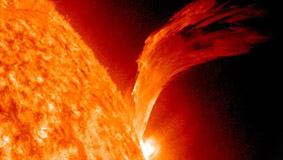 RADIOACTIVE materials decay at a predictable rate—so predictable, in fact, that scientists widely use them to date artefacts and geological objects. That, at least, is the received wisdom, which Jere Jenkins and Ephraim Fischbach, from Purdue University in Indiana, think may need revising. In 2006 Dr Jenkins noticed that the decay rate of the radioactive isotope manganese-54 dipped 39 hours before a solar flare came crashing into Earth's protective magnetic field. Now it seems that the sun might affect other types of decay, too.
As the researchers report in Astroparticle Physics, the decay rate of chlorine-36 increases as Earth approaches the sun. The difference is tiny: the rate fluctuates by less than 1% between the aphelion and perihelion, the points on Earth's orbit when it is farthest and closest to the sun, respectively. But it is discernible and persistent. As-yet-unpublished data for manganese-54 suggest that isotope follows a similar pattern. If confirmed, the insight might, among other things form the basis of a system for forecasting dangerous cosmic storms.
Solar flares, in which charged particles are ejected from the sun, can damage satellites and ground-based electronic infrastructure. In 2005 an unseasonal solar storm knocked out a number of Global Positioning System (GPS) birds, some of them for good. It also forced airliners to be redirected from Arctic routes, where Earth's magnetic field provides least cover from the nefarious effects a hail of such particles can have on the people's, and machines', health. And that was a mere breeze compared with the solar storm of 1859, thought to have been many times more devastating on the basis of the disruption it caused to the nascent telegraph service. These days, another Carrington Event, as the 19th-century episode is known, risks crippling a planet increasingly reliant on all sorts of electronic gubbins.
A number of advance-warning systems, enabling countermeasures such as temporary shutdown of vulnerable electronics, are in the works. But reliable forecasts are scarce. This is because solar storms are not yet well understood. Paradoxically, Dr Jenkins and Dr Fischbach think this might change with the help of neutrinos, the ethereal particles which pervade the universe but rarely interact with anything—and themselves a cause of much head-scratching among physicists.
Neutrinos are a byproduct of the nuclear fusion which powers the sun. Earth's elliptical orbit means that the flux of solar neutrinos which stream through it varies during the year. The changes in chlorine-36 and manganese-54 decay rates observed by the Purdue team, including the dip prior to the flare in 2006, mirror the changes in neutrino flux detected by other experiments. Unlike their tiny radioactive sample, though, those existing neutrino detectors are vast (to shorten the odds that the elusive particles deign to react with at least one atom inside it) and often sit deep underground (to shield the detectors from other particles which leave neutrino-like traces; only neutrinos, thanks to their signature unwillingness to react, are able to penetrate ). As a result, any system based on such detectors would be hard to scale up.
If Dr Fischbach and Dr Jenkins are right about neutrinos affecting radioactive decay, it would herald a new era in neutrino physics, not just space-weather forecasting. That is still a prodigious if. For a start, like many things neutrino-related, the mechanism through which the particles might affect decay rates remains a mystery. On the rare occasions that they do interact, neutrinos do so via the weak nuclear force, which is also responsible for the sorts of radioactivity present in chlorine-36 and manganese-54. Physicists critical of the work point out that in the Purdue team's proposal the strength of the force, which can be calculated from the observed changes in decay rates, is much larger than established particle theory would have it.
Such discrepancies might be explained if a neutrino somehow amplifies the decay rates. In the conventional view, most neutrinos pass through matter without so much as a shudder. Those that do interact tend to do so only once; the likelihood of a single neutrino scattering off one atom and then another in short order is infinitesimal. However, rather controversially, Dr Fischbach thinks that the large number of neutrinos that seem not to be interacting may in fact be doing so, just that the effects of these interactions in stable matter are too small to see. In an unstable radioactive sample, he speculates, they might come to light, because decay rates are known to be extremely sensitive to the energy released in the process. As a result, if solar neutrinos transferred a mere millionth of their energy to a decaying nucleus, that might have a big effect on the rate at which it breaks up.
Whatever the mechanism, the correlation between radioactive decay rates and neutrino flux looks striking, and has been observed in a number of samples in different laboratories. Wary neutrino physicists warn that it could all yet prove to be an artefact of the way the experiments were conducted. That was the case in 2011, when their colleagues in Italy clocked neutrinos travelling faster than light, only to discover that the result, at odds with Einstein's cherished theory of relativity, was down to a loose cable.
Even if this time all cables were taut, many hurdles remain. Dr Fischbach admits that while whatever process generated the flare in 2006 also caused a dip in neutrino flux, and a corresponding drop in radioactive decay rates, other processes seem to have the opposite effect. For example, a storm in 2008 was preceded by a spike in manganese-54 decay rates.He suspects that what is loosely termed a "solar storm" may in fact be a number of distinct processes whose common feature is that they affect neutrino production in one way or another. That is a far cry from a reliable space-weather forecast. But it has not stopped the university from applying for a patent on a decay-based neutrino detector technology, just in case.
Source: economist.com
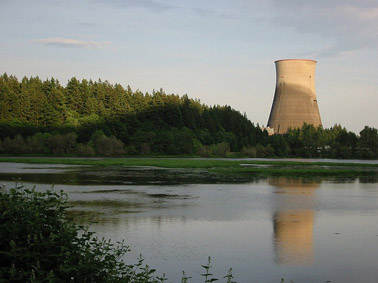 When you take a dip in the ocean, nuclear fuel is probably the farthest thing from your mind. Uranium floats in Earth's oceans in trace amounts of just 3 parts per billion, but it adds up. Combined, our oceans hold up to 4.5 billion tons of uranium - enough to potentially fuel the world's nuclear power plants for 6,500 years.
Countries such as Japan have examined the ocean as a uranium source since the 1960s, but previous approaches have been too expensive to extract the quantities needed for nuclear fuel. Now researchers at the Department of Energy's Pacific Northwest National Laboratory and Oak Ridge National Laboratory are tweaking one of those concepts with the goal of making it more efficient and cost-competitive. The research is being done for the Department of Energy's Office of Nuclear Energy.
Japan developed an adsorbent that attaches the uranium-loving chemical group amidoxime to a plastic polymer. ORNL examined the binding process between the plastic and chemical groups and used that knowledge to enhance the uranium-grabbing characteristic of the amidoxime groups on the adsorbent material's surface.
PNNL tested the adsorbent's performance at its Marine Sciences Laboratory in Sequim, Wash., DOE's only marine research facility. Using filtered seawater from nearby Sequim Bay, PNNL established a laboratory testing process to measure the effectiveness of both Japan's and ORNL's adsorbent materials. Initial tests showed ORNL's adsorbent can soak up more than two times the uranium than the material from Japan.
Results were presented today at the fall meeting of the American Chemical Society, which runs Aug. 19-23 in Philadelphia. ORNL chemical engineer Costas Tsouris presented the research team's findings this afternoon, while PNNL chemical oceanographer Gary Gill presented a poster on the PNNL testing program this evening. Tsouris' presentation is part of a larger, day-long oral session on uranium extraction from seawater. Check out the ACS website (link below) for talk and poster abstracts.
Source: pnnl.gov
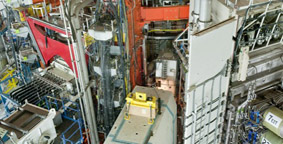 It is now three weeks since the last plasma pulse of 2012, and JET is now in a state called ‘shutdown’.
At the end of operations a lot of work has to be done before access is gained to the inside of the torus, which is planned to happen in a few weeks. When the machine is running, the torus is kept at 200 degrees celsius and inside the torus there are some cryo panels which are cooled to nearly minus 270 celsius. The cryopanels continuously collect (freeze) ‘condensable’ vapours such as water and practically all common gases. By keeping these two components at such a large temperature difference the exceptional cleanliness of the plasma-facing components is maintained.
After the end of operations, first the cryopanels were warmed to ambient temperature and the gas was collected. Then the torus was cooled. As it cools it contracts and the outer diameter of the torus decreases by about 30 mm. Essentially it shrinks onto some supporting features and locks itself into a fixed position until the end of the shutdown.
Now the task of removing some of the larger ancillary items has begun, with several big diagnostic systems being lifted out of the torus hall for storage. Some of them weigh tens of tonnes, but this is light work for the main crane. Once they are out of the way, engineers can get into the areas that they need to use to gain access to the inside of the torus, which brings us to the reason for this shutdown.
As you will know if you have followed the recent history of JET in the Shutdown Weekly series, the main purpose of 2009 shutdown was to allow a complete metal inner wall to be installed, replacing the previous carbon wall. Some of the 4,500 new tiles had been marked with thin layers of beryllium, molybdenum and tungsten. The layers are typically only 10 microns thick and these are the tiles that we plan to remove and replace during this shutdown. Careful examination of the marker layers will reveal which areas have been eroded by interaction with the plasma, and where that eroded material is deposited. You might think of this as being similar to erosion of part of a coastline by the action of the sea. The material that is removed from one place is washed along the coast and deposited somewhere else.
Of course this is only part of the work planned for the next few months. While the machine is out of action there is an opportunity for other equipment to be maintained. As the shutdown progresses you will see regular updates on the progress of some of this work.
Source: EFDA
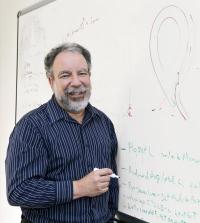 Researchers at a recent worldwide conference on fusion power have confirmed the surprising accuracy of a new model for predicting the size of a key barrier to fusion that a top scientist at the Princeton Plasma Physics Laboratory (PPPL) has developed.
The model could serve as a starting point for overcoming the barrier. "This allows you to depict the size of the challenge so you can think through what needs to be done to overcome it," said physicist Robert Goldston, the Princeton University professor of astrophysical sciences and former PPPL director who developed the model. Goldston was among physicists who presented aspects of the model in late May to the 20th Annual International Conference on Plasma Surface Interactions in Aachen, Germany. Some 400 researchers from around the world attended the conference. Results of the model have been "eerily close" to the data, said Thomas Eich, a senior scientist at the Max Planck Institute for Plasma Physics in Garching, Germany, who gave an invited talk on his measurements. The agreement appears too close to have happened by chance, Eich added. Goldston's model predicts the width of what physicists call the "scrape-off layer" in tokamaks, the most widely used fusion facilities. Such devices confine hot, electrically charged gas, or plasma, in powerful magnetic fields. But heat inevitably flows through the system and becomes separated, or scraped off, from the edge of the plasma and flows into an area called the divertor chamber. The challenge is to prevent a thin and highly concentrated layer of heat from reaching and damaging the plate that sits at the bottom of the divertor chamber and absorbs the scrape-off flow. Such damage would halt fusion reactions, which take place when the atomic nuclei, or ions, inside the plasma merge and release energy. "If nothing was done and you took this right on the chin, it could be a knockout blow," said Goldston, who published his model in January in the journal Nuclear Fusion. Solving this problem will be vital for future machines like ITER, the world's most powerful tokamak, which the European Union, the United States and five other countries are building in France to demonstrate fusion as a source of clean and abundant energy. The project is designed to produce 500 megawatts of fusion power in 400 second-long pulses, which will require researchers to spread the scrape-off heat as much as possible to protect the divertor plate.
Goldston's model could help guide such efforts. He began pondering the width of the heat flux during an international physics conference in South Korea in 2010. Looking at the latest scrape-off layer data based on improved measurements, he estimated—literally on an envelope—that the new widths could be produced without plasma turbulence, a factor that is typically considered but is notoriously difficult to calculate. This led him to search for a way to estimate the width of the surprisingly thin layer, and to gauge how the width would vary as conditions such as the amount of electrical current in the plasma varied. The way plasma flows inside tokamaks provided the major clue. The ions within the charged gas gyrate swiftly along the magnetic field lines while drifting slowly across the lines. At the same time, the electrons also in the plasma travel very rapidly along the lines and carry away most of the heat. Goldston arrived at his prediction by determining how fast these subatomic particles flow into the divertor region, and how long it therefore takes them to reach it. The result "is what we call a 'heuristic' estimate, based on the key aspects of the physics, but not a detailed calculation," said Goldston. His estimate confirmed what Goldston had suspected: the width of the scrape-off layer nearly matched the results of a calculation, made without considering turbulence, for determining how far the ions drift away from their field lines. "What's stunning is how closely the values correspond to the data, both in absolute value and in variation with the plasma current, magnetic field, machine size and input power," Goldston said. "This does not mean that turbulence plays no role, but it suggests that for the highest performance conditions, where turbulence is weakest, the motion of the ions is dominated by non-turbulent drift effects." This will be true in the case of ITER, he added, since it is designed to operate in high-performance conditions. Researchers are developing techniques for widening the scrape-off layer. Such methods include pumping gas into the divertor region to keep some heat from reaching the plate. Physicists use deuterium, a form of hydrogen, to block the heat, and are injecting nitrogen to turn other parts of the heat into ultraviolet light. (While charged deuterium ions are already in the plasma, the deuterium gas that is injected into the divertor region to block the heat is not electrically charged.) These strategies look promising. "We know that they will work," said Goldston. "The outstanding question is whether they will work completely enough" to mitigate the heat flux at ITER's highest power levels, without introducing so much gas that it cools the fuel. Physicists around the world are conducting experiments to understand the process better. For Goldston, calculating the width of the scrape-off layer marks the latest research effort in a 40-year career at PPPL, which began when he was a graduate student. Along the way he helped to pioneer techniques for heating the plasma, and developed a widely used method called "Goldston scaling" for predicting how long heat is retained in a tokamak plasma. "First, heat is injected into the plasma," Goldston said of how tokamaks operate. "Second, that heat is retained while much more heat is generated by fusion reactions. Finally, the resulting heat has to come out of the plasma. Without thinking about it, I have been following heat along this trajectory throughout my whole research career," he added. "We have made great progress on the first two steps, and now the most exciting challenge, to me, is the one that comes because of our success so far. Now we need to learn to handle the the outflow of heat from a high-power fusion energy source."
Source: phys.org


nsp_133.JPG)


nsp_133.JPG)


 |
 |
 |
 |
 |
 |
 |
 |
Media


Research projects carried out at the IPPLM are funded by the Polish Ministry of Education and Science, the National Science Centre and by the European Commission within the framework of EUROfusion Consortium under grant agreement No 101052200. Financial support comes also from the International Atomic Energy Agency, European Space Agency and LaserLab Consortium as well as from the Fusion for Energy Agency.