





Zestaw obrazów 2019
zdjecie1.jpg
zdjecie2.jpg
zdjecie3.jpg
zdjecie4.jpg
zdjecie5.jpg
zdjecie6.jpg
2019_1.JPG
2019_2.JPG
2019_4.JPG

Gallery
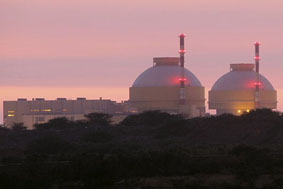 Countries, including India, are pooling resources to build a plant that runs on cleaner technology and abundant resources.
In the 1940s, attempts by the UK and the US to build the hydrogen bomb had a few useful byproducts, such as technologies that were able to use the power of the atom to generate electricity. The process of nuclear fission, which produces dangerous waste, was developed, and has been used since then to produce power the world over. Sadly, the other technological byproduct of the hydrogen bomb—nuclear fusion, which uses abundantly available fuel sources and emits no harmful radiation—never quite made the cut.
But this is fast changing. After the Fukushima disaster in March 2011, conventional nuclear plants that use fission technology are being shuttered in many parts of the world. The rush for the Holy Grail has begun. Activity to prove that fusion is feasible and economically viable has picked up, and new breakthroughs are speeding things up.
India, with its huge power deficit, is among the countries that have taken the lead in developing these technologies. The government has sealed its commitment through a sanction of Rs 2,500 crore to seed research of nuclear fusion. The funds are expected to be increased, as the work spearheaded by the Department of Atomic Energy (DAE), grows. At the focus of much of this activity is one reactor being built in the south of France.
The $20 billion project that aims to generate just 500 MW, which could indeed change the world, is called Iter (Latin for ‘the way’). It is being built by a consortium of seven partners—the European Union, the United States, Russia, China, Korea, Japan and India—to demonstrate the viability of harnessing energy from nuclear fusion on the scale of a power station.
Before this project, electricity from nuclear fusion has been produced only in laboratories. As the host-partner of the project, the EU is the largest contributor with a 34 percent stake. India has taken up 9 percent, which will be executed by the Gandhinagar-based Iter-India, a division of the Institute of Plasma Research. The seven partners will contribute in kind by bringing components to the project. In India, a lot of this work will be done by the private sector.
“Indian companies—both in the public and private sectors—with capabilities in nuclear and space industries are being awarded contracts,” says Shishir Deshpande, Iter-India project director. Nine large components, amounting to almost a tenth of the project, will be fabricated and sourced from India. The biggest of these, to build the cryostat—a 3,800 tonne pressure chamber the size of a 10-storey building—was awarded to Larsen & Toubro in August. The component, worth over Rs 1,000 crore, will be built in India and shipped to France in sections.
What it means for Indian firms
For L&T and MV Kotwal—board member and head of heavy engineering, who also spearheads the company’s ambitions in the nuclear industry—the Iter-India contract is a chance to establish the company’s reputation. L&T has sunk about Rs 1,800 crore in a forge shop at Hazira through a joint venture with Nuclear Power Corporation of India (NPCIL).
But nuclear projects are few and far between in the post-Fukushima era. Doubts have been raised about the viability of the shop that was set up for heavy forgings needed for nuclear and hydrocarbon reactors. The Iter cryostat will be fabricated at this facility. Kotwal says that with its current energy shortages, India simply cannot afford to stop working on nuclear energy.
Iter-India had awarded an earlier contract for the shielding vessel to Bangalore-based Avasarala Technologies. It is also working closely with TCS and Inox India for cryogenics, ECIL for power electronics, and several other vendors. Deshpande says their work will be subjected to international scrutiny and this will surely help the companies prove themselves and gain confidence. Most are looking for opportunities to step up their abilities to emerge as high-end, global suppliers in the nuclear business.
Over the next few years, more work will be contracted, including the work of building a lab in France for testing the systems.
India has had a nuclear fusion programme since 1986 and about 500 scientists have been working on various facets of it, Deshpande says.
Iter shares IP equally, so the partner countries can use the knowledge gained to set up their own demonstrator reactors at home. Deshpande and Iter-India hope that India can begin work on this as soon as gaps in its knowledge are bridged.
Deshpande says the fusion project could provide neutron sources for fission reactors. This could help fast-forward India’s thorium programme. India’s nuclear power was envisaged as a three-step programme; the final stage involved moving from uranium, of which we have limited reserves, to thorium, which is plentiful.
Fusion is something that was jokingly said to be ‘always the fuel of the future’. Lab experiments have now proved it is a viable concept. But practical problems of building and sustaining the process remain; materials that can withstand the heat and neutron damage need to be developed. But much of it is now in the realm of the possible. Energy-starved India would do well to push the process.
Source: Forbes India Magazine
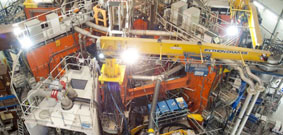 Latest results from the Joint European Torus (JET) fusion device are giving researchers increasing confidence in prospects for the next-generation ITER project, the international experiment that is expected to pave the way for commercial fusion power plants. Operation with a new lining inside JET has demonstrated the suitability of materials for the much larger and more powerful ITER device. Today Dr Francesco Romanelli, Leader of the European Fusion Development Agreement (EFDA) and JET Leader, will deliver a summary of the JET results at the IAEA Fusion Energy Conference in San Diego, U.S. This major fusion conference is held every two years and aims to discuss various options with the goal of building the first demonstration power plant before the middle of the 21st century.
JET, Europe’s premier magnetic confinement fusion facility, based at Culham, UK, has completed eleven months of tests to simulate the environment inside ITER and to prototype key components. For this purpose JET has been successfully transformed into a ‘mini-ITER’ with a wall made of the same materials – beryllium and tungsten – that ITER plans to use. Initial results will be summarised by Dr Francesco Romanelli, Leader of the European Fusion Development Agreement (EFDA) and JET Leader, at the IAEA Fusion Energy Conference in San Diego, U.S. on Monday 8 October.
At the heart of tokamak fusion reactors like JET is a ring-shaped vacuum vessel in which very hot plasma is confined using magnetic fields. Selecting the correct materials for the inner wall of this vessel is essential. Firstly to minimise ‘pollution’ when small amounts of wall materials enter the plasma, and secondly to prevent the fusion fuels from becoming trapped in the wall. ITER will use beryllium for the main wall and tungsten (with its higher melting point) for the floor of the chamber – the ‘divertor’ – where plasma is exhausted and heat loads are greatest. A 20-month engineering upgrade during 2010 and 2011 installed a new plasma-facing wall inside JET to validate these materials for ITER.
From the first test in August 2011, the beryllium and tungsten lining enabled more reliable plasmas to be produced. Crucially, researchers from the 27 European fusion laboratories which participate in JET have found that the amount of fuel being retained in the wall is at least ten times less than in the previous, carbon-based, configuration. The results achieved may lead ITER to drop plans for an initial phase of operation with carbon and adopt a beryllium-tungsten wall from the outset, bringing a significant saving in time and cost for the project.
Experiments at JET will restart in early 2013, with the goal of demonstrating further improvements in plasma performance, beyond expectations when scaled up to ITER. Looking further ahead, EFDA is already planning a full ‘dress rehearsal’ for ITER – an experimental campaign at JET using the optimum deuterium-tritium fuel mix that is needed for high-power fusion operation. JET is the only device currently able to run fusion plasmas with tritium, and exploiting these capabilities will be a crucial part of ITER preparations. ITER Director General Osamu Motojima praised the work being done at JET during a visit this summer and has been discussing collaborations with EFDA on future experiments.
Dr Francesco Romanelli said: “These results are very encouraging for ITER. JET is getting as close to ITER conditions as any present-day fusion device can. If this performance is scaled up, ITER will be successful and take a huge step towards the goal of commercial fusion power.
“JET has largely formed the basis for ITER’s design and is an ideal test-bed. We hope to open up new collaborations with ITER partners as we prepare for full deuterium-tritium tests in 2015. Already we are working with Indian colleagues on magnetic coils for suppressing plasma instabilities. I hope to build more partnerships so JET’s unique capabilities can be used for the benefit of the worldwide fusion programme.”
Source: EFDA
 Scientists at Portugal’s Instituto de Plasmas e Fusao Nuclear (IPFN) have made a dramatic twenty-fold improvement to the operation of their tokamak ISTTOK, by repeatedly reversing its plasma current to achieve stable AC operation – swirling it back and forth like Corridinho folk dancers.
“If we scale this achievement to JET, it represents a plasma discharge duration equivalent to the expected ITER run-time.” says IPFN physicist Ivo Carvalho. “We’ve moved our time-axis from milliseconds to seconds!”
Most tokamaks, such as JET, operate by propelling the plasma particles in a single direction around the donut-shaped vessel using the principle of electrical transformers, driven by the tokamak’s central (poloidal) electromagnet. Because this principle relies on the central or primary electromagnet having a changing magnetic field, it limits the pulse length; when the electromagnet reaches maximum current, the pulse has to stop, because the confinement of the plasma relies on this changing field.
However the Portuguese team have succeeded in switching the direction of the current quickly enough to allow the pulse to be continued, with the central electromagnet now driving current in the opposite direction. Of course the central magnet will eventually reach its maximum current – now in the reverse direction – at which stage the polarity is switched back to the original direction again. In all twenty half-cycles each of 25 milliseconds were achieved, driving the current back and forth, perhaps a little like the Portuguese Corridinho folk dancing pictured above.
ISTTOK has been experimenting with AC discharges for over a decade, but with a lack of control. The development by IFPN electronic engineers of new control and data acquision electronics with a lightning-fast control cycle of only 100 microseconds has provided the breakthrough that was needed. The new system is based on the ATCA standard (Advanced Telecommunications Computing Architecture) – the same hardware in use at JET in the vertical stabilisation system. The addition of a new magnetising power supply completed the setup which allows switching of the current direction quickly enough to prevent the plasma dissipating.
Studies of AC pulse operation in JET in the early nineties were limited by the requirement to restart the plasma at each reversal of the current direction. The ISTTOK results show that the plasma can be maintained for multiple AC cycles – when new power supplies are commissioned soon the Portuguese team expect to be able to improve the results further, well beyond the twenty cycles exhibited to date.
Source: EFDA
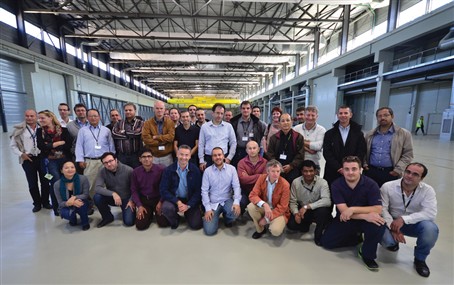 On 2 October, F4E and ITER IO have successfully concluded the first site acceptance test of the Control, Data, Access and Communication (CODAC) integration of the Poloidal Field (PF) coils building controller. Due to the impressive size and weight of the PF coils, ranging from 10 to 24 metres and weighing up to 400 tonnes, a specific building was constructed to assemble them on the ITER site.
The F4E CODAC team and the Site, buildings and power supplies project team worked together to achieve this result in collaboration with OMEGA and INEO.
The main objective of this activity was to integrate the local PF coils building alarm monitoring system into the overall site alarm system which will be in place for the building construction activities over the next 8 years.
The system handles more than 2,000 signals generated by the PF coils building subsystems responsible for heating, ventilation, air-conditioning, cooling water, heating water, electrical distribution, cranes and fire detection. Any alarm generated by those systems will be visible on any location through the CODAC network.
The excellent collaboration between the F4E and the ITER IO CODAC teams, along with the technical support received from ITER IO towards the development of the PF coils building interface, made this joint initiative a success.
Source: F4E
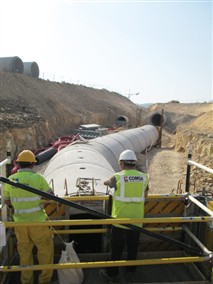 With the objective of avoiding delays on the ITER construction site, F4E has, for the first time, undertaken an accelerated restricted procurement procedure. Its successful completion – within the shortest time frame possible – is a significant achievement for F4E as it allows for the on-site work to continue without interruption and proves that the organisation is able to adapt and deliver even under unforeseen circumstances.
The accelerated restricted procedure has been the basis of the launching of the competitive Call for Tender which was open to all companies from EU Member States and Switzerland and has now resulted in the awarding of a contract worth 3.7 million EUR. The contract, signed in July and awarded to Spanish company COMSA EMTE, concerns the galleries and precipitation drainage around the Tokamak complex and Assembly building for which the works are currently being carried out by a workforce of 50.
The accelerated restricted procurement procedure, which involves speeding up all steps of the Call for Tender in order to achieve a 40% quicker result, can only be used in exceptional cases. In this case, a redesign linked to enhanced safety measures risked causing a delay in construction and it was especially important that the galleries and precipitation drainage around the Tokamak complex and Assembly building be completed before the rainy Autumn season starts. F4E decided therefore to use the accelerated restricted procurement procedure and design the Call for Tender using the lowest compliant bid method, i.e. the winning tender must include the lowest price offer while complying with the very detailed technical criteria set out in the call.
The awarded contract involves the construction of 12 reinforced concrete galleries which host Safety Important Component (SIC) related systems such as cooling water pipes and power supply cables of the networks that need to be visited and maintained during the lifecycle of the ITER machine. The total length of galleries will measure 650 metres, with particular sections measuring an impressive 12 metres in width and 6 metres in height. In total, 10,000m3 of earth is being moved in excavation (earthworks) and 5,000 m3 of concrete is being used. The awarded contract also comprises the precipitation drainage, i.e. the water collected from on and around the Tokamak and Assembly buildings, where in total the length for rain water drainage involves 800 metres of gravity pipework with diameters ranging from 400 millimetres to 1,400 millimetres.
Source: F4E


nsp_133.JPG)


nsp_133.JPG)


 |
 |
 |
 |
 |
 |
 |
 |
Media


Research projects carried out at the IPPLM are funded by the Polish Ministry of Education and Science, the National Science Centre and by the European Commission within the framework of EUROfusion Consortium under grant agreement No 101052200. Financial support comes also from the International Atomic Energy Agency, European Space Agency and LaserLab Consortium as well as from the Fusion for Energy Agency.