



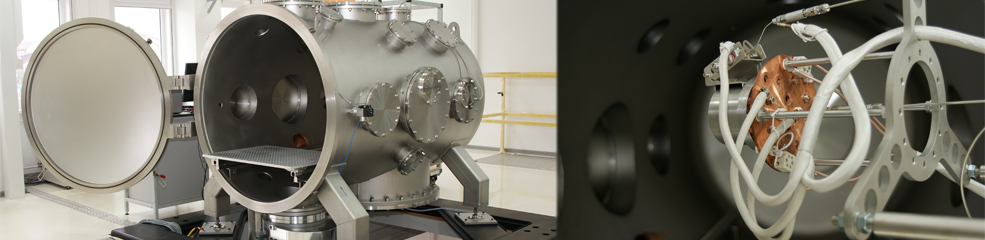


Zestaw obrazów 2019
zdjecie1.jpg
zdjecie2.jpg
zdjecie3.jpg
zdjecie4.jpg
zdjecie5.jpg
zdjecie6.jpg
2019_1.JPG
2019_2.JPG
2019_4.JPG

Gallery
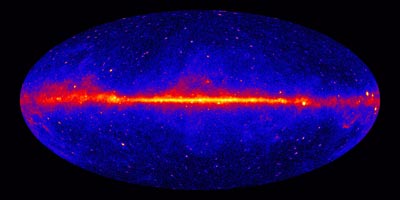 Using a new statistical technique to analyse publicly available data from NASA's Fermi Space Telescope, an astrophysicist in Germany says he may have spotted a tell-tale sign of exotic particles annihilating within the Milky Way. If proved to be real, this "gamma-ray line" would, he claims, be a "smoking-gun signature" of dark matter.
 The path of a frozen pellet through the JET plasma. The pellet enters at the left, and burns up a short distance later. However it induces an instability on the edge of the plasma which continues on the same trajectory through the chamber. The smaller bright spots to the right show this filament of an ELM instability hitting the limiter tiles on the edge of the plasma.
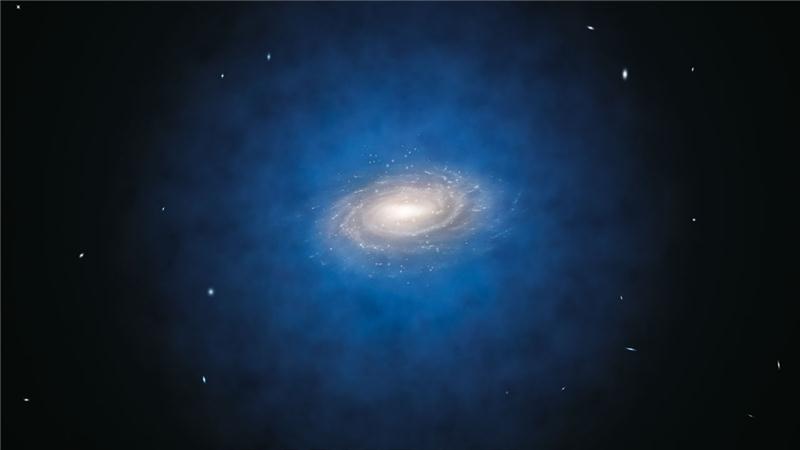
The most accurate study so far of the motions of stars in the Milky Way has found no evidence for dark matter in a large volume around the Sun. According to widely accepted theories, the solar neighbourhood was expected to be filled with dark matter, a mysterious invisible substance that can only be detected indirectly by the gravitational force it exerts. But a new study by a team of astronomers in Chile has found that these theories just do not fit the observational facts. This may mean that attempts to directly detect dark matter particles on Earth are unlikely to be successful.
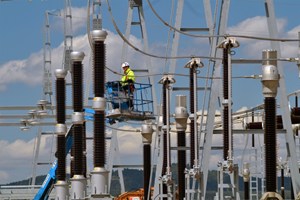 Although no speeding train will ever cross the ITER site, the four-hectare electrical switchyard in the southwest section of the platform will act very much like a railroad junction.
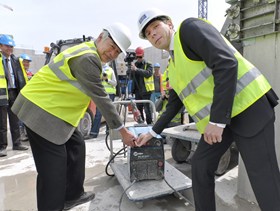 The last step in installing a seismic pad consists of pouring highly fluid mortar into the small space that persists between top of the concrete plinth and the bottom of the pad's metal plate after the pouring of second-phase concrete.


nsp_133.JPG)


nsp_133.JPG)


 |
 |
 |
 |
 |
 |
 |
 |
Media


Research projects carried out at the IPPLM are funded by the Polish Ministry of Education and Science, the National Science Centre and by the European Commission within the framework of EUROfusion Consortium under grant agreement No 101052200. Financial support comes also from the International Atomic Energy Agency, European Space Agency and LaserLab Consortium as well as from the Fusion for Energy Agency.