



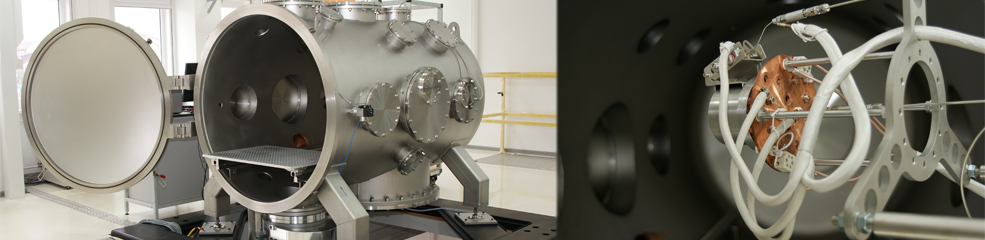


Zestaw obrazów 2019
zdjecie1.jpg
zdjecie2.jpg
zdjecie3.jpg
zdjecie4.jpg
zdjecie5.jpg
zdjecie6.jpg
2019_1.JPG
2019_2.JPG
2019_4.JPG

Gallery
 As the world community grapples with whether to pursue nuclear energy and at what pace, a "new" paradigm is getting thrown into the mix -- one that its advocates say is abundant in nature and which does not create the near the levels of radioactive waste that uranium does.
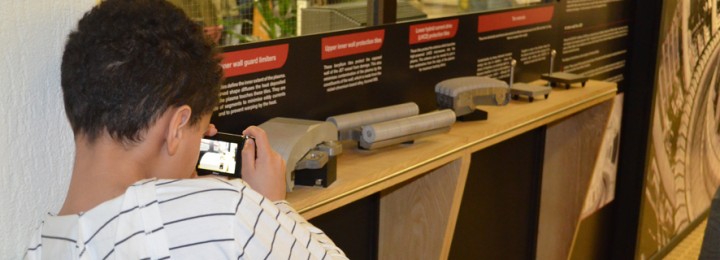 Ten times a year scientists and engineers at JET give up an evening to show the public around their wonderful toy. Over a thousand people attend each year, coming from as far afield as Europe and the US to catch a glimpse of the world’s largest fusion experiment, and the sessions are booked out months in advance. In addition to looking and listening, the vistors now have some exhibits they can touch
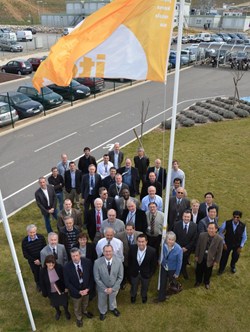 The design of ITER's Cooling Water System is maturing. The system, consisting of the Tokamak Cooling Water System (TCWS), the Component Cooling Water System (CCWS), the Chilled Water System (CHWS) and the Heat Rejection System (HRS), is responsible for removing the enormous amounts of heat generated by the tokamak and its auxiliary systems, with an anticipated peak heat load of more than 1100 MW.
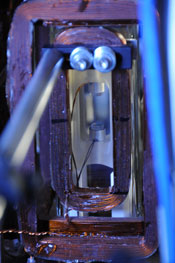 A new type of laser in which light is emitted collectively by several atoms at the same time – rather than just one – has been unveiled by physicists in the US. Their "superradiant" laser, which is based on a concept first described in 1954 by the US physicist Robert Dicke, has the potential to be up to 1000 times more stable than the best conventional visible lasers. It could therefore be used to boost the performance of the most advanced atomic clocks, although much more development work will be needed before that goal is fulfilled.
 Counting the number of neutrons produced by fusion reactions inside a burning plasma gives a precise indication of how much fusion power is being generated.


nsp_133.JPG)


nsp_133.JPG)


 |
 |
 |
 |
 |
 |
 |
 |
Media


Research projects carried out at the IPPLM are funded by the Polish Ministry of Education and Science, the National Science Centre and by the European Commission within the framework of EUROfusion Consortium under grant agreement No 101052200. Financial support comes also from the International Atomic Energy Agency, European Space Agency and LaserLab Consortium as well as from the Fusion for Energy Agency.