





Zestaw obrazów 2019
zdjecie1.jpg
zdjecie2.jpg
zdjecie3.jpg
zdjecie4.jpg
zdjecie5.jpg
zdjecie6.jpg
2019_1.JPG
2019_2.JPG
2019_4.JPG


Światowe
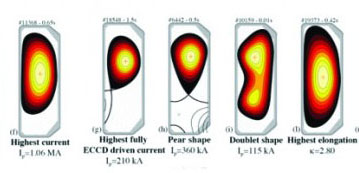 Some people believe the triangular shape of the pyramids has special powers. Plasma physicists also have strong opinions about shapes, too, but it is not superstition: it’s all about how to get the maximum performance out of a fusion experiment. The power that interests physicists is not mystical, it is fusion power. Changing the shape of the plasma can lead to higher stability at its edge. This leads to higher density, and therefore more power.
The champion of plasma shaping is the TCV tokamak (Tokamak à Configuration Variable) at the Ecole Polytechnique Fédérale de Lausanne (EPFL), Switzerland. With its 16 poloidal shaping coils it can achieve an astounding array of plasma geometries, not just triangular and round, but square, pear-shaped, double-lobed like the number eight or the picturesquely-named “snowflake”.
The original rationale for departing from the conventional circular cross-section was a practical engineering consideration. The design team of the first large tokamak, JET, realised it is much easier to support D-shaped coils as they sit closer into the central column - conventional circular coils would need substantial support structures to prevent them drooping. However it was soon found that performance was enhanced by this shape: the plasma sits tighter around the central column, which is where the inside sections of the toroidal electromagnets sit closer together. This means the magnetic field is stronger, which makes for the better performance.
At JET the six poloidal shaping coils around the outside of the torus can be used to emphasise the triangularity – the coils at the apices of the triangle ( top and bottom of the torus, and two on the horizontal plane) are run in the same direction as the central solenoid, effectively pulling the apices of the triangle further out, while the two coils at 45 degrees above and below the midplane are run in the opposite direction, flattening the rounded sides of the triangle. The result is far from a true triangle, it is more D-shaped, but a considerable enhancement on the circular cross-section.
What these experiments with plasma geometry have shown is that the creation of a shape with better confinement has a downside. The high-confinement modes inevitably lose energy through turbulent events known as an edge-localised modes (ELMs) – and the geometries with higher confinement lead to less frequent, but more powerful ELMS.
Nonetheless the design team for ITER has opted for a triangular plasma, to maximise the power output of the device, and is trialling a number of other methods to reduce ELMs, such as specifically installed localised coils, or injecting pellets of frozen fuel to trigger higher frequency, but less damaging ELMs.
The plasma shape plays another major role in a tokamak, by determining where the plasma touches the walls. It is here that TCV’s snowflake geometry is significant: It gains its name not from its cross section, which is more-or-less triangular, but from the six-fold pattern of the magnetic field lines where it touches the divertor. This extended shape spreads the heat load from the plasma, helping to overcome the material challenges for future fusion devices
If these plasma shapes are successful in ITER then perhaps the respect the ancient Egyptians had for the triangular shape of the pyramids will re-surface in the future, as society begins to rely on a generation of high triangularity fusion power plants!
Source: EFDA
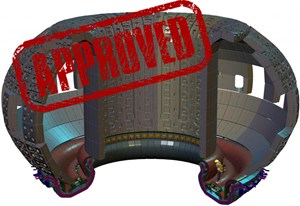 After three days and 29 presentations, a comprehensive design review with probably the largest participation in the history of the ITER project was completed last week. More than 80 experts from the ITER Organization, Domestic Agencies and industry attended the Final Design Review of the ITER blanket system.
 "The development and validation of the final design of the blanket system is a major achievement on our way to deuterium-tritium operation—the main goal of the ITER project," Blanket Integrated Product Team Leader (BIPT) and Section Leader Rene Raffray concluded at the end of the meeting, obviously relieved at the success of this tremendous endeavour. "We are looking at a first-of-a-kind fusion blanket which will operate in a first-of-a-kind fusion experimental reactor."
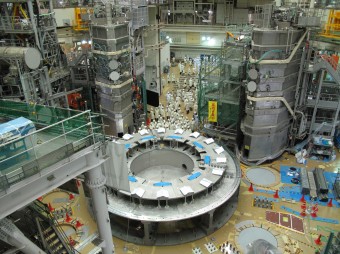 Naka, Japan: Clutching 2.5 metre long spanners, three teams of dignitaries from Europe and Japan simultaneously tighten bolts on the cryostat base of JT60 Super-Advanced, thereby marking a significant milestone – this major component for the Japanese tokamak was designed and manufactured in Spain.
The base is a 250-ton structure made of low-cobalt stainless steel that will support the complete tokamak. Together with an upper section the base will form a vacuum enclosure around the vacuum vessel and coils, allowing them to be cooled to low temperatures required by JT60-SA’s superconducting coils.
“Every project brings to you some new challenges.” says Joaquin Sanchez, head of research unit at CIEMAT. “On the one side, the need adapt the structure to the existing support basis at the JT60 building, which consists of two concentric rings. On the other side we have to guarantee the geometric stability of the upper part in order to preserve the vacuum tightness of the cryostat. This second requirement was a problem due to the fact that the upper ring of the base has to be in contact with elements at different temperatures: the TF coil supports, and the vacuum vessel supports.” However CIEMAT’s team of mechanical engineers was equal to the task, says Dr Sanchez: “We have been working on mechanical analysis & design problems for ITER and DEMO for a long time.”
The cryostat base was completed under the Broader Approach agreement between Japan and Europe. It was constructed by the company IDESA, located in Aviles, in the North of Spain, taking approximately 20 months.
Source: EFDA
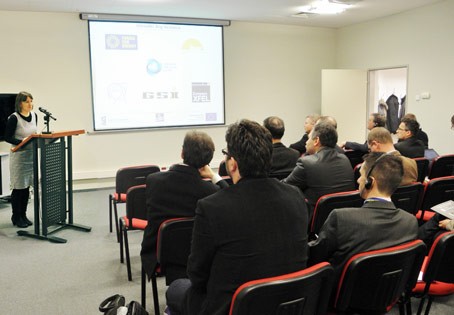 The business opportunities stemming from big science projects and the potential contribution of companies with their skills and expertise led Sylwia Wójtowicz, Poland’s Industrial Liaison Officer (ILO), to organise a one day seminar at Wroclaw Technology Park in order to showcase the ITER project together with the European Spallation Source. This was the second awareness day organised in the last three years and it came at the right time. Europe’s ITER procurement strategy has been outlined and contactors are actively looking for suppliers at different levels. The event managed to attract the interest of 30 representatives coming from the fields of services, cabling, IT and offered them information about the upcoming Calls for tender.
The plenary session opened with a presentation from Professor Maciej Chorowski, who highlighted the benefits that large scientific collaborations can yield to the economy and its operators. In this context, the ITER project was described as a true opportunity for fast track learning in new niche technologies with clear financial benefits in the long term. Anthony Courtial, representing F4E’s “Market policies, Analysis and Reporting” team, explained Europe’s contribution to ITER and elaborated on the different procurement packages that were of interest to the audience.
An online guided tour of the Industry and Associations portal was given to all participants focussing mainly on how to register and how to search for other business partners. One of the novelties of the seminar was a session called “Meet the company”, during which Polish companies presented to F4E their area of competence and capabilities in order to explore their potential contribution. The seminar concluded with meetings between different Polish companies exchanging contacts and understanding how they could complement each other’s skills.
To find out more about how your company could get involved in the ITER project, contact your Industrial Liaison Officer and keep checking the F4E website and theIndustry and Associations portal for any updates.
Source: F4E
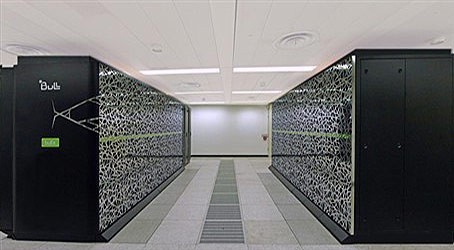 As of 9 April 2013 GÉANT, the world’s leading high-speed research and education network managed and operated by DANTE in Cambridge, UK, will be providing data links to the International Fusion Energy Research Centre (IFERC), in Rokkasho, Japan. IFERC hosts the Helios supercomputer, a system with a compute power exceeding 1 PFlops and attached to a storage capacity of 50 PB. The Helios supercomputer is provided and operated by the French Alternative Energies and Atomic Energy Commission (CEA), France and is a Fusion for Energy (F4E) resource.
GÉANT is supplying a 10 Gbps (10 Gigabits per second) link to connect Helios with scientists involved in ITER and DEMO, the demonstration fusion reactor which is considered the follow-on project of ITER.
It is hoped, after the first fusion plasmas of ITER in Cadarache, France, planned for 2020 and beyond, that DEMO, an industrial demonstration fusion reactor, will lead to full-scale fusion energy reaching the commercial market in the second half of the century.
Massive data sets
HELIOS is producing vast amounts of data, which need to be shared with scientists all over the world. Via the Japanese National Research and Education Network (NREN) SINET, IFERC is connected to the pan-European GÉANT network, and to all European NRENs, like RENATER, DFN, SWITCH, JANET and many others), supporting the research activities for fusion in Europe.
The GEANT-provided link is a 10Gbps connection between Geneva and Washington, matching the 10Gbps link between Japan and Washington provided by SINET. It will enable researchers in Europe to access this dedicated supercomputer in Japan. It may eventually be used to complement also the network resources allocated to other large scale projects, such as the CERN LHC experiment.
Roberto Sabatino Business Solutions consultant says: “The combination of major new scientific projects like IFERC and the use of supercomputers like Helios is creating an explosion of data for which we need to be ready. The provision of a 10Gbps link is a first and crucial step to support the data networking needs in the global search for cleaner, sustainable energy and to assist scientists in their ground-breaking work.”
Transporting high-volumes of traffic
Together with ever-growing data sets, greater collaboration in areas such as energy and genetics is driving a growing demand to access shared central databases of information across research disciplines, exponentially increasing network traffic. In the past, the most practical method for transferring bulk data from geographically dispersed clusters and end users was to physically ship disks by courier. With high speed networks such as GÉANT, data from many different sources can quickly be shared and analysed leading to accelerated results.
Europe’s vision for - sustainable energy
The ITER project is funded by and run by seven parties – Europe (contributing 45% of the cost), India, Japan, China, Russia, South Korea and the US. DEMO studies are carried out by individual ITER members, and in the case of Japan and Europe, jointly in the IFERC, in the framework of the Broader Approach Agreement. The investment in fusion research is in line with the EU’s focus for Horizon 2020 to find new and convincing solutions to the societal challenge of secure, clean and efficient energy. GÉANT is seen as an essential component in driving European ICT and for Europe to remain competitive in dealing with society’s grand challenges.
Susana Clement Lorenzo, F4E Group Leader for IFERC says: “Helios users are running codes ranging from fundamental physics in hot ITER plasmas to technology and engineering calculations so as to build components in very challenging environments as expected in DEMO. Supercomputers are crucial in solving these complex problems and good data communication channels such as the high-speed GÉANT network can provide the essential links to help scientists all over the world to analyse their findings. Ultimately, all these initiatives will bring us a step closer to fusion as a potential energy source.”
Big science reliant on high-speed networks
IFERC joins many other big science projects supported by GÉANT which are changing the way the world collaborates. Examples include CERN’s Large Hadron Collider and global projects addressing climate change, medical diagnosis, bioinformatics and deep space research.
To see a short clip on the Helios supercomputer click here
To see a short clip on GÉANT click here
Source: F4E
Local News
- 1
- 2
- 3
- 4
- 5
IPPLM joins the Enterprise Europe Network
31-03-2026
On 23 March 2026, the Institute of Plasma Physics and Laser Microfusion (IPPLM) joined, with its technological offer, the group of entities affiliated with the Enterprise Europe Network (EEN), interested...
Read moreIPPLM as a co-creator of the exhibition "E = mc² – the formula that changed the world" at the National…
18-02-2026

On 16 February 2026, the official opening of two new permanent exhibitions took place at the National Museum of Technology in Warsaw. The Institute of Plasma Physics and Laser Microfusion...
Read moreIPPLM supports children and young people at the TPD "Helenów" Centre
22-12-2025

The Sylwester Kaliski Institute of Plasma Physics and Laser Microfusion (IPPLM) has for many years been actively engaged in initiatives supporting children and young people supported by the TPD "Helenów"...
Read moreIPPLM researchers took part in an experimental campaign on the GEKKO XII laser
20-11-2025

On 10–14 November 2025, a research team from the Sylwester Kaliski Institute of Plasma Physics and Laser Microfusion (IPPLM) – Prof. Katarzyna Batani, Dr Hanna Marchenko and Dr Agnieszka Zaraś-Szydłowska...
Read moreRegister for the 18th Kudowa Summer School on Plasma Physics!
07-11-2025

We invite you to take part in the 18th Kudowa Summer School "Towards Fusion Energy", which will be held on 8–12 June 2026 in Kudowa-Zdrój, Poland. The event is organised...
Read moreIPPLM participated in the second technical meeting within the DONES Con-P1 project
17-10-2025
The Institute of Plasma Physics and Laser Microfusion (IPPLM) took part in the second technical meeting held as part of the DONES Consolidation Phase 1 (DONES ConP1) project, co-financed by...
Read moreProf. Jan Badziak from IPPLM among the World’s Top 2% Scientists
15-10-2025
Prof. Jan Badziak, from the Department of Laser Plasma and Magnetized Dense Plasma Physics at the Institute of Plasma Physics and Laser Microfusion (IPPLM), has been included in the prestigious...
Read more29th Science Festival with the participation of IPPLM
10-10-2025

During the 29th Science Festival in Warsaw, held on 19–28 September 2025, researchers from the Institute of Plasma Physics and Laser Microfusion (IPPLM) conducted lessons for upper-grade primary school students. The...
Read morePLASMA 2025 and the 20th Anniversary of the Euratom–IPPLM Association – event summary
26-09-2025

From 15 to 19 September 2025, Warsaw hosted the international scientific conference PLASMA 2025 – International Conference on Research and Application of Plasmas, dedicated to plasma research, diagnostics, and applications....
Read moreWe bid farewell with deep sorrow to Professor Jerzy Wołowski
25-09-2025

It is with great sadness that we have received the news of the passing of Professor Jerzy Wołowski (1936–2025) an outstanding physicist, long-time employee of the Institute of Plasma Physics...
Read more20th anniversary of the Euratom–IPPLM Association (CeNTE): Celebrating two decades of fusion research coordination
16-09-2025

On 19 September 2025, during the PLASMA 2025 International Conference on Research, Diagnostics and Applications of Plasma in Warsaw, the IPPLM will mark 20th anniversary of the coordination of research on nuclear fusion...
Read moreIPPLM at the 49th Congress of Polish Physicists in Katowice
13-09-2025
During the 49th Congress of Polish Physicists, held from September 5–11, 2025, in Katowice, the Institute of Plasma Physics and Laser Microfusion (IPPLM) was represented both among the speakers and...
Read moreProf. Agata Chomiczewska appointed Deputy Director for Scientific Affairs at the IPPLM
03-09-2025

We are pleased to announce that the Minister of Energy, Mr. Miłosz Motyka, has appointed Dr. hab. Agata Chomiczewska to the position of Deputy Director for Scientific Affairs at the...
Read moreA historic milestone – the Scientific Council of the Institute confers the degree of habilitated doctor
10-07-2025
For the first time in the history of the Institute of Plasma Physics and Laser Microfusion (IPPLM), the Scientific Council has adopted a resolution to confer the degree of habilitated...
Read moreNew Board of the Plasma Physics Division of the European Physical Society
04-07-2025

In the first quarter of 2025, elections were held for the Board of the Plasma Physics Division of the European Physical Society (EPS Plasma Physics Division). Six candidates who received...
Read moreIPPLM researchers bring fusion expertise to 10th Central & Eastern Europe Nuclear Industry Congress 2025
12-06-2025
Researchers from the Institute of Plasma Physics and Laser Microfusion (IPPLM), Dr. Natalia Wendler and Dr. Paweł Gąsior, recently participated in a panel discussion at the 10th Central & Eastern...
Read moreIPPLM at the 3rd edition of the "Science for Society" Congress
29-05-2025

On 25-26 May 2025, the 3rd edition of the "Science for Society" Congress took place in the Large Hall of the Warsaw University of Technology. The aim of the event...
Read moreInvitation to the 3rd edition of the "Science for Society" Congress with the participation of IPPLM
22-05-2025

The 3rd edition of the "Science for Society" Congress will take place on 25–26 May 2025 at the Warsaw University of Technology. This unique event demonstrates that science is not...
Read moreJoin the 28th Science Picnic!
07-05-2025

The Institute of Plasma Physics and Laser Microfusion (IPPLM) invites you to its stand on Saturday, 10 May, during the 28th Science Picnic, organized by Polish Radio and the Copernicus...
Read moreCooperation agreement between the IPPLM and the National Museum of Technology
18-04-2025

On 17 April 2025, a cooperation agreement was signed between the National Museum of Technology (NMT) and the Institute of Plasma Physics and Laser Microfusion (IPPLM). The ceremonial meeting, attended by...
Read morePolish and French researchers join forces in research on nuclear fusion
31-03-2025

On 24-25 March 2025, a Polish-French meeting was held at the headquarters of the Institute of Nuclear Physics of the Polish Academy of Sciences (IFJ PAN) and the French Institute...
Read moreJoin us for the International Conference on Research and Application of Plasmas – PLASMA 2025!
13-03-2025

The Institute of Plasma Physics and Laser Microfusion (IPPLM) invites you to attend the PLASMA 2025 – International Conference on Research and Application of Plasmas, which will be held from...
Read moreExperimental research session in the Plasma-Focus PF1000U laboratory as part of the ICDMP collaboration
27-02-2025

On February 10–21, 2025, an experimental session was held in the Plasma-Focus PF-1000U laboratory, in which, in addition to the IPPLM team, a three-person team of researchers from the Prague...
Read moreLaser demonstration on JET detects fusion fuels
11-02-2025

Scientists and engineers from eight nations, including Poland, have carried out a project using lasers on the Joint European Torus (JET) to study fusion fuel retention. Laser Induced Breakdown Spectroscopy (LIBS),...
Read moreIPPLM employee nominated for the Personality of the Year title in the Science category
24-01-2025
Research and technical employee Mr. Olgierd Cichorek, M.Sc., from the Laboratory of Plasma Nudge for Satellites at the IPPLM has been nominated for the title of Personality of the Year...
Read moreWorld News
- 1
- 2
- 3
- 4
- 5
In Memoriam — Professor Francesco Romanelli
24-03-2026

The world of fusion research mourns the loss of Professor Francesco Romanelli, a visionary scientist whose work helped bring humanity closer to clean, limitless energy. Over four decades, he explored...
Read moreIgniting the future: Breakthroughs in inertial confinement Fusion
25-07-2025

In December 2022, the National Ignition Facility (NIF) at Lawrence Livermore National Laboratory (USA) marked a historic milestone in fusion science: an experiment produced 3.15 MJ of fusion energy from 2.05 MJ of laser...
Read moreWendelstein 7-X sets new fusion performance records
04-06-2025

On May 22, 2025, the Wendelstein 7-X (W7-X) stellarator at the Max Planck Institute for Plasma Physics (IPP) in Greifswald concluded its latest experimental campaign with a major success: a...
Read moreEuropean tokamak sets new fusion plasma record
20-02-2025

On February 12, 2025, the WEST tokamak, located at CEA Cadarache in southern France, set a new world record by sustaining fusion plasma for 1,337 seconds, or over 22 minutes....
Read moreDr. Gianfranco Federici appointed as the new EUROfusion Programme Manager
17-12-2024
At the 49th General Assembly held in Barcelona, December 2024, Dr. Gianfranco Federici was elected as the new Programme Manager of EUROfusion. He succeeds Prof. Ambrogio Fasoli, who will return...
Read moreEUROfusion and F4E join forces for Europe’s fusion future
16-12-2024

EUROfusion and Fusion for Energy (F4E) have signed a Memorandum of Understanding (MoU) to advance fusion research and development in Europe. This agreement reinforces cooperation in...
Read moreJohn J. Hopfield and Geoffrey E. Hinton awarded the 2024 Nobel Prize in Physics
08-10-2024

John J. Hopfield and Geoffrey E. Hinton have been awarded the 2024 Nobel Prize in Physics "for foundational discoveries and inventions that enable machine learning with artificial neural networks." The Nobel...
Read moreWendelstein 7-X begins new experimental campaign
10-09-2024

The Wendelstein 7-X, the world’s most advanced stellarator, is launching a new experimental campaign after a year of intensive maintenance and upgrades. This phase, known as OP2.2, begins on 10...
Read moreITER's New Project Baseline: A Robust Path to Fusion Energy Research
04-07-2024

On 3 July, ITER Director-General Pietro Barabaschi presented the new project baseline, under evaluation by the ITER Organization's governing body. This plan aims to ensure a robust start to scientific...
Read moreITER Council Presents Updated Project Baseline
21-06-2024

The ITER Council convened this week for its 34th meeting, where nearly 100 attendees reviewed significant updates to the project baseline. The proposed changes aim to optimize the overall project...
Read moreEurope and Japan celebrate breakthrough in paving the way for fusion energy
01-12-2023

The prospect of harnessing fusion energy is closer. The successful operation of JT-60SA, the most powerful experimental device to date, built by Europe and Japan, is a landmark achievement for...
Read moreFirst plasma was successfully generated at JT-60SA
26-10-2023

A momentous achievement in the field of nuclear fusion has been accomplished by a collaborative team of engineers from Europe and Japan. They have successfully generated tokamak plasma for the...
Read moreThe Nobel Prize in Physics 2023
03-10-2023
Pierre Agostini, Ferenc Krausz and Anne L’Huillier are the winners of this year's Nobel Prize in Physics. It was awarded "for experimental methods that generate attosecond pulses of light for...
Read moreUS Lab Replicates Fusion Ignition Breakthrough
08-08-2023
The US National Ignition Facility (NIF) has achieved fusion ignition once again, building on its landmark 2022 success. This achievement, powered by hydrogen within a diamond capsule, signifies a major...
Read moreNew Programme Manager Elect announced by EUROfusion
20-07-2023
Professor Ambrogio Fasoli became the new EUROfusion Programme Manager Elect. The decision was made by EUROfusion General Assembly at the meeting on 18 July 2023. His tenure will officially commence...
Read moreEUROfusion stands in solidarity with research in Ukraine
24-02-2023

Today, as we commemorate the anniversary of the invasion of Ukraine by Russia, the EUROfusion consortium stands in solidarity with our Ukrainian member and research colleagues. EUROfusion remains committed to supporting...
Read moreEight-minute production of plasma with gigajoule energy turnover at Wendelstein 7-X
23-02-2023

Another target has been achieved only recently by the W7-X researchers, namely they managed to acquire an energy turnover of 1.3 gigajoules in the device, which is 17 times higher...
Read moreThe Nobel Prize in Physics 2022
04-10-2022

Alain Aspect, John F. Clauser and Anton Zeilinger are the winners of this year's Nobel Prize in Physics. It was awarded “for experiments with entangled photons, establishing the violation of...
Read moreNew experiments for fusion energy record breaker JET
27-09-2022

A new wave of fusion energy experiments on UK Atomic Energy Authority’s record-breaking Joint European Torus (JET) started this month. EUROfusion researchers are using the famous JET machine to conduct a...
Read moreITER appoints new Director-General
21-09-2022
Pietro Barabaschi has become the next Director-General of the ITER Organization as a result of the unanimous choice of the Council from among finalist candidates. In the transition period Dr....
Read moreStarting power plant design
07-07-2022

At a livestreamed Horizon EUROfusion event in Brussels on 5 July 2022, EUROfusion celebrated the start of conceptual design activities for Europe's first demonstration fusion power plant DEMO. This first-of-a-kind...
Read moreCelebration of achieving a crucial assembly milestone in the ITER Project
17-05-2022

This month, we have witnessed the successful lifting and lowering into the machine well of the first sub-section of the ITER plasma chamber. The weight of the component is the...
Read moreBurning plasma achieved in inertial fusion at the National Ignition Facility
15-02-2022
Obtaining a burning plasma is a critical step towards self-sustaining fusion energy. A burning plasma is one in which the fusion reactions themselves are the primary source of heating in...
Read moreHistoric milestone reached by JET scientists
20-01-2022

Iconic fusion energy machine JET – which reaches controlled temperatures 10 times hotter than the core of the sun – completed its 100,000th live pulse last night. Weighing 2,800 tonnes, the...
Read moreHorizon Europe Grant Agreement signed
20-12-2021

15 December 2021 saw the EUROfusion consortium signing the Grant Agreement under Horizon Europe, the European Framework Programme from 2021 – 2027, in an aim to launch comprehensive R&D approach...
Read more |
 |
 |
 |
 |
 |
 |
 |
What we do
Our laboratories
Online seminars
| Thursday, 30 Apr 2026, godz. 13.00 Seminarium instytutowe: "Equation of State of Shock Compressed BN in the Megabar Pressure Range", dr hab. Katarzyna Batani, IFPiLM |


Research projects carried out at the IPPLM are funded by the Polish Ministry of Education and Science, the National Science Centre and by the European Commission within the framework of EUROfusion Consortium under grant agreement No 101052200. Financial support comes also from the International Atomic Energy Agency, European Space Agency and LaserLab Consortium as well as from the Fusion for Energy Agency.