





Zestaw obrazów 2019
zdjecie1.jpg
zdjecie2.jpg
zdjecie3.jpg
zdjecie4.jpg
zdjecie5.jpg
zdjecie6.jpg
2019_1.JPG
2019_2.JPG
2019_4.JPG


Światowe
 Interested in a career in fusion? Want to gain practical experience in a European working environment? The F4E summer studentship programme could be the perfect opportunity for you!
If you are an EU or Swiss national, aged between 18-25 years, following university studies and with a good knowledge of at least two Community languages (one of which should be English), you are eligible to apply. The summer studentship programme, which is now in its fourth year, provides short-term training at the F4E offices in Barcelona in order to promote awareness, knowledge and understanding of F4E’s role in the ITER project and within the European context.
The duration of the summer studentship will be two to three months, with the programme running between June and September. F4E summer students will be remunerated and may receive an allowance for travel expenses.
Applications should be submitted in English using F4E’s online tool. The deadline for submission is 29/04/2013 at midday CET. After the closing time, the database will no longer be accessible.
The online application process starts upon clicking “CLICK TO APPLY” button on the following page:
http://fusionforenergy.europa.eu/careers/studentships.aspx
Applicants must register their applications online through the F4E Studentship Application tool by creating a valid F4E user account, duly filling in all the requested mandatory fields marked with an asterisk and submitting the following two documents:
- http://fusionforenergy.europa.eu/global/images/bulletDBlue.gif); color: rgb(102, 102, 102); padding-left: 12px; line-height: normal;">
- A detailed Europass curriculum vitae in English which can be obtained at the following address:
http://europass.cedefop.europa.eu/en/documents/curriculum-vitae - A motivation letter of two pages maximum in English
Please note that the online application tool is the only acceptable means of sending in applications.
For enquiries and requests for further documentation, email the This email address is being protected from spambots. You need JavaScript enabled to view it..
Source: F4E
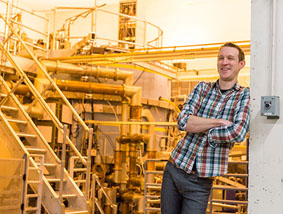 As an undergraduate engineering student, Zach Hartwig was introduced to the methods, procedures and practices that form an engineer’s toolkit. But, he recalls, his real interest was in “the principles the tools were built on, the fundamental physics that lay behind them.” So he switched majors and became a physicist, spending the next few years working in particle physics before joining the MIT NSE doctoral program.
Working at NSE’s Plasma Science and Fusion Center (PSFC), Hartwig has led the development of a groundbreaking materials diagnostic system that will help advance nuclear fusion as a practical energy source. And in the process, he has cultivated his true passion — “a mixture of nuclear physics and materials science with a bit of engineering thrown in.”
The work exemplifies NSE's increasing focus on interdisciplinary projects that support worldwide development of commercial fusion power plants utilizing tokamak reactors, like PSFC’s Alcator C-Mod. Tokamaks have made huge strides in functionality, successfully using magnetic fields to confine plasmas where lighter elements fuse into heavier ones, as they do in the core of stars, at temperatures of up to 100 million degrees C.
One important area of inquiry is the interaction between the confined plasma and the materials inside the tokamak's high-vacuum chamber. “The plasma and the chamber walls are a coupled system,” explains Hartwig. “C-Mod’s wall tiles and other plasma-facing components are made from robust refractory metals, like molybdenum, but we’re pushing their material limits by exposing them to enormous heat, charged-particle, and neutron fluxes that can cause severe surface modifications.”
Understanding how these components behave during ongoing reactor operation is intimately tied to several grand challenges still facing fusion — maintaining and controlling steady-state burning plasmas, mitigating deleterious effects of plasma-material interactions, and minimizing required maintenance. But until now, it has been effectively impossible to make routine, comprehensive measurements of plasma-facing materials in the hostile and inaccessible environment of a tokamak chamber.
Hartwig’s five-year project, conceived by NSE Professor Dennis Whyte and executed with help from nearly 100 NSE scientists, engineers, machinists, and students, solves the problem by directing a beam of deuterons (particles comprised of one proton and one neutron) from a linear accelerator into the tokamak, where it can be magnetically steered to strike any desired point.
The deuterons prompt nuclear reactions with the component material, generating high-energy neutrons and gamma rays, which can be measured by specially positioned detectors near the reactor chamber. “That tells us an enormous amount about the surface they came from, and lets us reconstruct surface properties we’re interested in,” explains Hartwig, “Nobody’s ever looked at these things so comprehensively inside the vacuum vessel.”
While Hartwig cautions that the diagnostic hardware and its associated computational modeling component must still fully prove themselves, the technology has the potential to become standard equipment for magnetic-confinement systems worldwide. It’s a vindication for Whyte’s vision, and for the diverse group of skilled contributors.
“Until this project, I hadn’t really appreciated what it means to be part of a cohesive team, the synergy. It’s impressive,” says Hartwig.
Hartwig supplements his research with substantial work in fusion-related outreach and communications. In addition to giving tours and talks at the PSFC, he has developed an overview presentation covering technical, economic, environmental, and safety aspects of fusion, delivering it to high-school students, university energy and business groups, and other audiences.
He also organized a 2012 trip for 11 NSE fusion students to Washington, DC, where they met with 30 House and Senate offices. On the agenda: the need to maintain a world-leading domestic fusion energy research program amidst tightening federal budgets and increased U.S. commitments to international fusion experiments. In this environment, says Hartwig, scientists must actively communicate the value of their work to the public and policymakers and make the case for ongoing funding.
“It’s increasingly important for scientists to understand the policy environment,” notes Hartwig, who is considering service as a science advisor in government post-doctorate. “Policymakers rarely meet young scientists. If you show up, tell them about your work and why it's important, and thank them for supporting it, that personal connection makes quite a big impact.”
Source: MIT Nuclear Science & Engineering.
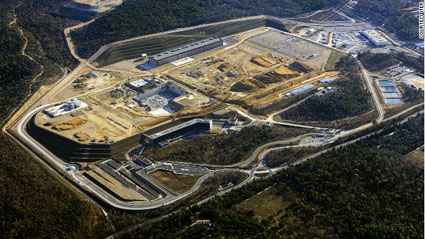
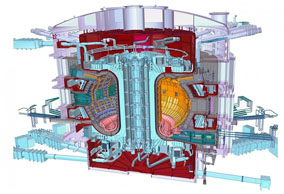 BARCELONA — Ground is now breaking in Cadarache, France, for the 18-billion-euro research facility dedicated to determine if the process that powers the sun can be harnessed to power our future without creating nuclear waste, causing meltdowns or producing carbon dioxide emissions.
The first nuclear fusion experiment of this magnitude, the International Thermonuclear Experimental Reactor project promises to produce almost as much energy as the typical nuclear fission plant. Combining 28 years of research from nations representing 80 percent of the world’s GDP, ITER will be, by far, the largest international partnership to explore if the fusion of nuclei gives off bursts of energy that could more safely light Europe and beyond.
Today and tomorrow, SmartPlanet will discuss this project that has the research and investment of the European Union, the United States, China, South Korea, Japan, India and the Russian Federation, as we attempt to answer what fusion energy is, whether it’s safe and a feasible alternative to oil and gas, and how the public is reacting.
The seemingly endless search for an alternative to oil and a desire to stop greenhouse gas emissions has led to the founding of this multinational consortium to “find the way,” which is whatiter means in Latin. “ITER is just the way to find out if this is the next step in our energy mix,” says Aris Apollonatos, communications leader of the EU branch of the project, Fusion for Energy. Construction is set to end by 2020, with the first successful reaction planned for the same year. While figures seem to vary, as the ITER website explains, “”It’s impossible to be more precise in estimating the cost of the project,” it looks like the construction will cost about 13 billion euros, withanother 5 to 6 billion to run the reactor and research.
What exactly is fusion? Modeled after the process by which the stars, including the sun, are powered, fusion is a process in which light atoms are fused together at extremely high temperatures — 150 million degrees Celsius, or ten times the heat of the Sun — until they turn into the less-talked-about fourth stage of matter, plasma. This really hot plasma, in turn, gives off energy. In the case of the ITER project, the hydrogen isotope deuterium, which is obtained from water, and the lithium-derived radioactive hydrogen isotope tritium are fused together at these extreme temperatures. The end result is the formation of a helium nucleus, a neutron and a lot of energy.
One fusion reactor is predicted to produce 7 billion kilowatt-hours of energy a year — less thanthe typical fission nuclear reactor, which generates about 12.2 billion kilowatts per year. On the other hand, while the fission reactor is usually between 30 and 45 percent efficient, the ITER fusion reactor is expected to produce ten times the amount of of energy needed to power it. Of course, as one retired nuclear power plant employee puts it, “Pure efficiency is virtually never the reason a particular type of generating plant is chosen. In the case of fusion, the minimal radioactive waste is the Holy Grail.”
Fusion is classified as a renewable energy resource because it produces no carbon dioxide in its output — however, you still need high-voltage electricity to heat it up. Since it relies mostly on extracts from sea water, “it doesn’t have to be the same game as with oil,” Apollonatos says, referring to the endless geo-political struggle over that Texas tea. “Many of the regions of the world that supply our energy are geographically remote and some may be politically unstable.”
The biggest question with atomic energy, of course, is: Will it be safe? The scope and scale of the ITER experiment has never been attempted before, as this kind of fusion has only produced megawatts of power for seconds at a time in small labs, but Apollonatos is certain of ITER’s safety. ITER and fusion are hugely different from the Fukushima power plant and those other nuclear fission reactors powering France and much of the world. Fission, like its name suggests, separates particles in a reaction that can create energy, but which can sometimes be uncontrollable. Fusion forces particles to join and should also produce energy, however, Apollonatos assures that, if anything goes wrong, the plasma cools itself, automatically stopping the process. He says there is no risk of meltdown or runaway reactions.
He also says that “The fusion fuel primary material is completely different,” than that is used in fission-based nuclear reactors. The hydrogen isotopes deuterium and tritium were chosen not just because of their wide availability, but because they don’t have a long-term legacy of radioactive waste and should be released from regulatory control and potentially recycled 100 years after ITER is inevitably closed. Nuclear reactors are typically open for only 21 to 30 years, and ITER is only intended for research anyway.
Cadarache is also located in a more geographically stable place than, for example, Fukushima, Japan. Signifying France and the consortium’s confidence in the safety of the project, ITER will sit around the corner from one of France’s active nuclear reactors. ITER is also the first nuclear fusion facility to have gone through the highest level of checks and to be given approval by the French nuclear ministry. “The red tape is terribly high, even more than fission because we are making history,” Apollonatos says. “ITER is the only [fusion experiment] that has met that scale or scope” that would be required to have this level of approval, he explains.
The internationalization of “fusion energy research for peaceful purposes” dates back to 1985, when the U.S., the then Soviet Union, the European Community and Japan created the Atomic Energy Agency. By 2007, China, India and South Korea had come on board in the shared research and economic commitment to form ITER, a joint effort to develop this renewable energy source.
Fusion for Energy, which will provide about 45 percent of the total ITER funding, is focused on this goal of limiting European dependence on foreign energy. Europe is very keen on developing energy that utilizes readily available natural resources — like the 70 percent of the earth covered in water and the minerals from the Earth’s crust — instead of continuing the status quo, in which Europe is importing about half its energy, mostly oil and gas. If current trends continue, Europe is set to import 70 percent of its energy by 2030.
Originally, Spain, France and Japan were bidding to host ITER. Cadarache, France was ultimately chosen as the location over Tarragona, Spain because — while Spain is known for its exploration of a broad range of energy resources, from its three nuclear power plants and its more common electromagnetic dams to being a leader in renewable energy research — France has a history as a leader in nuclear energy dating back to the time of de Gaulle. Plus, France simply has more money to invest into ITER.
While France won out on location, Spain received the authorization to award the contracts for the work, including the main administrative office located in Barcelona, which led to 436 new jobs. Spain has 14 contracts totaling 200 million euros. Two of these winning bids went to COMSA and Ferrovial, two of Spain’s largest construction companies that have been forced to downsize dramatically since 2008. Spain is in charge of building the infrastructure of the small ITER village of 39 buildings. France will head the building of the reactor itself.
Overall, the ITER project is set to create nearly 4,000 jobs, mostly for the French, Spanish and Japanese, who were the third bidders for the project location and who were promised at least 20 percent of the researcher jobs.
Japan will also prepare for the next step down the road, when the research from ITER will be applied at their still-to-be-built demonstration power plant, which will work to transfer any fusion-fueled power to electricity grids and, ultimately, to the public.
Read Global Observer colleague Bryan Pirolli’s take on how the public is reacting to the somewhat quiet building of the ITER reactor.
Source: SmartPlanet
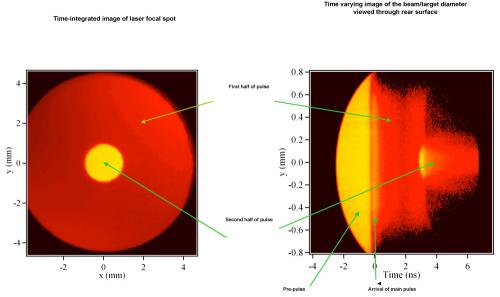 Researchers at the U.S. Naval Research Laboratory have successfully demonstrated pulse tailoring, producing a time varying focal spot size known as 'focal zooming' on the world's largest operating krypton fluoride (KrF) gas laser.
The Nike laser is a two to three kilojoule (kJ) KrF system that incorporates beam smoothing by induced spatial incoherence (ISI) to achieve one percent non-uniformity in single beams and 0.16 percent non-uniformity for 44 overlapped target beams. The facility routinely conducts experiments in support of inertial confinement fusion, laser-matter interactions and high energy density physics. "The development of an energy production system that utilizes thermonuclear fusion is an ongoing process of important incremental steps," said David Kehne, research scientist, NRL Plasma Physics Division. "As such, the use of focal zooming in an inertial fusion energy system is expected to reduce the required laser size by 30 percent, resulting in higher efficiency and lower construction and operating costs." In the direct-drive inertial confinement fusion (ICF) concept, numerous laser beams are used to implode and compress a pea-sized pellet of deuterium-tritium (D-T) to extreme density and temperature, causing the atoms to fuse, resulting in the release of excess energy. In an ICF implosion, a progressively diminishing portion of the beams will engage the shrinking pellet if the focal spot diameter of the laser remains unchanged. For optimal coupling, it becomes desirable to decrease the laser focal spot size to match the reduction in the pellet's diameter, minimizing wasted energy. "Matching the focal spot size to the pellet throughout the implosion process maximizes the on-target laser energy," Kehne said. "This experiment validates the engineering of focal zooming in KrF lasers to track the size of an imploding pellet in inertial confinement fusion." With single-step focal zooming implemented, the Nike laser provides independent control of pulse shape, time of arrival, and focal diameter allowing greater flexibility in the profiles and pulse shapes that can be produced. The flexibility in pulse shaping provides promising uses in both future experiments and laser diagnosis.
Source: phys.org
 Until recently, fears of peak oil and dependence on Middle Eastern suppliers were the key factors shaping our energy policy, pushing governments to scramble for fossil fuel alternatives. Then came shale gas, tar sands, and other unconventional sources. Industry found ways to affordably extract fuel for decades to come. So many are now imagining an end to the energy crisis. That's a dangerous mistake.
First, even the most optimistic predictions leave our grandchildren exposed to an uncertain future. More immediately -- and maybe more importantly -- burning fossil fuels is the number one cause of global warming and its catastrophic consequences.
We need to innovate alternative energy sources now more than ever ... and our choices are limited. There are few viable options that will preserve the levels of prosperity that modern industrial economies have come to expect.
Solar, advanced nuclear fission, and fusion offer the best hope but, unfortunately, none are ready for large-scale deployment. All need time-consuming innovations so we cannot afford to hesitate; research must be ramped up across the board and government must keep up the pace.
Of our three most promising technologies, fusion would be the biggest prize. It is in many respects the perfect energy source. Sea water provides millions of years of fusion fuel. Fusion reactions are safe, they emit neither radioactive waste nor greenhouse gasses and fusion reactors would take up relatively little space.
The catch is fusion is very hard to do. Two isotopes of hydrogen (deuterium and tritium) must be held at 200-million degrees until they collide and fuse to make helium. It is not easy to build a device that runs at ten times the temperature of the Sun, but it is possible.
In fact, the European experimental facility, JET -- hosted in the UK, has already done it. For a couple of seconds, it generated 16 megawatts of fusion power -- enough to supply around 8,000 homes. This is an astonishing achievement. We must now extend that duration and power and innovate technologies to make fusion electricity at a price that the consumer will pay.
We're working flat out on the first of those goals. Seven international partners representing more than half the world's people are constructing the critical experiment right now in Southern France. Called ITER -- it is designed to reach a self-sustaining fusion burn -- the last scientific hurdle to fusion power. Construction will complete in 2020 with a fusion burn expected by 2030.
There are other approaches to fusion -- for example the laser experiments at the National Ignition Facility in California -- but for many of us in the scientific trenches, the fusion burn on ITER is expected to be the defining moment.
But what about our second objective of economic viability? ITER isn't meant to achieve that goal. In addition to clearing our last remaining scientific hurdle, we need to advance a parallel engineering agenda into key reactor technologies that will enable commercial fusion power plants to reliably deliver electricity in a highly competitive market.
This means technological advances in areas such as structural and functional materials, power conversion, and reliability. China and Korea are on the job but the U.S. and Europe are reluctant to face the engineering issues. Certainly, cost increases on ITER haven't helped. If we continue to starve the technological research agenda of funds, however, we risk delaying fusion power and ceding technological leadership to China and Korea.
It goes without saying that resources are limited in our recession-ravaged economies ... but disinvesting in seed corn is obviously self-defeating.
What can we afford? The world energy market is approximately €5-€10 trillion ($6.5-13 trillion) a year. The total world spend on energy research is about 0.5% of this -- strikingly low. Fusion research including ITER construction is less than €1.5 billion ($2 billion) a year -- not even 0.05% of the market.
We are, it seems, not taking the threat of climate change and energy shortages seriously. In this context, the roughly €200-500 million ($260-650 million) per year needed to vigorously pursue the parallel track of technology innovation in fusion seems absurdly small.
We often hear that Thomas Malthus' dire predictions about population growth were wrong because humans innovated solutions to food shortages. Will we innovate ourselves out of our long-term energy constraints too? Only if we sufficiently fund alternative energy research now.
Source: CNN
Local News
- 1
- 2
- 3
- 4
- 5
IPPLM joins the Enterprise Europe Network
31-03-2026
On 23 March 2026, the Institute of Plasma Physics and Laser Microfusion (IPPLM) joined, with its technological offer, the group of entities affiliated with the Enterprise Europe Network (EEN), interested...
Read moreIPPLM as a co-creator of the exhibition "E = mc² – the formula that changed the world" at the National…
18-02-2026

On 16 February 2026, the official opening of two new permanent exhibitions took place at the National Museum of Technology in Warsaw. The Institute of Plasma Physics and Laser Microfusion...
Read moreIPPLM supports children and young people at the TPD "Helenów" Centre
22-12-2025

The Sylwester Kaliski Institute of Plasma Physics and Laser Microfusion (IPPLM) has for many years been actively engaged in initiatives supporting children and young people supported by the TPD "Helenów"...
Read moreIPPLM researchers took part in an experimental campaign on the GEKKO XII laser
20-11-2025

On 10–14 November 2025, a research team from the Sylwester Kaliski Institute of Plasma Physics and Laser Microfusion (IPPLM) – Prof. Katarzyna Batani, Dr Hanna Marchenko and Dr Agnieszka Zaraś-Szydłowska...
Read moreRegister for the 18th Kudowa Summer School on Plasma Physics!
07-11-2025

We invite you to take part in the 18th Kudowa Summer School "Towards Fusion Energy", which will be held on 8–12 June 2026 in Kudowa-Zdrój, Poland. The event is organised...
Read moreIPPLM participated in the second technical meeting within the DONES Con-P1 project
17-10-2025
The Institute of Plasma Physics and Laser Microfusion (IPPLM) took part in the second technical meeting held as part of the DONES Consolidation Phase 1 (DONES ConP1) project, co-financed by...
Read moreProf. Jan Badziak from IPPLM among the World’s Top 2% Scientists
15-10-2025
Prof. Jan Badziak, from the Department of Laser Plasma and Magnetized Dense Plasma Physics at the Institute of Plasma Physics and Laser Microfusion (IPPLM), has been included in the prestigious...
Read more29th Science Festival with the participation of IPPLM
10-10-2025

During the 29th Science Festival in Warsaw, held on 19–28 September 2025, researchers from the Institute of Plasma Physics and Laser Microfusion (IPPLM) conducted lessons for upper-grade primary school students. The...
Read morePLASMA 2025 and the 20th Anniversary of the Euratom–IPPLM Association – event summary
26-09-2025

From 15 to 19 September 2025, Warsaw hosted the international scientific conference PLASMA 2025 – International Conference on Research and Application of Plasmas, dedicated to plasma research, diagnostics, and applications....
Read moreWe bid farewell with deep sorrow to Professor Jerzy Wołowski
25-09-2025

It is with great sadness that we have received the news of the passing of Professor Jerzy Wołowski (1936–2025) an outstanding physicist, long-time employee of the Institute of Plasma Physics...
Read more20th anniversary of the Euratom–IPPLM Association (CeNTE): Celebrating two decades of fusion research coordination
16-09-2025

On 19 September 2025, during the PLASMA 2025 International Conference on Research, Diagnostics and Applications of Plasma in Warsaw, the IPPLM will mark 20th anniversary of the coordination of research on nuclear fusion...
Read moreIPPLM at the 49th Congress of Polish Physicists in Katowice
13-09-2025
During the 49th Congress of Polish Physicists, held from September 5–11, 2025, in Katowice, the Institute of Plasma Physics and Laser Microfusion (IPPLM) was represented both among the speakers and...
Read moreProf. Agata Chomiczewska appointed Deputy Director for Scientific Affairs at the IPPLM
03-09-2025

We are pleased to announce that the Minister of Energy, Mr. Miłosz Motyka, has appointed Dr. hab. Agata Chomiczewska to the position of Deputy Director for Scientific Affairs at the...
Read moreA historic milestone – the Scientific Council of the Institute confers the degree of habilitated doctor
10-07-2025
For the first time in the history of the Institute of Plasma Physics and Laser Microfusion (IPPLM), the Scientific Council has adopted a resolution to confer the degree of habilitated...
Read moreNew Board of the Plasma Physics Division of the European Physical Society
04-07-2025

In the first quarter of 2025, elections were held for the Board of the Plasma Physics Division of the European Physical Society (EPS Plasma Physics Division). Six candidates who received...
Read moreIPPLM researchers bring fusion expertise to 10th Central & Eastern Europe Nuclear Industry Congress 2025
12-06-2025
Researchers from the Institute of Plasma Physics and Laser Microfusion (IPPLM), Dr. Natalia Wendler and Dr. Paweł Gąsior, recently participated in a panel discussion at the 10th Central & Eastern...
Read moreIPPLM at the 3rd edition of the "Science for Society" Congress
29-05-2025

On 25-26 May 2025, the 3rd edition of the "Science for Society" Congress took place in the Large Hall of the Warsaw University of Technology. The aim of the event...
Read moreInvitation to the 3rd edition of the "Science for Society" Congress with the participation of IPPLM
22-05-2025

The 3rd edition of the "Science for Society" Congress will take place on 25–26 May 2025 at the Warsaw University of Technology. This unique event demonstrates that science is not...
Read moreJoin the 28th Science Picnic!
07-05-2025

The Institute of Plasma Physics and Laser Microfusion (IPPLM) invites you to its stand on Saturday, 10 May, during the 28th Science Picnic, organized by Polish Radio and the Copernicus...
Read moreCooperation agreement between the IPPLM and the National Museum of Technology
18-04-2025

On 17 April 2025, a cooperation agreement was signed between the National Museum of Technology (NMT) and the Institute of Plasma Physics and Laser Microfusion (IPPLM). The ceremonial meeting, attended by...
Read morePolish and French researchers join forces in research on nuclear fusion
31-03-2025

On 24-25 March 2025, a Polish-French meeting was held at the headquarters of the Institute of Nuclear Physics of the Polish Academy of Sciences (IFJ PAN) and the French Institute...
Read moreJoin us for the International Conference on Research and Application of Plasmas – PLASMA 2025!
13-03-2025

The Institute of Plasma Physics and Laser Microfusion (IPPLM) invites you to attend the PLASMA 2025 – International Conference on Research and Application of Plasmas, which will be held from...
Read moreExperimental research session in the Plasma-Focus PF1000U laboratory as part of the ICDMP collaboration
27-02-2025

On February 10–21, 2025, an experimental session was held in the Plasma-Focus PF-1000U laboratory, in which, in addition to the IPPLM team, a three-person team of researchers from the Prague...
Read moreLaser demonstration on JET detects fusion fuels
11-02-2025

Scientists and engineers from eight nations, including Poland, have carried out a project using lasers on the Joint European Torus (JET) to study fusion fuel retention. Laser Induced Breakdown Spectroscopy (LIBS),...
Read moreIPPLM employee nominated for the Personality of the Year title in the Science category
24-01-2025
Research and technical employee Mr. Olgierd Cichorek, M.Sc., from the Laboratory of Plasma Nudge for Satellites at the IPPLM has been nominated for the title of Personality of the Year...
Read moreWorld News
- 1
- 2
- 3
- 4
- 5
In Memoriam — Professor Francesco Romanelli
24-03-2026

The world of fusion research mourns the loss of Professor Francesco Romanelli, a visionary scientist whose work helped bring humanity closer to clean, limitless energy. Over four decades, he explored...
Read moreIgniting the future: Breakthroughs in inertial confinement Fusion
25-07-2025

In December 2022, the National Ignition Facility (NIF) at Lawrence Livermore National Laboratory (USA) marked a historic milestone in fusion science: an experiment produced 3.15 MJ of fusion energy from 2.05 MJ of laser...
Read moreWendelstein 7-X sets new fusion performance records
04-06-2025

On May 22, 2025, the Wendelstein 7-X (W7-X) stellarator at the Max Planck Institute for Plasma Physics (IPP) in Greifswald concluded its latest experimental campaign with a major success: a...
Read moreEuropean tokamak sets new fusion plasma record
20-02-2025

On February 12, 2025, the WEST tokamak, located at CEA Cadarache in southern France, set a new world record by sustaining fusion plasma for 1,337 seconds, or over 22 minutes....
Read moreDr. Gianfranco Federici appointed as the new EUROfusion Programme Manager
17-12-2024
At the 49th General Assembly held in Barcelona, December 2024, Dr. Gianfranco Federici was elected as the new Programme Manager of EUROfusion. He succeeds Prof. Ambrogio Fasoli, who will return...
Read moreEUROfusion and F4E join forces for Europe’s fusion future
16-12-2024

EUROfusion and Fusion for Energy (F4E) have signed a Memorandum of Understanding (MoU) to advance fusion research and development in Europe. This agreement reinforces cooperation in...
Read moreJohn J. Hopfield and Geoffrey E. Hinton awarded the 2024 Nobel Prize in Physics
08-10-2024

John J. Hopfield and Geoffrey E. Hinton have been awarded the 2024 Nobel Prize in Physics "for foundational discoveries and inventions that enable machine learning with artificial neural networks." The Nobel...
Read moreWendelstein 7-X begins new experimental campaign
10-09-2024

The Wendelstein 7-X, the world’s most advanced stellarator, is launching a new experimental campaign after a year of intensive maintenance and upgrades. This phase, known as OP2.2, begins on 10...
Read moreITER's New Project Baseline: A Robust Path to Fusion Energy Research
04-07-2024

On 3 July, ITER Director-General Pietro Barabaschi presented the new project baseline, under evaluation by the ITER Organization's governing body. This plan aims to ensure a robust start to scientific...
Read moreITER Council Presents Updated Project Baseline
21-06-2024

The ITER Council convened this week for its 34th meeting, where nearly 100 attendees reviewed significant updates to the project baseline. The proposed changes aim to optimize the overall project...
Read moreEurope and Japan celebrate breakthrough in paving the way for fusion energy
01-12-2023

The prospect of harnessing fusion energy is closer. The successful operation of JT-60SA, the most powerful experimental device to date, built by Europe and Japan, is a landmark achievement for...
Read moreFirst plasma was successfully generated at JT-60SA
26-10-2023

A momentous achievement in the field of nuclear fusion has been accomplished by a collaborative team of engineers from Europe and Japan. They have successfully generated tokamak plasma for the...
Read moreThe Nobel Prize in Physics 2023
03-10-2023
Pierre Agostini, Ferenc Krausz and Anne L’Huillier are the winners of this year's Nobel Prize in Physics. It was awarded "for experimental methods that generate attosecond pulses of light for...
Read moreUS Lab Replicates Fusion Ignition Breakthrough
08-08-2023
The US National Ignition Facility (NIF) has achieved fusion ignition once again, building on its landmark 2022 success. This achievement, powered by hydrogen within a diamond capsule, signifies a major...
Read moreNew Programme Manager Elect announced by EUROfusion
20-07-2023
Professor Ambrogio Fasoli became the new EUROfusion Programme Manager Elect. The decision was made by EUROfusion General Assembly at the meeting on 18 July 2023. His tenure will officially commence...
Read moreEUROfusion stands in solidarity with research in Ukraine
24-02-2023

Today, as we commemorate the anniversary of the invasion of Ukraine by Russia, the EUROfusion consortium stands in solidarity with our Ukrainian member and research colleagues. EUROfusion remains committed to supporting...
Read moreEight-minute production of plasma with gigajoule energy turnover at Wendelstein 7-X
23-02-2023

Another target has been achieved only recently by the W7-X researchers, namely they managed to acquire an energy turnover of 1.3 gigajoules in the device, which is 17 times higher...
Read moreThe Nobel Prize in Physics 2022
04-10-2022

Alain Aspect, John F. Clauser and Anton Zeilinger are the winners of this year's Nobel Prize in Physics. It was awarded “for experiments with entangled photons, establishing the violation of...
Read moreNew experiments for fusion energy record breaker JET
27-09-2022

A new wave of fusion energy experiments on UK Atomic Energy Authority’s record-breaking Joint European Torus (JET) started this month. EUROfusion researchers are using the famous JET machine to conduct a...
Read moreITER appoints new Director-General
21-09-2022
Pietro Barabaschi has become the next Director-General of the ITER Organization as a result of the unanimous choice of the Council from among finalist candidates. In the transition period Dr....
Read moreStarting power plant design
07-07-2022

At a livestreamed Horizon EUROfusion event in Brussels on 5 July 2022, EUROfusion celebrated the start of conceptual design activities for Europe's first demonstration fusion power plant DEMO. This first-of-a-kind...
Read moreCelebration of achieving a crucial assembly milestone in the ITER Project
17-05-2022

This month, we have witnessed the successful lifting and lowering into the machine well of the first sub-section of the ITER plasma chamber. The weight of the component is the...
Read moreBurning plasma achieved in inertial fusion at the National Ignition Facility
15-02-2022
Obtaining a burning plasma is a critical step towards self-sustaining fusion energy. A burning plasma is one in which the fusion reactions themselves are the primary source of heating in...
Read moreHistoric milestone reached by JET scientists
20-01-2022

Iconic fusion energy machine JET – which reaches controlled temperatures 10 times hotter than the core of the sun – completed its 100,000th live pulse last night. Weighing 2,800 tonnes, the...
Read moreHorizon Europe Grant Agreement signed
20-12-2021

15 December 2021 saw the EUROfusion consortium signing the Grant Agreement under Horizon Europe, the European Framework Programme from 2021 – 2027, in an aim to launch comprehensive R&D approach...
Read more |
 |
 |
 |
 |
 |
 |
 |
What we do
Our laboratories
Online seminars
| Thursday, 30 Apr 2026, godz. 13.00 Seminarium instytutowe: "Equation of State of Shock Compressed BN in the Megabar Pressure Range", dr hab. Katarzyna Batani, IFPiLM |


Research projects carried out at the IPPLM are funded by the Polish Ministry of Education and Science, the National Science Centre and by the European Commission within the framework of EUROfusion Consortium under grant agreement No 101052200. Financial support comes also from the International Atomic Energy Agency, European Space Agency and LaserLab Consortium as well as from the Fusion for Energy Agency.