



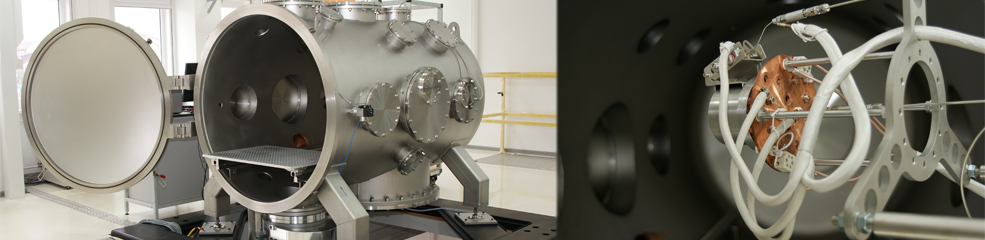


Zestaw obrazów 2019
zdjecie1.jpg
zdjecie2.jpg
zdjecie3.jpg
zdjecie4.jpg
zdjecie5.jpg
zdjecie6.jpg
2019_1.JPG
2019_2.JPG
2019_4.JPG


Światowe
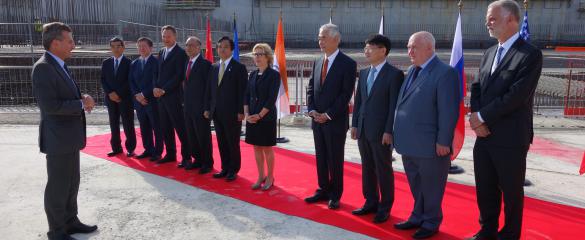 Ministers representing many of the world's main economic powers met on 6 September 2013 to show their support for one of the world’s most ambitious scientific experiments – a nuclear fusion reactor that will operate at temperatures ten times hotter than the core of the sun.
Representatives from the seven regions that are backing ITER – the International Thermonuclear Experimental Reactor – met for only the second time at the site of the planned reactor in southern France in September to underline the importance of the project.
‘Not to invest in fusion would be a big mistake,’ said Günther Oettinger, the European Commissioner for Energy. ‘We have oil for the next 20, 30, or maybe 40 years; but nobody knows what will happen at the end of the century. We have to switch and we need to invest in new, innovative energy generating technology for our children.’
ITER aims to produce energy through the same nuclear reaction that powers the sun. But, while the centre of the sun burns at 15 million degrees Celsius, the hydrogen inside the ITER reactor will be heated to some 150 million degrees Celsius.
At that temperature, electrons are ripped off individual atoms to form plasma, where nuclei float in a sea of electrons.
The high temperature means the plasma cannot be allowed to touch the sides of the reactor. So it will be suspended amid a vacuum in a toroid – a doughnut shape – using some of the world’s most powerful magnets.
‘The magnetic field will put very high mechanical stress on the supporting structure,’ said fusion physicist Dr Osama Motojima, ITER's Director-General. ‘So we developed an engineering design almost close to the limit of the material.’
Vast rewards
The potential rewards of the project are vast: fusion-based power would solve much of the world's energy needs without the dangers of traditional nuclear reactors.
But the difficulty of the technology means it will take time. ITER is aiming to start the most important test reactions in 2027. Success then will mean simply that the principle has worked so that plans can begin to construct commercial reactors to supply electricity grids. These might not come on line till 2040 or later.
Work began in 2010 on the 42-hectare site in Saint Paul-lez-Durance, in the hills of Provence, France, where China, the EU, India, Japan, Russia, South Korea and the United States are collaborating on ITER.
So far, a five-storey headquarters building and an assembly building have been built, and the foundations have been prepared for the main reactor.
Less hazardous
The reactive materials used in fusion are less hazardous than those for traditional fission reactors. Fission occurs when a large nucleus splits, giving off energy, and it normally uses radioactive forms of uranium, which pose a threat if the reaction leaks.
The fusion reactions being worked on consist of two small nuclei – of hydrogen – which collide to form helium, giving off energy in the process. Though some of the hydrogen used will be radioactive – the reaction needs heavier isotopes than the most common form of hydrogen – it will be easier to store and manage than uranium. Moreover, only tiny amounts will be needed because of the huge amounts of energy given off in the reactions.
However, mastery of nuclear fusion has proved elusive for half a century. Fusion reactions have been achieved in other test facilities, such as JET, the Joint European Torus, in the United Kingdom. But these runs have lasted just a few seconds.
While JET almost achieved ‘break-even’ – when a fusion reaction produces as much energy as was needed to set it off – it has not produced commercially viable amounts. ITER's goal is to sustain a fusion reaction for several minutes: for 50 MW of input power, it's aiming to produce 500 MW of output, enough to show that the technology is practical.
The public and scientific community is more supportive than in the past over the chances of success, says Motojima, whose career in plasma physics dates back to the 1970s. A Japanese fusion device he managed from 1998, the Large Helical Device Experiment (LHD), was greeted at the start with widespread scepticism, he said.
‘When we started to build the LHD in Japan, more than 50 % of people said, “It’s crazy, it’s not possible”,’ he said. ‘But now, nobody is saying it’s not possible here. That’s encouraging.’
If it is successful, the international participants will take the technology and try to put it to commercial use. South Korea – which, like Japan, has almost no fossil fuel resources – even has a fusion law that authorises an annual budget for research, currently about EUR 185 million.
So instead of each country pooling funds and the project being carried out centrally, 90 % of the equipment is being contributed in-kind, with each country assigned to build certain pieces. Roads, bridges and roundabouts have been adapted to form a 104 kilometre route for components arriving by sea before they are assembled like a high-tech jigsaw puzzle.
In the building phase, each step has to wait for a previous one to be finished – but these steps are sometimes held up by the arrangements for contract awards in the participating countries. ‘Intensive effort and innovative methods will be required to meet ... the challenge of staying within a tight but realistic schedule while containing costs,’ said Oettinger.
The EU is providing 45 % of the funding for ITER. Though most other participants offered firm commitments, the US representative, Edmund Synakowski, Associate Director of Science for Fusion Energy Sciences at the US Department of Energy, emphasised that Congress would first have to approve continued US funding. A decision is expected next year.
During the meeting, the ministerial representatives reaffirmed the significance of the ITER experiment as an important step towards fusion energy, and underlined the fact that the project is also defining a new model for international scientific collaboration.
Source: HORIZON
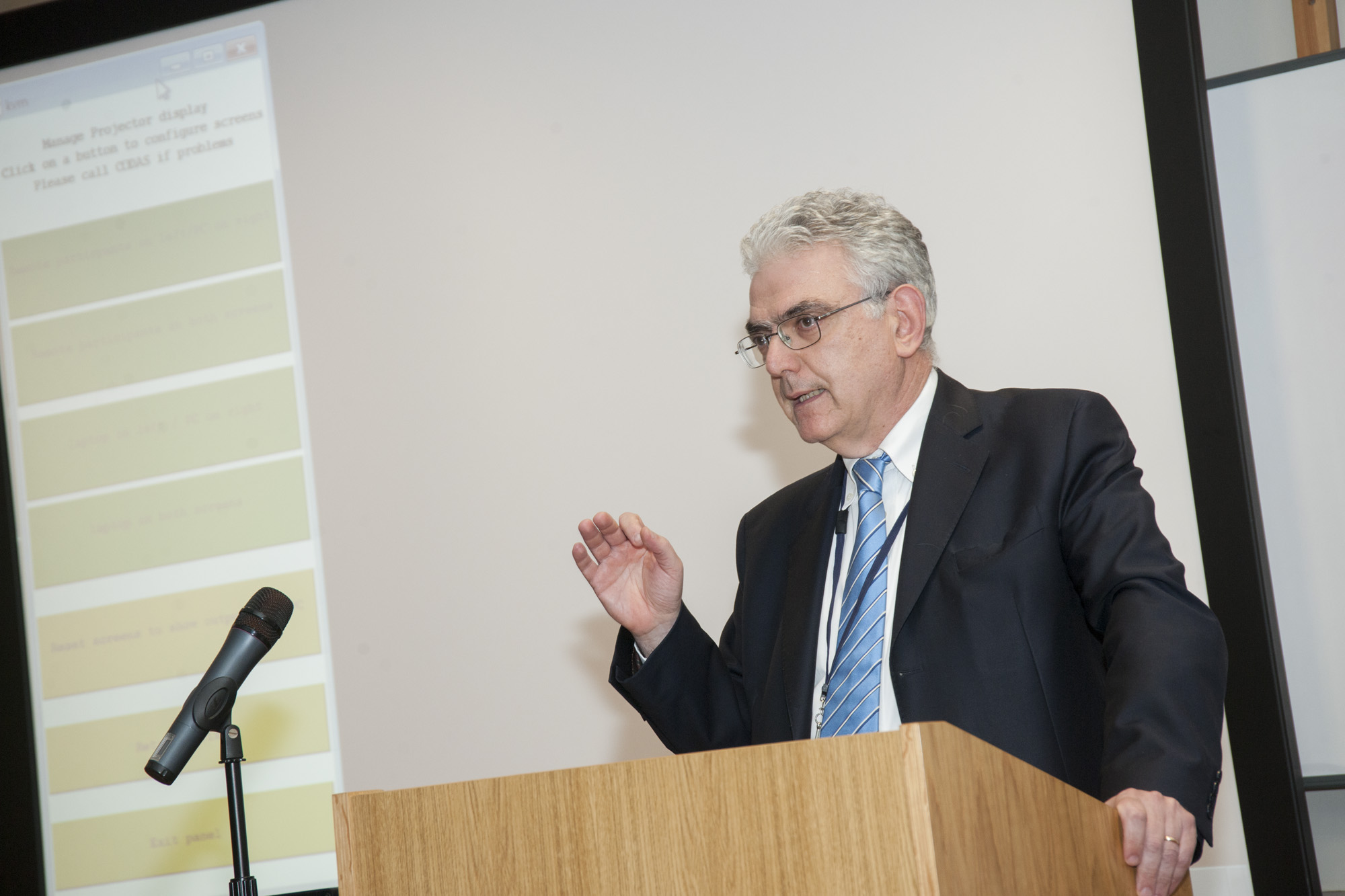 On 26 September, the first group of twenty students were awarded their FuseNet European Fusion Master’s / Doctorate certificates in a ceremony at Europe’s leading fusion experiment JET at Culham in the UK. The certificates are a recognition of excellence in fusion science and technology, and can be awarded to European MSc and PhD students who fulfil academic criteria that have been jointly established by universities and fusion research centres throughout Europe.
This first batch of certificates were presented to the nominated students by the EFDA leader Dr Francesco Romanelli, the chair of the Academic Council of FuseNet Prof. Ambrogio Fasoli and the chairman of FuseNet Prof. Niek Lopes Cardozo. Afterwards the students were treated to a spectacular ‘after hours’ tour of JET – including access to the torus hall itself.
The European Fusion Education Network FuseNet – with over 40 members including universities, research institutes and companies that are active in the development of fusion energy – supports and coordinates the education and training of the ‘ITER generation’ of fusion scientists and engineers. It’s aim is to ensure a core of highly skilled scientists and engineers for future fusion devices – most notably the international successor to JET and stepping stone to fusion power plants, ITER. Prof. Niek Lopes Cardozo, FuseNet chair explains: ‘The ceremony and JET visit are our way of showing these students that we highly appreciate the effort they have put into their studies of fusion; that we recognize the high level of expertise they have acquired and that it is young, smart and dedicated people like these that are going to make fusion energy happen’.
From now on, students can continuously apply for a European Fusion Master or Doctorate Certificate through the FuseNet website (www.fusenet.eu). Applications will be evaluated twice per year.
Source: EFDA
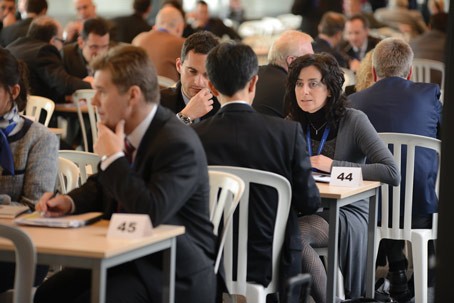 ITER is often described as the biggest international research collaboration in the field of energy bringing together half of the world’s population and 80% of the global GDP. A complex and ambitious project pushing our imagination to its limits and inviting us to explore if fusion energy can be a viable energy source in tomorrow’s energy mix.
To reach the holy grail of energy, as some have called fusion, scientists and engineers need to work hand in hand with industry and SMEs to manufacture the ITER components and develop the necessary appetite and expertise to invest in fusion technology.
In 2012 the value of the energy sector was is in the range of $6 trillion. Currently, in the EU the energy sector exceeds a turnover of about 885 billion EUR and keeps more than 22,000 enterprises afloat, which employ over 1.2 million people. The business potential of the energy market is vast and the opportunity for growth is clear.
So how is ITER unlocking Europe’s business potential?
To answer this question we traveled to five countries and interviewed 14 representatives from industry and SMEs, laboratories and senior policy figures from the fusion community. We asked them to describe the potential they see in ITER and the direct benefits stemming from Europe’s participation to the project.
Professor Henrik Bindslev, F4E’s Director, set the tone by describing the unique character of the project and the spillover effects spreading in the areas of knowledge, jobs and growth. Similarly, Professor Osamu Motojima, Director General of ITER International Organization, elaborated on the new technologies that industry would acquire through its participation and the expertise that future generations of scientists will develop through their involvement.
In our first clip we interviewed the Industry Liaison Officers, the business satellites of the ITER project in each European country, and asked them to give a their opinion on the business potential of the project. Their message was strong and clear: ITER means business opportunities and Europe’s industry should grab the opportunity to be involved.
Sue O’Neill, Ireland’s ILO, highlighted the growing potential of fusion industry and Dan Mistry, UK ILO, brought fusion a step closer to the market by reminding companies of the opportunities in the field of conventional engineering. The scale of the project requires the contribution and collaboration of many sectors. Sabine Portier, French ILO, explained that “ITER offers the possibility to build business partnerships” which will pave the way to new markets. Industry and SMEs from different countries have to learn to form consortia and compete in order to deliver high-end components in a competitive rate. Kurt Ebbinghaus argued that “a project like ITER will improve the capability of industry in terms of engineering and fabrication […] and create spinoffs for other business.” Søren Bang Korsholm, Denmark’s ILO, encouraged industry and SMEs to see themselves as legitimate partners in this project, a thought which was shared by Christian Dierick, Belgium’s ILO, who stated that “ITER is not a project only for big players.”
In the second clip, business representatives had the opportunity to express their views on the direct economic benefits stemming from their participation to ITER. Dr. Michael Peininger, Research Instruments, explained how cutting edge requirements pushed companies a step further. Similarly, Paolo Bonifazi, Walter Tosto, called ITER “the booster” which accelerated the pace of progress in his company. From SENER, Maria Rosa Sacristian, stressed the multi-disciplinary character of the project and the way it has helped companies to identify new markets. Jean-Claude Cercassi, CNIM, elaborated on the “new processes, jobs and growth” that have been created together with the development of new tooling which will prove useful in other operations. Aldo Pizzuto, ENEA, highlighted the role of fusion laboratories in the project and their capacity to generate new technologies that are not yet available to industry. Linda Hedegaard, Site Facility, saw plenty of opportunities for SMEs too through their participation as subcontractors in large contracts. The successful partnership between small and large players was also addressed by Maria Teresa Domiguez, Empresarios Agrupados, who acknowledged that thanks to ITER this new international way of doing business emerged in this field of energy.
Source: F4E
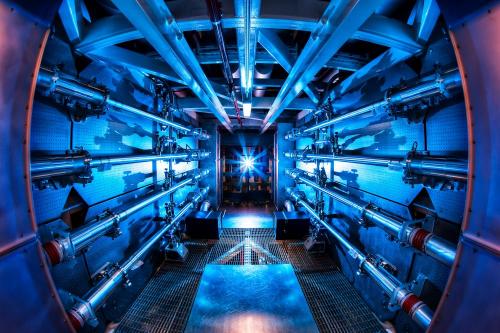 The dream of igniting a self-sustained fusion reaction with high yields of energy, a feat likened to creating a miniature star on Earth, is getting closer to becoming reality, according the authors of a new review article in the journal Physics of Plasmas
Researchers at the National Ignition Facility (NIF) engaged in a collaborative project led by the Department of Energy's Lawrence Livermore National Laboratory, report that while there is at least one significant obstacle to overcome before achieving the highly stable, precisely directed implosion required for ignition, they have met many of the demanding challenges leading up to that goal since experiments began in 2010.
The project is a multi-institutional effort including partners from the University of Rochester's Laboratory for Laser Energetics, General Atomics, Los Alamos National Laboratory, Sandia National Laboratory, and the Massachusetts Institute of Technology.
To reach ignition (defined as the point at which the fusion reaction produces more energy than is needed to initiate it), the NIF focuses 192 laser beams simultaneously in billionth-of-a-second pulses inside a cryogenically cooled hohlraum (from the German word for "hollow room"), a hollow cylinder the size of a pencil eraser. Within the hohlraum is a ball-bearing-size capsule containing two hydrogen isotopes, deuterium and tritium (D-T). The unified lasers deliver 1.8 megajoules of energy and 500 terawatts of power—1,000 times more than the United States uses at any one moment—to the hohlraum creating an "X-ray oven" which implodes the D-T capsule to temperatures and pressures similar to those found at the center of the sun.
"What we want to do is use the X-rays to blast away the outer layer of the capsule in a very controlled manner, so that the D-T pellet is compressed to just the right conditions to initiate the fusion reaction," explained John Edwards, NIF associate director for inertial confinement fusion and high-energy-density science. "In our new review article, we report that the NIF has met many of the requirements believed necessary to achieve ignition—sufficient X-ray intensity in the hohlraum, accurate energy delivery to the target and desired levels of compression—but that at least one major hurdle remains to be overcome, the premature breaking apart of the capsule."
In the article, Edwards and his colleagues discuss how they are using diagnostic tools developed at NIF to determine likely causes for the problem. "In some ignition tests, we measured the scattering of neutrons released and found different strength signals at different spots around the D-T capsule," Edwards said. "This indicates that the shell's surface is not uniformly smooth and that in some places, it's thinner and weaker than in others. In other tests, the spectrum of X-rays emitted indicated that the D-T fuel and capsule were mixing too much—the results of hydrodynamic instability—and that can quench the ignition process."
Edwards said that the team is concentrating its efforts on NIF to define the exact nature of the instability and use the knowledge gained to design an improved, sturdier capsule. Achieving that milestone, he said, should clear the path for further advances toward laboratory ignition.
Source: phys.org
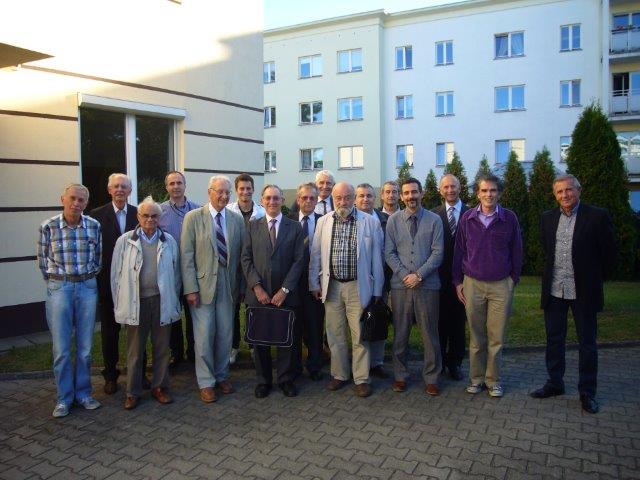 During the last few years a group of plasma physicists from countries all over the world has been meeting to analyse the scientific basis and prepare the programme of an International Centre for Dense Magnetised Plasmas (ICDMP).
On the 6th and 7th of September 2013 the Annual Meeting of the International Scientific Committee of ICDMP took place in Warsaw, at the IPPLM premises. The participants included Alexander Blagoev (Bulgaria), Alain Bernard (France), Igor Garkusha (Ukraina), Karel Kolacek (Czech Republic), Vyacheslav Krauz (Russia), Pavel Kubes (Czech Republic), Maurizio Samuelli (Italy), Hellmut Schmidt (Germany), Ülo Ugaste (Estonia), Eric Lerner (USA), Marek Scholz (INP PAS), Alireza Talebitaher, and IPPLM group: Marek Sadowski, Andrzej Galkowski (director of IPPLM), Pawel Nadrowski, Marian Paduch, Ryszard Miklaszewski, and Włodzimierz Stepniewski.
The Foundation Council presented its report and the International Scientific Committee elected a new ICDMP director. Dr. Marek Scholz was replaced by Dr. Marian Paduch, and Dr. Ryszard Miklaszewski became the deputy director of ICDMP. Pavel Kubes sent to absent Marek Scholz thanks for his long and demanding work in the leading position in ICDMP.
The workshop participants discussed the accomplished goals within the activities at PF-1000 and laboratories in frame of ICDMP and defined the scope of works for the future. The presentations were delivered by turns by Richard Miklaszewski, Sasha Blagoev, Igor Garkusha, Pavel Kubes, Slawa Krauz, Eric Lerner, Marek Sadowski, Ali Talebitaher and Üllo Ugaste. Moreover, P. Kubes announced that the grant of Ministry of Education, Youth and Sports of the Czech Republic, supporting activities of ICDMP, would continue up to the year 2015.
The next ISC-meeting together with Workshop will take place at IPPLM in Warsaw on October 10-11, 2014.
Local News
- 1
- 2
- 3
- 4
- 5
IPPLM joins the Enterprise Europe Network
31-03-2026
On 23 March 2026, the Institute of Plasma Physics and Laser Microfusion (IPPLM) joined, with its technological offer, the group of entities affiliated with the Enterprise Europe Network (EEN), interested...
Read moreIPPLM as a co-creator of the exhibition "E = mc² – the formula that changed the world" at the National…
18-02-2026

On 16 February 2026, the official opening of two new permanent exhibitions took place at the National Museum of Technology in Warsaw. The Institute of Plasma Physics and Laser Microfusion...
Read moreIPPLM supports children and young people at the TPD "Helenów" Centre
22-12-2025

The Sylwester Kaliski Institute of Plasma Physics and Laser Microfusion (IPPLM) has for many years been actively engaged in initiatives supporting children and young people supported by the TPD "Helenów"...
Read moreIPPLM researchers took part in an experimental campaign on the GEKKO XII laser
20-11-2025

On 10–14 November 2025, a research team from the Sylwester Kaliski Institute of Plasma Physics and Laser Microfusion (IPPLM) – Prof. Katarzyna Batani, Dr Hanna Marchenko and Dr Agnieszka Zaraś-Szydłowska...
Read moreRegister for the 18th Kudowa Summer School on Plasma Physics!
07-11-2025

We invite you to take part in the 18th Kudowa Summer School "Towards Fusion Energy", which will be held on 8–12 June 2026 in Kudowa-Zdrój, Poland. The event is organised...
Read moreIPPLM participated in the second technical meeting within the DONES Con-P1 project
17-10-2025
The Institute of Plasma Physics and Laser Microfusion (IPPLM) took part in the second technical meeting held as part of the DONES Consolidation Phase 1 (DONES ConP1) project, co-financed by...
Read moreProf. Jan Badziak from IPPLM among the World’s Top 2% Scientists
15-10-2025
Prof. Jan Badziak, from the Department of Laser Plasma and Magnetized Dense Plasma Physics at the Institute of Plasma Physics and Laser Microfusion (IPPLM), has been included in the prestigious...
Read more29th Science Festival with the participation of IPPLM
10-10-2025

During the 29th Science Festival in Warsaw, held on 19–28 September 2025, researchers from the Institute of Plasma Physics and Laser Microfusion (IPPLM) conducted lessons for upper-grade primary school students. The...
Read morePLASMA 2025 and the 20th Anniversary of the Euratom–IPPLM Association – event summary
26-09-2025

From 15 to 19 September 2025, Warsaw hosted the international scientific conference PLASMA 2025 – International Conference on Research and Application of Plasmas, dedicated to plasma research, diagnostics, and applications....
Read moreWe bid farewell with deep sorrow to Professor Jerzy Wołowski
25-09-2025

It is with great sadness that we have received the news of the passing of Professor Jerzy Wołowski (1936–2025) an outstanding physicist, long-time employee of the Institute of Plasma Physics...
Read more20th anniversary of the Euratom–IPPLM Association (CeNTE): Celebrating two decades of fusion research coordination
16-09-2025

On 19 September 2025, during the PLASMA 2025 International Conference on Research, Diagnostics and Applications of Plasma in Warsaw, the IPPLM will mark 20th anniversary of the coordination of research on nuclear fusion...
Read moreIPPLM at the 49th Congress of Polish Physicists in Katowice
13-09-2025
During the 49th Congress of Polish Physicists, held from September 5–11, 2025, in Katowice, the Institute of Plasma Physics and Laser Microfusion (IPPLM) was represented both among the speakers and...
Read moreProf. Agata Chomiczewska appointed Deputy Director for Scientific Affairs at the IPPLM
03-09-2025

We are pleased to announce that the Minister of Energy, Mr. Miłosz Motyka, has appointed Dr. hab. Agata Chomiczewska to the position of Deputy Director for Scientific Affairs at the...
Read moreA historic milestone – the Scientific Council of the Institute confers the degree of habilitated doctor
10-07-2025
For the first time in the history of the Institute of Plasma Physics and Laser Microfusion (IPPLM), the Scientific Council has adopted a resolution to confer the degree of habilitated...
Read moreNew Board of the Plasma Physics Division of the European Physical Society
04-07-2025

In the first quarter of 2025, elections were held for the Board of the Plasma Physics Division of the European Physical Society (EPS Plasma Physics Division). Six candidates who received...
Read moreIPPLM researchers bring fusion expertise to 10th Central & Eastern Europe Nuclear Industry Congress 2025
12-06-2025
Researchers from the Institute of Plasma Physics and Laser Microfusion (IPPLM), Dr. Natalia Wendler and Dr. Paweł Gąsior, recently participated in a panel discussion at the 10th Central & Eastern...
Read moreIPPLM at the 3rd edition of the "Science for Society" Congress
29-05-2025

On 25-26 May 2025, the 3rd edition of the "Science for Society" Congress took place in the Large Hall of the Warsaw University of Technology. The aim of the event...
Read moreInvitation to the 3rd edition of the "Science for Society" Congress with the participation of IPPLM
22-05-2025

The 3rd edition of the "Science for Society" Congress will take place on 25–26 May 2025 at the Warsaw University of Technology. This unique event demonstrates that science is not...
Read moreJoin the 28th Science Picnic!
07-05-2025

The Institute of Plasma Physics and Laser Microfusion (IPPLM) invites you to its stand on Saturday, 10 May, during the 28th Science Picnic, organized by Polish Radio and the Copernicus...
Read moreCooperation agreement between the IPPLM and the National Museum of Technology
18-04-2025

On 17 April 2025, a cooperation agreement was signed between the National Museum of Technology (NMT) and the Institute of Plasma Physics and Laser Microfusion (IPPLM). The ceremonial meeting, attended by...
Read morePolish and French researchers join forces in research on nuclear fusion
31-03-2025

On 24-25 March 2025, a Polish-French meeting was held at the headquarters of the Institute of Nuclear Physics of the Polish Academy of Sciences (IFJ PAN) and the French Institute...
Read moreJoin us for the International Conference on Research and Application of Plasmas – PLASMA 2025!
13-03-2025

The Institute of Plasma Physics and Laser Microfusion (IPPLM) invites you to attend the PLASMA 2025 – International Conference on Research and Application of Plasmas, which will be held from...
Read moreExperimental research session in the Plasma-Focus PF1000U laboratory as part of the ICDMP collaboration
27-02-2025

On February 10–21, 2025, an experimental session was held in the Plasma-Focus PF-1000U laboratory, in which, in addition to the IPPLM team, a three-person team of researchers from the Prague...
Read moreLaser demonstration on JET detects fusion fuels
11-02-2025

Scientists and engineers from eight nations, including Poland, have carried out a project using lasers on the Joint European Torus (JET) to study fusion fuel retention. Laser Induced Breakdown Spectroscopy (LIBS),...
Read moreIPPLM employee nominated for the Personality of the Year title in the Science category
24-01-2025
Research and technical employee Mr. Olgierd Cichorek, M.Sc., from the Laboratory of Plasma Nudge for Satellites at the IPPLM has been nominated for the title of Personality of the Year...
Read moreWorld News
- 1
- 2
- 3
- 4
- 5
In Memoriam — Professor Francesco Romanelli
24-03-2026

The world of fusion research mourns the loss of Professor Francesco Romanelli, a visionary scientist whose work helped bring humanity closer to clean, limitless energy. Over four decades, he explored...
Read moreIgniting the future: Breakthroughs in inertial confinement Fusion
25-07-2025

In December 2022, the National Ignition Facility (NIF) at Lawrence Livermore National Laboratory (USA) marked a historic milestone in fusion science: an experiment produced 3.15 MJ of fusion energy from 2.05 MJ of laser...
Read moreWendelstein 7-X sets new fusion performance records
04-06-2025

On May 22, 2025, the Wendelstein 7-X (W7-X) stellarator at the Max Planck Institute for Plasma Physics (IPP) in Greifswald concluded its latest experimental campaign with a major success: a...
Read moreEuropean tokamak sets new fusion plasma record
20-02-2025

On February 12, 2025, the WEST tokamak, located at CEA Cadarache in southern France, set a new world record by sustaining fusion plasma for 1,337 seconds, or over 22 minutes....
Read moreDr. Gianfranco Federici appointed as the new EUROfusion Programme Manager
17-12-2024
At the 49th General Assembly held in Barcelona, December 2024, Dr. Gianfranco Federici was elected as the new Programme Manager of EUROfusion. He succeeds Prof. Ambrogio Fasoli, who will return...
Read moreEUROfusion and F4E join forces for Europe’s fusion future
16-12-2024

EUROfusion and Fusion for Energy (F4E) have signed a Memorandum of Understanding (MoU) to advance fusion research and development in Europe. This agreement reinforces cooperation in...
Read moreJohn J. Hopfield and Geoffrey E. Hinton awarded the 2024 Nobel Prize in Physics
08-10-2024

John J. Hopfield and Geoffrey E. Hinton have been awarded the 2024 Nobel Prize in Physics "for foundational discoveries and inventions that enable machine learning with artificial neural networks." The Nobel...
Read moreWendelstein 7-X begins new experimental campaign
10-09-2024

The Wendelstein 7-X, the world’s most advanced stellarator, is launching a new experimental campaign after a year of intensive maintenance and upgrades. This phase, known as OP2.2, begins on 10...
Read moreITER's New Project Baseline: A Robust Path to Fusion Energy Research
04-07-2024

On 3 July, ITER Director-General Pietro Barabaschi presented the new project baseline, under evaluation by the ITER Organization's governing body. This plan aims to ensure a robust start to scientific...
Read moreITER Council Presents Updated Project Baseline
21-06-2024

The ITER Council convened this week for its 34th meeting, where nearly 100 attendees reviewed significant updates to the project baseline. The proposed changes aim to optimize the overall project...
Read moreEurope and Japan celebrate breakthrough in paving the way for fusion energy
01-12-2023

The prospect of harnessing fusion energy is closer. The successful operation of JT-60SA, the most powerful experimental device to date, built by Europe and Japan, is a landmark achievement for...
Read moreFirst plasma was successfully generated at JT-60SA
26-10-2023

A momentous achievement in the field of nuclear fusion has been accomplished by a collaborative team of engineers from Europe and Japan. They have successfully generated tokamak plasma for the...
Read moreThe Nobel Prize in Physics 2023
03-10-2023
Pierre Agostini, Ferenc Krausz and Anne L’Huillier are the winners of this year's Nobel Prize in Physics. It was awarded "for experimental methods that generate attosecond pulses of light for...
Read moreUS Lab Replicates Fusion Ignition Breakthrough
08-08-2023
The US National Ignition Facility (NIF) has achieved fusion ignition once again, building on its landmark 2022 success. This achievement, powered by hydrogen within a diamond capsule, signifies a major...
Read moreNew Programme Manager Elect announced by EUROfusion
20-07-2023
Professor Ambrogio Fasoli became the new EUROfusion Programme Manager Elect. The decision was made by EUROfusion General Assembly at the meeting on 18 July 2023. His tenure will officially commence...
Read moreEUROfusion stands in solidarity with research in Ukraine
24-02-2023

Today, as we commemorate the anniversary of the invasion of Ukraine by Russia, the EUROfusion consortium stands in solidarity with our Ukrainian member and research colleagues. EUROfusion remains committed to supporting...
Read moreEight-minute production of plasma with gigajoule energy turnover at Wendelstein 7-X
23-02-2023

Another target has been achieved only recently by the W7-X researchers, namely they managed to acquire an energy turnover of 1.3 gigajoules in the device, which is 17 times higher...
Read moreThe Nobel Prize in Physics 2022
04-10-2022

Alain Aspect, John F. Clauser and Anton Zeilinger are the winners of this year's Nobel Prize in Physics. It was awarded “for experiments with entangled photons, establishing the violation of...
Read moreNew experiments for fusion energy record breaker JET
27-09-2022

A new wave of fusion energy experiments on UK Atomic Energy Authority’s record-breaking Joint European Torus (JET) started this month. EUROfusion researchers are using the famous JET machine to conduct a...
Read moreITER appoints new Director-General
21-09-2022
Pietro Barabaschi has become the next Director-General of the ITER Organization as a result of the unanimous choice of the Council from among finalist candidates. In the transition period Dr....
Read moreStarting power plant design
07-07-2022

At a livestreamed Horizon EUROfusion event in Brussels on 5 July 2022, EUROfusion celebrated the start of conceptual design activities for Europe's first demonstration fusion power plant DEMO. This first-of-a-kind...
Read moreCelebration of achieving a crucial assembly milestone in the ITER Project
17-05-2022

This month, we have witnessed the successful lifting and lowering into the machine well of the first sub-section of the ITER plasma chamber. The weight of the component is the...
Read moreBurning plasma achieved in inertial fusion at the National Ignition Facility
15-02-2022
Obtaining a burning plasma is a critical step towards self-sustaining fusion energy. A burning plasma is one in which the fusion reactions themselves are the primary source of heating in...
Read moreHistoric milestone reached by JET scientists
20-01-2022

Iconic fusion energy machine JET – which reaches controlled temperatures 10 times hotter than the core of the sun – completed its 100,000th live pulse last night. Weighing 2,800 tonnes, the...
Read moreHorizon Europe Grant Agreement signed
20-12-2021

15 December 2021 saw the EUROfusion consortium signing the Grant Agreement under Horizon Europe, the European Framework Programme from 2021 – 2027, in an aim to launch comprehensive R&D approach...
Read more |
 |
 |
 |
 |
 |
 |
 |
What we do
Our laboratories
Online seminars
| Thursday, 30 Apr 2026, godz. 13.00 Seminarium instytutowe: "Equation of State of Shock Compressed BN in the Megabar Pressure Range", dr hab. Katarzyna Batani, IFPiLM |


Research projects carried out at the IPPLM are funded by the Polish Ministry of Education and Science, the National Science Centre and by the European Commission within the framework of EUROfusion Consortium under grant agreement No 101052200. Financial support comes also from the International Atomic Energy Agency, European Space Agency and LaserLab Consortium as well as from the Fusion for Energy Agency.