





Zestaw obrazów 2019
zdjecie1.jpg
zdjecie2.jpg
zdjecie3.jpg
zdjecie4.jpg
zdjecie5.jpg
zdjecie6.jpg
2019_1.JPG
2019_2.JPG
2019_4.JPG


Światowe
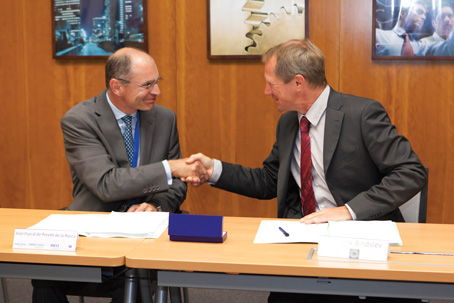 Fusion for Energy (F4E) has signed its largest contract to date with Cofely Axima, Cofely Ineo, Cofely Endel (GDF Suez Group) and M+W Group. The strong expertise of the Franco-German group of companies will be used to provide the building services for the Tokamak complex, where the ITER Tokamak machine will be located, and the surrounding buildings. The contract is expected to run for six years and its budget is approximately 530 million EUR.
Professor Henrik Bindslev, F4E’s Director, stated that “this is an important achievement for Europe not only because of the volume of the contract but also because European companies will be given an unprecedented opportunity to share and acquire new know-how that will generate future business opportunities.” Guy Lacroix, Managing Director of GDF SUEZ Energy Services in charge of Cofely Axima, Cofely Ineo and Cofely Endel confirmed that “being part of the largest international collaboration in the field of fusion energy makes us extremely proud. All the members of the consortium bring together a diversity of skills and expertise which allow us to demonstrate that we can be at the forefront of large scale industrial projects like ITER.”
The ITER site in figures:
The size of the ITER platform is 42 hectares and Europe is the party responsible for the delivery of the 39 buildings that the ITER platform will host. Currently, the personnel directly involved in construction counts 250 people and by the end of 2014 it is expected to reach 2,000 people. One of the key challenges will be to accommodate the needs of the rapidly growing workforce and to guarantee an optimal use of space to the different companies operating on the ground, in order to carry out the construction of all infrastructures in parallel and on time.
The scope and key figures of the contract:
The contract covers the design, supply, installation and commissioning of the mechanical and electrical equipment for the Tokamak complex, which consists of the Tokamak, Diagnostic and Tritium buildings, plus the surrounding buildings which reach a total of 97,200 m3. Thanks to this contract all the necessary works of the ITER Assembly phase will start in order to host ITER’s high tech equipment in compliance with the strict safety requirements and in line with the rigorous qualification tests.
Through this contract a Heating Ventilation Air Conditioning (HVAC) system will be delivered powerful enough to treat the air flow of 1,000,000 m3/hour which corresponds to the volume of air that is inhaled and exhaled by 3,5 million people/hour. Furthermore, Instrumentation and Control (IC) systems, power supplies, interior and exterior lighting, gas and liquid networks will be installed. State of the art fire detection and extinguishing systems, consisting of 2,000 fire detectors, will be supplied, pipe fittings and handling equipment with various interfaces connecting buildings and systems.
Source: F4E
 One of the most fascinating aspects of the ITER project is the technology that is being deployed in order to test the viability of fusion energy at such scale. For an outsider, the project is a leap to the future. For scientists and technical experts who have spent most of their life in the fusion community, ITER is validating and upgrading existing know-how that has been accumulated throughout the years in fusion laboratories around the world.
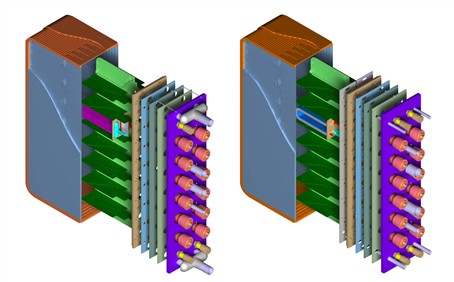
There will be some, however, who will be given a once in a lifetime opportunity to push the envelope further and use ITER as a laboratory. They will witness technological breakthroughs and pave the way for DEMO, the fusion demonstration reactor planned to come after ITER. Amongst the fortunate vanguard fusion specialists are those involved in the Test Blanket Modules (TBMs). During the last International Symposium on Fusion Nuclear Technology there was a lot of buzz about the progress made in the area of TBMs. What is this blanket made of that is exposed to plasma reaching 150 million°C and what purpose does it serve? We met with Yves Poitevin, F4E’s Project Team Leader for TBMs and Materials Development, to understand the background, the state of play and potential of this domain.
Apart from deuterium, ITER will require the administration of tritium in order to make the fusion reaction happen. In DEMO, it will need to be bred continuously within the reactor in order to keep the fusion reaction going. How can this be achieved? Tritium can be produced within the reactor once the neutrons of the fusion reaction bounce on lithium, which is contained in the reactor’s blanket. “One of our aims is to test the prototypes of future breeding blankets in real fusion conditions offered by ITER and then export that knowledge to DEMO. In essence, we are generating a new component and qualifying it in unprecedented conditions. Furthermore, through this process, we are licensing a nuclear system based on advanced materials and top fabrication technology” Yves Poitevin explains. “We are writing a new chapter in this field by collecting new data, developing new codes and extrapolating them to DEMO. This is a real opportunity for Europe’s research and industrial communities to collaborate and develop together a vital technology for fusion reactors.”
Work started in the late 90s when the European Fusion Development Agreement (EFDA) conducted research to address the need for the development of new materials and technologies for tritium production. The transition from research to licensing and fabrication is challenging. F4E has been collaborating with specialised engineering companies like IDOM, Atmostat, Iberdrola, AMEC, Empresarios Agrupados to take stock of their expertise. Similarly, for the design and qualification phases the input received by laboratories like KIT, CEA, ENEA, CIEMAT, UJV, KFKI, NRG, etc. has proved extremely valuable. Approximately 30 contracts have already been signed in this domain and the work is gradually increasing in volume.
Europe is standing at the crossroads of two blanket concepts: the Helium-Cooled Pebble-Bed (HCPB) and the Helium-Cooled Lead Lithium (HCLL). The key difference lies in the type of material used for the tritium breeder. In order to choose which way to go for DEMO, it has been decided to test both concepts simultaneously in ITER by placing the TBMs in an equatorial port of the machine.
In terms of the TBMs structural materials, Europe has set its hopes on EUROFER, a newly developed reduced activation ferritic/martensitic (RAFM) steel developed in Europe, which provides adequate resistance to neutron irradiation, corrosion and with acceptable resistance at high temperatures. “EUROFER is Europe’s choice for ITER’s TBMs because of its properties, its mechanical resistance and its tolerance to neutrons irradiation” explains Yves Poitevin. Part of EUROFER design limits have been recently added to the RCC-MRx nuclear construction code and progress is being made to complete them. Japan, Korea, India and China are also developing their own TBMs for ITER. The potential of developing in parallel different degrees of expertise is there. What is here, however, is the opportunity to invest and test today a technology that will be necessary tomorrow.
Source: F4E
 Scientific advisers to the ITER fusion reactor project have recommended several key changes to its design that could increase technical risks—but also smooth the path to producing excess energy. The recommendations, made last week by ITER’s Science and Technology Advisory Committee (STAC), will have to be approved by the full ITER council in November. But if approved, as expected, “the chance of surprises later is reduced,” says Alberto Loarte, head of ITER’s confinement and modeling section. “The risk will pay off.”
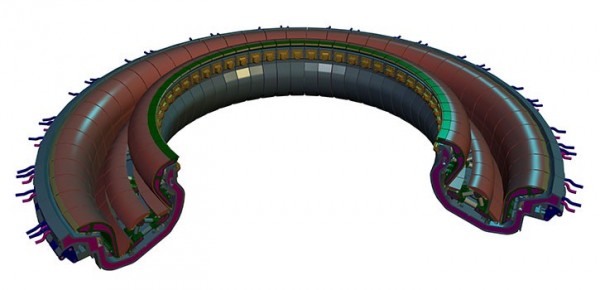
ITER, being built in France by an international collaboration, aims to show that nuclear fusion, the reaction that powers the sun, can be controlled on earth to produce energy. But reaching that goal involves heating hydrogen gas to more than 150 million°C so that hydrogen nuclei slam together with enough force to fuse. To do this, researchers are building a huge doughnut-shaped container called a tokamak to confine the ionized gas—or plasma—using enormously strong magnetic fields. ITER’s goal is to coax the plasma to produce 500 megawatts (MW) of heat, 10 times the 50 MW of power required to heat the plasma; this multiplying effect is known as a gain of 10.
The most significant change decided at the STAC meeting concerns a structure at the base of the tokamak vessel called the divertor. Its main function is to remove the helium that is the “exhaust” gas of the fusion reaction. The divertor is the only part of the vessel where the superhot plasma actually touches a solid surface, so it has to be able to absorb huge quantities of heat, as much as 10 MW per square meter of surface.
Existing plans call for making ITER’s first divertor with an outer layer of carbon. This is the safe option: Carbon is well proven in tokamak interiors; it can easily withstand the temperatures; and if any is blasted off into the plasma, it doesn’t affect the performance very much. The problem with carbon, however, is that it happily reacts with hydrogen, binding atoms into its structure. This wouldn’t be a problem during the early phases of ITER operation when researchers plan to use simple hydrogen or helium in the machine to get the hang of how it works. But a carbon coating could be a huge problem in later phases, when researchers plan to switch to real fusion fuel—a more reactive mixture of the hydrogen isotopes deuterium and tritium. Tritium is radioactive and so needs to be carefully controlled and accounted for. Nuclear regulators would never accept a divertor material that absorbs tritium and so makes it impossible to locate.
To address that problem, planners had proposed running ITER for several years with the carbon-coated divertor, and then switching to one made of tungsten. Tungsten has the highest melting point of any metal: 3422°C. That should be fine for withstanding the heat produced during normal, steady ITER operations. But any unexpected bursts of heat could potentially melt the divertor, and tungsten—unlike carbon—instantly poisons the plasma, bringing fusion to a halt. So ITER’s operators would have to run the reactor much more carefully with a tungsten divertor, not pushing it to limits where the plasma might become unstable.
Despite this drawback of tungsten, STAC has recommended that ITER be built with a tungsten divertor from the start. “It was not an easy decision,” says STAC Chair Joaquín Sánchez, head of Spain’s National Fusion Laboratory in Madrid. The decision was made after years of research at other tokamak laboratories, in particular the Joint European Torus (JET) at Culham in the United Kingdom, which is the closest machine to ITER in size and design. Several years ago, JET researchers refitted the reactor with a tungsten divertor and beryllium lining (as ITER will have). After a year of testing, they confirmed that this “ITER-like wall” worked well enough not to cause problems for ITER.
Although some fusion researchers think that it would be safer to start ITER with a well understood carbon divertor, allowing them to push the reactor to extremes in search of high performance, starting with tungsten has advantages, too. Changing divertors is a complex process that would take many months. In addition, once operation with deuterium-tritium fuel has started, the interior of the vessel becomes radioactive (or “activated”), making it much harder to modify internal components. “If we start with tungsten, we save the cost of the change,” Sánchez says. “We know tungsten will be more difficult, but we will start learning earlier in the nonactivated phase and if there is a problem we can send people inside to fix it.”
The other design changes concern two separate magnetic coils to be inserted inside the reactor vessel to fine-tune control of the plasma. ITER’s main plasma-confining magnets are outside the vessel and act as something of a blunt instrument. About 5 years ago, researchers highlighted the fact that operators would have difficulty keeping the vertical position of the plasma steady, and so proposed some extra magnetic coils on the inside.
In addition to those for vertical stability, researchers proposed installing a second set of internal coils to combat a troubling phenomenon in superhot fusion plasma called edge-localized modes, or ELMs. ELMs occur when energy builds up in the plasma during fusion and then bursts out of the edge unpredictably, potentially damaging the lining or the divertor. The second set of coils deploys a magnetic field to roughen up the surface of the plasma so that it leaks energy at a constant rate rather than in erratic bursts.
Anything inside the vessel is subjected to extreme heat, radioactivity, and magnetic forces, so researchers had to persuade STAC that these two sets of coils could be made resilient enough to survive. “There was some reluctance in STAC and the ITER Organization because of the technical issues of installation,” Loarte says. Experiments at other labs around the world reassured them. “The results obtained were very positive,” he says.
STAC also took a hard look at the delivery schedule of components for ITER. The original plan called for everything—heating systems, instruments, ELM mitigation—to be in place when ITER is completed in 2020. But delays have meant that some items will be arriving later. “We needed to redo the schedule with a logic consistent with [achieving deuterium-tritium operation] faster. It was not consistent before and that led to criticism,” Loarte says. “Now we have to do the organizational part, which is not simple.”
Source: news.sciencemag.org
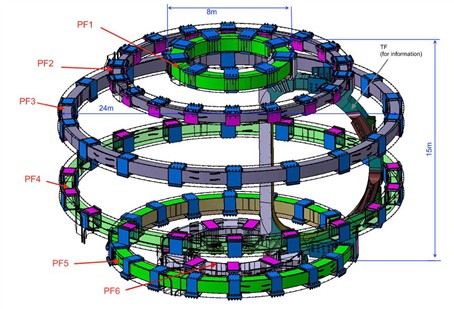 F4E has signed the contract for the Poloidal Field (PF) coils Engineering Integrator (EI). Awarded to ASG and worth approximately 27.5 million EUR, this contract is the first of a number of work packages, which will cover tooling (equipment necessary in order to manufacture and handle the components) , site and infrastructure, manufacturing and cold testing.These work packages are currently being prepared in order to provide F4E’s contribution of the PF coils 2-6 (PF coils 2-5 will all be manufactured in Europe, while PF coil 6 will be manufactured in China, but cold tested in Europe; the Russian Domestic Agency will procure PF coil 1). The PF coils contribute in generating the magnetic field to control the plasma position, maintaining the plasma's shape and stability inside the tokamak, in order to provide the conditions for the fusion reaction. The Poloidal Field coil system consists of six horizontal, circular coils placed outside the toroidal magnet structure. Due to their very large size making impossible to transport them, manufacture of four of the six PF coils will take place in the PF coil winding building, directly on the ITER site in Cadarache, France.
The ASG Engineering Integrator team is composed of approximately 20 engineers working to issue the manufacturing plan (developing plans in support of rigorous Quality Assurance, control of manufacturing activities, and establishing a production time schedule) to define the manufacturing layout and workflow, as well as to issue the manufacturing drawings and procedures for the production of all four PF coils. ASG will also support F4E in the procurement of the tooling and equipment for component manufacture; in addition, they will supervise the manufacturing and cold test activities (the final acceptance test which involves cooling the coil at low temperature of 80 K in order to reproduce thermal stresses similar to the ones experienced in the operating conditions in the ITER machine).
Focus will now be on implementing the EI contract and negotiating the next procurement which is for winding tooling (expected to be signed during the first quarter of 2014). The Calls for tender for the other remaining contracts (except the contract for the cold testing facility) are foreseen to be launched during 2014.
Source: F4E
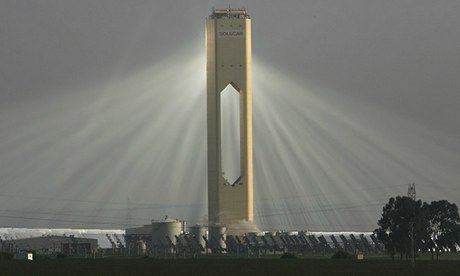 Last Friday's report from the United Nations confirms the huge danger from our continued dependence on fossil fuel. But one simple thing can break this dependence. It needs to be cheaper to produce non-carbonenergy than it is by digging up coal, gas or oil. Once this happens, most of the coal, gas and oil will automatically be left undisturbed in the ground.
To make non-carbon energy become competitive is a major scientific challenge, not unlike the challenge of developing the atom bomb or sending a man to the moon. Science rose to those challenges because a clear goal and timetable were set and enough public money was provided for the research. These programmes had high political profile and public visibility. They attracted many of the best minds of the age.
The issue of climate change and energy is even more important and it needs the same treatment. In most countries, there is at present too little public spending on non-carbon energy research. Instead, we need a major international research effort, with a clear goal and a clear timetable.
What should it focus on? There will always be many sources of non-carbon energy – nuclear fission, hydropower, geothermal, wind, nuclear fusion (possibly) and solar. But nuclear fission and hydropower have been around for many years. Nuclear is essential but faces political obstacles and there are physical limits to hydropower. Nuclear fusion remains uncertain. And, while wind can play a big role in the UK, in many countries its application is limited. So there is no hope of completely replacing fossil fuel without a major contribution from the power of the sun.
Moreover, the sun sends energy to the Earth equal to about 5,000 times our total energy needs. It is inconceivable that we cannot collect enough of this energy for our needs, at a reasonable cost. The price of photovoltaic energy is falling at 10% a year, and in Germany a serious amount of unsubsidised, solar electricity is already being added to the grid. In California, forward contracts for solar energy are becoming competitive with other fuels and they will become more so, as technology progresses.
But time is desperately short and there are two even bigger scientific challenges. The first is to make solar power available on a 24-hour basis, when the sun shines only part of the day and can be obscured by cloud. This requires a major breakthrough in the storage of electricity.
The second is to reduce the cost of transmitting electricity from areas of high luminosity and low land value to the major population centres of the world. Better storage requires major breakthroughs in the science of batteries; better transmission requires new materials that are much better at conducting electricity without loss of power. In all these cases, the solution requires new disruptive technologies.
So here is our proposal. There should be a world sunpower programme of research, development and demonstration. The goal would be by 2025 to deliver solar electricity at scale to the grid at a cost below the cost of fossil fuel. All countries would be invited to participate. Those who did would commit, in their own countries, to major new programmes of research, internationally co-ordinated, and to share their findings for the benefit of the world.
Each country would have the goal of demonstrating bulk supply of unsubsidised solar electricity in scale to the grid by 2025. At the world level, the target would be for solar electricity to be at least 10% of total energy supply by 2025 and 25% by 2030. Countries' contributions to this target would be closely watched.
The programme would be truly broad. It would cover non-grid solar as well as grid electricity. And it would be of value to wind electricity as well, through improving storage and transmission.
Unlike fossil fuel, solar produces no pollution and no miners get killed. Unlike nuclear fission, it produces no radioactive waste. It harnesses the power of the sun, which is the ultimate source of most energy on Earth. And it can strike the imagination of a people and therefore of their politicians.
A central role of governments is to promote new public knowledge. Surely the most important knowledge of all is how to preserve human life as we know it. In 2015, the nations of the world will meet to agree their commitments on climate change. Whatever else they agree, they should go for a major sunpower programme.
Sir David King will be the foreign secretary's special representative on climate change from 1 October. Lord Layard is former founder-director of the Centre for Economic Performance at the LSE.
Source: theguardian.com
Local News
- 1
- 2
- 3
- 4
- 5
IPPLM joins the Enterprise Europe Network
31-03-2026
On 23 March 2026, the Institute of Plasma Physics and Laser Microfusion (IPPLM) joined, with its technological offer, the group of entities affiliated with the Enterprise Europe Network (EEN), interested...
Read moreIPPLM as a co-creator of the exhibition "E = mc² – the formula that changed the world" at the National…
18-02-2026

On 16 February 2026, the official opening of two new permanent exhibitions took place at the National Museum of Technology in Warsaw. The Institute of Plasma Physics and Laser Microfusion...
Read moreIPPLM supports children and young people at the TPD "Helenów" Centre
22-12-2025

The Sylwester Kaliski Institute of Plasma Physics and Laser Microfusion (IPPLM) has for many years been actively engaged in initiatives supporting children and young people supported by the TPD "Helenów"...
Read moreIPPLM researchers took part in an experimental campaign on the GEKKO XII laser
20-11-2025

On 10–14 November 2025, a research team from the Sylwester Kaliski Institute of Plasma Physics and Laser Microfusion (IPPLM) – Prof. Katarzyna Batani, Dr Hanna Marchenko and Dr Agnieszka Zaraś-Szydłowska...
Read moreRegister for the 18th Kudowa Summer School on Plasma Physics!
07-11-2025

We invite you to take part in the 18th Kudowa Summer School "Towards Fusion Energy", which will be held on 8–12 June 2026 in Kudowa-Zdrój, Poland. The event is organised...
Read moreIPPLM participated in the second technical meeting within the DONES Con-P1 project
17-10-2025
The Institute of Plasma Physics and Laser Microfusion (IPPLM) took part in the second technical meeting held as part of the DONES Consolidation Phase 1 (DONES ConP1) project, co-financed by...
Read moreProf. Jan Badziak from IPPLM among the World’s Top 2% Scientists
15-10-2025
Prof. Jan Badziak, from the Department of Laser Plasma and Magnetized Dense Plasma Physics at the Institute of Plasma Physics and Laser Microfusion (IPPLM), has been included in the prestigious...
Read more29th Science Festival with the participation of IPPLM
10-10-2025

During the 29th Science Festival in Warsaw, held on 19–28 September 2025, researchers from the Institute of Plasma Physics and Laser Microfusion (IPPLM) conducted lessons for upper-grade primary school students. The...
Read morePLASMA 2025 and the 20th Anniversary of the Euratom–IPPLM Association – event summary
26-09-2025

From 15 to 19 September 2025, Warsaw hosted the international scientific conference PLASMA 2025 – International Conference on Research and Application of Plasmas, dedicated to plasma research, diagnostics, and applications....
Read moreWe bid farewell with deep sorrow to Professor Jerzy Wołowski
25-09-2025

It is with great sadness that we have received the news of the passing of Professor Jerzy Wołowski (1936–2025) an outstanding physicist, long-time employee of the Institute of Plasma Physics...
Read more20th anniversary of the Euratom–IPPLM Association (CeNTE): Celebrating two decades of fusion research coordination
16-09-2025

On 19 September 2025, during the PLASMA 2025 International Conference on Research, Diagnostics and Applications of Plasma in Warsaw, the IPPLM will mark 20th anniversary of the coordination of research on nuclear fusion...
Read moreIPPLM at the 49th Congress of Polish Physicists in Katowice
13-09-2025
During the 49th Congress of Polish Physicists, held from September 5–11, 2025, in Katowice, the Institute of Plasma Physics and Laser Microfusion (IPPLM) was represented both among the speakers and...
Read moreProf. Agata Chomiczewska appointed Deputy Director for Scientific Affairs at the IPPLM
03-09-2025

We are pleased to announce that the Minister of Energy, Mr. Miłosz Motyka, has appointed Dr. hab. Agata Chomiczewska to the position of Deputy Director for Scientific Affairs at the...
Read moreA historic milestone – the Scientific Council of the Institute confers the degree of habilitated doctor
10-07-2025
For the first time in the history of the Institute of Plasma Physics and Laser Microfusion (IPPLM), the Scientific Council has adopted a resolution to confer the degree of habilitated...
Read moreNew Board of the Plasma Physics Division of the European Physical Society
04-07-2025

In the first quarter of 2025, elections were held for the Board of the Plasma Physics Division of the European Physical Society (EPS Plasma Physics Division). Six candidates who received...
Read moreIPPLM researchers bring fusion expertise to 10th Central & Eastern Europe Nuclear Industry Congress 2025
12-06-2025
Researchers from the Institute of Plasma Physics and Laser Microfusion (IPPLM), Dr. Natalia Wendler and Dr. Paweł Gąsior, recently participated in a panel discussion at the 10th Central & Eastern...
Read moreIPPLM at the 3rd edition of the "Science for Society" Congress
29-05-2025

On 25-26 May 2025, the 3rd edition of the "Science for Society" Congress took place in the Large Hall of the Warsaw University of Technology. The aim of the event...
Read moreInvitation to the 3rd edition of the "Science for Society" Congress with the participation of IPPLM
22-05-2025

The 3rd edition of the "Science for Society" Congress will take place on 25–26 May 2025 at the Warsaw University of Technology. This unique event demonstrates that science is not...
Read moreJoin the 28th Science Picnic!
07-05-2025

The Institute of Plasma Physics and Laser Microfusion (IPPLM) invites you to its stand on Saturday, 10 May, during the 28th Science Picnic, organized by Polish Radio and the Copernicus...
Read moreCooperation agreement between the IPPLM and the National Museum of Technology
18-04-2025

On 17 April 2025, a cooperation agreement was signed between the National Museum of Technology (NMT) and the Institute of Plasma Physics and Laser Microfusion (IPPLM). The ceremonial meeting, attended by...
Read morePolish and French researchers join forces in research on nuclear fusion
31-03-2025

On 24-25 March 2025, a Polish-French meeting was held at the headquarters of the Institute of Nuclear Physics of the Polish Academy of Sciences (IFJ PAN) and the French Institute...
Read moreJoin us for the International Conference on Research and Application of Plasmas – PLASMA 2025!
13-03-2025

The Institute of Plasma Physics and Laser Microfusion (IPPLM) invites you to attend the PLASMA 2025 – International Conference on Research and Application of Plasmas, which will be held from...
Read moreExperimental research session in the Plasma-Focus PF1000U laboratory as part of the ICDMP collaboration
27-02-2025

On February 10–21, 2025, an experimental session was held in the Plasma-Focus PF-1000U laboratory, in which, in addition to the IPPLM team, a three-person team of researchers from the Prague...
Read moreLaser demonstration on JET detects fusion fuels
11-02-2025

Scientists and engineers from eight nations, including Poland, have carried out a project using lasers on the Joint European Torus (JET) to study fusion fuel retention. Laser Induced Breakdown Spectroscopy (LIBS),...
Read moreIPPLM employee nominated for the Personality of the Year title in the Science category
24-01-2025
Research and technical employee Mr. Olgierd Cichorek, M.Sc., from the Laboratory of Plasma Nudge for Satellites at the IPPLM has been nominated for the title of Personality of the Year...
Read moreWorld News
- 1
- 2
- 3
- 4
- 5
In Memoriam — Professor Francesco Romanelli
24-03-2026

The world of fusion research mourns the loss of Professor Francesco Romanelli, a visionary scientist whose work helped bring humanity closer to clean, limitless energy. Over four decades, he explored...
Read moreIgniting the future: Breakthroughs in inertial confinement Fusion
25-07-2025

In December 2022, the National Ignition Facility (NIF) at Lawrence Livermore National Laboratory (USA) marked a historic milestone in fusion science: an experiment produced 3.15 MJ of fusion energy from 2.05 MJ of laser...
Read moreWendelstein 7-X sets new fusion performance records
04-06-2025

On May 22, 2025, the Wendelstein 7-X (W7-X) stellarator at the Max Planck Institute for Plasma Physics (IPP) in Greifswald concluded its latest experimental campaign with a major success: a...
Read moreEuropean tokamak sets new fusion plasma record
20-02-2025

On February 12, 2025, the WEST tokamak, located at CEA Cadarache in southern France, set a new world record by sustaining fusion plasma for 1,337 seconds, or over 22 minutes....
Read moreDr. Gianfranco Federici appointed as the new EUROfusion Programme Manager
17-12-2024
At the 49th General Assembly held in Barcelona, December 2024, Dr. Gianfranco Federici was elected as the new Programme Manager of EUROfusion. He succeeds Prof. Ambrogio Fasoli, who will return...
Read moreEUROfusion and F4E join forces for Europe’s fusion future
16-12-2024

EUROfusion and Fusion for Energy (F4E) have signed a Memorandum of Understanding (MoU) to advance fusion research and development in Europe. This agreement reinforces cooperation in...
Read moreJohn J. Hopfield and Geoffrey E. Hinton awarded the 2024 Nobel Prize in Physics
08-10-2024

John J. Hopfield and Geoffrey E. Hinton have been awarded the 2024 Nobel Prize in Physics "for foundational discoveries and inventions that enable machine learning with artificial neural networks." The Nobel...
Read moreWendelstein 7-X begins new experimental campaign
10-09-2024

The Wendelstein 7-X, the world’s most advanced stellarator, is launching a new experimental campaign after a year of intensive maintenance and upgrades. This phase, known as OP2.2, begins on 10...
Read moreITER's New Project Baseline: A Robust Path to Fusion Energy Research
04-07-2024

On 3 July, ITER Director-General Pietro Barabaschi presented the new project baseline, under evaluation by the ITER Organization's governing body. This plan aims to ensure a robust start to scientific...
Read moreITER Council Presents Updated Project Baseline
21-06-2024

The ITER Council convened this week for its 34th meeting, where nearly 100 attendees reviewed significant updates to the project baseline. The proposed changes aim to optimize the overall project...
Read moreEurope and Japan celebrate breakthrough in paving the way for fusion energy
01-12-2023

The prospect of harnessing fusion energy is closer. The successful operation of JT-60SA, the most powerful experimental device to date, built by Europe and Japan, is a landmark achievement for...
Read moreFirst plasma was successfully generated at JT-60SA
26-10-2023

A momentous achievement in the field of nuclear fusion has been accomplished by a collaborative team of engineers from Europe and Japan. They have successfully generated tokamak plasma for the...
Read moreThe Nobel Prize in Physics 2023
03-10-2023
Pierre Agostini, Ferenc Krausz and Anne L’Huillier are the winners of this year's Nobel Prize in Physics. It was awarded "for experimental methods that generate attosecond pulses of light for...
Read moreUS Lab Replicates Fusion Ignition Breakthrough
08-08-2023
The US National Ignition Facility (NIF) has achieved fusion ignition once again, building on its landmark 2022 success. This achievement, powered by hydrogen within a diamond capsule, signifies a major...
Read moreNew Programme Manager Elect announced by EUROfusion
20-07-2023
Professor Ambrogio Fasoli became the new EUROfusion Programme Manager Elect. The decision was made by EUROfusion General Assembly at the meeting on 18 July 2023. His tenure will officially commence...
Read moreEUROfusion stands in solidarity with research in Ukraine
24-02-2023

Today, as we commemorate the anniversary of the invasion of Ukraine by Russia, the EUROfusion consortium stands in solidarity with our Ukrainian member and research colleagues. EUROfusion remains committed to supporting...
Read moreEight-minute production of plasma with gigajoule energy turnover at Wendelstein 7-X
23-02-2023

Another target has been achieved only recently by the W7-X researchers, namely they managed to acquire an energy turnover of 1.3 gigajoules in the device, which is 17 times higher...
Read moreThe Nobel Prize in Physics 2022
04-10-2022

Alain Aspect, John F. Clauser and Anton Zeilinger are the winners of this year's Nobel Prize in Physics. It was awarded “for experiments with entangled photons, establishing the violation of...
Read moreNew experiments for fusion energy record breaker JET
27-09-2022

A new wave of fusion energy experiments on UK Atomic Energy Authority’s record-breaking Joint European Torus (JET) started this month. EUROfusion researchers are using the famous JET machine to conduct a...
Read moreITER appoints new Director-General
21-09-2022
Pietro Barabaschi has become the next Director-General of the ITER Organization as a result of the unanimous choice of the Council from among finalist candidates. In the transition period Dr....
Read moreStarting power plant design
07-07-2022

At a livestreamed Horizon EUROfusion event in Brussels on 5 July 2022, EUROfusion celebrated the start of conceptual design activities for Europe's first demonstration fusion power plant DEMO. This first-of-a-kind...
Read moreCelebration of achieving a crucial assembly milestone in the ITER Project
17-05-2022

This month, we have witnessed the successful lifting and lowering into the machine well of the first sub-section of the ITER plasma chamber. The weight of the component is the...
Read moreBurning plasma achieved in inertial fusion at the National Ignition Facility
15-02-2022
Obtaining a burning plasma is a critical step towards self-sustaining fusion energy. A burning plasma is one in which the fusion reactions themselves are the primary source of heating in...
Read moreHistoric milestone reached by JET scientists
20-01-2022

Iconic fusion energy machine JET – which reaches controlled temperatures 10 times hotter than the core of the sun – completed its 100,000th live pulse last night. Weighing 2,800 tonnes, the...
Read moreHorizon Europe Grant Agreement signed
20-12-2021

15 December 2021 saw the EUROfusion consortium signing the Grant Agreement under Horizon Europe, the European Framework Programme from 2021 – 2027, in an aim to launch comprehensive R&D approach...
Read more |
 |
 |
 |
 |
 |
 |
 |
What we do
Our laboratories
Online seminars
| Thursday, 30 Apr 2026, godz. 13.00 Seminarium instytutowe: "Equation of State of Shock Compressed BN in the Megabar Pressure Range", dr hab. Katarzyna Batani, IFPiLM |


Research projects carried out at the IPPLM are funded by the Polish Ministry of Education and Science, the National Science Centre and by the European Commission within the framework of EUROfusion Consortium under grant agreement No 101052200. Financial support comes also from the International Atomic Energy Agency, European Space Agency and LaserLab Consortium as well as from the Fusion for Energy Agency.