





Zestaw obrazów 2019
zdjecie1.jpg
zdjecie2.jpg
zdjecie3.jpg
zdjecie4.jpg
zdjecie5.jpg
zdjecie6.jpg
2019_1.JPG
2019_2.JPG
2019_4.JPG


Światowe
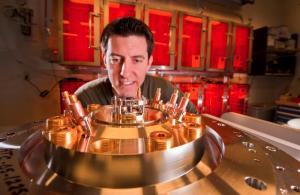 Magnetically imploded tubes called liners, intended to help produce controlled nuclear fusion at scientific "break-even" energies or better within the next few years, have functioned successfully in preliminary tests, according to a Sandia research paper accepted for publication by Physical Review Letters (PRL).
To exceed scientific break-even is the most hotly sought-after goal of fusion research, in which the energy released by a fusion reaction is greater than the energy put into it -- an achievement that would have extraordinary energy and defense implications.
That the liners survived their electromagnetic drubbing is a key step in stimulating further Sandia testing of a concept called MagLIF (Magnetized Liner Inertial Fusion), which will use magnetic fields and laser pre-heating in the quest for energetic fusion.
In the dry-run experiments just completed, cylindrical beryllium liners remained reasonably intact as they were imploded by huge magnetic field of Sandia's Z machine, the world's most powerful pulsed-power accelerator. Had they overly distorted, they would have proved themselves incapable of shoveling together nuclear fuel -- deuterium and possibly tritium -- to the point of fusing them. Sandia researchers expect to add deuterium fuel in experiments scheduled for 2013.
"The experimental results -- the degree to which the imploding liner maintained its cylindrical integrity throughout its implosion -- were consistent with results from earlier Sandia computer simulations," said lead researcher Ryan McBride."These predicted MagLIF will exceed scientific break-even."
A simulation published in a 2010 Physics of Plasmas article by Sandia researcher Steve Slutz showed that a tube enclosing preheated deuterium and tritium, crushed by the large magnetic fields of the 25-million-ampere Z machine, would yield slightly more energy than is inserted into it.
A later simulation, published last January in PRL by Slutz and Sandia researcher Roger Vesey, showed that a more powerful accelerator generating 60 million amperes or more could reach "high-gain" fusion conditions, where the fusion energy released greatly exceeds (by more than 1,000 times) the energy supplied to the fuel.
These goals -- both the near-term goal of scientific break-even on today's Z machine and the long-term goal of high-gain fusion on a future, more powerful machine -- require the metallic liners to maintain sufficient cylindrical integrity while they implode.
The liner is intended to contain fusion fuel like a can holds peanut butter, and push it together in nanoseconds like two semicylindrical shovels compacting snow together.
An element of drama is present because the metallic liner doing the compressing is also being eaten away as it conducts the Z machine's enormous electrical current along its outer surface. This electrical current generates the corresponding magnetic field that crushes the liner, but under the stress of passing that current, the outer surface of the liner begins to vaporize and turn into plasma, in much the same way as a car fuse vaporizes when a short circuit sends too much current through it. As this happens, the surface begins to lose integrity and becomes unstable. This instability works its way inward, toward the liner's inner surface, throughout the course of the implosion.
"You might say: The race is on," said McBride. "The question is, can we start off with a thick enough tube such that we can complete the implosion and burn the fusion fuel before the instability eats its way completely through the liner wall?
"A thicker tube would be more robust in standing up to this instability, but the implosion would be less efficient because Z would have to accelerate more liner mass. On the flip side, a thinner tube could be accelerated to a much higher implosion velocity, but then the instability would rip the liner to shreds and render it useless," he continues. "Our experiments were designed to test a sweet spot predicted by the simulations where a sufficiently robust liner could implode with a sufficiently high velocity."
By following the dimensions proposed by the earlier simulations, the physical test proved successful and the liner walls maintained their integrity throughout the implosion. Radiographs taken at nanosecond intervals depicted the implosion of the initially solid beryllium liner through to stagnation -- the point at which an implosion stops because the liner material has reached the cylinder's central axis. The images show the outer surface of the imploding liner distorting until it resembles threads on a bolt. However, the more crucial inner surface remains reasonably intact all the way through to stagnation.
Said McBride's manager Dan Sinars, "When Magnetized Liner Inertial Fusion was first proposed, our biggest concern was whether the instabilities would disrupt the target before fusion reactions could occur. We had complex computer simulations that suggested things would be OK, but we were not confident in those predictions. Then McBride did his experiments, using liners with the same dimensions as our simulations, and the outcomes matched. We are now confident enough to take the next steps on the Z facility of integrating in the new magnetic field and laser preheat capabilities that will be required to test the full concept. Consequently, we intend to take those first integration steps in 2013."
Slated for December are the first tests of the final two components of the MagLIF concept: laser preheating to put more energy into the fuel before magnetic compression begins, and the testing of two secondary electrical coils placed at the top and bottom of the can. Their magnetic fields are expected to keep charged particles from escaping the hot fuel horizontally. This is crucial because if too many particles escape, the fuel could cool to the point where fusion reactions cease.
Sandia researchers intend to test the fully integrated MagLIF concept by the close of 2013.
"This work is one more step on a long path to possible energy applications," said Sandia senior manager Mark Herrmann.
The liner implosion experiments also served to verify that simulation tools like the popular LASNEX code are accurate within certain parameters, but may diverge when used beyond those limits -- information of importance to other labs that use the same codes. McBride will give an invited talk on his work this fall at the American Physical Society's annual Division of Plasma Physics meeting in Providence, RI. He is also preparing an invited paper for Physics of Plasmas to explain the PRL results in greater depth.
The work was funded by Sandia's Laboratory Directed Research and Development program and the National Nuclear Security Administration.
Source: sciencedaily.com
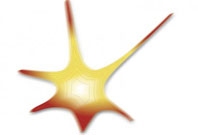 The snowflake is not usually associated with extremely high temperatures – yet this image from the latest issue of Fusion in Europe is from the hottest part of a tokamak, the divertor. The snowflake divertor is a new approach to managing the intense heat loads generated by fusion experiments, based on a complex magnetic field configuration. The success of this approach earned a prestigious “R & D 100″ award for the team that developed it, from the EFDA’s Swiss Associate CRPP, and the Lawrence Livermore National Laboratory, US and Princeton University, US.
The full story is in the Autumn Issue of Fusion in Europe, along with novel tritium recovery methods, how industry benefits from Wendelstein 7-X, a new negative ion source and models of the future global energy market. There is also a round up of JET’s latest progress and future plans – and the interest they are attracting from ITER – and much more.
Follow the link to the right to read the articles online or download the complete issue as a PDF. If you would prefer to get your hands on a hard copy use the subscribe link at the bottom of this page.
Source: EFDA
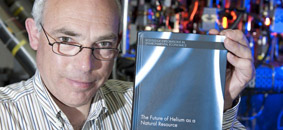 It’s a well known fact that the fusion of tritium and deuterium produces helium. However, a fusion power plant also uses helium – it is a vital coollant which, while not actually consumed, is inevitably lost during operation in quantities that far outweigh the amount produced – and in recent years it has become apparent the future supply of helium is not assured.
This week former Cryogenic Section Leader at JET, Richard Clarke, is presenting a paper about the world’s helium market at the Cryogenics 2012 international conference in Dresden. In 2005, while working at Culham, Richard was prompted by uncertainties in the helium supply to begin investigating the situation, which led to a global exploration of the technological, economic and political factors influencing the helium market. Teaming up with William J Nuttall and Bartek A Glowacki from Cambridge University Richard has recently co-edited a book, entitled “The Future of Helium as a Natural Resource” (Routledge 2012). The book is the first in-depth book on the noble gas since 1968.
Helium is produced in the ground by alpha decay of naturally radioactive minerals, and then comes to the surface as a by-product of natural gas production. “The big challenge now is for the natural gas industry to better preserve known geological helium reserves,” says Richard Clarke. Although the global helium market turns over around $1 billion per year and demand is predicted to double by 2030, this is a pittance compared with the $1 trillion natural gas market – there is little incentive for natural gas producers to invest in additional processing to extract helium.
In a recent comment published in Nature, the three authors added their voices to those calling for global arrangements to oversee helium resources: “A global agency is urgently needed to address the long-term issues facing the supply and demand of this precious element.”
In the meantime JET has been doing its bit towards preserving this scarce resource: the cryogenics plant has recently been upgraded, which has reduced the helium losses by up to £10,000-worth per month.
Source: EFDA
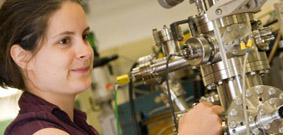 In the story of “The Princess and the Pea”, as told by Hans Christian Andersen, a princess is able to detect a pea in the bed she is lying on, despite a large pile of mattresses and feather quilts on top of it. However physicist Katharina Dobes can do much better: she can detect single layers of atoms, weighing a billionth of a milligram – around 10-12 of a pea. She does this not by lying on them, but by using a device known as a quartz crystal microbalance (QCM).
Ms Dobes is doing a PhD at the Institute of Applied Physics at the Vienna University of Technology, and the layers that she is studying are the surfaces of plasma facing materials, such as tungsten, carbon and beryllium. In her experiments these materials are bombarded with ions, which knocks off atoms, in a process known as sputtering. This process happens to plasma-facing materials in a fusion vessel – with the QCM Katharina can measure exactly how much sputtering occurs with each combination of wall material and plasma ion. This in turn gives vital information about how much of the wall material will contaminate the plasma.
Recent experiments have explored bombarding a tungsten wall with argon or nitrogen, because these have been used in JET to cool the edge of the plasma. These gases are much heavier than deuterium and so were expected to cause more sputtering of tungsten, which these measurements confirmed. “It was not a particularly disappointing result for fusion,” says Head of the Atomic and Plasma Physics Research Group, Professor Friedrich Aumayr. “but you don’t need bad surprises!”
The quartz crystal microbalance consists of a quartz crystal on to which layers are deposited. A vibration is then electronically induced in the crystal and the resonant frequency of the crystal measured. When atoms are sputtered off the crystal the resonant frequency changes, as it gets lighter. Although QCMs are not uncommon in the thin film manufacturing industry – for measuring deposition, not erosion – this particular experiment has achieved outstanding results. “QCMs can usually measure less than a micrometer,” says Professor Aumayr, “but thanks to a carefully controlled lab environment and specially built electronics we can detect less than one thousandth of a monolayer – fractions of a nanometer”
The next set of measurements will use beryllium as the wall material, however the Vienna University of Technology does not have a beryllium handling facility. This means, in keeping with the fairytale theme, to complete her quest Katharina Dobes will need pack the QCM up into a truck and journey to a faraway kingdom – the Institute for Plasma Physics in Garching, Germany.
The Institute of Applied Physics at the Vienna University of Technology is a signatory to EFDA through the Austrian Fusion Research Programme ÖAW-EURATOM. The Max-Planck-Institute for Plasma Physics in Garching is one of three German signatories to EFDA.
Source: EFDA
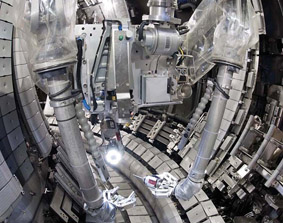 After more than a half a century addressing the scientific challenges of controlled nuclear fusion, the research focus is moving from plasma physics to engineering. Chris Warrick from the Culham Centre for Fusion Energy explains how remote handling, materials and superconducting magnets are taking fusion energy into the reactor era.
Read the whole story: INGENIA ISSUE 52 SEPTEMBER 2012
Local News
- 1
- 2
- 3
- 4
- 5
IPPLM joins the Enterprise Europe Network
31-03-2026
On 23 March 2026, the Institute of Plasma Physics and Laser Microfusion (IPPLM) joined, with its technological offer, the group of entities affiliated with the Enterprise Europe Network (EEN), interested...
Read moreIPPLM as a co-creator of the exhibition "E = mc² – the formula that changed the world" at the National…
18-02-2026

On 16 February 2026, the official opening of two new permanent exhibitions took place at the National Museum of Technology in Warsaw. The Institute of Plasma Physics and Laser Microfusion...
Read moreIPPLM supports children and young people at the TPD "Helenów" Centre
22-12-2025

The Sylwester Kaliski Institute of Plasma Physics and Laser Microfusion (IPPLM) has for many years been actively engaged in initiatives supporting children and young people supported by the TPD "Helenów"...
Read moreIPPLM researchers took part in an experimental campaign on the GEKKO XII laser
20-11-2025

On 10–14 November 2025, a research team from the Sylwester Kaliski Institute of Plasma Physics and Laser Microfusion (IPPLM) – Prof. Katarzyna Batani, Dr Hanna Marchenko and Dr Agnieszka Zaraś-Szydłowska...
Read moreRegister for the 18th Kudowa Summer School on Plasma Physics!
07-11-2025

We invite you to take part in the 18th Kudowa Summer School "Towards Fusion Energy", which will be held on 8–12 June 2026 in Kudowa-Zdrój, Poland. The event is organised...
Read moreIPPLM participated in the second technical meeting within the DONES Con-P1 project
17-10-2025
The Institute of Plasma Physics and Laser Microfusion (IPPLM) took part in the second technical meeting held as part of the DONES Consolidation Phase 1 (DONES ConP1) project, co-financed by...
Read moreProf. Jan Badziak from IPPLM among the World’s Top 2% Scientists
15-10-2025
Prof. Jan Badziak, from the Department of Laser Plasma and Magnetized Dense Plasma Physics at the Institute of Plasma Physics and Laser Microfusion (IPPLM), has been included in the prestigious...
Read more29th Science Festival with the participation of IPPLM
10-10-2025

During the 29th Science Festival in Warsaw, held on 19–28 September 2025, researchers from the Institute of Plasma Physics and Laser Microfusion (IPPLM) conducted lessons for upper-grade primary school students. The...
Read morePLASMA 2025 and the 20th Anniversary of the Euratom–IPPLM Association – event summary
26-09-2025

From 15 to 19 September 2025, Warsaw hosted the international scientific conference PLASMA 2025 – International Conference on Research and Application of Plasmas, dedicated to plasma research, diagnostics, and applications....
Read moreWe bid farewell with deep sorrow to Professor Jerzy Wołowski
25-09-2025

It is with great sadness that we have received the news of the passing of Professor Jerzy Wołowski (1936–2025) an outstanding physicist, long-time employee of the Institute of Plasma Physics...
Read more20th anniversary of the Euratom–IPPLM Association (CeNTE): Celebrating two decades of fusion research coordination
16-09-2025

On 19 September 2025, during the PLASMA 2025 International Conference on Research, Diagnostics and Applications of Plasma in Warsaw, the IPPLM will mark 20th anniversary of the coordination of research on nuclear fusion...
Read moreIPPLM at the 49th Congress of Polish Physicists in Katowice
13-09-2025
During the 49th Congress of Polish Physicists, held from September 5–11, 2025, in Katowice, the Institute of Plasma Physics and Laser Microfusion (IPPLM) was represented both among the speakers and...
Read moreProf. Agata Chomiczewska appointed Deputy Director for Scientific Affairs at the IPPLM
03-09-2025

We are pleased to announce that the Minister of Energy, Mr. Miłosz Motyka, has appointed Dr. hab. Agata Chomiczewska to the position of Deputy Director for Scientific Affairs at the...
Read moreA historic milestone – the Scientific Council of the Institute confers the degree of habilitated doctor
10-07-2025
For the first time in the history of the Institute of Plasma Physics and Laser Microfusion (IPPLM), the Scientific Council has adopted a resolution to confer the degree of habilitated...
Read moreNew Board of the Plasma Physics Division of the European Physical Society
04-07-2025

In the first quarter of 2025, elections were held for the Board of the Plasma Physics Division of the European Physical Society (EPS Plasma Physics Division). Six candidates who received...
Read moreIPPLM researchers bring fusion expertise to 10th Central & Eastern Europe Nuclear Industry Congress 2025
12-06-2025
Researchers from the Institute of Plasma Physics and Laser Microfusion (IPPLM), Dr. Natalia Wendler and Dr. Paweł Gąsior, recently participated in a panel discussion at the 10th Central & Eastern...
Read moreIPPLM at the 3rd edition of the "Science for Society" Congress
29-05-2025

On 25-26 May 2025, the 3rd edition of the "Science for Society" Congress took place in the Large Hall of the Warsaw University of Technology. The aim of the event...
Read moreInvitation to the 3rd edition of the "Science for Society" Congress with the participation of IPPLM
22-05-2025

The 3rd edition of the "Science for Society" Congress will take place on 25–26 May 2025 at the Warsaw University of Technology. This unique event demonstrates that science is not...
Read moreJoin the 28th Science Picnic!
07-05-2025

The Institute of Plasma Physics and Laser Microfusion (IPPLM) invites you to its stand on Saturday, 10 May, during the 28th Science Picnic, organized by Polish Radio and the Copernicus...
Read moreCooperation agreement between the IPPLM and the National Museum of Technology
18-04-2025

On 17 April 2025, a cooperation agreement was signed between the National Museum of Technology (NMT) and the Institute of Plasma Physics and Laser Microfusion (IPPLM). The ceremonial meeting, attended by...
Read morePolish and French researchers join forces in research on nuclear fusion
31-03-2025

On 24-25 March 2025, a Polish-French meeting was held at the headquarters of the Institute of Nuclear Physics of the Polish Academy of Sciences (IFJ PAN) and the French Institute...
Read moreJoin us for the International Conference on Research and Application of Plasmas – PLASMA 2025!
13-03-2025

The Institute of Plasma Physics and Laser Microfusion (IPPLM) invites you to attend the PLASMA 2025 – International Conference on Research and Application of Plasmas, which will be held from...
Read moreExperimental research session in the Plasma-Focus PF1000U laboratory as part of the ICDMP collaboration
27-02-2025

On February 10–21, 2025, an experimental session was held in the Plasma-Focus PF-1000U laboratory, in which, in addition to the IPPLM team, a three-person team of researchers from the Prague...
Read moreLaser demonstration on JET detects fusion fuels
11-02-2025

Scientists and engineers from eight nations, including Poland, have carried out a project using lasers on the Joint European Torus (JET) to study fusion fuel retention. Laser Induced Breakdown Spectroscopy (LIBS),...
Read moreIPPLM employee nominated for the Personality of the Year title in the Science category
24-01-2025
Research and technical employee Mr. Olgierd Cichorek, M.Sc., from the Laboratory of Plasma Nudge for Satellites at the IPPLM has been nominated for the title of Personality of the Year...
Read moreWorld News
- 1
- 2
- 3
- 4
- 5
In Memoriam — Professor Francesco Romanelli
24-03-2026

The world of fusion research mourns the loss of Professor Francesco Romanelli, a visionary scientist whose work helped bring humanity closer to clean, limitless energy. Over four decades, he explored...
Read moreIgniting the future: Breakthroughs in inertial confinement Fusion
25-07-2025

In December 2022, the National Ignition Facility (NIF) at Lawrence Livermore National Laboratory (USA) marked a historic milestone in fusion science: an experiment produced 3.15 MJ of fusion energy from 2.05 MJ of laser...
Read moreWendelstein 7-X sets new fusion performance records
04-06-2025

On May 22, 2025, the Wendelstein 7-X (W7-X) stellarator at the Max Planck Institute for Plasma Physics (IPP) in Greifswald concluded its latest experimental campaign with a major success: a...
Read moreEuropean tokamak sets new fusion plasma record
20-02-2025

On February 12, 2025, the WEST tokamak, located at CEA Cadarache in southern France, set a new world record by sustaining fusion plasma for 1,337 seconds, or over 22 minutes....
Read moreDr. Gianfranco Federici appointed as the new EUROfusion Programme Manager
17-12-2024
At the 49th General Assembly held in Barcelona, December 2024, Dr. Gianfranco Federici was elected as the new Programme Manager of EUROfusion. He succeeds Prof. Ambrogio Fasoli, who will return...
Read moreEUROfusion and F4E join forces for Europe’s fusion future
16-12-2024

EUROfusion and Fusion for Energy (F4E) have signed a Memorandum of Understanding (MoU) to advance fusion research and development in Europe. This agreement reinforces cooperation in...
Read moreJohn J. Hopfield and Geoffrey E. Hinton awarded the 2024 Nobel Prize in Physics
08-10-2024

John J. Hopfield and Geoffrey E. Hinton have been awarded the 2024 Nobel Prize in Physics "for foundational discoveries and inventions that enable machine learning with artificial neural networks." The Nobel...
Read moreWendelstein 7-X begins new experimental campaign
10-09-2024

The Wendelstein 7-X, the world’s most advanced stellarator, is launching a new experimental campaign after a year of intensive maintenance and upgrades. This phase, known as OP2.2, begins on 10...
Read moreITER's New Project Baseline: A Robust Path to Fusion Energy Research
04-07-2024

On 3 July, ITER Director-General Pietro Barabaschi presented the new project baseline, under evaluation by the ITER Organization's governing body. This plan aims to ensure a robust start to scientific...
Read moreITER Council Presents Updated Project Baseline
21-06-2024

The ITER Council convened this week for its 34th meeting, where nearly 100 attendees reviewed significant updates to the project baseline. The proposed changes aim to optimize the overall project...
Read moreEurope and Japan celebrate breakthrough in paving the way for fusion energy
01-12-2023

The prospect of harnessing fusion energy is closer. The successful operation of JT-60SA, the most powerful experimental device to date, built by Europe and Japan, is a landmark achievement for...
Read moreFirst plasma was successfully generated at JT-60SA
26-10-2023

A momentous achievement in the field of nuclear fusion has been accomplished by a collaborative team of engineers from Europe and Japan. They have successfully generated tokamak plasma for the...
Read moreThe Nobel Prize in Physics 2023
03-10-2023
Pierre Agostini, Ferenc Krausz and Anne L’Huillier are the winners of this year's Nobel Prize in Physics. It was awarded "for experimental methods that generate attosecond pulses of light for...
Read moreUS Lab Replicates Fusion Ignition Breakthrough
08-08-2023
The US National Ignition Facility (NIF) has achieved fusion ignition once again, building on its landmark 2022 success. This achievement, powered by hydrogen within a diamond capsule, signifies a major...
Read moreNew Programme Manager Elect announced by EUROfusion
20-07-2023
Professor Ambrogio Fasoli became the new EUROfusion Programme Manager Elect. The decision was made by EUROfusion General Assembly at the meeting on 18 July 2023. His tenure will officially commence...
Read moreEUROfusion stands in solidarity with research in Ukraine
24-02-2023

Today, as we commemorate the anniversary of the invasion of Ukraine by Russia, the EUROfusion consortium stands in solidarity with our Ukrainian member and research colleagues. EUROfusion remains committed to supporting...
Read moreEight-minute production of plasma with gigajoule energy turnover at Wendelstein 7-X
23-02-2023

Another target has been achieved only recently by the W7-X researchers, namely they managed to acquire an energy turnover of 1.3 gigajoules in the device, which is 17 times higher...
Read moreThe Nobel Prize in Physics 2022
04-10-2022

Alain Aspect, John F. Clauser and Anton Zeilinger are the winners of this year's Nobel Prize in Physics. It was awarded “for experiments with entangled photons, establishing the violation of...
Read moreNew experiments for fusion energy record breaker JET
27-09-2022

A new wave of fusion energy experiments on UK Atomic Energy Authority’s record-breaking Joint European Torus (JET) started this month. EUROfusion researchers are using the famous JET machine to conduct a...
Read moreITER appoints new Director-General
21-09-2022
Pietro Barabaschi has become the next Director-General of the ITER Organization as a result of the unanimous choice of the Council from among finalist candidates. In the transition period Dr....
Read moreStarting power plant design
07-07-2022

At a livestreamed Horizon EUROfusion event in Brussels on 5 July 2022, EUROfusion celebrated the start of conceptual design activities for Europe's first demonstration fusion power plant DEMO. This first-of-a-kind...
Read moreCelebration of achieving a crucial assembly milestone in the ITER Project
17-05-2022

This month, we have witnessed the successful lifting and lowering into the machine well of the first sub-section of the ITER plasma chamber. The weight of the component is the...
Read moreBurning plasma achieved in inertial fusion at the National Ignition Facility
15-02-2022
Obtaining a burning plasma is a critical step towards self-sustaining fusion energy. A burning plasma is one in which the fusion reactions themselves are the primary source of heating in...
Read moreHistoric milestone reached by JET scientists
20-01-2022

Iconic fusion energy machine JET – which reaches controlled temperatures 10 times hotter than the core of the sun – completed its 100,000th live pulse last night. Weighing 2,800 tonnes, the...
Read moreHorizon Europe Grant Agreement signed
20-12-2021

15 December 2021 saw the EUROfusion consortium signing the Grant Agreement under Horizon Europe, the European Framework Programme from 2021 – 2027, in an aim to launch comprehensive R&D approach...
Read more |
 |
 |
 |
 |
 |
 |
 |
What we do
Our laboratories
Online seminars
| Thursday, 30 Apr 2026, godz. 13.00 Seminarium instytutowe: "Equation of State of Shock Compressed BN in the Megabar Pressure Range", dr hab. Katarzyna Batani, IFPiLM |


Research projects carried out at the IPPLM are funded by the Polish Ministry of Education and Science, the National Science Centre and by the European Commission within the framework of EUROfusion Consortium under grant agreement No 101052200. Financial support comes also from the International Atomic Energy Agency, European Space Agency and LaserLab Consortium as well as from the Fusion for Energy Agency.