





Zestaw obrazów 2019
zdjecie1.jpg
zdjecie2.jpg
zdjecie3.jpg
zdjecie4.jpg
zdjecie5.jpg
zdjecie6.jpg
2019_1.JPG
2019_2.JPG
2019_4.JPG
Krajowe
 The Institute of Plasma Physics and Laser Microfusion (IPPLM, Warsaw, Poland) and the International Centre for Dense Magnetised Plasmas (ICDMP) are organizing the 12th Kudowa Summer School "Towards Fusion Energy", which will be held in Kudowa Zdrój, Poland, in June 9-13, 2014.
The Kudowa Summer School "Towards Fusion Energy" takes place annually in Kudowa Zdrój, Poland. The school aims at young scientists (PhD and Master students) from different countries, and provides courses on various aspects of fusion energy, plasma experiments and technology.
The topics of the lectures are as follows:
- Magnetic Confinement Fusion (MCF),
- Inertial Confinement Fusion (ICF),
- Fusion Technology,
- Plasma Diagnostic Techniques.
Urszula Woźnicka1, Łukasz Ciupiński2, Jacek Jagielski3, Monika Kubkowska4, Marek Stodulski1, Roman Zagórski4
1 The Henryk Niewodniczański Institute of Nuclear Physics Polish Academy of Sciences, Krakow, Poland, (IFJ PAN)
2 Warsaw University of Technology (WUT)
3 National Center for Nuclear Research, Otwock/Swierk, Poland (NCBJ)
4 The Institute of Plasma Physics and Laser Microfusion, Warsaw, Poland, (IPPLM)
The Wendelstein 7-X stellarator is now being assembled at the Max Planck Institute for Plasma Physics (IPP), Greifswald, Germany. Polish involvement in the Wendelstein 7-X stellarator programme is quite large and covers many areas, started from cooperation on device assembly and development of the NBI system, structural and mechanical calculations through development of several diagnostics, like X-ray pulse height analysis PHA, C/O monitor system, neutron and microwave diagnostics, and modeling studies related to neutron MCNP calculations and 3D edge plasma simulations.
The magnetic system of the Wendelstein 7-X consists of 20 planar and 50 non-planar superconducting coils toroidally arranged in five identical modules made of half-modules set with 2-fold rotational symmetry. Due to the complex geometry, the complex load pattern, and the nonlinear interaction between the components, the accurate analysis of the magnetic system of W7-X is only possible by numerical means.
IPPLM Association has carried out the structural – mechanical analyses of this system since 2004. Among others, finite element parametric models of critical system elements have been developed at Warsaw University of Technology (WUT) in cooperation with the team of Structural Integrity at Max-Plank-Institute für Plasmaphysik (IPP) in Greifswald. Those models, built using ANSYS code, enabled semi-automatic numerical analyses of the connections and provided a better understanding of the structural behaviour of the joints, as well as enabled to study influences of tolerances, and to follow complex manufacture and assembly processes subjected to non-conformities after some manual modifications. Further details on these activities can be found in [1 - 3].

A general view of the W7-X half-module FEM model.
 Dnia 15 mara 2013 roku w siedzibie Instytutu Fizyki Jądrowej Polskiej Akademii Nauk w Krakowie odbyło się posiedzenie Rady Asocjacji EURATOM-IFPiLM.
Obradom przewodniczył Prof. Marek Rubel. W spotkaniu uczestniczyli przedstawiciele EFDA i europejskich ośrodków badań fuzji jądrowej oraz przedstawiciele Polskich ośrodków naukowo-badawczych należących do Asocjacji EURATOM-IFPiLM.
Prezentacje z wystąpień:
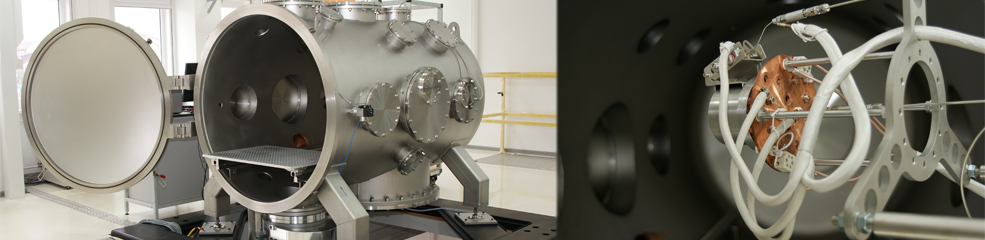
 Część oficjalną spotkania rozpoczął dyrektor IFPiLM, prof. Andrzej Gałkowski, który zauważył, iż od lat staramy się sprowadzić Słońce na Ziemię, a tym razem udało nam się sprowadzić na Ziemię fragment kosmosu o objętości 2m3, do symulowania warunków kosmicznych w warunkach laboratoryjnych. Przystąpienie Polski w ubiegłym roku do Europejskiej Agencji Kosmicznej zbiegło się w czasie z pracami nad laboratorium, które otrzymało nazwę PlanS.
Wśród gości zaproszonych na uroczystość znaleźli się prof. Zbigniew Kłos (Centrum Badań Kosmicznych PAN), prof. Zbigniew Peradzyński (UW), przedstawiciele Konsorcjum: Ricardo Martin, Francisco Garcia (JMP Ingenieros, Hiszpania), Pablo Ortiz, Javier Alonso (NASP, Hiszpania), Yan Mabillard, Luca Negrini (Mecartex, Szwajcaria), Pelle Rangsten, Ana Zaldivar Salaverri (Nanospace, Szwecja), Christophe Koppel (KCI, Francja), przedstawiciele mediów – m.in. Marek Bielski z „Przeglądu Technicznego” oraz załoga IFPiLM.
Podczas inauguracji prac laboratorium głos zabrał prof. Zbigniew Kłos, który wskazał na szansę wykorzystania silników plazmowych w projektach Europejskiej Agencji Kosmicznej, np. w projekcie Galileo (odpowiednik amerykańskiego systemu GPS) nowej generacji. Autorem kolejnej prezentacji był prof. Zbigniew Peradzyński, który zauważył, iż droga badaczy prowadziła niejako od papieru (obliczenia, modelowanie matematyczne) do żelaza (czyli stworzenia właściwej komory próżniowej). Z kolei przedstawiciel Konsorcjum, Ricardo Martin, przybliżył zalety wykorzystania silników plazmowych w sektorze małych satelitów oraz opowiedział o projekcie L-mPPT. Podkreślił także wagę współpracy wielu państw europejskich, która zaowocowała sukcesem projektu. Dr Jacek Kurzyna z IFPiLM skupił się na kwestii zapewnienia mobilności najmniejszym satelitom, gdzie prędkość obiektu zależy od prędkości wyrzucanych gazów. Zapewnienie takiej prędkości możliwe jest właśnie dzięki wykorzystaniu silników plazmowych. Dzięki silnikowi Halla Snecma PPS-1350G, który używał ksenonu jako gazu napędowego, było możliwe opuszczenie przez satelitę orbity okołoziemskiej i uzyskanie orbity księżycowej. Silnik takiego typu został zaprojektowany w IFPiLM do badań eksperymentalnych z zastosowaniem kryptonu zamiast ksenonu jako gazu roboczego.
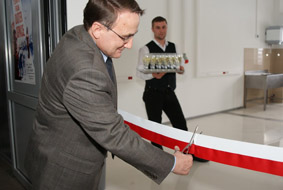
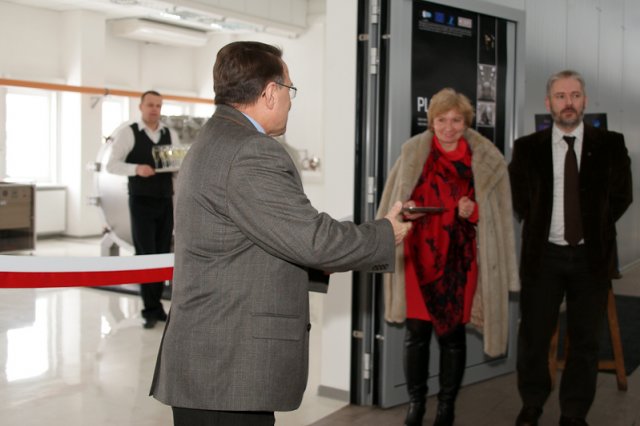
Uroczyste otwarcie zakończyło przecięcie wstęgi oraz wspólne zdjęcie uczestników projektu.
Oprawę graficzną wydarzenia zawdzięczamy Katarzynie Gałkowskiej-Guzik, zaś jego odzwierciedlenie w mediach dostępne jest pod następującymi linkami:
 |
 |
 |
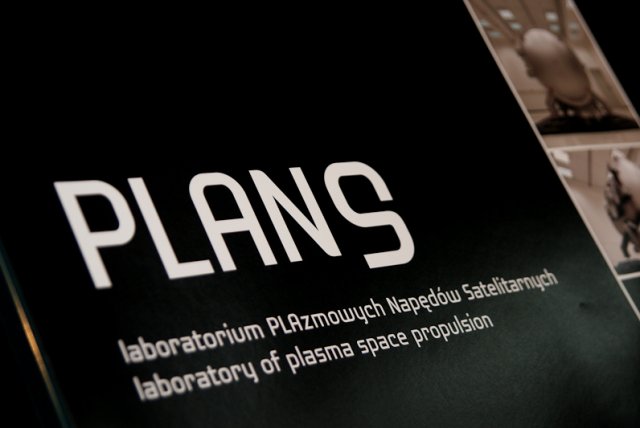
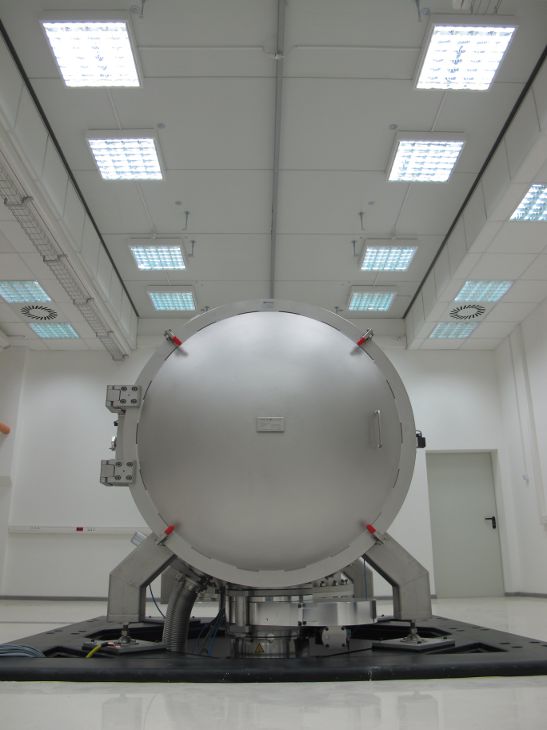 Dnia 22 stycznia br., o godz. 11:00, w Instytucie Fizyki Plazmy i Laserowej Mikrosyntezy (sala teatru GO) w Warszawie rozpocznie się uroczyste otwarcie pierwszego w Polsce i jednego z nielicznych w Europie laboratorium dedykowanego pracom badawczo-rozwojowym nad napędami plazmowymi dla satelitów, a także sond kosmicznych wysyłanych w bardziej odległe obszary przestrzeni. Specjalistyczne laboratorium plazmowych silników satelitarnych zostało utworzone dla potrzeb 3-letniego projektu L-µPPT (Innovative Liquid Micro Pulsed Plasma Thruster) realizowanego w ramach 7-ego Europejskiego Programu Ramowego. Do symulacji warunków panujących w przestrzeni kosmicznej Laboratorium dysponuje cylindryczną komorą próżniową o objętości 2 m3 wyposażoną w układ pompowy umożliwiający ciągłe działanie badanych napędów przy ciśnieniu otoczenia ponad 100 milionów razy mniejszym niż atmosferyczne.
Pierwsze badania w Laboratorium plazmowych silników satelitarnych polegać będą na testowaniu i rozwijaniu innowacyjnego napędu plazmowego dla nanosatelitów, zaprojektowanego przez zespół z IFPiLM przy współudziale pozostałych uczestników europejskiego konsorcjum L-µPPT, którego prace koordynuje hiszpańska firma JMP Ingenieros. W skład konsorcjum wchodzą także firmy Kopoos (Francja), NASP (Hiszpania), Mecartex (Szwajcaria) i Nanospace (Szwecja), reprezentujące sektor małych i średnich przedsiębiorstw. Podczas gdy w chwili obecnej istnieje wiele rozwiązań w zakresie napędów konwencjonalnych satelitów (tj. satelitów o masie powyżej 100 kg), takich jak rakietowe silniki chemiczne, silniki z zimnym gazem lub systemy oparte na napędach jonowych/plazmowych (których liczba ciągle rośnie), to szybko rozwijający się sektor nanosatelitów (tj. satelitów o masie kilku kilogramów) wciąż nie dysponuje żadnymi rozwiązaniami w zakresie napędu. Z uwagi na bardzo wydajne wykorzystanie paliwa i brak zagrożeń chemicznych napędy jonowe/plazmowe stanowią potencjalnie najlepsze rozwiązanie technologiczne dla nanosatelitów, co wyniki projektu L-µPPT mają właśnie udowodnić. W odróżnieniu od istniejących napędów typu PPT, w których paliwo stanowi blok polimerowy zintegrowany z silnikiem, L-µPPT będzie wykorzystywał paliwo ciekłe, co pozwoli na zachowanie identycznej geometrii wyładowania oraz siły ciągu przez całe życie silnika, a zarazem daje możliwość zmagazynowania dowolnej masy paliwa w oddzielnym zbiorniku.
Po zakończeniu projektu L-µPPT wyposażenie próżniowe laboratorium plazmowych silników satelitarnych będzie mogło być wykorzystane do badania silników o średniej mocy dla sond kosmicznych i konwencjonalnych satelitów. Do tej klasy napędów plazmowych należy niedawno zaprojektowany w IFPiLM kryptonowy silnik Hall'a, nad którym dalsze prace prowadzone są w ramach umowy z Europejską Agencją Kosmiczną.
Local News
- 1
- 2
- 3
- 4
- 5
Ministry of Energy delegation visits IPPLM
20-07-2026

On 16 July 2026, a delegation from the Ministry of Energy visited the Institute of Plasma Physics and Laser Microfusion (IPPLM) as part of the quarterly meetings between the Institute’s...
Read moreIPPLM research visit to Japan’s National Institute for Fusion Science
10-07-2026

From 13 to 23 June 2026, IPPLM Director Dr hab. Monika Kubkowska, Dr Tomasz Fornal and Dr Łukasz Syrocki took part in a research visit to Japan’s National Institute for...
Read moreIPPLM researchers visit IPPL in Greece
26-06-2026

From 25 May to 3 June 2026, researchers from the Institute of Plasma Physics and Laser Microfusion (IPPLM) took part in a research visit to the Institute of Plasma Physics...
Read moreIPPLM at the 4th "Science for Society – Society for Science" Congress
23-06-2026

On 14–15 June 2026, the University of Warsaw hosted the 4th edition of the "Science for Society" Congress, held under the theme "Society for Science". The event brought together representatives...
Read moreIPPLM involved in the development of diagnostics for the JT-60SA tokamak
19-06-2026
We are pleased to celebrate an important step in international scientific cooperation: the successful delivery of the advanced Divertor Vacuum Ultra Violet (DivVUV) spectrometer system for the JT-60SA tokamak in...
Read moreInternational Fusion Community Meets at the 18th Kudowa Summer School
18-06-2026

The 18th Kudowa Summer School "Towards Fusion Energy", organised every two years by the Institute of Plasma Physics and Laser Microfusion (IPPLM) and the National Contact Point EURATOM-FUSION, has come...
Read moreDr Agnieszka Jardin from IPPLM awarded NCN SONATA 21 grant
17-06-2026

Dr Agnieszka Jardin from the Department of Thermonuclear Plasma Research and Space Technologies has been awarded a grant from the National Science Centre, Poland, under the SONATA 21 call for...
Read moreIPPLM employee joins the Management Committee of COST Action CA23151
01-06-2026
Dr hab. Katarzyna Batani from the Institute of Plasma Physics and Laser Microfusion (IPPLM) has become a member of the Management Committee of COST Action CA23151 – Mediterranean Cancer Screening...
Read moreThe Polish CeNTE Consortium has been granted observer status in the DONES programme
28-04-2026
The DONES programme is one of the key European initiatives supporting the development of fusion energy and research in plasma physics. It is now entering a further stage of institutional...
Read moreIPPLM joins the Enterprise Europe Network
31-03-2026
On 23 March 2026, the Institute of Plasma Physics and Laser Microfusion (IPPLM) joined, with its technological offer, the group of entities affiliated with the Enterprise Europe Network (EEN), interested...
Read moreIPPLM as a co-creator of the exhibition "E = mc² – the formula that changed the world" at the National…
18-02-2026

On 16 February 2026, the official opening of two new permanent exhibitions took place at the National Museum of Technology in Warsaw. The Institute of Plasma Physics and Laser Microfusion...
Read moreIPPLM supports children and young people at the TPD "Helenów" Centre
22-12-2025

The Sylwester Kaliski Institute of Plasma Physics and Laser Microfusion (IPPLM) has for many years been actively engaged in initiatives supporting children and young people supported by the TPD "Helenów"...
Read moreIPPLM researchers took part in an experimental campaign on the GEKKO XII laser
20-11-2025

On 10–14 November 2025, a research team from the Sylwester Kaliski Institute of Plasma Physics and Laser Microfusion (IPPLM) – Prof. Katarzyna Batani, Dr Hanna Marchenko and Dr Agnieszka Zaraś-Szydłowska...
Read moreRegister for the 18th Kudowa Summer School on Plasma Physics!
07-11-2025

We invite you to take part in the 18th Kudowa Summer School "Towards Fusion Energy", which will be held on 8–12 June 2026 in Kudowa-Zdrój, Poland. The event is organised...
Read moreIPPLM participated in the second technical meeting within the DONES Con-P1 project
17-10-2025
The Institute of Plasma Physics and Laser Microfusion (IPPLM) took part in the second technical meeting held as part of the DONES Consolidation Phase 1 (DONES ConP1) project, co-financed by...
Read moreProf. Jan Badziak from IPPLM among the World’s Top 2% Scientists
15-10-2025
Prof. Jan Badziak, from the Department of Laser Plasma and Magnetized Dense Plasma Physics at the Institute of Plasma Physics and Laser Microfusion (IPPLM), has been included in the prestigious...
Read more29th Science Festival with the participation of IPPLM
10-10-2025

During the 29th Science Festival in Warsaw, held on 19–28 September 2025, researchers from the Institute of Plasma Physics and Laser Microfusion (IPPLM) conducted lessons for upper-grade primary school students. The...
Read morePLASMA 2025 and the 20th Anniversary of the Euratom–IPPLM Association – event summary
26-09-2025

From 15 to 19 September 2025, Warsaw hosted the international scientific conference PLASMA 2025 – International Conference on Research and Application of Plasmas, dedicated to plasma research, diagnostics, and applications....
Read moreWe bid farewell with deep sorrow to Professor Jerzy Wołowski
25-09-2025

It is with great sadness that we have received the news of the passing of Professor Jerzy Wołowski (1936–2025) an outstanding physicist, long-time employee of the Institute of Plasma Physics...
Read more20th anniversary of the Euratom–IPPLM Association (CeNTE): Celebrating two decades of fusion research coordination
16-09-2025

On 19 September 2025, during the PLASMA 2025 International Conference on Research, Diagnostics and Applications of Plasma in Warsaw, the IPPLM will mark 20th anniversary of the coordination of research on nuclear fusion...
Read moreIPPLM at the 49th Congress of Polish Physicists in Katowice
13-09-2025
During the 49th Congress of Polish Physicists, held from September 5–11, 2025, in Katowice, the Institute of Plasma Physics and Laser Microfusion (IPPLM) was represented both among the speakers and...
Read moreProf. Agata Chomiczewska appointed Deputy Director for Scientific Affairs at the IPPLM
03-09-2025

We are pleased to announce that the Minister of Energy, Mr. Miłosz Motyka, has appointed Dr. hab. Agata Chomiczewska to the position of Deputy Director for Scientific Affairs at the...
Read moreA historic milestone – the Scientific Council of the Institute confers the degree of habilitated doctor
10-07-2025
For the first time in the history of the Institute of Plasma Physics and Laser Microfusion (IPPLM), the Scientific Council has adopted a resolution to confer the degree of habilitated...
Read moreNew Board of the Plasma Physics Division of the European Physical Society
04-07-2025

In the first quarter of 2025, elections were held for the Board of the Plasma Physics Division of the European Physical Society (EPS Plasma Physics Division). Six candidates who received...
Read moreIPPLM researchers bring fusion expertise to 10th Central & Eastern Europe Nuclear Industry Congress 2025
12-06-2025
Researchers from the Institute of Plasma Physics and Laser Microfusion (IPPLM), Dr. Natalia Wendler and Dr. Paweł Gąsior, recently participated in a panel discussion at the 10th Central & Eastern...
Read moreWorld News
- 1
- 2
- 3
- 4
- 5
In Memoriam — Professor Francesco Romanelli
24-03-2026

The world of fusion research mourns the loss of Professor Francesco Romanelli, a visionary scientist whose work helped bring humanity closer to clean, limitless energy. Over four decades, he explored...
Read moreIgniting the future: Breakthroughs in inertial confinement Fusion
25-07-2025

In December 2022, the National Ignition Facility (NIF) at Lawrence Livermore National Laboratory (USA) marked a historic milestone in fusion science: an experiment produced 3.15 MJ of fusion energy from 2.05 MJ of laser...
Read moreWendelstein 7-X sets new fusion performance records
04-06-2025

On May 22, 2025, the Wendelstein 7-X (W7-X) stellarator at the Max Planck Institute for Plasma Physics (IPP) in Greifswald concluded its latest experimental campaign with a major success: a...
Read moreEuropean tokamak sets new fusion plasma record
20-02-2025

On February 12, 2025, the WEST tokamak, located at CEA Cadarache in southern France, set a new world record by sustaining fusion plasma for 1,337 seconds, or over 22 minutes....
Read moreDr. Gianfranco Federici appointed as the new EUROfusion Programme Manager
17-12-2024
At the 49th General Assembly held in Barcelona, December 2024, Dr. Gianfranco Federici was elected as the new Programme Manager of EUROfusion. He succeeds Prof. Ambrogio Fasoli, who will return...
Read moreEUROfusion and F4E join forces for Europe’s fusion future
16-12-2024

EUROfusion and Fusion for Energy (F4E) have signed a Memorandum of Understanding (MoU) to advance fusion research and development in Europe. This agreement reinforces cooperation in...
Read moreJohn J. Hopfield and Geoffrey E. Hinton awarded the 2024 Nobel Prize in Physics
08-10-2024

John J. Hopfield and Geoffrey E. Hinton have been awarded the 2024 Nobel Prize in Physics "for foundational discoveries and inventions that enable machine learning with artificial neural networks." The Nobel...
Read moreWendelstein 7-X begins new experimental campaign
10-09-2024

The Wendelstein 7-X, the world’s most advanced stellarator, is launching a new experimental campaign after a year of intensive maintenance and upgrades. This phase, known as OP2.2, begins on 10...
Read moreITER's New Project Baseline: A Robust Path to Fusion Energy Research
04-07-2024

On 3 July, ITER Director-General Pietro Barabaschi presented the new project baseline, under evaluation by the ITER Organization's governing body. This plan aims to ensure a robust start to scientific...
Read moreITER Council Presents Updated Project Baseline
21-06-2024

The ITER Council convened this week for its 34th meeting, where nearly 100 attendees reviewed significant updates to the project baseline. The proposed changes aim to optimize the overall project...
Read moreEurope and Japan celebrate breakthrough in paving the way for fusion energy
01-12-2023

The prospect of harnessing fusion energy is closer. The successful operation of JT-60SA, the most powerful experimental device to date, built by Europe and Japan, is a landmark achievement for...
Read moreFirst plasma was successfully generated at JT-60SA
26-10-2023

A momentous achievement in the field of nuclear fusion has been accomplished by a collaborative team of engineers from Europe and Japan. They have successfully generated tokamak plasma for the...
Read moreThe Nobel Prize in Physics 2023
03-10-2023
Pierre Agostini, Ferenc Krausz and Anne L’Huillier are the winners of this year's Nobel Prize in Physics. It was awarded "for experimental methods that generate attosecond pulses of light for...
Read moreUS Lab Replicates Fusion Ignition Breakthrough
08-08-2023
The US National Ignition Facility (NIF) has achieved fusion ignition once again, building on its landmark 2022 success. This achievement, powered by hydrogen within a diamond capsule, signifies a major...
Read moreNew Programme Manager Elect announced by EUROfusion
20-07-2023
Professor Ambrogio Fasoli became the new EUROfusion Programme Manager Elect. The decision was made by EUROfusion General Assembly at the meeting on 18 July 2023. His tenure will officially commence...
Read moreEUROfusion stands in solidarity with research in Ukraine
24-02-2023

Today, as we commemorate the anniversary of the invasion of Ukraine by Russia, the EUROfusion consortium stands in solidarity with our Ukrainian member and research colleagues. EUROfusion remains committed to supporting...
Read moreEight-minute production of plasma with gigajoule energy turnover at Wendelstein 7-X
23-02-2023

Another target has been achieved only recently by the W7-X researchers, namely they managed to acquire an energy turnover of 1.3 gigajoules in the device, which is 17 times higher...
Read moreThe Nobel Prize in Physics 2022
04-10-2022

Alain Aspect, John F. Clauser and Anton Zeilinger are the winners of this year's Nobel Prize in Physics. It was awarded “for experiments with entangled photons, establishing the violation of...
Read moreNew experiments for fusion energy record breaker JET
27-09-2022

A new wave of fusion energy experiments on UK Atomic Energy Authority’s record-breaking Joint European Torus (JET) started this month. EUROfusion researchers are using the famous JET machine to conduct a...
Read moreITER appoints new Director-General
21-09-2022
Pietro Barabaschi has become the next Director-General of the ITER Organization as a result of the unanimous choice of the Council from among finalist candidates. In the transition period Dr....
Read moreStarting power plant design
07-07-2022

At a livestreamed Horizon EUROfusion event in Brussels on 5 July 2022, EUROfusion celebrated the start of conceptual design activities for Europe's first demonstration fusion power plant DEMO. This first-of-a-kind...
Read moreCelebration of achieving a crucial assembly milestone in the ITER Project
17-05-2022

This month, we have witnessed the successful lifting and lowering into the machine well of the first sub-section of the ITER plasma chamber. The weight of the component is the...
Read moreBurning plasma achieved in inertial fusion at the National Ignition Facility
15-02-2022
Obtaining a burning plasma is a critical step towards self-sustaining fusion energy. A burning plasma is one in which the fusion reactions themselves are the primary source of heating in...
Read moreHistoric milestone reached by JET scientists
20-01-2022

Iconic fusion energy machine JET – which reaches controlled temperatures 10 times hotter than the core of the sun – completed its 100,000th live pulse last night. Weighing 2,800 tonnes, the...
Read moreHorizon Europe Grant Agreement signed
20-12-2021

15 December 2021 saw the EUROfusion consortium signing the Grant Agreement under Horizon Europe, the European Framework Programme from 2021 – 2027, in an aim to launch comprehensive R&D approach...
Read more |
 |
 |
 |
 |
 |
 |
 |


Research projects carried out at the IPPLM are funded by the Polish Ministry of Education and Science, the National Science Centre and by the European Commission within the framework of EUROfusion Consortium under grant agreement No 101052200. Financial support comes also from the International Atomic Energy Agency, European Space Agency and LaserLab Consortium as well as from the Fusion for Energy Agency.