





Zestaw obrazów 2019
zdjecie1.jpg
zdjecie2.jpg
zdjecie3.jpg
zdjecie4.jpg
zdjecie5.jpg
zdjecie6.jpg
2019_1.JPG
2019_2.JPG
2019_4.JPG
Krajowe
Staże w jednostkach naukowych i w przedsiębiorstwach finansowane w 100% ze środków UE
Projekt "VI edycja TEKLA PLUS - Stolica staży"
Consulting Plus Sp. z o. o. w partnerstwie z m.st. Warszawa realizuje projekt "VI edycja TEKLA PLUS - Stolica staży", w ramach którego ze środków unijnych finansujemy staże pracowników warszawskich firm w jednostkach naukowych oraz staże pracowników naukowych w firmach. Staże mają na celu opracowywanie innowacyjnych rozwiązań dla firm.
Za przeprowadzenie stażu wypłacamy jednostce naukowej do 51.000 zł, natomiast pracownikowi naukowemu dodatek stażowy w wysokości 3.500 zł za miesiąc stażu.
Więcej informacji na stronie projektu "VI edycja TEKLA PLUS – Stolica staży” www.staze.teklaplus.pl
Zespół Projektu „VI edycja TEKLA PLUS-Stolica staży”
_________________________________________________
Projekt współfinansowany ze środków Unii Europejskiej w ramach Europejskiego Funduszu Społecznego.
 Firma SMT Software została zwycięzcą unijnego przetargu na obsługę informatyczną organizacji Fusion for Energy, zajmującej się budową eksperymentalnego reaktora termojądrowego. Do konkursu zgłosiło się kilkadziesiąt spółek z całej Europy. - Ten przetarg traktowaliśmy jako test. Teraz będziemy startowali w większej liczbie przetargów na poziomie Komisji Europejskiej - zdradza plany na przyszłość Konrad Pankiewicz, prezes SMT.
Obok polskiej spółki, projekt będą realizowały też dwie zagraniczne firmy. Przedstawiciele SMT nie podają, o które spółki chodzi. - To duże, międzynarodowe korporacje, nie możemy jednak zdradzać ich nazw. Mogę za to powiedzieć, że znalezienie się w tym gronie to dla nas duże wyróżnienie - mówi Alicja Szymkiewicz, w SMT odpowiedzialna za kontakt z mediami.
Według zawartej umowy ramowej, wrocławska firma będzie tworzyła i usprawniała oprogramowanie, a także mierzyła efektywność systemu informatycznego, który obsłuży prace nad eksperymentalnym reaktorem. Dokument będzie obowiązywał przez dwa lata z możliwością przedłużenia o kolejne dwa. - Ponieważ jest to umowa ramowa, w tej chwili nie wiemy jeszcze jakie dokładnie zadania przypadną nam w udziale. Dlatego nie możemy oszacować wartości naszych prac. O wszystkich podpisanych umowach będziemy informować w komunikatach - odpowiada Alicja Szymkiewicz na pytanie o wartość umowy.
SMT Software jest jedną z ośmiu spółek należących do grupy SMT. Jej przychody w pierwszym półroczu 2013 roku wyniosły prawie 16,5 miliona złotych wobec 10,6 miliona w analogicznym okresie poprzedniego roku. Zysk netto spółki z 0,8 miliona złotych w pierwszym kwartale 2012 roku zwiększył się do 2,2 miliona złotych w analogicznym okresie tego roku.
Fusion for Energy to organizacja zajmująca się budową eksperymentalnego reaktora termojądrowego utworzona w ramach tak zwanego Euroatomu przy Radzie Europejskiej. Do podstawowych zadań przedsięwzięcia F4E należy m.in. opracowywanie i produkcja zaawansowanych technologicznie komponentów na użytek projektu badawczego ITER we współpracy z przemysłem oraz instytutami badawczymi w Europie. We wspólnym przedsięwzięciu uczestniczy 27 krajów członkowskich Unii Europejskiej, Euratom reprezentowany przez Komisję Europejską i Szwajcaria.
Source: manager.money.pl
 To już 37 lat badań prowadzonych w IFPiLM między innymi dla przyszłej energetyki. Była to kolejna okazja do spotkania, do wspomnień, gratulacji sukcesów i wyrażenia nadziei na przyszłość równie dobrą, jeśli nie lepszą od tego, co już udało się osiągnąć.
Tegoroczna uroczystość jubileuszowa IFPiLM w teatrze GO, znajdującym się na terenie Instytutu, zgromadziła oprócz Załogi także wielu szacownych Gości, wśród których znaleźli się m.in. prof. Marek J. Sadowski (Honorowy Przewodniczący Rady Naukowej IFPiLM), prof. Jan Pluta (Politechnika Warszawska, członek RN Instytutu), prof. Krzysztof Drozdowicz (Instytut Fizyki Jądrowej PAN), Ryszard Socha (ACS), Krzysztof Tomaszewski (ACS), Wacław Muniak (Solaris Optics S.A.), Józef Piotrowski (Vigo System S.A.), Wiesław Galus (Vigo System S.A.), Krzysztof Więcław, Witold Głuchowski (Kancelaria Radców Prawnych i Adwokatów Sołtysiński, Kawecki & Szlęzak), Tomasz Sopyło (Sublime Technologie Informatyczne), red. Marek Bielski (Pro Atom), Włodzimierz Gołaszewski (dyrektor teatru GO) oraz pan Tadeusz Zygan. Dokumentację fotograficzną spotkania przygotowywała Pani Katarzyna Gałkowska-Guzik.
Dyrektor IFPiLM, prof. Andrzej Gałkowski, w swojej prezentacji zwrócił uwagę na istotne fakty i osiągnięcia z ostatniego roku, wśród których znalazła się informacja o dorobku publikacyjnym Instytutu mierzonym wzrastającą liczbą artykułów naukowych w ważnych czasopismach międzynarodowych. W mijającym roku zostały pozytywnie rozpatrzone dwa wnioski o nadanie tytułu profesora i dwóch młodych naukowców - dr Paweł Gąsior oraz dr Rafał Prokopowicz - uzyskało stopień naukowy doktora.
Dyrektor Instytutu zapoznał zebranych z zakresem prac prowadzonych ostatnio w dwóch oddziałach instytutowych – Oddziale Plazmy Wytwarzanej Laserem oraz Oddziale Plazmy w Polu Magnetycznym. Większość tych prac wykonano w ramach szeroko zakrojonej współpracy międzynarodowej. Dyrektor przedstawił też nową i zmodernizowaną aparaturą badawczą. Przywołał również sukces dwóch konferencji międzynarodowych, zorganizowanych w tym roku przez IFPiLM, mianowicie: PLASMA-2013 - Research and Applications of Plasmas (w Warszawie) oraz 14th Workshop on Plasma Edge Theory in Fusion Devices (w Krakowie). Odnotowany został również wysiłek naukowców Instytutu uczestniczących w XVII Festiwalu Nauki. W ciągu 9 dni trwania Festiwalu mieszkańcy Warszawy mieli możliwość wysłuchania wykładów dotyczących badań prowadzonych w Instytucie i odwiedzenia instytutowych laboratoriów.
Uroczystość jubileuszu była okazją do ogłoszenie wyników konkursu o nagrody dyrektora I i II stopnia. Laureatami nagrody I stopnia zostali wspólnie dr hab. prof. Taduesz Pisarczyk i dr Andrzej Kasperczuk. Nagrody II stopnia otrzymała mgr Irena Ivanova-Stanik oraz zespół: mgr Leszek Ryć, dr Sławomir Jabłoński, mgr Jacek Kaczmarczyk i Waldemar Figacz.
Laureaci nagród dyrektora, tegoroczni doktorzy oraz jubilaci świętujący „okrągłe” rocznice pracy otrzymali pamiątkowe dyplomy. Laureaci przedstawili prezentacje dotyczące osiągnięć badawczych uznanych za zasługujące na wyróżnienie nagrodami dyrektora.
Spotkanie zakończyła prezentacja dyrektora Teatru GO, Włodzimierza Gołaszewskiego, prezentująca oryginalną działalność tego teatru w zakresie powiązania nauki ze sztuką i pokazywania pierwiastka metafizycznego w tym związku. Teatr GO współpracuje z Instytutem w promowaniu nauki poprzez sztukę i sztuki poprzez naukę.
Końcowym, nieoficjalnym aktem uroczystości jubileuszowych było spotkanie towarzyskie.
Zdjęcia z jubileuszu 37-lecia Instytutu Fizyki Plazmy i Laserowej Mikrosyntezy są dostępne w galerii.
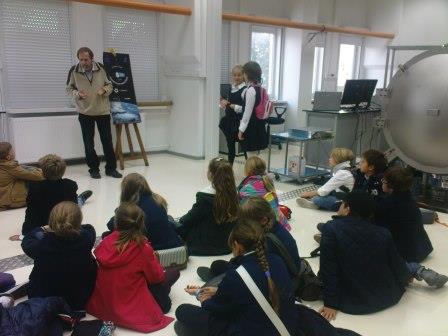 Miło nam poinformować, iż odwiedzający IFPiLM w ramach XVII Festiwalu Nauki nie zawiedli po raz kolejny. Mieliśmy przyjemność gościć grupy w różnym wieku (ok. 70 osób) w ciągu dwóch weekendów, a także 6 klas ze szkół podstawowych i gimnazjów (ok. 150 osób) w tygodniu. Padło wiele pytań dotyczących fizyki plazmy, działania laserów oraz silników kosmicznych, a także promieniowania wokół nas, na które nasi naukowcy starali się odpowiedzieć w sposób wyczerpujący. Mamy nadzieję powtórzyć sukces frekwencyjny także za rok i już teraz zapraszamy na wykłady i zwiedzanie laboratoriów IFPiLM podczas kolejnej edycji warszawskiego Festiwalu Nauki.
 XVII edycja warszawskiego Festiwalu Nauki odbędzie się w dn. 20-29 września. IFPiLM, podobnie jak w zeszłym roku, dołoży swoją cegiełkę w budowanie świadomości naukowej, rozwijanie wyobraźni i zainteresowania tym, co na co dzień zamknięte w laboratoriach i pracowniach.
Zapraszamy Państwa do uczestnictwa w wykładach weekendowych, które dotyczyć będą m. in. silników plazmowych i ich zastosowania w satelitach oraz przepisu na produkcję energii Słońca z wody i kamieni, a także na spotkania młodzieży szkolnej w tygodniu w ramach lekcji festiwalowych. Po wykładach nasi Goście będą mieli możliwość obejrzenia największego na świecie urządzenia typu Plazma Focus, zwiedzenia laboratorium laserowego, gdzie będzie można ustalić grubość swojego włosa, a także posłuchania o promieniotwórczości wśród nas.
Oprowadzać Państwa będą nasi naukowcy, którzy w sposób przystępny i ciekawy, niezależnie od wieku uczestników Festiwalu, przybliżą krąg zainteresowań i zakres prac w IFPiLM.
Local News
- 1
- 2
- 3
- 4
- 5
Ministry of Energy delegation visits IPPLM
20-07-2026

On 16 July 2026, a delegation from the Ministry of Energy visited the Institute of Plasma Physics and Laser Microfusion (IPPLM) as part of the quarterly meetings between the Institute’s...
Read moreIPPLM research visit to Japan’s National Institute for Fusion Science
10-07-2026

From 13 to 23 June 2026, IPPLM Director Dr hab. Monika Kubkowska, Dr Tomasz Fornal and Dr Łukasz Syrocki took part in a research visit to Japan’s National Institute for...
Read moreIPPLM researchers visit IPPL in Greece
26-06-2026

From 25 May to 3 June 2026, researchers from the Institute of Plasma Physics and Laser Microfusion (IPPLM) took part in a research visit to the Institute of Plasma Physics...
Read moreIPPLM at the 4th "Science for Society – Society for Science" Congress
23-06-2026

On 14–15 June 2026, the University of Warsaw hosted the 4th edition of the "Science for Society" Congress, held under the theme "Society for Science". The event brought together representatives...
Read moreIPPLM involved in the development of diagnostics for the JT-60SA tokamak
19-06-2026
We are pleased to celebrate an important step in international scientific cooperation: the successful delivery of the advanced Divertor Vacuum Ultra Violet (DivVUV) spectrometer system for the JT-60SA tokamak in...
Read moreInternational Fusion Community Meets at the 18th Kudowa Summer School
18-06-2026

The 18th Kudowa Summer School "Towards Fusion Energy", organised every two years by the Institute of Plasma Physics and Laser Microfusion (IPPLM) and the National Contact Point EURATOM-FUSION, has come...
Read moreDr Agnieszka Jardin from IPPLM awarded NCN SONATA 21 grant
17-06-2026

Dr Agnieszka Jardin from the Department of Thermonuclear Plasma Research and Space Technologies has been awarded a grant from the National Science Centre, Poland, under the SONATA 21 call for...
Read moreIPPLM employee joins the Management Committee of COST Action CA23151
01-06-2026
Dr hab. Katarzyna Batani from the Institute of Plasma Physics and Laser Microfusion (IPPLM) has become a member of the Management Committee of COST Action CA23151 – Mediterranean Cancer Screening...
Read moreThe Polish CeNTE Consortium has been granted observer status in the DONES programme
28-04-2026
The DONES programme is one of the key European initiatives supporting the development of fusion energy and research in plasma physics. It is now entering a further stage of institutional...
Read moreIPPLM joins the Enterprise Europe Network
31-03-2026
On 23 March 2026, the Institute of Plasma Physics and Laser Microfusion (IPPLM) joined, with its technological offer, the group of entities affiliated with the Enterprise Europe Network (EEN), interested...
Read moreIPPLM as a co-creator of the exhibition "E = mc² – the formula that changed the world" at the National…
18-02-2026

On 16 February 2026, the official opening of two new permanent exhibitions took place at the National Museum of Technology in Warsaw. The Institute of Plasma Physics and Laser Microfusion...
Read moreIPPLM supports children and young people at the TPD "Helenów" Centre
22-12-2025

The Sylwester Kaliski Institute of Plasma Physics and Laser Microfusion (IPPLM) has for many years been actively engaged in initiatives supporting children and young people supported by the TPD "Helenów"...
Read moreIPPLM researchers took part in an experimental campaign on the GEKKO XII laser
20-11-2025

On 10–14 November 2025, a research team from the Sylwester Kaliski Institute of Plasma Physics and Laser Microfusion (IPPLM) – Prof. Katarzyna Batani, Dr Hanna Marchenko and Dr Agnieszka Zaraś-Szydłowska...
Read moreRegister for the 18th Kudowa Summer School on Plasma Physics!
07-11-2025

We invite you to take part in the 18th Kudowa Summer School "Towards Fusion Energy", which will be held on 8–12 June 2026 in Kudowa-Zdrój, Poland. The event is organised...
Read moreIPPLM participated in the second technical meeting within the DONES Con-P1 project
17-10-2025
The Institute of Plasma Physics and Laser Microfusion (IPPLM) took part in the second technical meeting held as part of the DONES Consolidation Phase 1 (DONES ConP1) project, co-financed by...
Read moreProf. Jan Badziak from IPPLM among the World’s Top 2% Scientists
15-10-2025
Prof. Jan Badziak, from the Department of Laser Plasma and Magnetized Dense Plasma Physics at the Institute of Plasma Physics and Laser Microfusion (IPPLM), has been included in the prestigious...
Read more29th Science Festival with the participation of IPPLM
10-10-2025

During the 29th Science Festival in Warsaw, held on 19–28 September 2025, researchers from the Institute of Plasma Physics and Laser Microfusion (IPPLM) conducted lessons for upper-grade primary school students. The...
Read morePLASMA 2025 and the 20th Anniversary of the Euratom–IPPLM Association – event summary
26-09-2025

From 15 to 19 September 2025, Warsaw hosted the international scientific conference PLASMA 2025 – International Conference on Research and Application of Plasmas, dedicated to plasma research, diagnostics, and applications....
Read moreWe bid farewell with deep sorrow to Professor Jerzy Wołowski
25-09-2025

It is with great sadness that we have received the news of the passing of Professor Jerzy Wołowski (1936–2025) an outstanding physicist, long-time employee of the Institute of Plasma Physics...
Read more20th anniversary of the Euratom–IPPLM Association (CeNTE): Celebrating two decades of fusion research coordination
16-09-2025

On 19 September 2025, during the PLASMA 2025 International Conference on Research, Diagnostics and Applications of Plasma in Warsaw, the IPPLM will mark 20th anniversary of the coordination of research on nuclear fusion...
Read moreIPPLM at the 49th Congress of Polish Physicists in Katowice
13-09-2025
During the 49th Congress of Polish Physicists, held from September 5–11, 2025, in Katowice, the Institute of Plasma Physics and Laser Microfusion (IPPLM) was represented both among the speakers and...
Read moreProf. Agata Chomiczewska appointed Deputy Director for Scientific Affairs at the IPPLM
03-09-2025

We are pleased to announce that the Minister of Energy, Mr. Miłosz Motyka, has appointed Dr. hab. Agata Chomiczewska to the position of Deputy Director for Scientific Affairs at the...
Read moreA historic milestone – the Scientific Council of the Institute confers the degree of habilitated doctor
10-07-2025
For the first time in the history of the Institute of Plasma Physics and Laser Microfusion (IPPLM), the Scientific Council has adopted a resolution to confer the degree of habilitated...
Read moreNew Board of the Plasma Physics Division of the European Physical Society
04-07-2025

In the first quarter of 2025, elections were held for the Board of the Plasma Physics Division of the European Physical Society (EPS Plasma Physics Division). Six candidates who received...
Read moreIPPLM researchers bring fusion expertise to 10th Central & Eastern Europe Nuclear Industry Congress 2025
12-06-2025
Researchers from the Institute of Plasma Physics and Laser Microfusion (IPPLM), Dr. Natalia Wendler and Dr. Paweł Gąsior, recently participated in a panel discussion at the 10th Central & Eastern...
Read moreWorld News
- 1
- 2
- 3
- 4
- 5
In Memoriam — Professor Francesco Romanelli
24-03-2026

The world of fusion research mourns the loss of Professor Francesco Romanelli, a visionary scientist whose work helped bring humanity closer to clean, limitless energy. Over four decades, he explored...
Read moreIgniting the future: Breakthroughs in inertial confinement Fusion
25-07-2025

In December 2022, the National Ignition Facility (NIF) at Lawrence Livermore National Laboratory (USA) marked a historic milestone in fusion science: an experiment produced 3.15 MJ of fusion energy from 2.05 MJ of laser...
Read moreWendelstein 7-X sets new fusion performance records
04-06-2025

On May 22, 2025, the Wendelstein 7-X (W7-X) stellarator at the Max Planck Institute for Plasma Physics (IPP) in Greifswald concluded its latest experimental campaign with a major success: a...
Read moreEuropean tokamak sets new fusion plasma record
20-02-2025

On February 12, 2025, the WEST tokamak, located at CEA Cadarache in southern France, set a new world record by sustaining fusion plasma for 1,337 seconds, or over 22 minutes....
Read moreDr. Gianfranco Federici appointed as the new EUROfusion Programme Manager
17-12-2024
At the 49th General Assembly held in Barcelona, December 2024, Dr. Gianfranco Federici was elected as the new Programme Manager of EUROfusion. He succeeds Prof. Ambrogio Fasoli, who will return...
Read moreEUROfusion and F4E join forces for Europe’s fusion future
16-12-2024

EUROfusion and Fusion for Energy (F4E) have signed a Memorandum of Understanding (MoU) to advance fusion research and development in Europe. This agreement reinforces cooperation in...
Read moreJohn J. Hopfield and Geoffrey E. Hinton awarded the 2024 Nobel Prize in Physics
08-10-2024

John J. Hopfield and Geoffrey E. Hinton have been awarded the 2024 Nobel Prize in Physics "for foundational discoveries and inventions that enable machine learning with artificial neural networks." The Nobel...
Read moreWendelstein 7-X begins new experimental campaign
10-09-2024

The Wendelstein 7-X, the world’s most advanced stellarator, is launching a new experimental campaign after a year of intensive maintenance and upgrades. This phase, known as OP2.2, begins on 10...
Read moreITER's New Project Baseline: A Robust Path to Fusion Energy Research
04-07-2024

On 3 July, ITER Director-General Pietro Barabaschi presented the new project baseline, under evaluation by the ITER Organization's governing body. This plan aims to ensure a robust start to scientific...
Read moreITER Council Presents Updated Project Baseline
21-06-2024

The ITER Council convened this week for its 34th meeting, where nearly 100 attendees reviewed significant updates to the project baseline. The proposed changes aim to optimize the overall project...
Read moreEurope and Japan celebrate breakthrough in paving the way for fusion energy
01-12-2023

The prospect of harnessing fusion energy is closer. The successful operation of JT-60SA, the most powerful experimental device to date, built by Europe and Japan, is a landmark achievement for...
Read moreFirst plasma was successfully generated at JT-60SA
26-10-2023

A momentous achievement in the field of nuclear fusion has been accomplished by a collaborative team of engineers from Europe and Japan. They have successfully generated tokamak plasma for the...
Read moreThe Nobel Prize in Physics 2023
03-10-2023
Pierre Agostini, Ferenc Krausz and Anne L’Huillier are the winners of this year's Nobel Prize in Physics. It was awarded "for experimental methods that generate attosecond pulses of light for...
Read moreUS Lab Replicates Fusion Ignition Breakthrough
08-08-2023
The US National Ignition Facility (NIF) has achieved fusion ignition once again, building on its landmark 2022 success. This achievement, powered by hydrogen within a diamond capsule, signifies a major...
Read moreNew Programme Manager Elect announced by EUROfusion
20-07-2023
Professor Ambrogio Fasoli became the new EUROfusion Programme Manager Elect. The decision was made by EUROfusion General Assembly at the meeting on 18 July 2023. His tenure will officially commence...
Read moreEUROfusion stands in solidarity with research in Ukraine
24-02-2023

Today, as we commemorate the anniversary of the invasion of Ukraine by Russia, the EUROfusion consortium stands in solidarity with our Ukrainian member and research colleagues. EUROfusion remains committed to supporting...
Read moreEight-minute production of plasma with gigajoule energy turnover at Wendelstein 7-X
23-02-2023

Another target has been achieved only recently by the W7-X researchers, namely they managed to acquire an energy turnover of 1.3 gigajoules in the device, which is 17 times higher...
Read moreThe Nobel Prize in Physics 2022
04-10-2022

Alain Aspect, John F. Clauser and Anton Zeilinger are the winners of this year's Nobel Prize in Physics. It was awarded “for experiments with entangled photons, establishing the violation of...
Read moreNew experiments for fusion energy record breaker JET
27-09-2022

A new wave of fusion energy experiments on UK Atomic Energy Authority’s record-breaking Joint European Torus (JET) started this month. EUROfusion researchers are using the famous JET machine to conduct a...
Read moreITER appoints new Director-General
21-09-2022
Pietro Barabaschi has become the next Director-General of the ITER Organization as a result of the unanimous choice of the Council from among finalist candidates. In the transition period Dr....
Read moreStarting power plant design
07-07-2022

At a livestreamed Horizon EUROfusion event in Brussels on 5 July 2022, EUROfusion celebrated the start of conceptual design activities for Europe's first demonstration fusion power plant DEMO. This first-of-a-kind...
Read moreCelebration of achieving a crucial assembly milestone in the ITER Project
17-05-2022

This month, we have witnessed the successful lifting and lowering into the machine well of the first sub-section of the ITER plasma chamber. The weight of the component is the...
Read moreBurning plasma achieved in inertial fusion at the National Ignition Facility
15-02-2022
Obtaining a burning plasma is a critical step towards self-sustaining fusion energy. A burning plasma is one in which the fusion reactions themselves are the primary source of heating in...
Read moreHistoric milestone reached by JET scientists
20-01-2022

Iconic fusion energy machine JET – which reaches controlled temperatures 10 times hotter than the core of the sun – completed its 100,000th live pulse last night. Weighing 2,800 tonnes, the...
Read moreHorizon Europe Grant Agreement signed
20-12-2021

15 December 2021 saw the EUROfusion consortium signing the Grant Agreement under Horizon Europe, the European Framework Programme from 2021 – 2027, in an aim to launch comprehensive R&D approach...
Read more |
 |
 |
 |
 |
 |
 |
 |


Research projects carried out at the IPPLM are funded by the Polish Ministry of Education and Science, the National Science Centre and by the European Commission within the framework of EUROfusion Consortium under grant agreement No 101052200. Financial support comes also from the International Atomic Energy Agency, European Space Agency and LaserLab Consortium as well as from the Fusion for Energy Agency.