



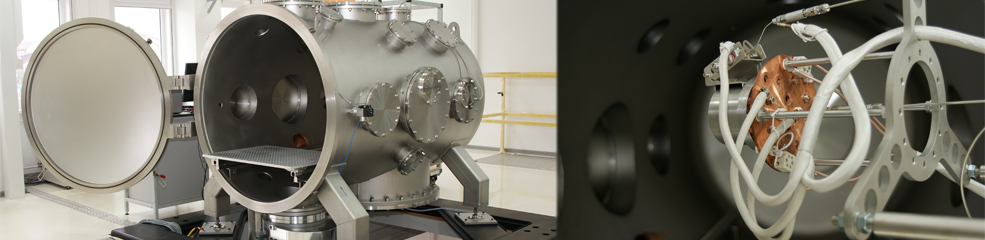


Zestaw obrazów 2019
zdjecie1.jpg
zdjecie2.jpg
zdjecie3.jpg
zdjecie4.jpg
zdjecie5.jpg
zdjecie6.jpg
2019_1.JPG
2019_2.JPG
2019_4.JPG
Krajowe
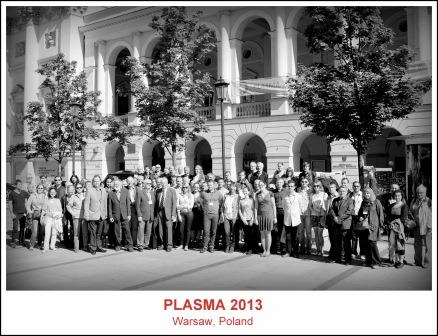 Międzynarodowa Konferencja PLASMA-2013 została zorganizowana przez Lokalny Komitet Organizacyjny utworzony w IFPiLM. Współorganizatorem konferencji było Polskie Towarzystwo Fizyczne. Na konferencję PLASMA-2013 zgłosiło się ponad 140 uczestników z różnych krajów. Na zaproszenie Międzynarodowego Komitetu Naukowego ponad 20 wybitnych polskich i zagranicznych specjalistów zgodziło się wygłosić referaty plenarne. Ministerstwo Nauki i Szkolnictwa Wyższego wsparło organizację konferencji specjalną dotacją. Kilka polskich i zagranicznych przedsiębiorstw prywatnych sponsorowało tę konferencję prezentując jednocześnie produkowaną w firmie aparaturę badawczą. Szczegółowe informacje o konferencji PLASMA-2013 są dostępne w internecie na stronie http://plasma2013.ipplm.pl.
Konferencje pod nazwą PLASMA były organizowane od 1993 roku głównie w Polsce. W roku 2007 konferencja ta odbyła się w Niemczech, a w roku 2010 we Francji. Głównym celem kolejnych konferencji PLASMA jest tworzenie forum naukowego do pogłębionej dyskusji i oceny postępu w badaniach w zakresie fizyki i technologii plazmy oraz fuzji termojądrowej. Większość prezentowanych prac jest realizowana w ramach współpracy międzynarodowej, najczęściej objętej programami europejskimi. Konferencja uzyskała renomę ważnego międzynarodowego wydarzenia naukowego o szczególnym znaczeniu dla kontaktów środowisk badawczych w Europie Wschodniej i Zachodniej. Umożliwia ona także spotkania młodych naukowców z doświadczonymi uczonymi z renomowanych ośrodków krajowych i zagranicznych.
Badania i zastosowania plazmy w różnych dziedzinach nauki i techniki rozwijane są bardzo intensywnie na całym świecie. Ważnym celem badań plazmy gorącej jest opanowanie kontrolowanej syntezy (fuzji) termojądrowej dla przyszłej produkcji energii użytecznej w sposób bezpieczny dla ludności i środowiska. Plazma niskotemperaturowa znajduje różne zastosowania technologiczne, m.in. w elektronice, technice kosmicznej i modyfikacji właściwości materiałów.
W Polsce kilka ośrodków zajmuje się badaniami plazmowymi i termojądrowymi w ścisłej współpracy międzynarodowej. Są to: Instytut Fizyki Plazmy i Laserowej Mikrosyntezy, Narodowe Centrum Badań Jądrowych, Instytut Fizyki Jądrowej PAN, Centrum Badań Kosmicznych PAN, Instytut Maszyn Przepływowych PAN, Uniwersytet Opolski oraz kilka grup naukowych w innych uczelniach i instytutach. IFPiLM koordynuje w Polsce prace dotyczące fuzji termojądrowej w układach tokamak i stellarator w ramach programu Asocjacji EURATOM-IFPiLM i fuzji laserowej w ramach europejskiego projektu HiPER.

Fundacja Proscenium
z Instytutem Fizyki Plazmy i Laserowej Mikrosyntezy
zapraszają do Teatru GO ul. Hery 23 na otwarte warsztaty artystyczne:
„Piąty stan skupienia”
Nauka inspiruje sztukę, a sztuka inspiruje naukę.
Młodzież i dorosłych chcących uczestniczyć w sesji twórczej i stworzyć własne dzieło /malarstwo, film, fotografia/ pod okiem profesjonalnych artystów i naukowców w unikalnej scenerii laboratorium eksperymentalnego IFPiLM prosimy o przyjście na rozmowy i zapisy w Teatrze GO 28 września 2013 w godz. 12-20.
Warsztaty odbędą się w dniach 5 i 6.10.2013 /sobota i niedziela/ w godz.12-15 oraz 9 i 10.10.2013 /środa, czwartek/ w godz. 17-20.
W piątek 18.10.2013 o godz. 20 wernisaż „5. Stan skupienia”.
Ilość miejsc ograniczona.
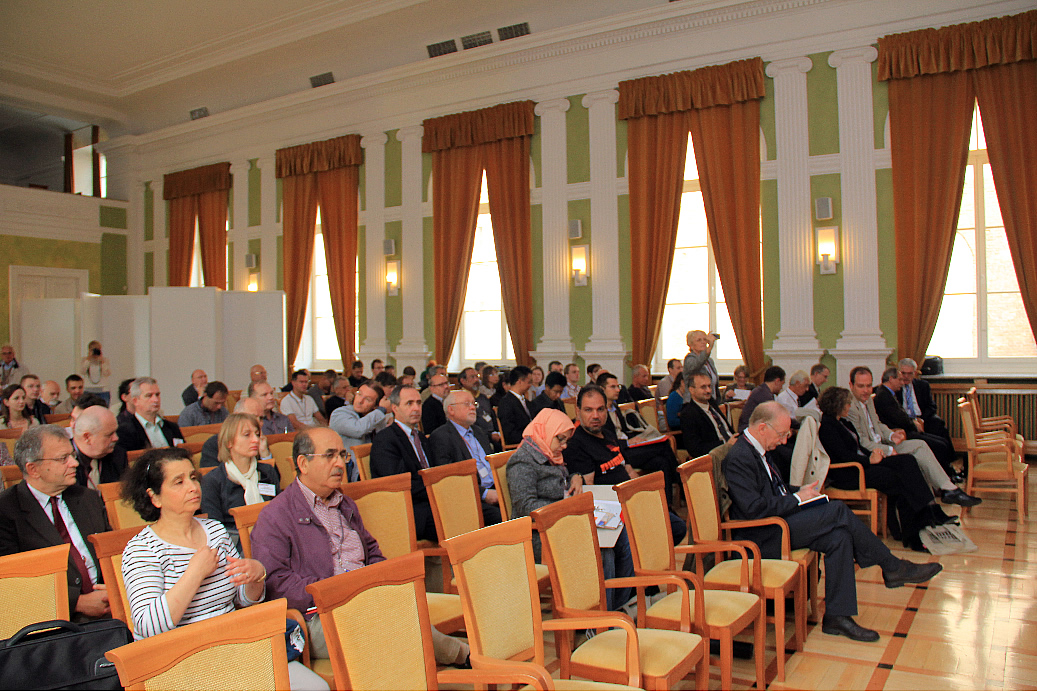 O godzinie 9:00 w gmachu Centralnej Biblioteki Rolniczej rozpoczęła się konferencja PLAZMA 2013
Badania i zastosowania plazmy w różnych dziedzinach nauki i techniki rozwijane są bardzo intensywnie na całym świecie. Ważnym celem badań plazmy gorącej jest opanowanie kontrolowanej syntezy (fuzji) termojądrowej dla przyszłej produkcji energii w sposób bezpieczny dla ludności i środowiska. Plazma niskotemperaturowa znajduje różne zastosowania technologiczne, m.in. w elektronice, technice kosmicznej i modyfikacji właściwości materiałów.
W Polsce kilka ośrodków zajmuje się badaniami plazmowymi i termojądrowymi w ścisłej współpracy międzynarodowej. Są to: Instytut Fizyki Plazmy i Laserowej Mikrosyntezy, Narodowe Centrum Badań Jądrowych, Instytut Fizyki Jądrowej PAN, Centrum Badań Kosmicznych PAN, Instytut Maszyn Przepływowych PAN, Uniwersytet Opolski, oraz kilka grup naukowych w innych uczelniach i instytutach. IFPiLM koordynuje w Polsce prace dotyczące fuzji termojądrowej w układach tokamak i stellarator w ramach programu Asocjacji EURATOM-IFPiLM i fuzji laserowej w ramach europejskiego projektu HiPER.
Source: ekoatom.com.pl
 Na południu Francji zbudowano najważniejszy element reaktora, w którym naukowcy odtworzą proces zachodzący we wnętrzu gwiazd.
Pierwsza część reaktora termojądrowego ITER w Cadarache niedaleko Marsylii została już zmontowana. Do końca roku ma być gotowy fundament pod kompleks reaktora. Cała budowa ma się zakończyć w 2019 roku.
Uruchomienie głównej części gigantycznego urządzenia – tokamaka – nastąpi rok później. Ta dziwna nazwa określająca reaktory termojądrowe pochodzi z języka rosyjskiego. To skrótowiec od słów „Toroidalnaja Kamiera s Magnitnymi Katuszkami”, czyli toroidalna komora z cewką magnetyczną. Fizycy z dawnego ZSRR w 1950 roku wyprzedzili wszystkich w konstruowaniu urządzenia do przeprowadzenia kontrolowanej reakcji termojądrowej. Stąd rosyjska nazwa urządzenia trafiła do powszechnego użytku na całym świecie.
Po początkowych problemach z projektem Międzynarodowego Eksperymentalnego Reaktora Termonuklearnego ITER (ang. skrót International Thermonuclear Experimental Reactor) i trudnościach z koordynacją wyjątkowy projekt naukowy ma wszelkie szanse, aby udało się doprowadzć go do szczęśliwego finału. Borykający się z wieloma opóźnieniami i kłopotami natury finansowej projekt budowy ruszył pełną parą. Opóźnienia w stosunku do pierwotnego planu wynoszą ok. dwóch lat. Mimo tego szefowie projektu deklarują, że urządzenie będzie uruchomione zaledwie rok później, niż zakładał pierwotny plan z 2008 roku, kiedy zostało wydane pozwolenie na budowę w Cadarache. Jednym ze sposobów nadrobienia zaległości, na jaki zdecydowało się konsorcjum zarządzające projektem, jest modyfikacja kluczowych budynków.
Spełnione marzenia
– Ta sytuacja jest bardzo frustrująca, jednak nie ukrywamy niczego – powiedział BBC News David Campbell, zastępca dyrektora projektu ITER. –Teraz robimy wszystko, co możemy, aby odzyskać jak najwięcej straconego czasu. Projekt jest niezwykle ekscytujący. To dodaje nam sił. Każdy z nas chciałby zobaczyć energię pochodzącą z reakcji termojądrowej najszybciej, jak to możliwe.
– Reaktor jest niezwykle skomplikowanym urządzeniem, jego elementy wykonywane są na całym świecie – powiedział Ken Blackler, odpowiedzialny za budowę tokamaka. – Musimy się zgrać i budować krok po kroku, więc wszystkie transporty będą musiały przybyć w odpowiedniej kolejności – to jest naprawdę trudne przedsięwzięcie logistyczne.
Pomysł na eksperymentalny reaktor termojądrowy, który byłby w stanie tanim kosztem wytwarzać olbrzymie ilości energii, sięga wczesnych lat 50. ubiegłego wieku. Fuzja jądrowa spełnia marzenie o prawie nieograniczonym źródle energii zasilanym przez dwa łatwo dostępne izotopy wodoru. Zaletą takiego rozwiązania jest połączenie taniego paliwa, niewielu odpadów promieniotwórczych oraz braku emisji gazów cieplarnianych.
Ale wyzwania techniczne: kontrolowanie procesu fuzji i sposób odzyskiwania energii są ogromne. Przez kilka dekad fizycy przekonywali, że wykorzystanie kontrolowanej reakcji termonuklearnej będzie możliwe w perspektywie przynajmniej 30–40 lat.
Drogi eksperyment
Bezpośrednim prekursorem reaktora ITER jest eksperymentalny JET (Joint European Torus), europejski projekt pilotażowy reaktora działającego od 20 lat w Culham w Wielkiej Brytanii. JET z komorą próżniową o średnicy ok. 3 metrów pozwala uzyskać 16 MW energii – ok. 30 razy mniej niż planowana wydajność ITER, który na każde 50 MW dostarczonej energii ma wyprodukować 500 MW w postaci ciepła dostarczanego do generatora elektrowni. Komora próżniowa, w której znajdzie się plazma w ITER, ma 16 metrów średnicy i 11 metrów wysokości.
W ramach eksperymentu ITER początkowo współpracowało kilka krajów europejskich, USA i Japonia. Nie mogły jednak dojść do porozumienia, gdzie ów reaktor mógłby stanąć. O jego lokalizację walczyły Niemcy, Japonia i Francja. Ostatecznie zapadła decyzja, że ITER powstanie niedaleko Marsylii. Zezwolenie na budowę reaktora formalnie zostało wydane w 2008 roku. Przesądziła bliskość dużego portu morskiego. A i tak do skompletowania całego urządzenia lokalne władze będą musiały przebudować drogi. Niektóre elementy do budowy skomplikowanego urządzenia będą małe i delikatne. Inne tak duże, że nie zmieszczą się na normalnych drogach.
Przez kolejne dziesięciolecia naukowcy będą sprawdzali różne rozwiązania techniczne, które pozwoliłyby w przyszłości wykorzystywać fuzję nuklearną do produkcji taniej i czystej energii elektrycznej.
ITER to jeden z najdroższych eksperymentów naukowych w historii ludzkości. Jego koszty wyniosą ok. 15 mld euro. Przewyższy je jedynie budowa Międzynarodowej Stacji Kosmicznej, która pochłonęła 100 mld dolarów. Nawet największy na świecie akcelerator cząstek Wielki Zderzacz Hadronów (LHC) pod Genewą kosztował znacznie mniej, ok. 7,5 mld euro.
Dokładne sumy przeznaczone na budowę ITER są trudne do oszacowania, ponieważ poszczególne kraje wnoszą je w „naturze”, a nie w gotówce. Unia Europejska na przykład wybuduje wszystkie budynki i całą infrastrukturę.
Podobnie jak stacja orbitalna i LHC ITER wymagał połączenia wysiłków wielu krajów. Dlatego w projekcie biorą udział naukowcy z krajów reprezentujących połowę ludzkości: USA, Unii Europejskiej, Chin, Indii, Japonii i Rosji, a także z Polski (m.in. z Instytutu Fizyki Plazmy i Laserowej Mikrosyntezy z Warszawy).
Jak to działa
W procesie syntezy termojądrowej lekkie jądra atomowe izotopów wodoru: deuteru i trytu łączą się i powstają cięższe jądra helu oraz energia. Ze względu na siły odpychania elektrostatycznego synteza jąder jest możliwa w bardzo wysokiej temperaturze. We wnętrzu reaktora panować będzie temperatura rzędu 100–200 mln stopni Celsjusza. Najtrudniejsze będzie uzyskanie plazmy o tej temperaturze. Potrzebne do tego jest olbrzymie pole magnetyczne. Będą je wytwarzać elektromagnesy wokół komory tokamaka. Ale elektromagnesy muszą pracować w temperaturze -269 st. C.
Pod wpływem olbrzymiej temperatury wewnątrz komory atomy stracą powłoki elektronowe i utworzą plazmę. Jądra atomowe, z których składa się plazma, będą się zderzały, w wyniku czego wytworzy się energia zamieniana następnie na energię elektryczną. W przeciwieństwie do tradycyjnych elektrowni atomowych reaktory syntezy termojądrowej nie będą produkowały radioaktywnych śmieci.
Cały projekt przewidziany jest na 30 lat: po 10 latach budowy zaplanowano 20 lat eksperymentalnej pracy reaktora. Na bazie ITER ma powstać nowa generacja reaktorów. Sam ITER będzie miał moc niewiele większą niż najsłabszy blok japońskiej elektrowni jądrowej Fukushima. Ale na podstawie doświadczeń uzyskanych podczas pracy eksperymentalnego tokamaka będą mogły powstać reaktory, które wyprodukują wielokrotnie większe ilości energii.
Wtedy ludzkość będzie miała szansę zapewnić sobie źródła energii bez konieczności spalania paliw kopalnych i uwalniania milionów ton gazów cieplarnianych, które przyczyniają się do globalnego ocieplenia, jakie prognozowane jest na wiek XXI.
Source: RZECZPOSPOLITA
 On the 17th of July 2013, the management of IPPLM had an honour to welcome the representatives of Commissariat à l'énergie atomique et aux énergies alternatives (CEA), namely Mr. Gabriele Fioni, Directeur des sciences de la matière du Commissariat à l'énergie atomique et aux énergies alternatives, Dr. Alain Becoulet, Chef de l’IRFM / Head of IRFM; CEA/DSM/Institut de Recherche sur la Fusion par confinement Magnétique and Dr. Tuong Hoang, Institut de Recherche sur la Fusion par confinement Magnétique, CEA Cadarache. The aim of the visit was to sign the Cooperation Agreement in the field of plasma physics and controlled fusion between CEA and IPPLM. The French delegation was accompanied by Ms Camille Baudoin (Adjointe du Conseiller Nucleaire, Ambassade de France en Pologne).
After welcome, the representatives of both parties underlined the significance of the international cooperation. Director M. Fioni described the CEA organizational structure as well as the personnel dedicated to this entity. He also underlined that Poland is the first European partner to sign the Cooperation Agreement. Dr T. Hoang mentioned the extensive experience of the French partner in the field of fast particle diagnostics. Mr Roman Zagórski, the Coordinator of Euratom-IPPLM Association, stated that the cooperation with CEA is a very important step for the Institute and a summary of our experience in the framework of the European fusion programme. IPPLM director, Mr Andrzej Gałkowski, expressed his hope to witness the constructive changes in the structure of Euratom Association and pointed out the necessity to align the Polish programme to the European guidelines.
Having exchanged the ideas, the participants had a chance to see the presentation of dr. A. Becoulet regarding the WEST project and main technologies prepared for Tore Supra. Mr R. Zagórski, in his turn, summarized the Polish experience of the international cooperation, involvement in JET activities (participation in the experimental campaigns) and Wendelstein 7-X project. He also mentioned the latest achievement of IPPLM, namely the start of the Hall thruster laboratory.
When the presentations finished, IPPLM and CEA directors signed the Cooperation Agreement and underlined the importance of this step, referred to the historical experience of Maria Skłodowska and Pierre Curie and expressed their hope to perform jointly many scientific projects, exchange mutual experience and take advantage of the potential of the scientific staff of both institutions. The official part of the meeting was followed by the tour around IPPLM’s premises where the guests had a chance to get acquainted with the operation of Plasma Focus generator, PlanS laboratory and the laser equipment stored in the „L” building.
{phocagallery view=category|categoryid=17|limitstart=0|limitcount=0}
Local News
- 1
- 2
- 3
- 4
- 5
Ministry of Energy delegation visits IPPLM
20-07-2026

On 16 July 2026, a delegation from the Ministry of Energy visited the Institute of Plasma Physics and Laser Microfusion (IPPLM) as part of the quarterly meetings between the Institute’s...
Read moreIPPLM research visit to Japan’s National Institute for Fusion Science
10-07-2026

From 13 to 23 June 2026, IPPLM Director Dr hab. Monika Kubkowska, Dr Tomasz Fornal and Dr Łukasz Syrocki took part in a research visit to Japan’s National Institute for...
Read moreIPPLM researchers visit IPPL in Greece
26-06-2026

From 25 May to 3 June 2026, researchers from the Institute of Plasma Physics and Laser Microfusion (IPPLM) took part in a research visit to the Institute of Plasma Physics...
Read moreIPPLM at the 4th "Science for Society – Society for Science" Congress
23-06-2026

On 14–15 June 2026, the University of Warsaw hosted the 4th edition of the "Science for Society" Congress, held under the theme "Society for Science". The event brought together representatives...
Read moreIPPLM involved in the development of diagnostics for the JT-60SA tokamak
19-06-2026
We are pleased to celebrate an important step in international scientific cooperation: the successful delivery of the advanced Divertor Vacuum Ultra Violet (DivVUV) spectrometer system for the JT-60SA tokamak in...
Read moreInternational Fusion Community Meets at the 18th Kudowa Summer School
18-06-2026

The 18th Kudowa Summer School "Towards Fusion Energy", organised every two years by the Institute of Plasma Physics and Laser Microfusion (IPPLM) and the National Contact Point EURATOM-FUSION, has come...
Read moreDr Agnieszka Jardin from IPPLM awarded NCN SONATA 21 grant
17-06-2026

Dr Agnieszka Jardin from the Department of Thermonuclear Plasma Research and Space Technologies has been awarded a grant from the National Science Centre, Poland, under the SONATA 21 call for...
Read moreIPPLM employee joins the Management Committee of COST Action CA23151
01-06-2026
Dr hab. Katarzyna Batani from the Institute of Plasma Physics and Laser Microfusion (IPPLM) has become a member of the Management Committee of COST Action CA23151 – Mediterranean Cancer Screening...
Read moreThe Polish CeNTE Consortium has been granted observer status in the DONES programme
28-04-2026
The DONES programme is one of the key European initiatives supporting the development of fusion energy and research in plasma physics. It is now entering a further stage of institutional...
Read moreIPPLM joins the Enterprise Europe Network
31-03-2026
On 23 March 2026, the Institute of Plasma Physics and Laser Microfusion (IPPLM) joined, with its technological offer, the group of entities affiliated with the Enterprise Europe Network (EEN), interested...
Read moreIPPLM as a co-creator of the exhibition "E = mc² – the formula that changed the world" at the National…
18-02-2026

On 16 February 2026, the official opening of two new permanent exhibitions took place at the National Museum of Technology in Warsaw. The Institute of Plasma Physics and Laser Microfusion...
Read moreIPPLM supports children and young people at the TPD "Helenów" Centre
22-12-2025

The Sylwester Kaliski Institute of Plasma Physics and Laser Microfusion (IPPLM) has for many years been actively engaged in initiatives supporting children and young people supported by the TPD "Helenów"...
Read moreIPPLM researchers took part in an experimental campaign on the GEKKO XII laser
20-11-2025

On 10–14 November 2025, a research team from the Sylwester Kaliski Institute of Plasma Physics and Laser Microfusion (IPPLM) – Prof. Katarzyna Batani, Dr Hanna Marchenko and Dr Agnieszka Zaraś-Szydłowska...
Read moreRegister for the 18th Kudowa Summer School on Plasma Physics!
07-11-2025

We invite you to take part in the 18th Kudowa Summer School "Towards Fusion Energy", which will be held on 8–12 June 2026 in Kudowa-Zdrój, Poland. The event is organised...
Read moreIPPLM participated in the second technical meeting within the DONES Con-P1 project
17-10-2025
The Institute of Plasma Physics and Laser Microfusion (IPPLM) took part in the second technical meeting held as part of the DONES Consolidation Phase 1 (DONES ConP1) project, co-financed by...
Read moreProf. Jan Badziak from IPPLM among the World’s Top 2% Scientists
15-10-2025
Prof. Jan Badziak, from the Department of Laser Plasma and Magnetized Dense Plasma Physics at the Institute of Plasma Physics and Laser Microfusion (IPPLM), has been included in the prestigious...
Read more29th Science Festival with the participation of IPPLM
10-10-2025

During the 29th Science Festival in Warsaw, held on 19–28 September 2025, researchers from the Institute of Plasma Physics and Laser Microfusion (IPPLM) conducted lessons for upper-grade primary school students. The...
Read morePLASMA 2025 and the 20th Anniversary of the Euratom–IPPLM Association – event summary
26-09-2025

From 15 to 19 September 2025, Warsaw hosted the international scientific conference PLASMA 2025 – International Conference on Research and Application of Plasmas, dedicated to plasma research, diagnostics, and applications....
Read moreWe bid farewell with deep sorrow to Professor Jerzy Wołowski
25-09-2025

It is with great sadness that we have received the news of the passing of Professor Jerzy Wołowski (1936–2025) an outstanding physicist, long-time employee of the Institute of Plasma Physics...
Read more20th anniversary of the Euratom–IPPLM Association (CeNTE): Celebrating two decades of fusion research coordination
16-09-2025

On 19 September 2025, during the PLASMA 2025 International Conference on Research, Diagnostics and Applications of Plasma in Warsaw, the IPPLM will mark 20th anniversary of the coordination of research on nuclear fusion...
Read moreIPPLM at the 49th Congress of Polish Physicists in Katowice
13-09-2025
During the 49th Congress of Polish Physicists, held from September 5–11, 2025, in Katowice, the Institute of Plasma Physics and Laser Microfusion (IPPLM) was represented both among the speakers and...
Read moreProf. Agata Chomiczewska appointed Deputy Director for Scientific Affairs at the IPPLM
03-09-2025

We are pleased to announce that the Minister of Energy, Mr. Miłosz Motyka, has appointed Dr. hab. Agata Chomiczewska to the position of Deputy Director for Scientific Affairs at the...
Read moreA historic milestone – the Scientific Council of the Institute confers the degree of habilitated doctor
10-07-2025
For the first time in the history of the Institute of Plasma Physics and Laser Microfusion (IPPLM), the Scientific Council has adopted a resolution to confer the degree of habilitated...
Read moreNew Board of the Plasma Physics Division of the European Physical Society
04-07-2025

In the first quarter of 2025, elections were held for the Board of the Plasma Physics Division of the European Physical Society (EPS Plasma Physics Division). Six candidates who received...
Read moreIPPLM researchers bring fusion expertise to 10th Central & Eastern Europe Nuclear Industry Congress 2025
12-06-2025
Researchers from the Institute of Plasma Physics and Laser Microfusion (IPPLM), Dr. Natalia Wendler and Dr. Paweł Gąsior, recently participated in a panel discussion at the 10th Central & Eastern...
Read moreWorld News
- 1
- 2
- 3
- 4
- 5
In Memoriam — Professor Francesco Romanelli
24-03-2026

The world of fusion research mourns the loss of Professor Francesco Romanelli, a visionary scientist whose work helped bring humanity closer to clean, limitless energy. Over four decades, he explored...
Read moreIgniting the future: Breakthroughs in inertial confinement Fusion
25-07-2025

In December 2022, the National Ignition Facility (NIF) at Lawrence Livermore National Laboratory (USA) marked a historic milestone in fusion science: an experiment produced 3.15 MJ of fusion energy from 2.05 MJ of laser...
Read moreWendelstein 7-X sets new fusion performance records
04-06-2025

On May 22, 2025, the Wendelstein 7-X (W7-X) stellarator at the Max Planck Institute for Plasma Physics (IPP) in Greifswald concluded its latest experimental campaign with a major success: a...
Read moreEuropean tokamak sets new fusion plasma record
20-02-2025

On February 12, 2025, the WEST tokamak, located at CEA Cadarache in southern France, set a new world record by sustaining fusion plasma for 1,337 seconds, or over 22 minutes....
Read moreDr. Gianfranco Federici appointed as the new EUROfusion Programme Manager
17-12-2024
At the 49th General Assembly held in Barcelona, December 2024, Dr. Gianfranco Federici was elected as the new Programme Manager of EUROfusion. He succeeds Prof. Ambrogio Fasoli, who will return...
Read moreEUROfusion and F4E join forces for Europe’s fusion future
16-12-2024

EUROfusion and Fusion for Energy (F4E) have signed a Memorandum of Understanding (MoU) to advance fusion research and development in Europe. This agreement reinforces cooperation in...
Read moreJohn J. Hopfield and Geoffrey E. Hinton awarded the 2024 Nobel Prize in Physics
08-10-2024

John J. Hopfield and Geoffrey E. Hinton have been awarded the 2024 Nobel Prize in Physics "for foundational discoveries and inventions that enable machine learning with artificial neural networks." The Nobel...
Read moreWendelstein 7-X begins new experimental campaign
10-09-2024

The Wendelstein 7-X, the world’s most advanced stellarator, is launching a new experimental campaign after a year of intensive maintenance and upgrades. This phase, known as OP2.2, begins on 10...
Read moreITER's New Project Baseline: A Robust Path to Fusion Energy Research
04-07-2024

On 3 July, ITER Director-General Pietro Barabaschi presented the new project baseline, under evaluation by the ITER Organization's governing body. This plan aims to ensure a robust start to scientific...
Read moreITER Council Presents Updated Project Baseline
21-06-2024

The ITER Council convened this week for its 34th meeting, where nearly 100 attendees reviewed significant updates to the project baseline. The proposed changes aim to optimize the overall project...
Read moreEurope and Japan celebrate breakthrough in paving the way for fusion energy
01-12-2023

The prospect of harnessing fusion energy is closer. The successful operation of JT-60SA, the most powerful experimental device to date, built by Europe and Japan, is a landmark achievement for...
Read moreFirst plasma was successfully generated at JT-60SA
26-10-2023

A momentous achievement in the field of nuclear fusion has been accomplished by a collaborative team of engineers from Europe and Japan. They have successfully generated tokamak plasma for the...
Read moreThe Nobel Prize in Physics 2023
03-10-2023
Pierre Agostini, Ferenc Krausz and Anne L’Huillier are the winners of this year's Nobel Prize in Physics. It was awarded "for experimental methods that generate attosecond pulses of light for...
Read moreUS Lab Replicates Fusion Ignition Breakthrough
08-08-2023
The US National Ignition Facility (NIF) has achieved fusion ignition once again, building on its landmark 2022 success. This achievement, powered by hydrogen within a diamond capsule, signifies a major...
Read moreNew Programme Manager Elect announced by EUROfusion
20-07-2023
Professor Ambrogio Fasoli became the new EUROfusion Programme Manager Elect. The decision was made by EUROfusion General Assembly at the meeting on 18 July 2023. His tenure will officially commence...
Read moreEUROfusion stands in solidarity with research in Ukraine
24-02-2023

Today, as we commemorate the anniversary of the invasion of Ukraine by Russia, the EUROfusion consortium stands in solidarity with our Ukrainian member and research colleagues. EUROfusion remains committed to supporting...
Read moreEight-minute production of plasma with gigajoule energy turnover at Wendelstein 7-X
23-02-2023

Another target has been achieved only recently by the W7-X researchers, namely they managed to acquire an energy turnover of 1.3 gigajoules in the device, which is 17 times higher...
Read moreThe Nobel Prize in Physics 2022
04-10-2022

Alain Aspect, John F. Clauser and Anton Zeilinger are the winners of this year's Nobel Prize in Physics. It was awarded “for experiments with entangled photons, establishing the violation of...
Read moreNew experiments for fusion energy record breaker JET
27-09-2022

A new wave of fusion energy experiments on UK Atomic Energy Authority’s record-breaking Joint European Torus (JET) started this month. EUROfusion researchers are using the famous JET machine to conduct a...
Read moreITER appoints new Director-General
21-09-2022
Pietro Barabaschi has become the next Director-General of the ITER Organization as a result of the unanimous choice of the Council from among finalist candidates. In the transition period Dr....
Read moreStarting power plant design
07-07-2022

At a livestreamed Horizon EUROfusion event in Brussels on 5 July 2022, EUROfusion celebrated the start of conceptual design activities for Europe's first demonstration fusion power plant DEMO. This first-of-a-kind...
Read moreCelebration of achieving a crucial assembly milestone in the ITER Project
17-05-2022

This month, we have witnessed the successful lifting and lowering into the machine well of the first sub-section of the ITER plasma chamber. The weight of the component is the...
Read moreBurning plasma achieved in inertial fusion at the National Ignition Facility
15-02-2022
Obtaining a burning plasma is a critical step towards self-sustaining fusion energy. A burning plasma is one in which the fusion reactions themselves are the primary source of heating in...
Read moreHistoric milestone reached by JET scientists
20-01-2022

Iconic fusion energy machine JET – which reaches controlled temperatures 10 times hotter than the core of the sun – completed its 100,000th live pulse last night. Weighing 2,800 tonnes, the...
Read moreHorizon Europe Grant Agreement signed
20-12-2021

15 December 2021 saw the EUROfusion consortium signing the Grant Agreement under Horizon Europe, the European Framework Programme from 2021 – 2027, in an aim to launch comprehensive R&D approach...
Read more |
 |
 |
 |
 |
 |
 |
 |


Research projects carried out at the IPPLM are funded by the Polish Ministry of Education and Science, the National Science Centre and by the European Commission within the framework of EUROfusion Consortium under grant agreement No 101052200. Financial support comes also from the International Atomic Energy Agency, European Space Agency and LaserLab Consortium as well as from the Fusion for Energy Agency.