





Zestaw obrazów 2019
zdjecie1.jpg
zdjecie2.jpg
zdjecie3.jpg
zdjecie4.jpg
zdjecie5.jpg
zdjecie6.jpg
2019_1.JPG
2019_2.JPG
2019_4.JPG


Światowe
 At ITER, there will be over 100 kilometres of cable trays and over 6,000 kilometres of cables. The contract for this procurement was awarded this week, 30 April, in Seoul to the Korean company KEPCO specialized in the construction of nuclear power plants. Last week, ITER Director-General Osamu Motojima and the president and CEO of KEPCO E&C, Seung-Kyoo An, signed on the dotted line.
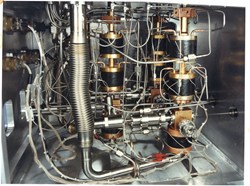 Using a cryogenic deuterium pellet injector installed on the DIII-D Tokamak operated by General Atomics in San Diego, Oak Ridge National Laboratory (ORNL) researchers and collaborators were able to fire millimetre-sized frozen deuterium pellets into ultra-hot plasma at a rate of 60 times per second. The results demonstrate that pellet technology can repetitively trigger small edge instabilities that both protect material surfaces from potentially larger energy pulses and help to keep the plasma free of impurities. This is the first time the technique has been demonstrated at a level nearing the requirements of ITER.
"Our recent experiments indicate that the newly tested pellet injection technique can be applied at pellet repetition rates approaching what ITER needs and without harmful effects," said Larry Baylor, a plasma physicist and engineer at ORNL's Fusion Energy Division, who led the collaboration of researchers from General Atomics, the ITER Organization, Lawrence Livermore National Laboratory, Oak Ridge National Laboratory, and the University of California San Diego. The US Domestic Agency (US-ITER) is responsible for developing and fabricating pellet injectors and pellet-based ELM pacing technology for the ITER machine.
The team has demonstrated that it is possible to decrease the intensity of the periodic plasma edge disturbances, known as edge localized modes (ELMs), by a factor of 10 by injecting small pellets at a 10 times higher frequency than the ELMs naturally occur in the plasma, Baylor said in an interview.
"You have seen pictures of the sun, in which part of the hot plasma surface flies out and into space? That is in some sense similar to what happens to a tokamak plasma on its outer edge, its boundary," Baylor explained.
When large flare-like events occur, they can cause erosion and melting of the metal surfaces that surround the plasma, causing metal impurities of beryllium or tungsten in ITER to enter the plasma and thereby reduce its energy and performance.
"That's a byproduct of having the wall in close proximity to the plasma," Baylor said. "The magnetic field is not a perfect container. The plasma does leak out. And when it contacts the wall it can release these impurity atoms that then can find their way into the plasma. We have to minimize that."
To reduce the size of the ELMs, researchers used a cryogenic deuterium rapid-fire "machine gun" that fires 1.3 mm deuterium ice pellets into the edge of the plasma, at up to 60 Hz, or 60 times per second. Each ice pellet triggered a small ELM, short-circuiting the plasma's natural tendency to have infrequent, large ELMs. Using this rapid-fire technology, they are in effect "tickling" the edge of the plasma, Baylor explained, to turn potentially large and damaging ELMs into a series of small ones that can do little or no harm.
"It really is a machine gun. And we had three of them operating together, each one firing 20 times per second," Baylor explained. "We fired these simultaneously, alternating among them. We ended up with 60 pellets per second entering the plasma, and these stimulated much smaller ELMs than would occur naturally."
The researchers observed, as they expected, that the more frequently that ELMs occur, the smaller they tend to be and consequently the smaller the pulsed energy losses from the plasma. It benefits the plasma to create multiple small incidents and the researchers are taking advantage of this insight. "If they flare out once per second, then they are very big. But if they are ejected at 60 times per second, then they are very small," Baylor said.
Not only did the researchers successfully demonstrate that their method for controlling plasma edge activity is potentially feasible for ITER, but they also found that their intervention did not negatively affect the plasma's internal energy, Baylor said. This was somewhat unexpected. "The plasma performance was essentially the same as it was without the pellets."
Furthermore, Baylor said, they found that such pellet injection actually made the plasma cleaner: The injected pellets stimulate the flow of particles on the outer boundary of the plasma downwards along the lines of the magnetic field and towards the divertor at the bottom of the plasma vessel, where the heat flux exits the tokamak.
The divertor is a kind of funnel on the floor of the container that pumps out impurities, metal and carbon atoms and ions from the plasma. "By injecting pellets and causing particles to flow down to the divertor, [the pellets] act as a screening mechanism to keep those impurities reduced, to keep them from migrating into the plasma. So it resulted in a much cleaner plasma, more pure than would otherwise be the case. We weren't expecting this at the level that we discovered," Baylor said.
The testing of the technology at the DIII-D facility demonstrates proof of principle on a system that is about one-tenth the pellet throughput that ITER will require. While the plasma on DIII-D is sustained for a matter of seconds, the plasma in ITER will run for up to an hour.
"The scaling up to ITER represents a challenge in that we have to use larger pellets," Baylor said. "So the throughput of solid deuterium, the continuous extrusion that we create to make the pellets, is more of a challenge."
"The challenge is also in producing that much solid deuterium that is at a temperature of 15 K. ITER will not require 60 pellets per second, as we did here; it will need perhaps 20 pellets per second. But they will be much larger pellets, something more like 3 mm in size."
"It's like a BB-size, or slightly bigger, whereas the size used here in testing was only 1.3 mm, so on the order of 10 times smaller."
Moving forward, the researchers now are planning to inject pellets from the inner wall to fuel the plasma and at the same time to control edge localized plasma flares with injection from the outer wall.
"In the future in ITER, we will have to replenish the plasma [with fuel], because the duration of the plasma will be so much longer that we must replenish both the burned and slowly leaking plasma particles," Baylor said.
"Our goal is to demonstrate that we can inject fuel pellets synergistically with ELM pacing pellets and maintain good plasma performance. This is what ITER will require."
Source: ITERnewsline
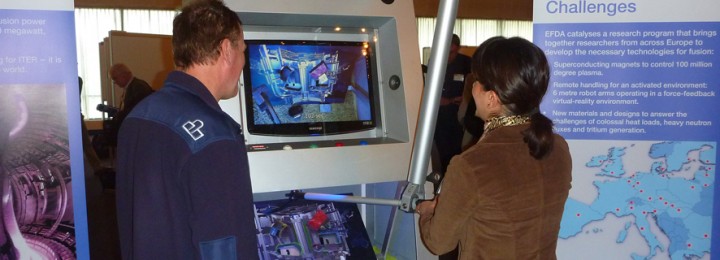 EFDA set participants at last week's European Energy Conference a stimulating coffee break challenge: to replace the tiles in a fusion reactor. The new Remote Handling Experience exhibit, which simulates the operation of a robotic arm akin to that used to conduct maintenance at JET, was a central attraction at the EFDA stand in the Conference Expo. Many would-be engineers tried their hand at manipulating the "tiles" – wooden blocks – into their allotted spaces using only the on-screen camera view. However, the two minute time limit for the four tiles proved too testing for all but one contestant, giving visitors an appreciation of the skill that the JET technicians showed in replacing 84,000 components in the 2010 – 2011 shutdown.
The four day conference was attended by over three hundred people, who heard presentations ranging from US energy policy, to materials with tailored properties, to future electric vehicles, to artificial photosynthesis. Of course, fusion featured as well – plenary lectures were given by the Director General of ITER, Professor Osamu Motojima, and the EFDA leader, Dr Francesco Romanelli.
The depth and scope of innovation portrayed by the talks was impressive and there was a notable consensus that there will be no silver bullet to solve the looming energy issues – instead there was a feeling that governments and industries will have to work together to achieve an optimal energy mix for Europe's – and the planet's – future.
Source: EFDA
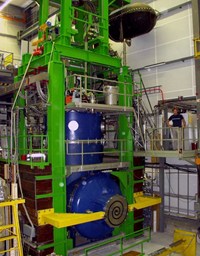 The ITER magnet system that confines, shapes and controls the hot plasma inside the vacuum vessel consists of an arrangement of several large coils wound with jacketed superconducting cable, referred to as conductor.
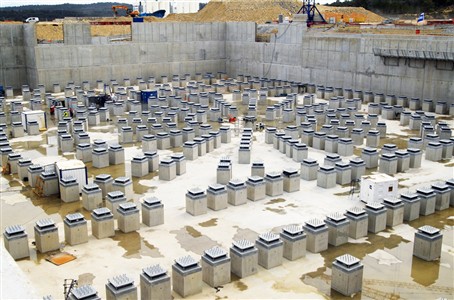 The task began in August last year has been successfully completed on Thursday 19 April thanks to a workforce of 45 people from the NTS and GTM contractors, under the supervision of the F4E team in Cadarache. During the past nine months, the Tokamak complex has undergone a total transformation since the first cubic metres of concrete were poured. This was a turning point for the construction, which paved the way for the arrival of the plinths and the anti-seismic pads. The team behind the project has been committed to meeting the tight schedule and overcoming all installation constraints.
The precision with which the plinths have been placed indicate the complexity of the construction process. It is these plinths, with the support of anti-seismic pads, that will shoulder the weight of the Tokamak machine. The plinths are placed in the form of concentric circles to mirror the shape of the machine and even the distribution of its load.
Professor Osamu Motojima, Director General of ITER International Organization, paid a visit to the Tokamak complex to witness the arrival of the last plinth. In parallel, he was briefed on the progress made with regards to the retaining walls which are now fully erected in order to isolate the Tokamak complex from the surrounding soil.
Source: F4E
Local News
- 1
- 2
- 3
- 4
- 5
IPPLM joins the Enterprise Europe Network
31-03-2026
On 23 March 2026, the Institute of Plasma Physics and Laser Microfusion (IPPLM) joined, with its technological offer, the group of entities affiliated with the Enterprise Europe Network (EEN), interested...
Read moreIPPLM as a co-creator of the exhibition "E = mc² – the formula that changed the world" at the National…
18-02-2026

On 16 February 2026, the official opening of two new permanent exhibitions took place at the National Museum of Technology in Warsaw. The Institute of Plasma Physics and Laser Microfusion...
Read moreIPPLM supports children and young people at the TPD "Helenów" Centre
22-12-2025

The Sylwester Kaliski Institute of Plasma Physics and Laser Microfusion (IPPLM) has for many years been actively engaged in initiatives supporting children and young people supported by the TPD "Helenów"...
Read moreIPPLM researchers took part in an experimental campaign on the GEKKO XII laser
20-11-2025

On 10–14 November 2025, a research team from the Sylwester Kaliski Institute of Plasma Physics and Laser Microfusion (IPPLM) – Prof. Katarzyna Batani, Dr Hanna Marchenko and Dr Agnieszka Zaraś-Szydłowska...
Read moreRegister for the 18th Kudowa Summer School on Plasma Physics!
07-11-2025

We invite you to take part in the 18th Kudowa Summer School "Towards Fusion Energy", which will be held on 8–12 June 2026 in Kudowa-Zdrój, Poland. The event is organised...
Read moreIPPLM participated in the second technical meeting within the DONES Con-P1 project
17-10-2025
The Institute of Plasma Physics and Laser Microfusion (IPPLM) took part in the second technical meeting held as part of the DONES Consolidation Phase 1 (DONES ConP1) project, co-financed by...
Read moreProf. Jan Badziak from IPPLM among the World’s Top 2% Scientists
15-10-2025
Prof. Jan Badziak, from the Department of Laser Plasma and Magnetized Dense Plasma Physics at the Institute of Plasma Physics and Laser Microfusion (IPPLM), has been included in the prestigious...
Read more29th Science Festival with the participation of IPPLM
10-10-2025

During the 29th Science Festival in Warsaw, held on 19–28 September 2025, researchers from the Institute of Plasma Physics and Laser Microfusion (IPPLM) conducted lessons for upper-grade primary school students. The...
Read morePLASMA 2025 and the 20th Anniversary of the Euratom–IPPLM Association – event summary
26-09-2025

From 15 to 19 September 2025, Warsaw hosted the international scientific conference PLASMA 2025 – International Conference on Research and Application of Plasmas, dedicated to plasma research, diagnostics, and applications....
Read moreWe bid farewell with deep sorrow to Professor Jerzy Wołowski
25-09-2025

It is with great sadness that we have received the news of the passing of Professor Jerzy Wołowski (1936–2025) an outstanding physicist, long-time employee of the Institute of Plasma Physics...
Read more20th anniversary of the Euratom–IPPLM Association (CeNTE): Celebrating two decades of fusion research coordination
16-09-2025

On 19 September 2025, during the PLASMA 2025 International Conference on Research, Diagnostics and Applications of Plasma in Warsaw, the IPPLM will mark 20th anniversary of the coordination of research on nuclear fusion...
Read moreIPPLM at the 49th Congress of Polish Physicists in Katowice
13-09-2025
During the 49th Congress of Polish Physicists, held from September 5–11, 2025, in Katowice, the Institute of Plasma Physics and Laser Microfusion (IPPLM) was represented both among the speakers and...
Read moreProf. Agata Chomiczewska appointed Deputy Director for Scientific Affairs at the IPPLM
03-09-2025

We are pleased to announce that the Minister of Energy, Mr. Miłosz Motyka, has appointed Dr. hab. Agata Chomiczewska to the position of Deputy Director for Scientific Affairs at the...
Read moreA historic milestone – the Scientific Council of the Institute confers the degree of habilitated doctor
10-07-2025
For the first time in the history of the Institute of Plasma Physics and Laser Microfusion (IPPLM), the Scientific Council has adopted a resolution to confer the degree of habilitated...
Read moreNew Board of the Plasma Physics Division of the European Physical Society
04-07-2025

In the first quarter of 2025, elections were held for the Board of the Plasma Physics Division of the European Physical Society (EPS Plasma Physics Division). Six candidates who received...
Read moreIPPLM researchers bring fusion expertise to 10th Central & Eastern Europe Nuclear Industry Congress 2025
12-06-2025
Researchers from the Institute of Plasma Physics and Laser Microfusion (IPPLM), Dr. Natalia Wendler and Dr. Paweł Gąsior, recently participated in a panel discussion at the 10th Central & Eastern...
Read moreIPPLM at the 3rd edition of the "Science for Society" Congress
29-05-2025

On 25-26 May 2025, the 3rd edition of the "Science for Society" Congress took place in the Large Hall of the Warsaw University of Technology. The aim of the event...
Read moreInvitation to the 3rd edition of the "Science for Society" Congress with the participation of IPPLM
22-05-2025

The 3rd edition of the "Science for Society" Congress will take place on 25–26 May 2025 at the Warsaw University of Technology. This unique event demonstrates that science is not...
Read moreJoin the 28th Science Picnic!
07-05-2025

The Institute of Plasma Physics and Laser Microfusion (IPPLM) invites you to its stand on Saturday, 10 May, during the 28th Science Picnic, organized by Polish Radio and the Copernicus...
Read moreCooperation agreement between the IPPLM and the National Museum of Technology
18-04-2025

On 17 April 2025, a cooperation agreement was signed between the National Museum of Technology (NMT) and the Institute of Plasma Physics and Laser Microfusion (IPPLM). The ceremonial meeting, attended by...
Read morePolish and French researchers join forces in research on nuclear fusion
31-03-2025

On 24-25 March 2025, a Polish-French meeting was held at the headquarters of the Institute of Nuclear Physics of the Polish Academy of Sciences (IFJ PAN) and the French Institute...
Read moreJoin us for the International Conference on Research and Application of Plasmas – PLASMA 2025!
13-03-2025

The Institute of Plasma Physics and Laser Microfusion (IPPLM) invites you to attend the PLASMA 2025 – International Conference on Research and Application of Plasmas, which will be held from...
Read moreExperimental research session in the Plasma-Focus PF1000U laboratory as part of the ICDMP collaboration
27-02-2025

On February 10–21, 2025, an experimental session was held in the Plasma-Focus PF-1000U laboratory, in which, in addition to the IPPLM team, a three-person team of researchers from the Prague...
Read moreLaser demonstration on JET detects fusion fuels
11-02-2025

Scientists and engineers from eight nations, including Poland, have carried out a project using lasers on the Joint European Torus (JET) to study fusion fuel retention. Laser Induced Breakdown Spectroscopy (LIBS),...
Read moreIPPLM employee nominated for the Personality of the Year title in the Science category
24-01-2025
Research and technical employee Mr. Olgierd Cichorek, M.Sc., from the Laboratory of Plasma Nudge for Satellites at the IPPLM has been nominated for the title of Personality of the Year...
Read moreWorld News
- 1
- 2
- 3
- 4
- 5
In Memoriam — Professor Francesco Romanelli
24-03-2026

The world of fusion research mourns the loss of Professor Francesco Romanelli, a visionary scientist whose work helped bring humanity closer to clean, limitless energy. Over four decades, he explored...
Read moreIgniting the future: Breakthroughs in inertial confinement Fusion
25-07-2025

In December 2022, the National Ignition Facility (NIF) at Lawrence Livermore National Laboratory (USA) marked a historic milestone in fusion science: an experiment produced 3.15 MJ of fusion energy from 2.05 MJ of laser...
Read moreWendelstein 7-X sets new fusion performance records
04-06-2025

On May 22, 2025, the Wendelstein 7-X (W7-X) stellarator at the Max Planck Institute for Plasma Physics (IPP) in Greifswald concluded its latest experimental campaign with a major success: a...
Read moreEuropean tokamak sets new fusion plasma record
20-02-2025

On February 12, 2025, the WEST tokamak, located at CEA Cadarache in southern France, set a new world record by sustaining fusion plasma for 1,337 seconds, or over 22 minutes....
Read moreDr. Gianfranco Federici appointed as the new EUROfusion Programme Manager
17-12-2024
At the 49th General Assembly held in Barcelona, December 2024, Dr. Gianfranco Federici was elected as the new Programme Manager of EUROfusion. He succeeds Prof. Ambrogio Fasoli, who will return...
Read moreEUROfusion and F4E join forces for Europe’s fusion future
16-12-2024

EUROfusion and Fusion for Energy (F4E) have signed a Memorandum of Understanding (MoU) to advance fusion research and development in Europe. This agreement reinforces cooperation in...
Read moreJohn J. Hopfield and Geoffrey E. Hinton awarded the 2024 Nobel Prize in Physics
08-10-2024

John J. Hopfield and Geoffrey E. Hinton have been awarded the 2024 Nobel Prize in Physics "for foundational discoveries and inventions that enable machine learning with artificial neural networks." The Nobel...
Read moreWendelstein 7-X begins new experimental campaign
10-09-2024

The Wendelstein 7-X, the world’s most advanced stellarator, is launching a new experimental campaign after a year of intensive maintenance and upgrades. This phase, known as OP2.2, begins on 10...
Read moreITER's New Project Baseline: A Robust Path to Fusion Energy Research
04-07-2024

On 3 July, ITER Director-General Pietro Barabaschi presented the new project baseline, under evaluation by the ITER Organization's governing body. This plan aims to ensure a robust start to scientific...
Read moreITER Council Presents Updated Project Baseline
21-06-2024

The ITER Council convened this week for its 34th meeting, where nearly 100 attendees reviewed significant updates to the project baseline. The proposed changes aim to optimize the overall project...
Read moreEurope and Japan celebrate breakthrough in paving the way for fusion energy
01-12-2023

The prospect of harnessing fusion energy is closer. The successful operation of JT-60SA, the most powerful experimental device to date, built by Europe and Japan, is a landmark achievement for...
Read moreFirst plasma was successfully generated at JT-60SA
26-10-2023

A momentous achievement in the field of nuclear fusion has been accomplished by a collaborative team of engineers from Europe and Japan. They have successfully generated tokamak plasma for the...
Read moreThe Nobel Prize in Physics 2023
03-10-2023
Pierre Agostini, Ferenc Krausz and Anne L’Huillier are the winners of this year's Nobel Prize in Physics. It was awarded "for experimental methods that generate attosecond pulses of light for...
Read moreUS Lab Replicates Fusion Ignition Breakthrough
08-08-2023
The US National Ignition Facility (NIF) has achieved fusion ignition once again, building on its landmark 2022 success. This achievement, powered by hydrogen within a diamond capsule, signifies a major...
Read moreNew Programme Manager Elect announced by EUROfusion
20-07-2023
Professor Ambrogio Fasoli became the new EUROfusion Programme Manager Elect. The decision was made by EUROfusion General Assembly at the meeting on 18 July 2023. His tenure will officially commence...
Read moreEUROfusion stands in solidarity with research in Ukraine
24-02-2023

Today, as we commemorate the anniversary of the invasion of Ukraine by Russia, the EUROfusion consortium stands in solidarity with our Ukrainian member and research colleagues. EUROfusion remains committed to supporting...
Read moreEight-minute production of plasma with gigajoule energy turnover at Wendelstein 7-X
23-02-2023

Another target has been achieved only recently by the W7-X researchers, namely they managed to acquire an energy turnover of 1.3 gigajoules in the device, which is 17 times higher...
Read moreThe Nobel Prize in Physics 2022
04-10-2022

Alain Aspect, John F. Clauser and Anton Zeilinger are the winners of this year's Nobel Prize in Physics. It was awarded “for experiments with entangled photons, establishing the violation of...
Read moreNew experiments for fusion energy record breaker JET
27-09-2022

A new wave of fusion energy experiments on UK Atomic Energy Authority’s record-breaking Joint European Torus (JET) started this month. EUROfusion researchers are using the famous JET machine to conduct a...
Read moreITER appoints new Director-General
21-09-2022
Pietro Barabaschi has become the next Director-General of the ITER Organization as a result of the unanimous choice of the Council from among finalist candidates. In the transition period Dr....
Read moreStarting power plant design
07-07-2022

At a livestreamed Horizon EUROfusion event in Brussels on 5 July 2022, EUROfusion celebrated the start of conceptual design activities for Europe's first demonstration fusion power plant DEMO. This first-of-a-kind...
Read moreCelebration of achieving a crucial assembly milestone in the ITER Project
17-05-2022

This month, we have witnessed the successful lifting and lowering into the machine well of the first sub-section of the ITER plasma chamber. The weight of the component is the...
Read moreBurning plasma achieved in inertial fusion at the National Ignition Facility
15-02-2022
Obtaining a burning plasma is a critical step towards self-sustaining fusion energy. A burning plasma is one in which the fusion reactions themselves are the primary source of heating in...
Read moreHistoric milestone reached by JET scientists
20-01-2022

Iconic fusion energy machine JET – which reaches controlled temperatures 10 times hotter than the core of the sun – completed its 100,000th live pulse last night. Weighing 2,800 tonnes, the...
Read moreHorizon Europe Grant Agreement signed
20-12-2021

15 December 2021 saw the EUROfusion consortium signing the Grant Agreement under Horizon Europe, the European Framework Programme from 2021 – 2027, in an aim to launch comprehensive R&D approach...
Read more |
 |
 |
 |
 |
 |
 |
 |
What we do
Our laboratories
Online seminars
| Thursday, 30 Apr 2026, godz. 13.00 Seminarium instytutowe: "Equation of State of Shock Compressed BN in the Megabar Pressure Range", dr hab. Katarzyna Batani, IFPiLM |


Research projects carried out at the IPPLM are funded by the Polish Ministry of Education and Science, the National Science Centre and by the European Commission within the framework of EUROfusion Consortium under grant agreement No 101052200. Financial support comes also from the International Atomic Energy Agency, European Space Agency and LaserLab Consortium as well as from the Fusion for Energy Agency.