





Zestaw obrazów 2019
zdjecie1.jpg
zdjecie2.jpg
zdjecie3.jpg
zdjecie4.jpg
zdjecie5.jpg
zdjecie6.jpg
2019_1.JPG
2019_2.JPG
2019_4.JPG


Światowe
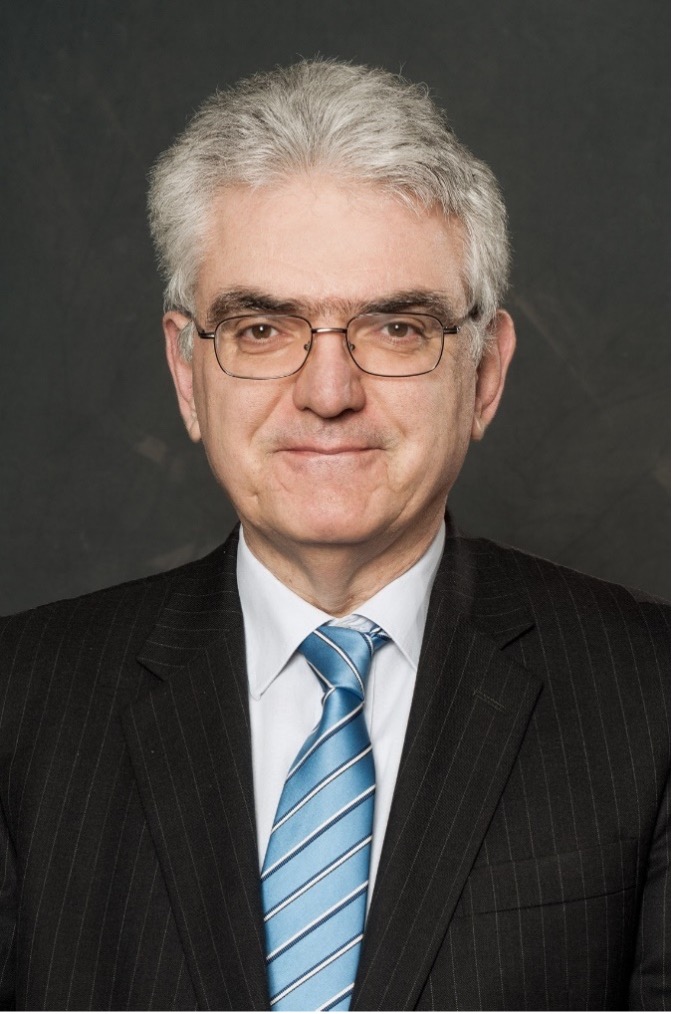 The world of fusion research mourns the loss of Professor Francesco Romanelli, a visionary scientist whose work helped bring humanity closer to clean, limitless energy. Over four decades, he explored the complex behavior of plasma – the hot, charged gas at the heart of fusion reactors – and contributed to the science that underpins today’s biggest fusion experiments.
Professor Romanelli played key roles in Europe’s most important fusion projects, including JET, the European Fusion Development Agreement (EFDA), and the Divertor Tokamak Test Facility (DTT), helping lay the groundwork for ITER, the international effort to make fusion energy a reality. Beyond his research, he inspired generations of scientists, promoted collaboration across institutions, and mentored young researchers who will continue his mission.
His passion, leadership, and discoveries leave a lasting legacy in the pursuit of a cleaner, sustainable energy future.
Source: EUROfusion
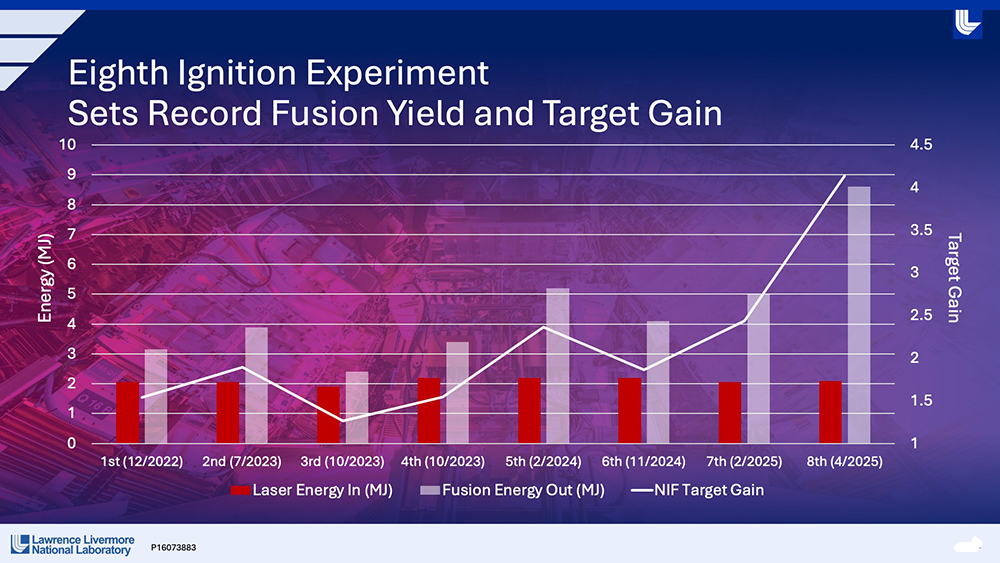
In December 2022, the National Ignition Facility (NIF) at Lawrence Livermore National Laboratory (USA) marked a historic milestone in fusion science: an experiment produced 3.15 MJ of fusion energy from 2.05 MJ of laser input – a gain factor (Q) of 1.54 – achieving scientific energy gain for the first time. This result demonstrated that the energy generated within the fusion target exceeded the energy delivered to it by the lasers, a condition also referred to as target gain.
Since then, NIF has repeatedly refined its techniques, achieving ignition seven times by early 2025. Notable experiments include:
- July 30, 2023: 2.05 MJ delivered yielded 3.88 MJ (Q≈1.89)
- October 8, 2023: ignition with 1.9 MJ input → 2.4 MJ output
- October 30, 2023: 2.2 MJ → 3.4 MJ
- February 12, 2024: 2.2 MJ → 5.2 MJ
- November 18, 2024: 2.2 MJ → 4.1 MJ
- February 23, 2025: 2.05 MJ → 5.0 MJ (Q≈2.44)
- April 7, 2025: record yield 8.6 MJ from 2.08 MJ (Q≈4.13)
These achievements stem from meticulous improvements in target design, laser pulse shaping, and hohlraum symmetry. Each experiment brings scientists closer to a self-sustaining plasma state, where alpha-particle heating dominates over energy losses – fulfilling a key condition for sustained fusion reactions.
 |
| Source: Lawrence Livermore National Laboratory, https://lasers.llnl.gov/science/achieving-fusion-ignition. Used under CC BY-NC-SA 4.0 license. |
What happens inside NIF?
NIF uses 192 precisely synchronized lasers aimed at a tiny capsule containing cryogenically cooled deuterium tritium fuel. The lasers heat the inner walls of a hohlraum to create a burst of X-rays. These X rays cause the outer shell of the capsule to rapidly expand, generating a powerful inward force that compresses the fuel to extreme densities and temperatures – hundreds of millions of degrees.
At the center of this implosion, a "hot spot" forms and fusion begins. The alpha particles produced deposit energy into the surrounding fuel, potentially creating a larger burning region. When the conditions are optimal – high enough density, temperature, and symmetry – the process results in ignition and scientific energy gain.
Why it matters?
Although these experiments do not yet produce net electricity – since the full energy input to the laser system still exceeds the fusion output – the fact that target gain has been achieved is a groundbreaking step. It validates the central principles of inertial confinement fusion (ICF) and provides a foundation for future technologies aimed at clean, abundant energy production.
In summary, NIF’s repeated ignition results represent a transition from proof-of-concept to reproducible fusion conditions. Each success advances our understanding of plasma physics and fusion science – and moves us closer to practical fusion energy.
More information on this topic is available at: https://lasers.llnl.gov/science/achieving-fusion-ignition
Source: https://lasers.llnl.gov/
On May 22, 2025, the Wendelstein 7-X (W7-X) stellarator at the Max Planck Institute for Plasma Physics (IPP) in Greifswald concluded its latest experimental campaign with a major success: a new world record in the triple product for long plasma durations, a key milestone in nuclear fusion research. This result confirms the stellarator’s potential as a viable path toward future fusion power plants.
The triple product – the fusion key parameter combining plasma density, temperature, and energy confinement time – was maintained at a record level for 43 seconds. W7-X now surpasses all previous long-duration results from tokamak devices, including those from JT60U (Japan) and JET (UK).
 |
| In a future fusion power plant, a plasma with a high triple product (y-axis, logarithmic scale) must be maintained for long periods (x-axis). Previous fusion experiments only achieved high values for plasma durations of a very few seconds. On May 22, 2025, Wendelstein 7-X achieved the world record for plasma times of more than 30 seconds with a high fusion product. In this OP2.3 experiment campaign, further best values were achieved for plasma durations between 30 and 40 seconds. Tokamaks remain the record holders for short plasma times. Source: MPI for Plasma Physics, Dinklage et al (to be published) / X. Litaudon et al 2024 Nucl. Fusion 64 015001 |
This breakthrough was made possible by international collaboration, especially with the U.S. Department of Energy’s Oak Ridge National Laboratory, which developed and delivered a novel pellet injector. During the record-setting discharge, around 90 frozen hydrogen pellets were injected into the plasma, enabling continuous refueling. Simultaneous microwave heating raised the plasma temperature above 20 million degrees Celsius, peaking at 30 million degrees.
Crucial diagnostic data came from Princeton Plasma Physics Laboratory and IPP, enabling precise calculation of the triple product.
 |
| The pellet injector in the Wendelstein 7-X experimental hall. Photo: MPI for Plasma Physics, Beate Kemnitz |
In addition to the new triple product record, W7-X achieved two further milestones:
- A new energy turnover record of 1.8 gigajoules (360 seconds plasma duration), exceeding the previous 1.3 GJ record and even surpassing values from the 1000-second EAST tokamak experiment.
- For the first time, plasma pressure reached 3% of magnetic pressure across the entire plasma volume, an important benchmark on the way to achieving reactor-relevant conditions (4-5%).
"The records of this experimental campaign are much more than mere numbers. They represent a significant step forward in validating the stellarator concept – made possible through outstanding international collaboration," said Prof. Dr. Robert Wolf, Head of Stellarator Heating and Optimization at IPP.
Wendelstein 7-X is operated in cooperation with EUROfusion and aims to demonstrate that stellarators can achieve the confinement quality needed for a future fusion power plant - safely, continuously, and efficiently.
Since the start of Wendelstein 7-X operation in 2015, a research team from the Institute of Plasma Physics and Laser Microfusion (IPPLM) in Poland has been actively participating in the device’s experimental campaigns. Members of the team operating the PHA (pulse-height analyzer) diagnostic system, designed and built by IPPLM researchers, were also involved in the record-setting experiment.
More information: www.ipp.mpg.de/5532945/w7x
 |
| View inside the vacuum vessel of Wendelstein 7-X in Greifswald. Photo: MPI for Plasma Physics, Jan Hosan |
Source: Max Planck Institute for Plasma Physics (IPP)
 On February 12, 2025, the WEST tokamak, located at CEA Cadarache in southern France, set a new world record by sustaining fusion plasma for 1,337 seconds, or over 22 minutes. This achievement marks a 25% improvement over the previous record set by China’s EAST tokamak just weeks earlier. WEST is part of the EUROfusion consortium’s network of medium-sized tokamaks, playing a vital role in advancing research for ITER, the world’s largest fusion experiment currently under construction.
Maintaining stable plasma for extended durations is a critical milestone for developing fusion energy. The challenge lies in controlling the naturally unstable plasma while ensuring that the components exposed to its high radiation—such as tungsten tiles—can withstand the extreme conditions without malfunctioning or contaminating the plasma. This capability will be essential for ITER, which aims to produce energy through fusion reactions over several minutes in its operational phases.
The recent record was achieved using a lower hybrid (LH) radiofrequency antenna that injected 2 MW of heating power into the plasma. This antenna generates a current by accelerating electrons, stabilizing the plasma and preventing disruptions. During the record-setting experiment, the actively cooled tungsten components extracted 2.6 gigajoules (GJ) of energy, showcasing the robustness of the system and its suitability for long-duration experiments.
According to Gianfranco Federici, EUROfusion Programme Manager, "WEST is an important facility for preparing the ITER exploitation towards the development of fusion energy. It plays a key role in implementing the EUROfusion programme within EURATOM." His statement highlights the strategic importance of WEST in ensuring Europe’s leadership in fusion research.
Moving forward, the WEST team will focus on increasing plasma heating power to 10 MW over durations of about 1,000 seconds. This corresponds to a fusion power of several gigawatts in a machine the size of ITER. Such efforts will allow scientists to simulate conditions expected during ITER’s deuterium-tritium (DT) operational phase and evaluate how long plasma-facing components can endure these extreme conditions.
Mastering plasma control for extended periods is a technological challenge but an essential step toward achieving sustainable fusion energy. These advancements bring the scientific community closer to realizing fusion power on an industrial scale.
For more information, please visit:
https://euro-fusion.org
https://irfm.cea.fr
Watch the video of this world record: https://www.youtube.com
Photo: WEST tokamak in Cadarache, France. Credit: CEA / C. Roux
Source: EUROfusion
At the 49th General Assembly held in Barcelona, December 2024, Dr. Gianfranco Federici was elected as the new Programme Manager of EUROfusion. He succeeds Prof. Ambrogio Fasoli, who will return to EPFL as its Provost.
In his address to the General Assembly, Dr. Federici presented his vision for the future of EUROfusion and European fusion strategy. His priorities include implementing a redefined European fusion roadmap, establishing a realistic work plan for 2026-2027 and beyond, and strengthening collaborations with key partners such as the European Commission, ITER Organisation, and Fusion for Energy. He also emphasized the need to enhance partnerships with private industry and fusion start-ups, as well as to expand international collaborations.
Dr. Federici brings decades of experience in fusion research and has been a central figure within EUROfusion since its inception. As the former head of the fusion technology department, he played a pivotal role in establishing the internationally recognised DEMO design and technology R&D programme. He also highlighted the importance of addressing critical technological challenges, such as nuclear technology qualification, to ensure the performance and reliability of key components like the breeding blanket and fusion fuel cycle.
The European fusion community expressed strong confidence in Dr. Federici’s leadership and strategy to maintain EUROfusion’s global position in fusion energy research. His official tenure will begin on January 1, 2025.
For more information, please visit the EUROfusion website.
Source: EUROfusion
 |
 |
 |
 |
 |
 |
 |
 |


Projekty badawcze realizowane przez IFPiLM są finansowane ze środków Ministerstwa Edukacji i Nauki i Narodowego Centrum Nauki oraz ze środków Komisji Europejskiej na podstawie umowy grantowej No 101052200, w ramach Konsorcjum EUROfusion. Wsparcia finansowego udzielają także: Międzynarodowa Agencja Energii Atomowej, Agencja Fusion for Energy, Europejska Agencja Kosmiczna i Konsorcjum LaserLab.