




Zestaw obrazów 2019
zdjecie1.jpg
zdjecie2.jpg
zdjecie3.jpg
zdjecie4.jpg
zdjecie5.jpg
zdjecie6.jpg
2019_1.JPG
2019_2.JPG
2019_4.JPG

Gallery
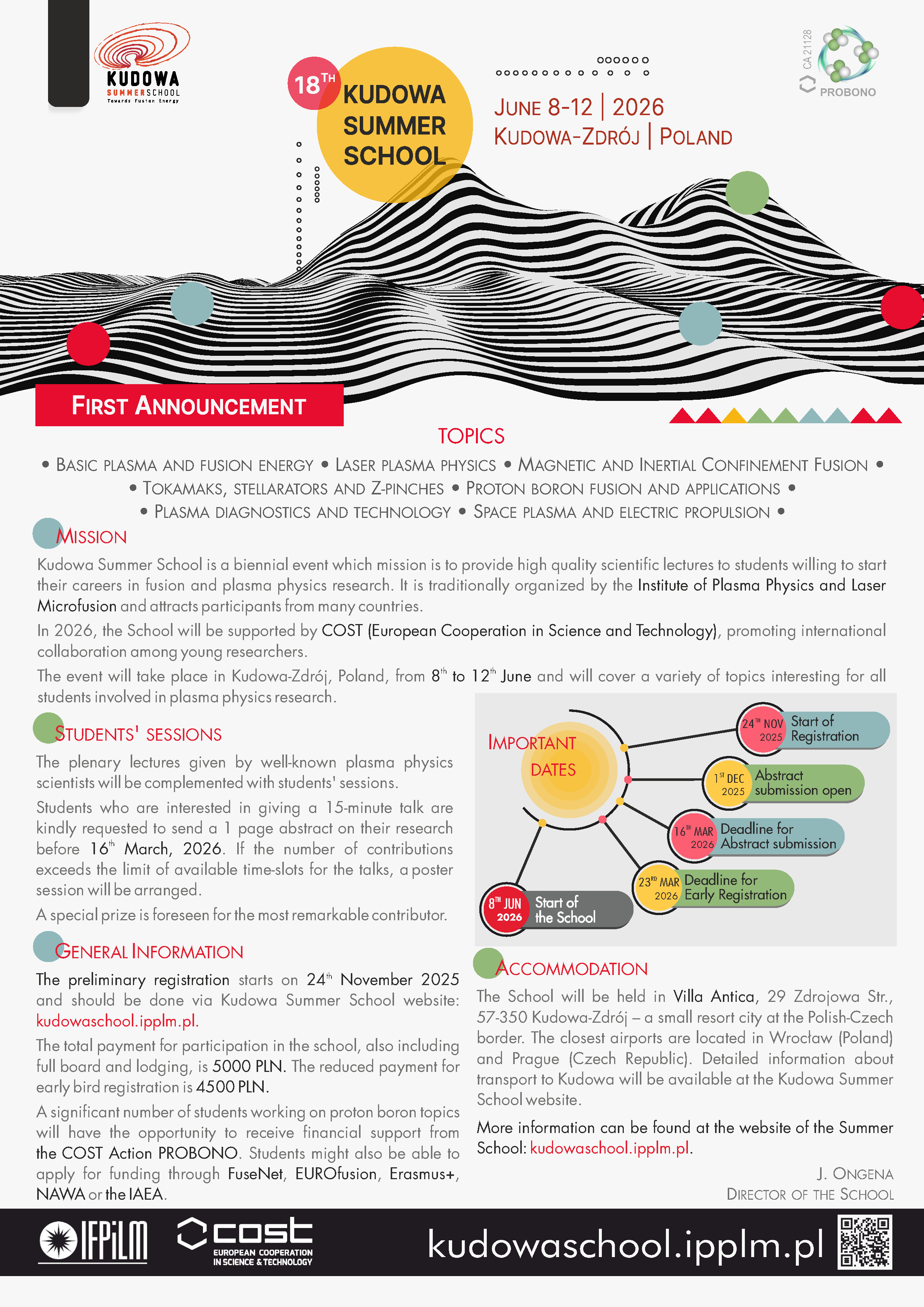
We invite you to take part in the 18th Kudowa Summer School "Towards Fusion Energy", which will be held on 8–12 June 2026 in Kudowa-Zdrój, Poland. The event is organised by the Institute of Plasma Physics and Laser Microfusion (IPPLM) in cooperation with COST Action CA21128 PROBONO.
The Kudowa Summer School offers an excellent opportunity for young researchers, Master’s students, and PhD candidates from Poland and abroad to broaden their knowledge of plasma physics and fusion energy research. During the School, participants will have the chance to present their research achievements, and the best presentations will be awarded.
Lectures delivered by leading specialists from renowned research centres worldwide will cover a wide range of plasma physics topics, including fusion energy, plasma experiments, plasma technology and diagnostics, as well as proton boron fusion and laser-induced plasmas.
Participant registration will open on 24 November 2025 and remain available until 20 April 2026. The deadline for abstract submission is 16 March 2026.
More information is available on the official School website: https://kudowaschool.ipplm.pl/
Don’t miss the chance to join one of the most significant scientific events of the coming year!
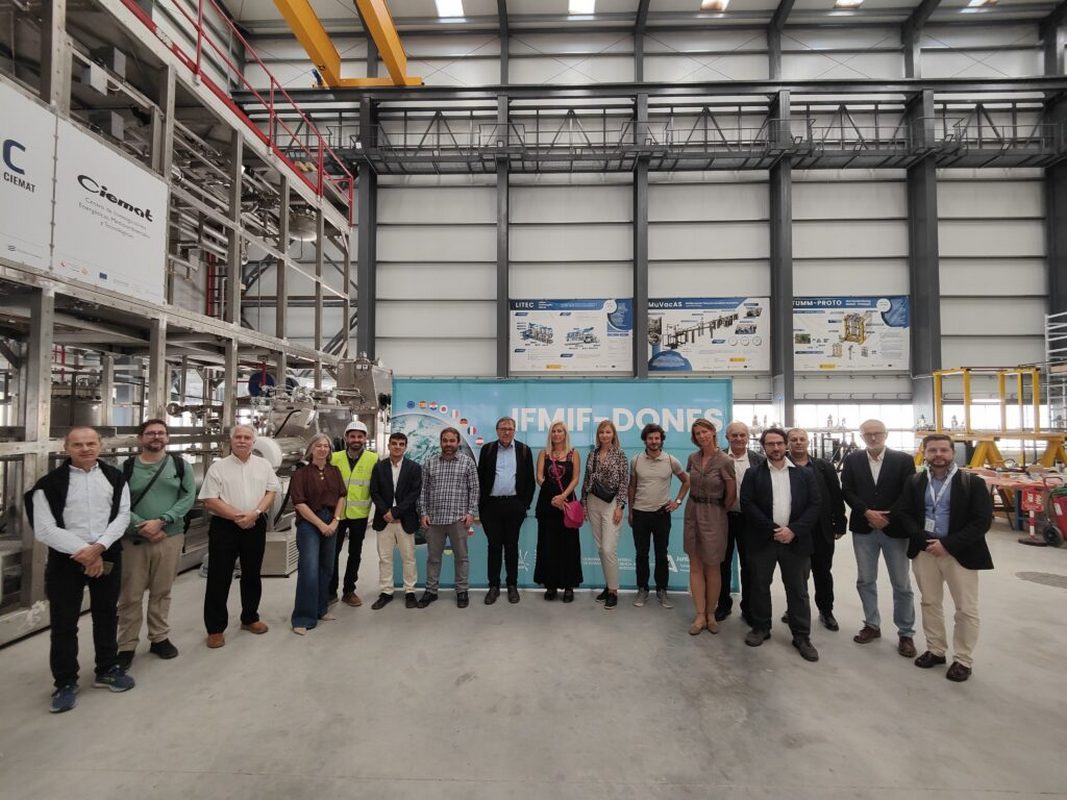
The Institute of Plasma Physics and Laser Microfusion (IPPLM) took part in the second technical meeting held as part of the DONES Consolidation Phase 1 (DONES ConP1) project, co-financed by the European Commission under the EURATOM programme.
The DONES ConP1 project aims to prepare for the launch of the innovative research infrastructure IFMIF-DONES (International Fusion Materials Irradiation Facility – Demo Oriented NEutron Source), located in Granada, Spain. This facility will be used for testing, validating, and qualifying materials intended for future fusion reactors. The data obtained from DONES experiments will play a key role in advancing fusion science, verifying radiation–material interaction models, and developing reactor technologies. In addition, the infrastructure will support research in nuclear physics as well as medical and industrial applications. IFMIF-DONES is included in the ESFRI Roadmap (European Strategy Forum on Research Infrastructures).
Ten partners from eight European countries are involved in the project, including institutions from France, Spain, Italy, Germany, Hungary, and Poland. The project is coordinated by esDONES – the IFMIF-DONES España consortium. Poland is represented in the consortium by the Institute of Plasma Physics and Laser Microfusion and the Institute of Nuclear Physics of the Polish Academy of Sciences (IFJ PAN).
DONES ConP1 focuses on key technical, financial, and organisational aspects related to the preparation for the construction and operation of the international IFMIF-DONES facility. The project includes, among others, updating the experimental programme documentation, developing a licensing strategy, planning auxiliary infrastructure, and building a scientific community interested in using the facility for research in nuclear physics, medicine, and industry. One of the main objectives of the project is to consolidate the scientific user community involved in both fusion and non-fusion experiments. The project also aims to strengthen this emerging community by developing innovative research proposals in nuclear physics, medical, and industrial fields.
The DONES ConP1 project will conclude on 31 October 2025.
 |
|
| Photo: © IFMIF-DONES | |
Prof. Jan Badziak, from the Department of Laser Plasma and Magnetized Dense Plasma Physics at the Institute of Plasma Physics and Laser Microfusion (IPPLM), has been included in the prestigious Stanford/Elsevier Top 2% Scientists List 2025. This exceptional distinction recognises outstanding researchers worldwide whose scientific work has made a significant impact on the advancement of their respective fields.
The Stanford/Elsevier Top 2% Scientists List is an annual ranking jointly prepared by Stanford University and Elsevier. It highlights the 2% of the most influential scientists in the world, based on a comprehensive analysis of citation data covering both the past year and entire research careers. The evaluation methodology includes factors such as the number of citations, the Hirsch index, and the author’s position among co-authors. The list encompasses 22 main scientific disciplines and 174 specific research areas.
We extend our congratulations to Prof. Jan Badziak for earning a place among such a distinguished group of scientists.
The full list is available at: https://elsevier.digitalcommonsdata.com
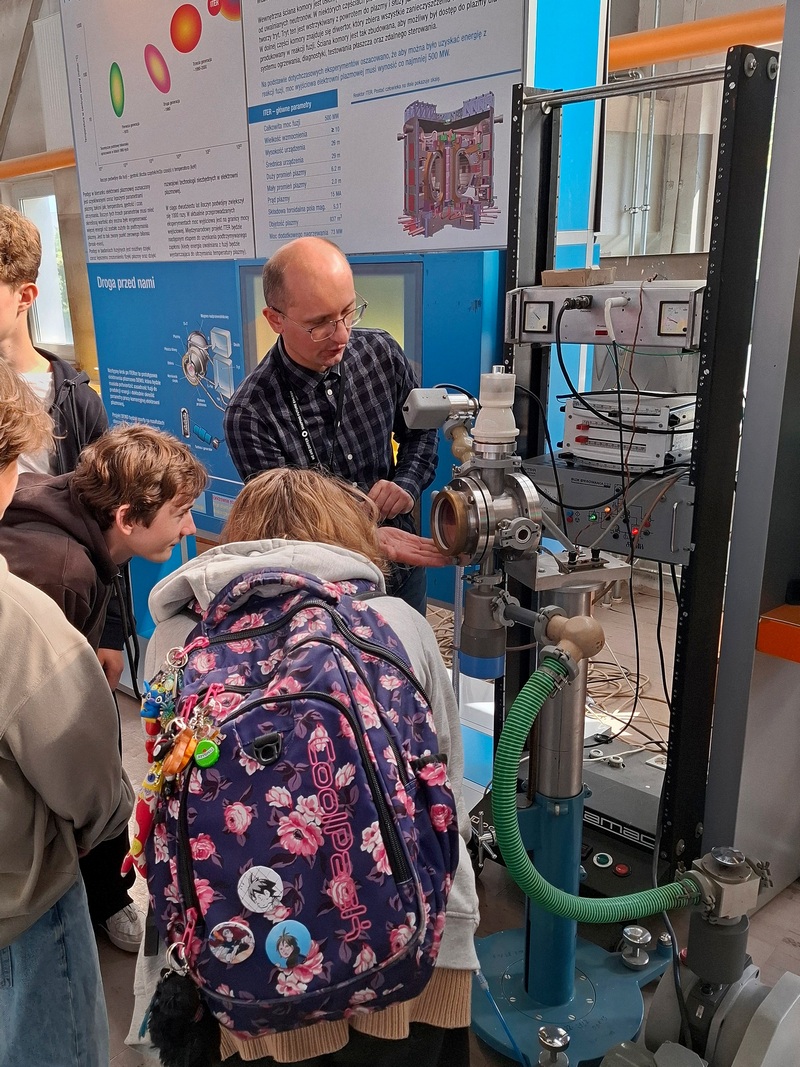
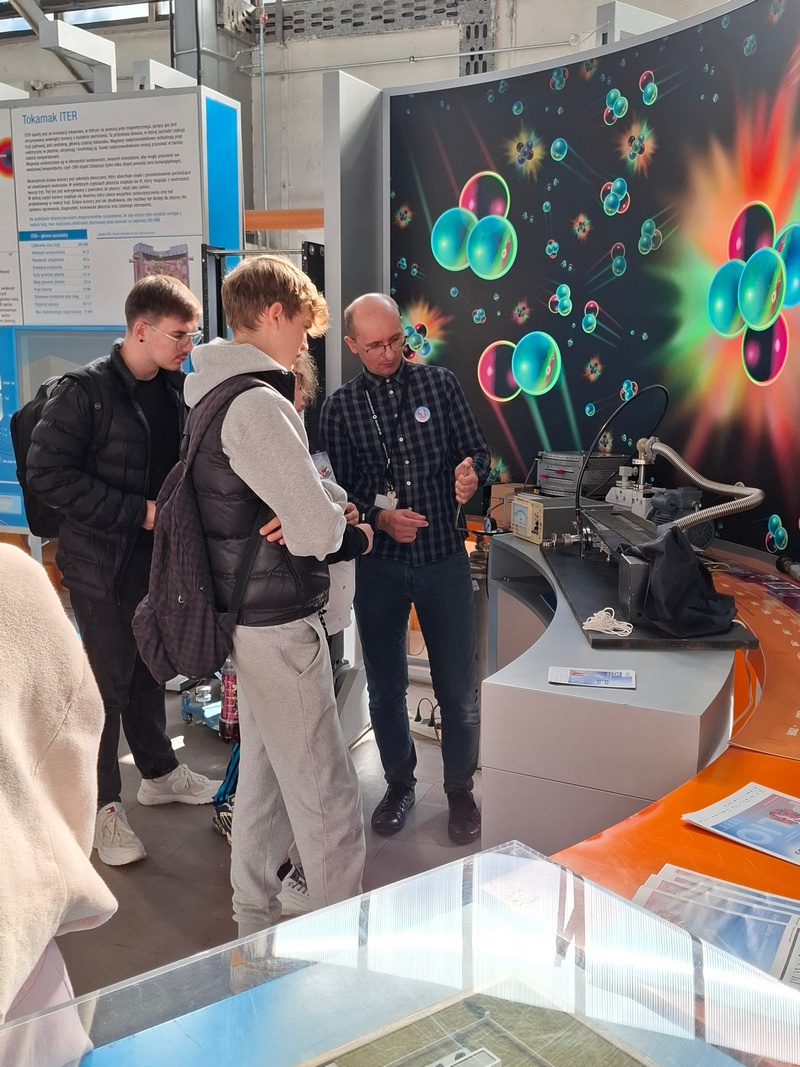
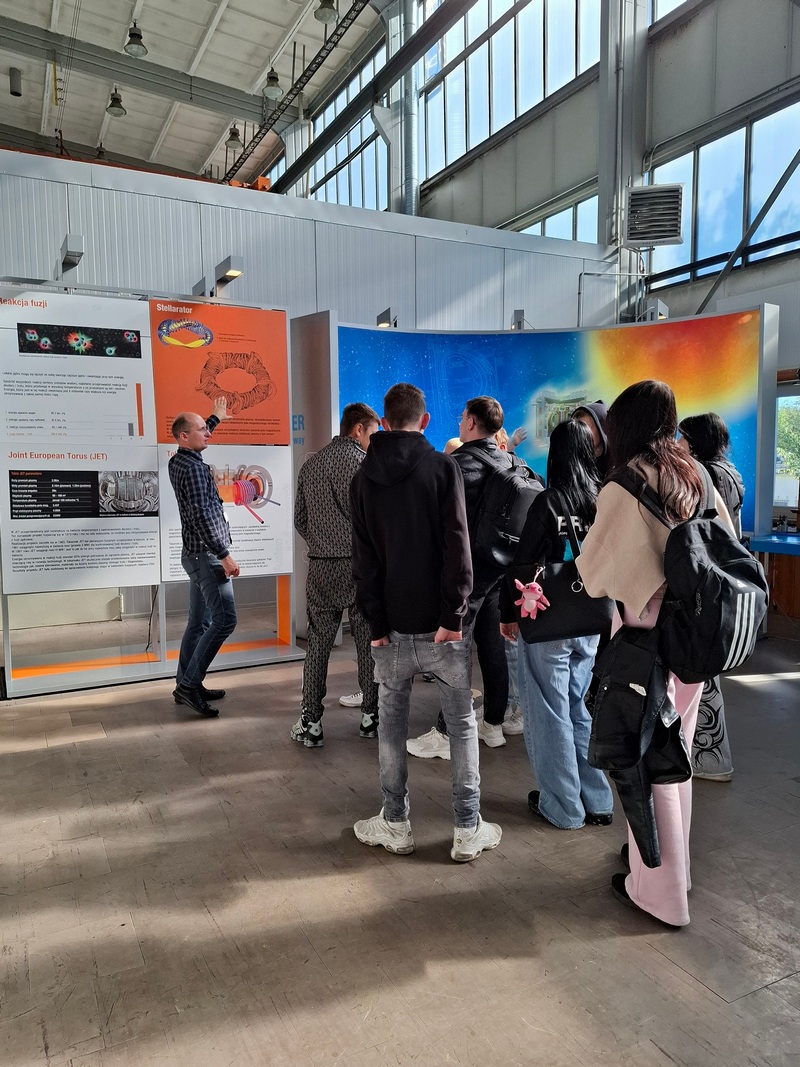
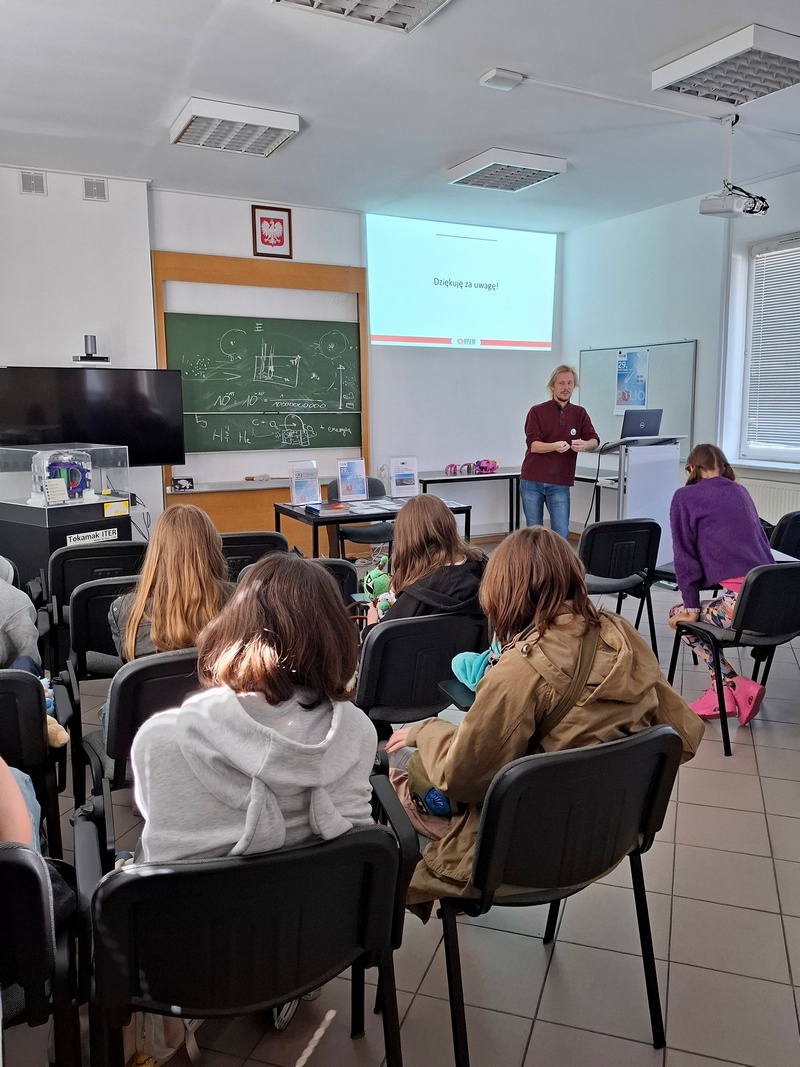
During the 29th Science Festival in Warsaw, held on 19–28 September 2025, researchers from the Institute of Plasma Physics and Laser Microfusion (IPPLM) conducted lessons for upper-grade primary school students. The sessions, held at the Institute’s premises, combined theory, demonstrations, and discussions, introducing young participants to the world of plasma and nuclear fusion.
Dr Piotr Chmielewski led a class entitled "The Sun, the Aurora, Lightning and… a Fluorescent Lamp – Discovering Plasma", in which he presented plasma as the fourth state of matter, found both in the Universe and in our everyday surroundings. Students learned about the properties of plasma, such as electrical conductivity, light emission, and interaction with magnetic fields. Using examples like the aurora borealis, lightning, and the structure of the Sun, they explored how plasma occurs in nature. During the demonstration part, participants observed a glow discharge and the operation of a fusor-type fusion reactor, learning, among other things, about how gas pressure affects the discharge process. The session concluded with an educational game that reinforced the newly acquired knowledge.
Dr Krzysztof Gałązka conducted a class entitled "What’s This Nuclear Fusion All About?", designed as a discussion with elements of a lecture and live demonstrations. Students learned about various forms of energy, ways of generating and storing it, and the importance of electricity in everyday life. The fundamentals of nuclear fusion reactions and their potential as a future clean energy source were then explained. The discussion also addressed the advantages and technological challenges associated with sustaining fusion reactions on Earth. The class concluded with a visit to the laboratory, where students – like previous groups – observed glow discharges and the operation of the fusor.
The Warsaw Science Festival is a series of meetings with scientists who present the latest scientific achievements, research methods, and future challenges in an accessible way. The Festival’s programme covers a wide range of topics – from natural and exact sciences to medicine, the humanities, social sciences, culture, and the arts. Events take the form of debates, lectures, workshops, laboratory visits, exhibitions, excursions, and educational games. As part of the Festival, special lessons are also organised for school groups at all educational levels. The events are hosted by scientific, educational, and cultural institutions as well as academic societies and associations.
 |
 |
 |
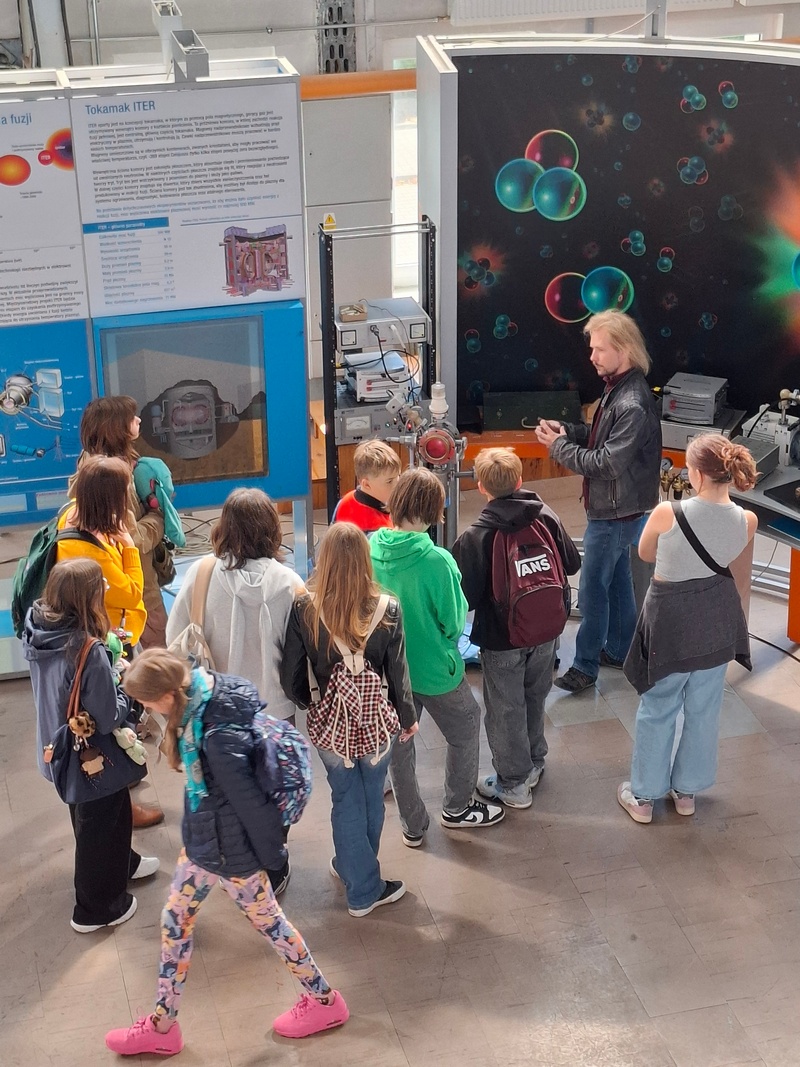 |
Photo: © IPPLM
From 15 to 19 September 2025, Warsaw hosted the international scientific conference PLASMA 2025 – International Conference on Research and Application of Plasmas, dedicated to plasma research, diagnostics, and applications. The event was organized by the Institute of Plasma Physics and Laser Microfusion (IPPLM).
A comprehensive scientific programme
Organized for more than 30 years, the conference once again confirmed its status as an important forum for the exchange of knowledge and experience in the field of plasma physics.
The programme covered, among others, the following topics:
- plasmas in tokamaks and stellarators (magnetic confinement fusion),
- plasmas generated by laser beams (inertial confinement fusion),
- space plasmas and laboratory astrophysics,
- dusty plasmas,
- plasma diagnostics, measurements, and data processing (including artificial intelligence),
- elementary processes and general plasma physics.
The conference was organized under the guidance of two committees: the International Scientific Committee chaired by Prof. Monika Kubkowska, IPPLM Director, and the Local Organizing Committee chaired by Dr. Natalia Wendler, Head of the Laboratory for Plasma Studies with Spectroscopic Methods at IPPLM.
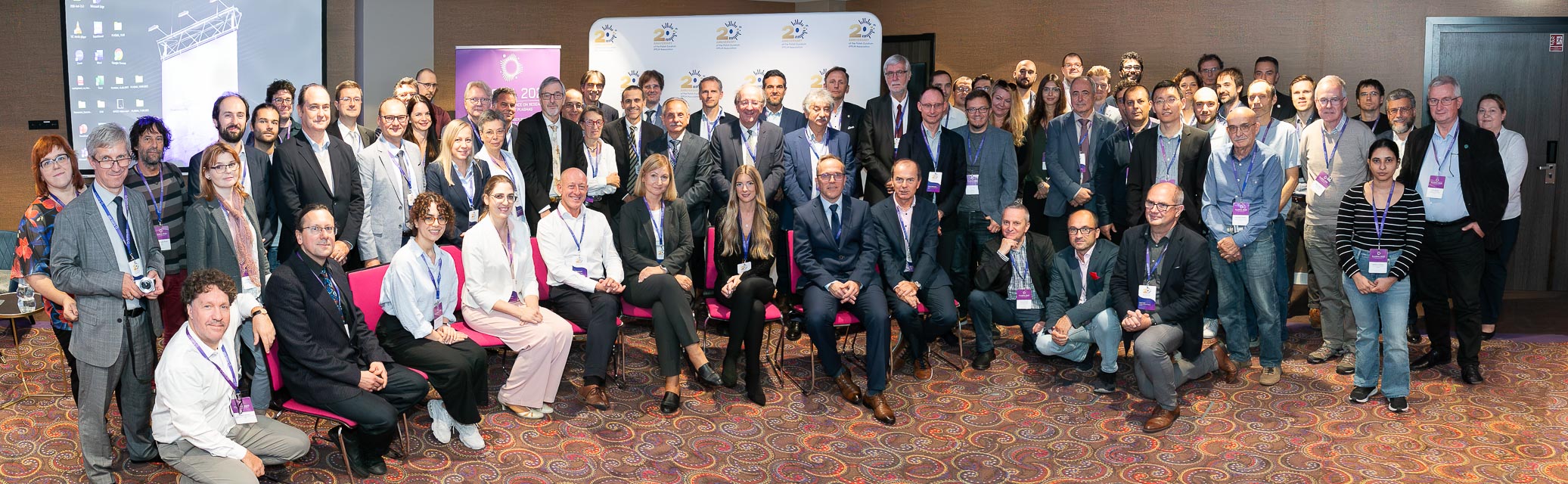 |
20th Anniversary of the Polish Euratom–IPPLM Association
A key highlight of the conference was the celebration of the 20th anniversary of the Polish Euratom–IPPLM Association (CeNTE) and the coordination of fusion research in Poland. The event brought together the Association’s pioneers, leading researchers, and representatives of scientific institutions and industry engaged in the development of technologies aiming at the realization of fusion energy.
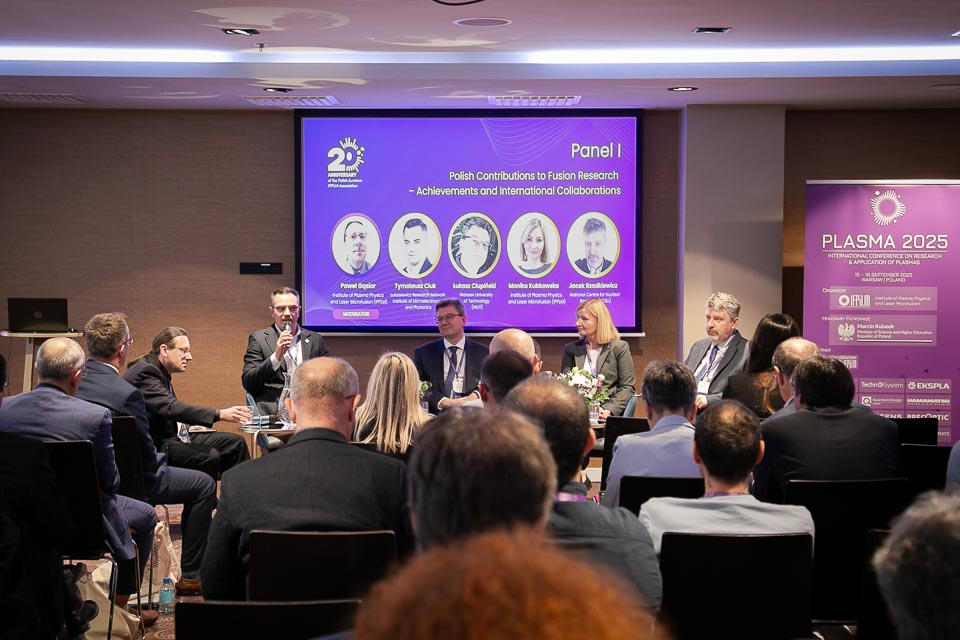
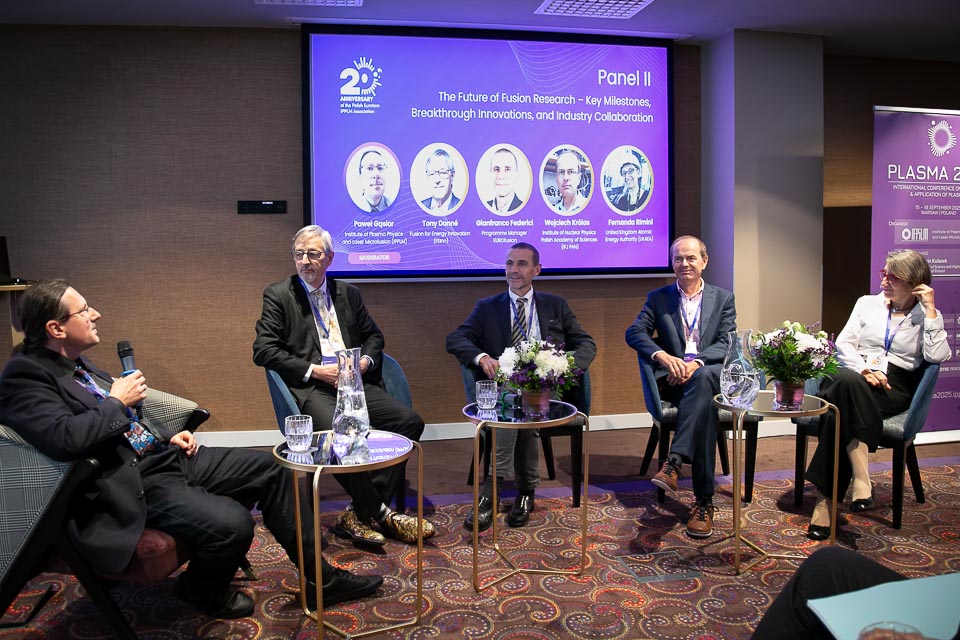
The anniversary programme included lectures on the history and future of fusion research in Europe, as well as two high-level panel discussions broadcast live on the IPPLM YouTube channel:
- Panel I: Polish Contributions to Fusion Research – Achievements and International Collaborations,
- Panel II: The Future of Fusion Research – Key Milestones, Breakthrough Innovations, and Industry Collaboration.
Recordings of the debates are available online: watch them on the IPPLM YouTube channel.
 |
 |
Patronage, partners and sponsors
The conference was held under the honorary patronage of Mr. Marcin Kulasek, Minister of Science and Higher Education.
The event partner was the Euratom–IPPLM National Contact Point.
The conference was sponsored by: Ekspla, Eurotek International Sp. z o.o., Exosens, Hamamatsu Photonics, IRtech Sp. z o.o., LTB Lasertechnik Berlin, Precoptic Co., Quantum Design, TechnoSystem, Teledyne Princeton Instruments, Tespol Sp. z o.o.
PLASMA 2027
The next edition of the conference, PLASMA 2027, is planned for 2027.
Photos: IPPLM


nsp_133.JPG)


nsp_133.JPG)


 |
 |
 |
 |
 |
 |
 |
 |
Media


Research projects carried out at the IPPLM are funded by the Polish Ministry of Education and Science, the National Science Centre and by the European Commission within the framework of EUROfusion Consortium under grant agreement No 101052200. Financial support comes also from the International Atomic Energy Agency, European Space Agency and LaserLab Consortium as well as from the Fusion for Energy Agency.