





Zestaw obrazów 2019
zdjecie1.jpg
zdjecie2.jpg
zdjecie3.jpg
zdjecie4.jpg
zdjecie5.jpg
zdjecie6.jpg
2019_1.JPG
2019_2.JPG
2019_4.JPG

Gallery
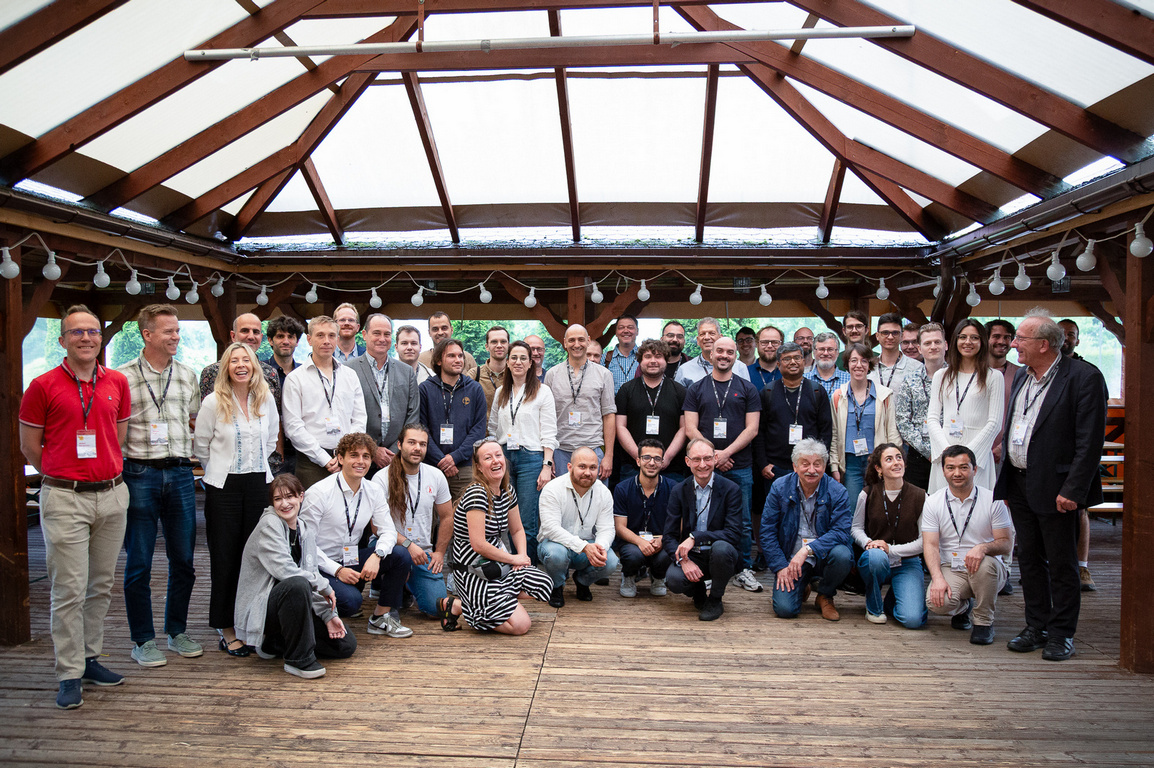
The 18th Kudowa Summer School "Towards Fusion Energy", organised every two years by the Institute of Plasma Physics and Laser Microfusion (IPPLM) and the National Contact Point EURATOM-FUSION, has come to a successful close.
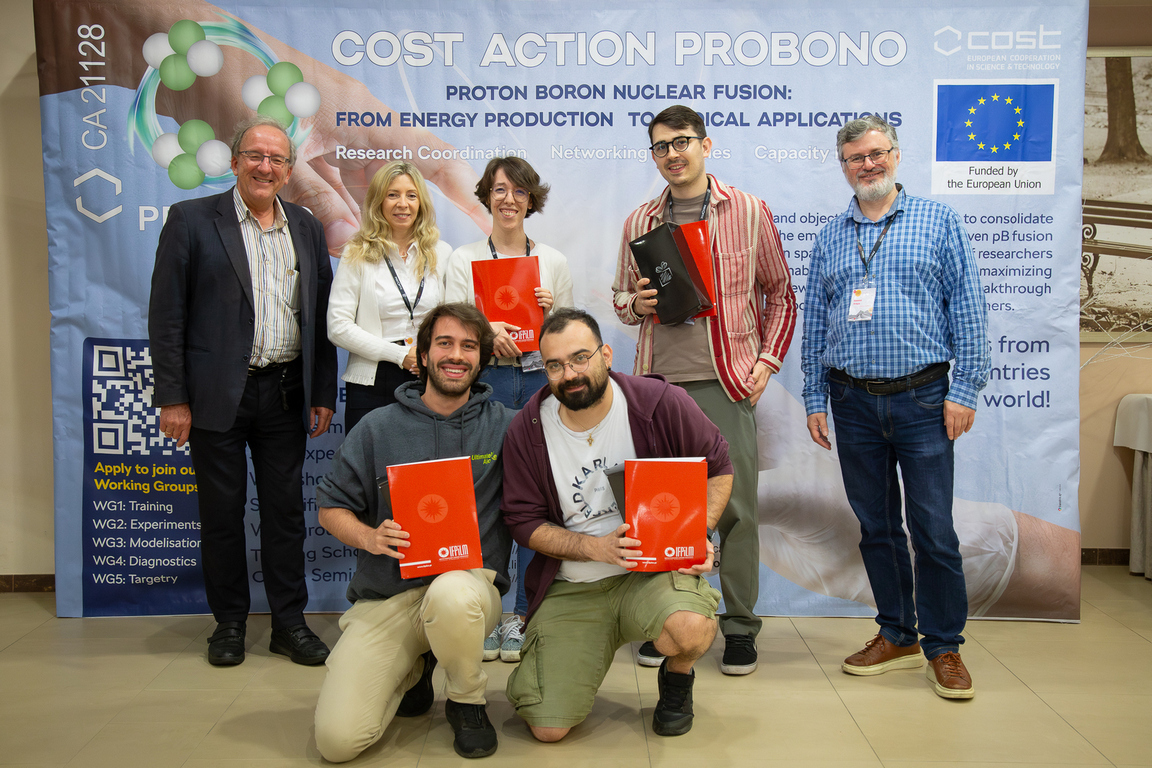
This year's edition also included students working on proton-boron fusion, whose participation was supported by the COST Action 21128 PROton BOron Nuclear fusion: from energy production to medical applicatiOns (PROBONO).
The School was directed by Jef Ongena, while the scientific programme was overseen by the Scientific Committee: Agata Chomiczewska, Daniele Margarone, Katarzyna Batani, and Tomasz Chodukowski. The Local Organizing Committee, chaired by Agnieszka Jardin, included Dorota Błoniarz-Łuczak, Ioannis Fitilis, Natalia Grzybicka, Krzysztof Król, and Jakub Włodarczyk.
The School brought together 35 participants affiliated with institutions in the Czech Republic, France, Germany, Greece, Israel, Italy, Lithuania, Poland, Romania, Turkey, and Ukraine. A total of 22 topical lectures were delivered by experts in the field, covering basic plasma physics and fusion energy, laser plasma physics, magnetic and inertial confinement fusion, tokamaks, stellarators and Z-pinches, proton-boron fusion and its applications, plasma diagnostics and technology, as well as space plasma. Once again, the Kudowa Summer School provided a unique forum for young researchers and leading experts to exchange ideas, establish new collaborations, and strengthen the international fusion community.
 |
An important part of this year's programme was a visit to the ELI Beamlines Facility. Students also took part in hands-on activities, including scientific data visualisation with a real 3D simulation, an introduction to Fourier optics in advanced laser systems, 3D printing, and target density measurements related to fusion research.
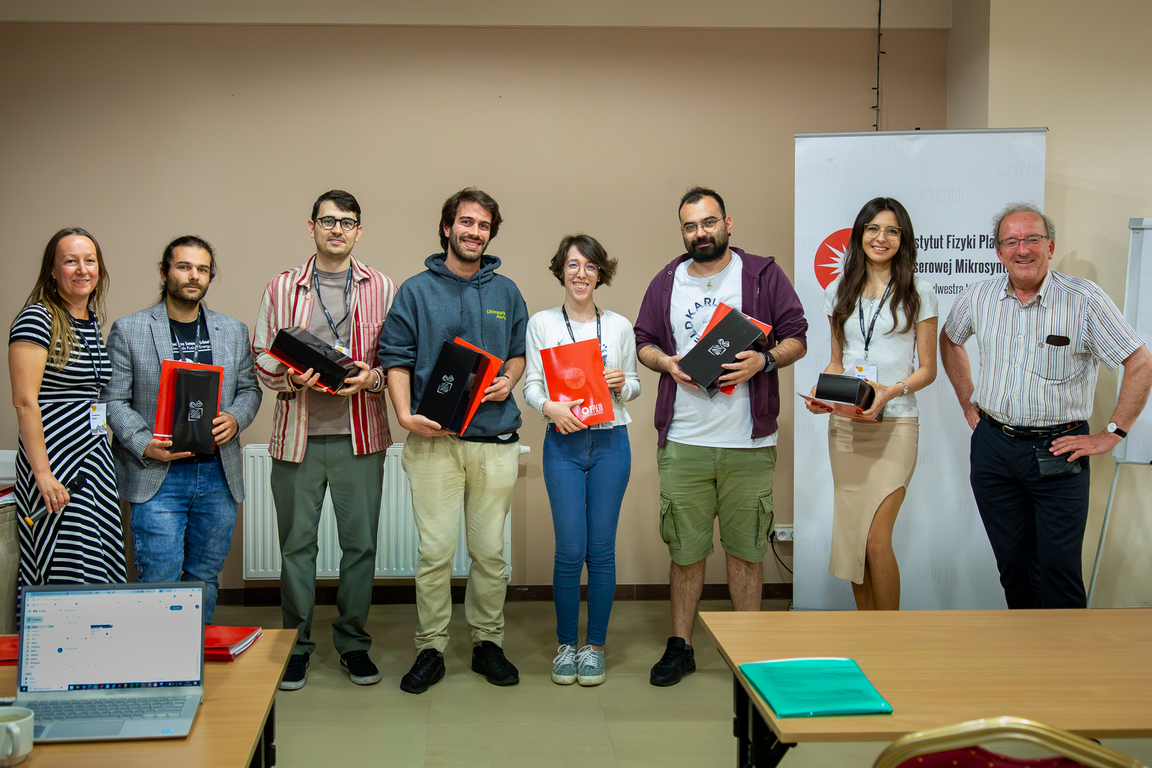
During the School, students gave 12-minute presentations on their research topics and results. The following presentations were recognised for their quality and clear delivery:
1st place:
- Patryk Nowak vel Nowakowski, "Analysis of the optically attenuated Photomultiplier Tube signal using a coincidence detector"
2nd place (ex aequo):
- Giulia Maria Falciglia, "Ion Diagnostic Methods for the Investigation of the p-11B Nuclear Fusion Reaction"
- Natalia Grzybicka, "Strategies for mitigating power exhaust in tokamaks"
- Matteo Iaccarino, "Advanced Nanofoam based double layer target for laser-plasma interaction"
- Christos Karvounis, "2D MHD simulations of a miniature Plasma Focus Machine"
Outstanding contribution award:
- Axel Jardin, "Developing tomography methods for plasma radiation analysis in tokamaks"
 |
We sincerely thank our sponsors – LTB Lasertechnik Berlin GmbH, Quantum Design GmbH, and PRECOPTIC – for their support. We are also grateful to Hotel Kudowa and Villa Antica in Kudowa-Zdrój for their hospitality and for providing excellent conditions for both the scientific programme and the social activities of the School.
We are already looking forward to the next edition in two years and warmly invite future participants to join us when the next call opens.
 |
Photos: IPPLM
Dr Agnieszka Jardin from the Department of Thermonuclear Plasma Research and Space Technologies has been awarded a grant from the National Science Centre, Poland, under the SONATA 21 call for a basic research project.
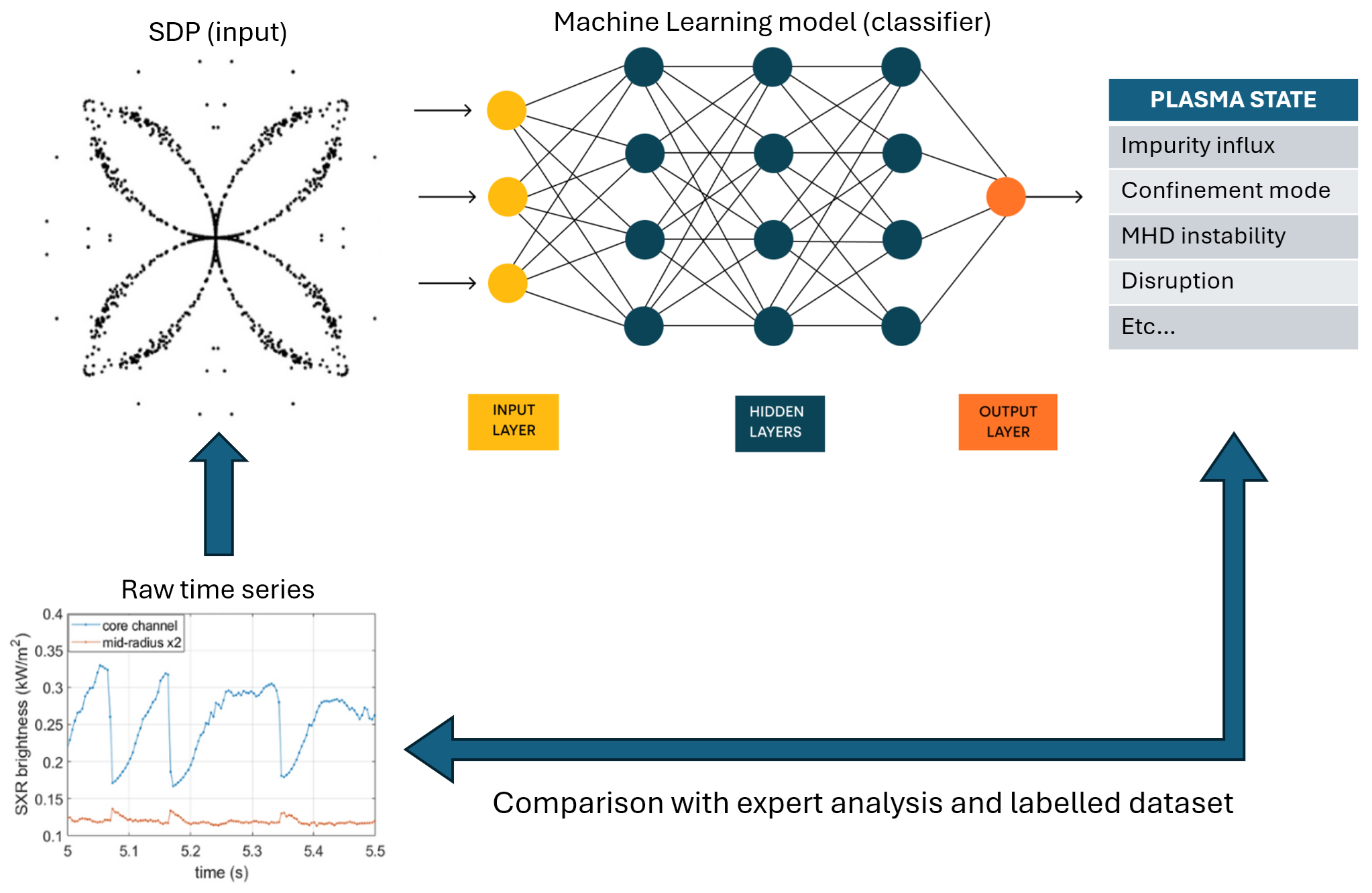
Dr Agnieszka Jardin’s project, entitled "Plasma state classification and abnormal event detection in nuclear fusion devices with Symmetrized Dot Pattern and Machine Learning applied to time series of tokamak plasma radiation measurements", focuses on the development of advanced plasma diagnostics methods based on modern data analysis techniques and artificial intelligence.
The aim of the project is to develop methods for the automatic classification of plasma states and the detection of anomalies in the operation of fusion devices, using diagnostic data from plasma radiation measurements. The research will apply an innovative approach based on the Symmetrized Dot Pattern (SDP), which enables time signals to be transformed into image representations and then analysed using machine learning methods.
 |
The project will contribute to a better understanding of plasma behaviour in tokamaks and to the development of tools supporting the monitoring and safe operation of future fusion reactors. The results may be applicable in next-generation diagnostic systems for fusion devices, supporting the further development of fusion energy.
The project will run for three years, with funding amounting to PLN 1,678,864.
We warmly congratulate Dr Agnieszka Jardin and wish her continued success in her research work and in the implementation of the project.
Dr hab. Katarzyna Batani from the Institute of Plasma Physics and Laser Microfusion (IPPLM) has become a member of the Management Committee of COST Action CA23151 – Mediterranean Cancer Screening and Early Diagnosis Network (Medi-CaSE).
The project was established to help reduce disparities in the implementation of cancer control policies and screening programmes between high-, middle- and low-income countries. It also aims to support cooperation and promote innovation in cancer prevention.
Participation in this programme will support research conducted at IPPLM on the development of new methods for producing radioisotopes relevant to cancer diagnostics (43Sc, 44Sc). This work is based on the use of low-energy, short-pulse lasers with a high repetition rate.
More information about the project is available at:
The DONES programme is one of the key European initiatives supporting the development of fusion energy and research in plasma physics. It is now entering a further stage of institutional and technical maturation. At the Steering Committee meeting in Misawa, Japan, attended by representatives from 14 countries and European institutions, a series of decisions were made to strengthen programme governance and accelerate the implementation of the IFMIF-DONES infrastructure, which will be a high-performance neutron source for materials research in thermonuclear fusion reactors.
The most significant outcome for Poland is the granting of observer status to the CeNTE (Scientific and Industrial Centre for New Energy Technologies) consortium, coordinated by the Institute of Plasma Physics and Laser Microfusion (IPPLM). Including CeNTE in the DONES framework is an important step towards increasing the participation of Polish scientific and industrial institutions in international nuclear fusion research and the development of advanced materials technologies for future fusion reactors.
A revised programme governance structure was also approved during the meeting, including key leadership appointments and the establishment of the Scientific and Technical Advisory Committee (STAC). The STAC will provide independent expert advice to support the scientific and technical excellence of the project. Discussions also focused on assessing technical and organisational progress, updating key performance indicators and planning subsequent implementation phases.
The IFMIF-DONES facility, which is set to be built in Granada, Spain, is expected to play a pivotal role in investigating the impact of intense neutron radiation on structural materials, which is one of the most significant challenges in developing fusion energy systems.
The decisions made in Japan confirm the increasing momentum of the DONES Programme and its position as a global platform for scientific collaboration. The involvement of the Polish CeNTE consortium also strengthens Poland's position within the European and international fusion energy research ecosystem.
Source: IFMIF-DONES, IPPLM
On 23 March 2026, the Institute of Plasma Physics and Laser Microfusion (IPPLM) joined, with its technological offer, the group of entities affiliated with the Enterprise Europe Network (EEN), interested in cooperation with international business and technology partners.
The network enables participation in international brokerage events, trade fairs, business missions, webinars and conferences, as well as the establishment of international cooperation. It provides access to a database of international cooperation offers, including business requests and partnership opportunities from companies in over 60 countries, and allows companies to register their profiles in an international database of enterprises seeking business partners.
Cooperation opportunities database
The cooperation opportunities database, managed by Enterprise Europe Network centres, enables contacts with subcontractors, distributors and technology partners.
The Partnership Opportunities Database (POD) is an international database of cooperation offers, maintained in English by the European Commission through the EEN network. It contains company profiles from over 60 countries where the network operates.
The database facilitates contacts with foreign manufacturers, distributors, commercial agents and subcontractors. It also includes technology offers supporting cooperation in technology transfer (e.g. sale or acquisition of machinery and equipment, licences), knowledge exchange (know-how) and research and development (R&D), including work on new technologies and products.
Sample offers from foreign companies.
Success stories of companies that have already benefited from Enterprise Europe Network services.
Opportunities for companies
Companies may create their own profiles, which will be distributed among enterprises in selected countries through the databases of Enterprise Europe Network centres, chambers of commerce and industry associations, as well as publications, newsletters and websites. To do so, a completed application form should be submitted to the relevant regional EEN centre.
Using the POD search engine, it is possible to browse cooperation offers from all countries participating in the network. To find offers targeted at Polish companies, select "Poland" in the "Client requested" field. The tool also enables submitting enquiries regarding selected offers.
In the case of establishing cooperation with an international partner via POD, the relevant Enterprise Europe Network centre may request information on the cooperation, including the partner’s name, scope of cooperation and activities carried out to date.
Cooperation offers are available in the database managed by the Enterprise Europe Network centre at PARP under the SME Development Centre, as well as on the European Commission’s website.


nsp_133.JPG)


nsp_133.JPG)


 |
 |
 |
 |
 |
 |
 |
 |
Media


Research projects carried out at the IPPLM are funded by the Polish Ministry of Education and Science, the National Science Centre and by the European Commission within the framework of EUROfusion Consortium under grant agreement No 101052200. Financial support comes also from the International Atomic Energy Agency, European Space Agency and LaserLab Consortium as well as from the Fusion for Energy Agency.