



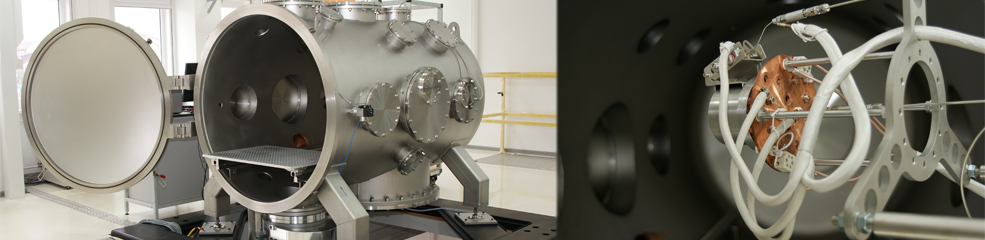


Zestaw obrazów 2019
zdjecie1.jpg
zdjecie2.jpg
zdjecie3.jpg
zdjecie4.jpg
zdjecie5.jpg
zdjecie6.jpg
2019_1.JPG
2019_2.JPG
2019_4.JPG

Gallery
 It was with great sadness that we learned of the death of our friend Dr. Hellmut Schmidt (1935-2024).
Our first contact with Hellmut Schmidt was during the period of his activity in the so-called Steering Committee of the International Centre for Dense Magnetized Plasma, operating at the end of the last century under the auspices of UNESCO, whose goal was to establish an international centre for DMP research. In August 1999, the UNESCO President and the President of the Polish Atomic Energy Agency signed an agreement to establish the International Centre for Dense Magnetized Plasma (ICDMP), which became part of the organizational structure of the Institute of Plasma Physics and Laser Microfusion (IPPLM). In the following years, Hellmut Schmidt became one of the closest collaborators and, one might say, mentors of the Polish ICDMP team. For almost twenty years he was a frequent guest of IPPLM, actively participating in experiments conducted with the Plasma-Focus PF-1000 plasma generator. He also supported us during the organization of regular schools for young science students since 2004 (International Kudowa School "Towards Fusion Energy") and workshops on dense magnetized plasma. Dr. Schmidt also participated in the annual meetings of the ICDMP International Scientific Council, supporting us with his knowledge and scientific authority. He was well-known in our community for his work on the POSEIDON plasma-focus system. The research conducted under his leadership clarified important regularities in neutron emission from PF systems, and the articles describing this research are classic items still cited today.
When we remember Hellmut Schmidt today, we see a man of impeccable manner, calm, competent, open to others, and always ready to help.
We will miss him.
 |
| ICDMP meeting, 2017. Dr. Hellmut Schmidt third from left in the front row |

On the occasion of the Open Days of European Funds organized as part of the celebration of Poland's 20th anniversary in the European Union, we invite you to visit the Sylwester Kaliski Institute of Plasma Physics and Laser Microfusion.
On 10 May at 12.00 in the administration building at 23 Hery Str. a lecture will take place on nuclear fusion as well as the Institute's 20-year involvement in European research in the field of plasma physics and the development of thermonuclear technology.
After the lecture, guests will visit the IPPLM laboratories. You will be able to see, among others:
- the largest plasma focus concentrator in Europe,
- Pulsar 10 TW high-power femtosecond laser system,
- a laboratory where research is carried out on ion/plasma accelerators - in particular on Hall engines and PPT (Pulsed Plasma Thruster) in the context of electric drives for satellites,
- a laboratory where projects are carried out aimed at the construction and development of GEM (Gas Electron Multiplier) gas detectors for the purposes of soft X-ray imaging of plasma structures and monitoring radiation from plasma admixtures,
- a laboratory where research is carried out using the LIBS (Laser Induced Breakdown Spectroscopy) method to study sample composition, as well as in the context of developing diagnostics for measuring fuel retention in a fusion reactor.
The meeting will end at 2:30.
Admission is free. The number of places is limited.

The website of the organizer of the celebration of Poland's 20th anniversary in the EU: https://20lat.eu/
Photo: IPPLM
The Joint European Torus (JET), one of the world’s largest and most powerful fusion machines, has demonstrated the ability to reliably generate fusion energy, whilst simultaneously setting a world-record in energy output.
These notable accomplishments represent a significant milestone in the field of fusion science and engineering.
In JET's final deuterium-tritium experiments (DTE3), high fusion power was consistently produced for 5 seconds, resulting in a ground-breaking record of 69 megajoules using a mere 0.2 milligrams of fuel.
 |
| Comparison of fusion energy results in 1997 (DTE1), 2021 (DTE2) and 2023 (DTE3) on the JET tokamak. |
JET is a tokamak, a design which uses powerful magnetic fields to confine a plasma in the shape of a doughnut. Most approaches to creating commercial fusion favour the use of two hydrogen variants – deuterium and tritium. When deuterium and tritium fuse together they produce helium and vast amounts of energy, a reaction that will form the basis of future fusion powerplants.
Dr Fernanda Rimini, JET Senior Exploitation Manager, said:
"We can reliably create fusion plasmas using the same fuel mixture to be used by commercial fusion energy powerplants, showcasing the advanced expertise developed over time."
Professor Ambrogio Fasoli, Programme Manager (CEO) at EUROfusion, said:
"Our successful demonstration of operational scenarios for future fusion machines like ITER and DEMO, validated by the new energy record, instil greater confidence in the development of fusion energy. Beyond setting a new record, we achieved things we’ve never done before and deepened our understanding of fusion physics."
Dr Emmanuel Joffrin, EUROfusion Tokamak Exploitation Task Force Leader from CEA, said:
"Not only did we demonstrate how to soften the intense heat flowing from the plasma to the exhaust, we also showed in JET how we can get the plasma edge into a stable state thus preventing bursts of energy reaching the wall. Both techniques are intended to protect the integrity of the walls of future machines. This is the first time that we've ever been able to test those scenarios in a deuterium-tritium environment."
 |
 |
 |
| Record JET discharge No. 104522 during the DTE3 experimental campaign. Credit: EUROfusion consortium | ||
Involvement of Polish researchers
More than 300 researchers and engineers from EUROfusion, a research consortium that brings together scientists from all over Europe, including the Institute of Plasma Physics and Laser Microfusion (IPPLM) staff, took part in these groundbreaking experiments at the headquarters of the UK Atomic Energy Authority, UKAEA) in Oxford, showcasing the unparalleled dedication and effectiveness of the international team at JET.
Dr. Agata Chomiczewska, IPPLM professor, national coordinator of the JET tokamak research, said:
"Our determination and international cooperation have produced exceptional results that represent a milestone in fusion energy research. This success not only confirms the ability to control plasma in tokamaks, but also represents a key step towards achieving the goal of commercial-scale energy production using nuclear reaction. There are still many challenges and years of research ahead of us, but I am convinced that our hard work will bring even more innovative solutions that will shape the global energy industry."
 |
| Map of countries and research centers being part of the EUROfusion consortium. Credit: EUROfusion consortium |
Unique significance of JET
The results solidify JET’s pivotal role in advancing safe, low-carbon, and sustainable fusion energy.
UK Minister for Nuclear and Networks, Andrew Bowie, said:
"JET's final fusion experiment is a fitting swansong after all the groundbreaking work that has gone into the project since 1983. We are closer to fusion energy than ever before thanks to the international team of scientists and engineers in Oxfordshire."
Professor Sir Ian Chapman, UKAEA CEO, said:
"JET has operated as close to powerplant conditions as is possible with today’s facilities, and its legacy will be pervasive in all future powerplants. It has a critical role in bringing us closer to a safe and sustainable future."
Dr Pietro Barabaschi, ITER Director-General, said:
"Throughout its lifecycle, JET has been remarkably helpful as a precursor to ITER: in the testing of new materials, in the development of innovative new components, and nowhere more than in the generation of scientific data from Deuterium-Tritium fusion. The results obtained here will directly and positively impact ITER, validating the way forward and enabling us to progress faster toward our performance goals. On a personal note, it has been for me a great privilege having myself been at JET for a few years. There I had the opportunity to learn from many exceptional people."
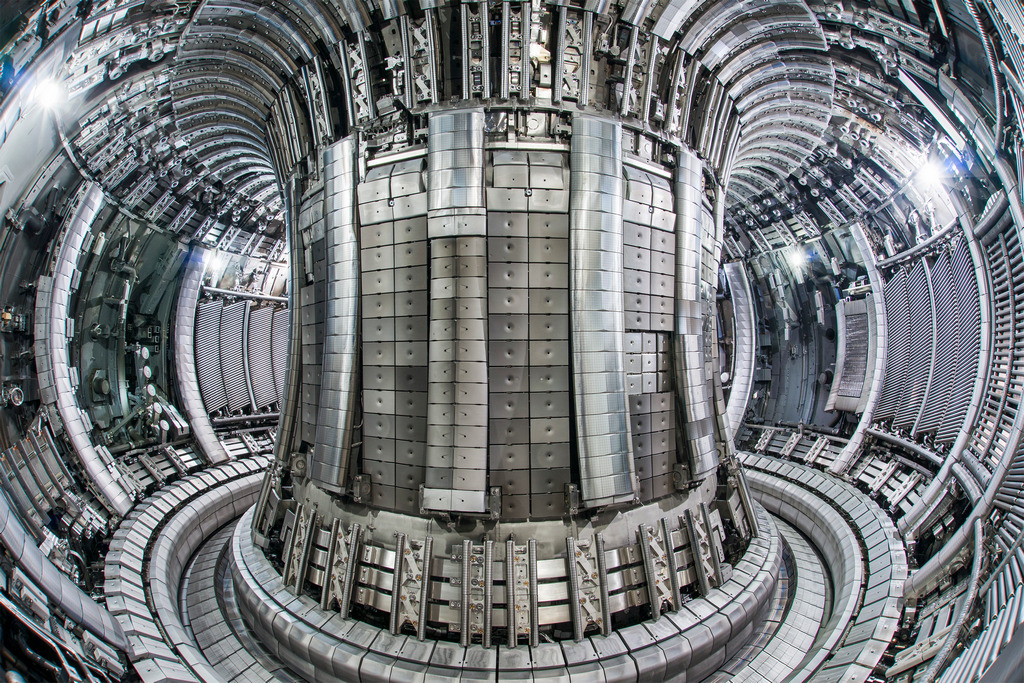 |
| The interior of the JET tokamak. Credit: UKAEA |
40 years of innovative nuclear fusion research
JET has been instrumental in advancing fusion energy for over four decades, symbolising international scientific collaboration, engineering excellence, and the commitment to harness the power of fusion energy – the same reactions that fuel the Sun and stars.
JET demonstrated sustained fusion over five seconds at high power and set a world-record in 2021. JET’s first deuterium-tritium experiments took place in 1997.
In December 2023, JET ceased operations as a plasma generating device, moving to the next phase of its operational cycle, including repurposing and decommissioning. A celebration is planned for late February 2024 that will honor his founding vision and the collaborative spirit that ensures success.
The achievements at JET, from the major scientific milestones to the setting of energy records, underscores the facility’s enduring legacy in the evolution of fusion technology.
Its contributions to fusion science and engineering have played a crucial role in accelerating the development of fusion energy, which promises to be a safe, low carbon and sustainable part of the world’s future energy supply.
The February 8, 2024, press conference announcing the record results can be viewed at: www.youtube.com
Source: EUROfusion, UKAEA
Researchers from the EUROfusion consortium, including Polish ones from the Institute of Plasma Physics and Laser Microfusion (IPPLM), have recently completed successful experiments at JET (Joint European Torus) tokamak, the nuclear fusion research device located in Oxford (United Kingdom Atomic Energy Authority, UKAEA) in the United Kingdom.
On Thursday, 8 February, representatives of EUROfusion, UKAEA and the international nuclear fusion project ITER will present the results of these experiments at a press conference.
The conference will be attended by:
- Ambrogio Fasoli, Programme Manager (CEO) of EUROfusion
- Ian Chapman, CEO of UK Atomic Energy Authority (UKAEA)
- Tim Luce, Deputy Head of ITER Construction Project
- Athina Kappatou, former Deputy Task Force Leader for the EUROfusion Work Package Tokamak Exploitation (Max Planck Institute for Plasma Physics, Garching, Germany)
- Joëlle Mailloux, Head of JET Science Programme Support Office (UKAEA)
- Mikhail Maslov, Scientific Coordinator – JET Tritium-rich High Fusion Power Experiments (UKAEA)
Soon we will provide more information on this topic.
The last series of experiments ended on the JET (Joint European Torus) tokamak, 40 years after its launch.
On 25 June 1983, the first plasma was obtained on this device, four decades later - on Monday, 18 December 2023, at 10:06 p.m., the last plasma discharge number 105842 was observed. It was the last experiment on JET and the end of a certain era.
UKAEA Chief Executive Officer, Prof Sir Ian Chapman, who was in attendance in JET’s Control Room for the final plasma experiment, said: "This is the final milestone in JET’s 40-year history. Those decades of research using JET by dedicated teams of scientists and engineers have played a critical role in accelerating the development of fusion energy."
Researchers from European research centres being part of the EUROfusion consortium, including scientists from the Institute of Plasma Physics and Laser Microfusion, on JET’s final day of plasma continued to push scientific boundaries, firstly attempting an inverted plasma shape for the first time at Culham before deliberately aiming electrons at the inner wall to improve understanding of beam control and damage mechanisms. The findings of these experiments will support the development and operation of ITER in France.
JET will now move on to the next phase of its life cycle in early 2024 for repurposing and decommissioning, and final shutdown which will last until c.2040.
UKAEA is currently developing the STEP (Spherical Tokamak for Energy Production) programme aimed at demonstrating the ability to generate net electricity from nuclear fusion.
 |
| A group of researchers during the last experimental campaign at the JET tokamak, including a team of the IPPLM employees (December 2023). Photo: © IPPLM |
About JET
JET is the largest and most successful fusion experiment in the world, and a central research facility of the European Fusion Programme. JET is based at the UKAEA campus in Culham, Oxfordshire, UK and is collectively used by more than 31 European laboratories under the management of the EUROfusion consortium involving the participation of more than 350 researchers and engineers from all over Europe including Poland.
JET tokamak is an experimental torus-shaped fusion reactor that uses magnetic fields to keep hot, ionized gas (plasma) away from the inner walls of the vessel, allowing it to operate safely at temperatures of 150 million degrees Celsius - ten times hotter than the temperature at the centre of the Sun.
The core of the reactor is a vacuum chamber in which plasma is held in place by strong magnetic fields. In the current configuration, the main and minor radii of the plasma torus are 3 and 0.9 meters, respectively, and the total plasma volume is 90 cubic meters. A diverter located at the bottom of the vacuum chamber allows controlled removal of escaping heat and gas.
JET commenced operation in 1983 as a joint European project, undergoing several enhancements to improve its performance over the years. In 1991, JET became the world's first reactor to operate using a 50–50 mix of tritium and deuterium. The facility set numerous fusion records including a record Q-plasma (the ratio of the fusion power produced to the external power put in to heat the plasma) of 0.64 in 1997. Since 2011, the first wall of the vacuum chamber was made of beryllium and tungsten, which was to reflect the materials selected for the construction of the ITER reactor, i.e. the so-called ITER LIKE WALL. The next fusion energy record output of 59 megajoules in a five-second pulse was accomplished in December 2021. Built by Europe and used collaboratively by European researchers over its lifetime, JET became UKAEA property in October 2021.
Source: UKAEA, IPPLM


nsp_133.JPG)


nsp_133.JPG)


 |
 |
 |
 |
 |
 |
 |
 |
Media


Research projects carried out at the IPPLM are funded by the Polish Ministry of Education and Science, the National Science Centre and by the European Commission within the framework of EUROfusion Consortium under grant agreement No 101052200. Financial support comes also from the International Atomic Energy Agency, European Space Agency and LaserLab Consortium as well as from the Fusion for Energy Agency.