





Zestaw obrazów 2019
zdjecie1.jpg
zdjecie2.jpg
zdjecie3.jpg
zdjecie4.jpg
zdjecie5.jpg
zdjecie6.jpg
2019_1.JPG
2019_2.JPG
2019_4.JPG

Gallery
 The Big Science Business Forum 2026 is taking place in Maastricht from 27 to 30 October. The Institute of Plasma Physics and Laser Microfusion (IPPLM), together with the National Centre for Nuclear Research (NCBJ), the Institute of Nuclear Physics of the Polish Academy of Sciences (IFJ PAN), PK Krakow University of Technology and AGH University of Krakow, is showcasing Polish innovations at the Polish pavilion.
Information about the activities of the Polish pavilion’s partners is available on WielkaNauka.pl and on the “Wielka Nauka” LinkedIn profile.
The services offered by IPPLM are described on the Institute’s website.
 |
2026 BROCHURE Polish Science and Industry for Fusion EnergyThe brochure presents products and services offered by organisations associated with the Science and Industry Centre for New Energy Technologies (CeNTE). It also includes case studies on transferring technologies from fusion research to industry and applying technologies developed by research and industry in the Big Science sector. |
The brochure is also available in the “Bulletins” section of the National Contact Point Euratom-Fusion website and on the CeNTE website. We invite you to download it and share it within your organisation and with your partners.
More information about CeNTE’s activities is available on the Centre’s website. The IPPLM website provides more information about the Institute, which coordinates CeNTE.
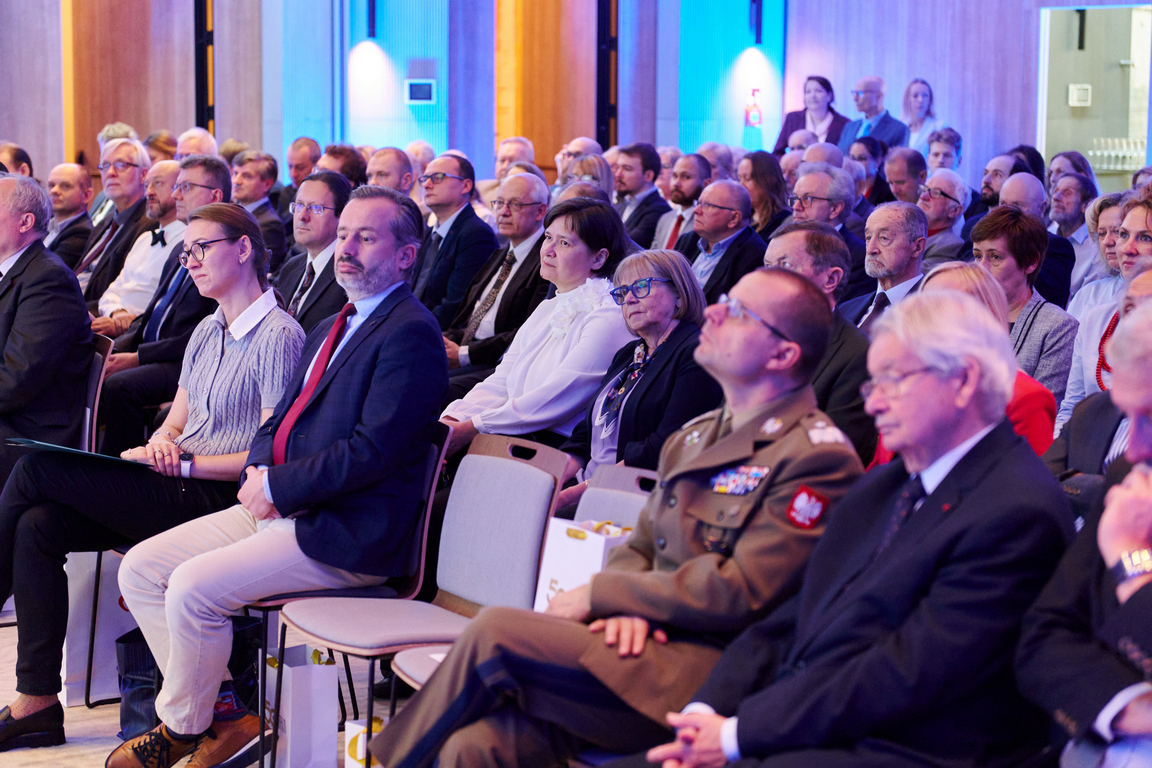
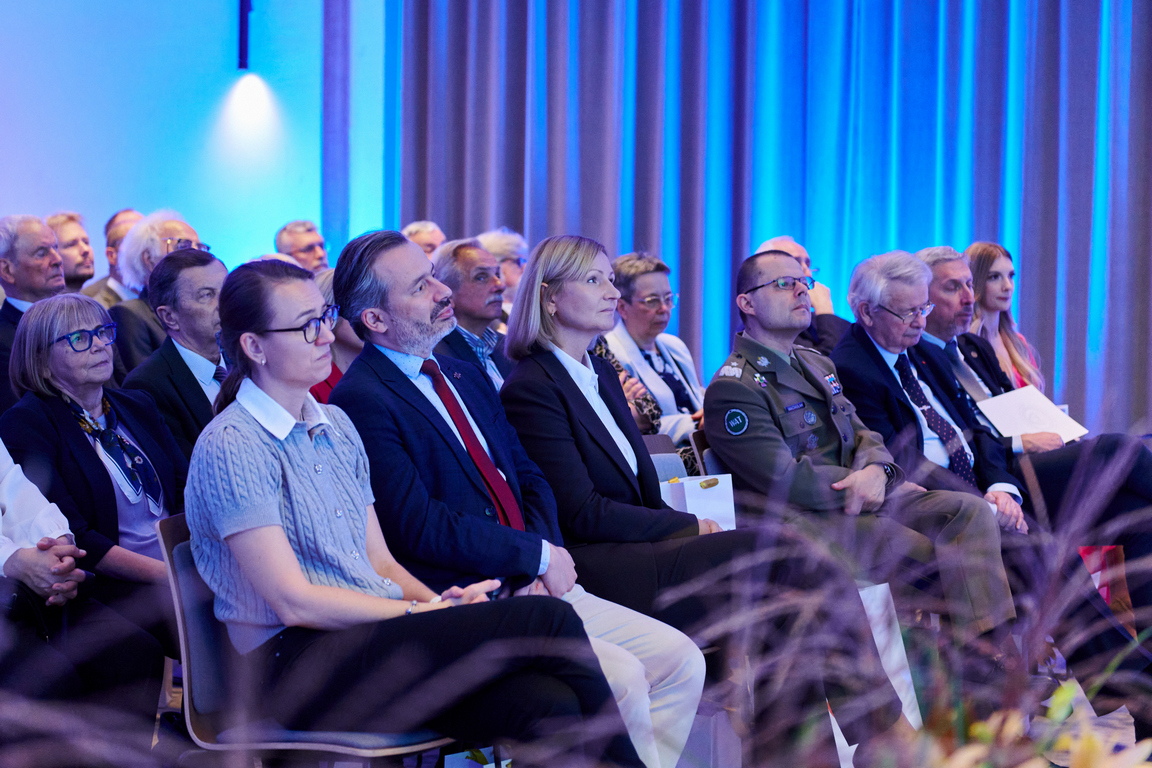
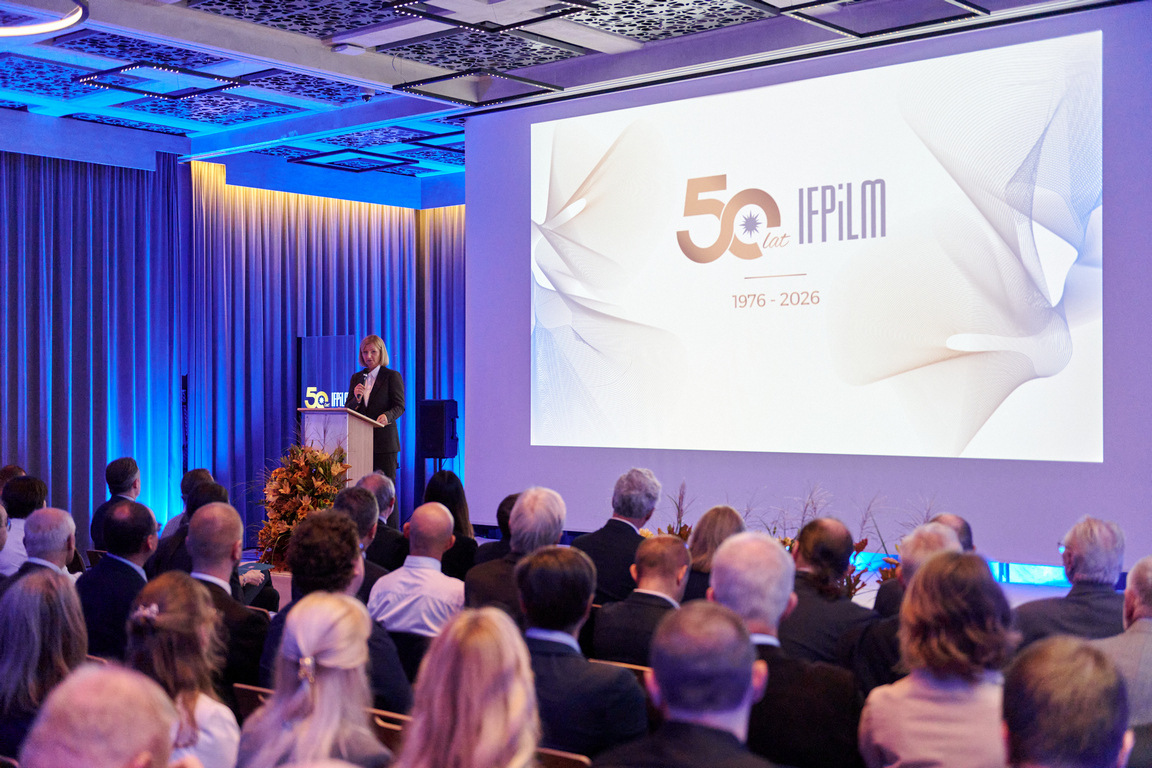
On 16 October 2026, a ceremony marking the 50th anniversary of the Sylwester Kaliski Institute of Plasma Physics and Laser Microfusion (IPPLM) was held in Warsaw. The event brought together representatives of government authorities, universities and research institutions, as well as current and former IPPLM staff, partners, collaborators and friends. It was an opportunity to celebrate together, share memories and reflect on five decades of scientific research.
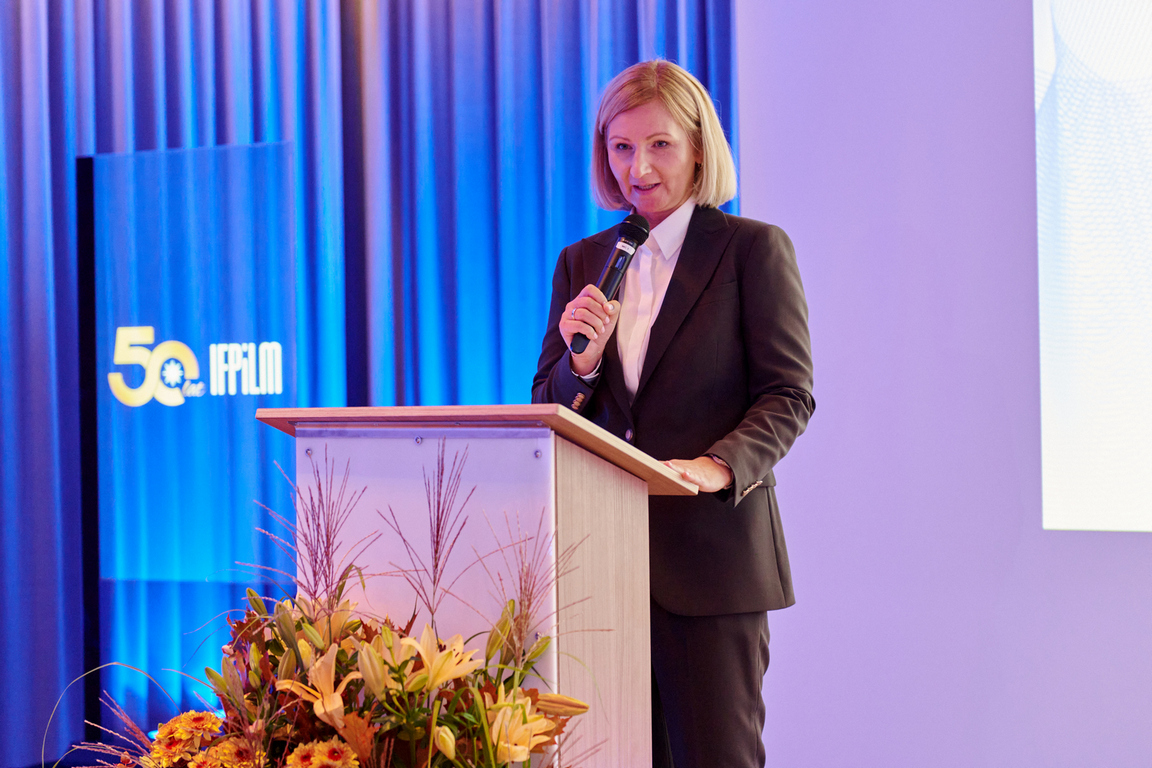
The official part of the ceremony began with a series of speeches. The first to address the guests was Dr hab. Monika Kubkowska, Director of IPPLM. In her speech, she recalled key stages in the Institute's development, from its early research in plasma physics and the use of high-power lasers to its expansion into new areas, including plasma propulsion technologies. She highlighted the contributions of successive generations of staff and IPPLM's involvement in international research initiatives. Looking to the future, she also emphasised the importance of supporting staff development and investing in modern research infrastructure.
 |
 |
Speeches were also delivered by Dr Paweł Gajda, Director of the Nuclear Energy Department at the Ministry of Energy, and Ms Sylwia Sztark, a representative of the Office of the Marshal of the Mazowieckie Voivodeship. Ms Sztark read out a congratulatory letter from Marshal Adam Struzik and presented a certificate of recognition.
The programme included the premiere of a film produced especially to mark IPPLM's 50th anniversary. The film traced the Institute's origins to pioneering laser fusion research conducted by a team led by Professor Sylwester Kaliski. It also presented subsequent stages of the Institute's development and its current research activities.
Watch the anniversary film on YouTube.
Dr Paweł Gąsior, Head of the Department of Thermonuclear Plasma Research and Space Technologies, then presented a broader perspective on the Institute's history and achievements, placing them in the context of changes in science and the wider world.
A particularly significant moment of the ceremony was the presentation of a state decoration. On the recommendation of the Minister of Energy, Miłosz Motyka, the President of the Republic of Poland awarded Dr Paweł Gąsior the Bronze Cross of Merit in recognition of his contribution to the advancement of science. The decoration was presented on behalf of the President by Dr Paweł Gajda.
Another important part of the anniversary celebration was the recognition of long-serving IPPLM staff members. Commemorative certificates of appreciation were presented to employees with at least 20 years of service at the Institute, including those who have helped shape its history almost since its establishment.
The official programme concluded with a musical performance. Afterwards, participants had the opportunity to talk, share memories and reconnect with colleagues with whom they had conducted research and worked on scientific projects over the years.
We would like to thank all our guests, current and former staff members, and friends of the Institute for joining us and celebrating this special anniversary together.
 |
 |
Congratulatory letters
To mark IPPLM's 50th anniversary, we received congratulatory letters from a number of institutions and organisations. We sincerely thank them for their kind wishes and expressions of recognition.
The letters linked below are in Polish.
- Instytut Chemii i Techniki Jądrowej
- Instytut Ekologii Terenów Uprzemysłowionych
- Instytut Fizyki Jądrowej PAN
- Marszałek Województwa Mazowieckiego
- Naczelna Organizacja Techniczna
- Narodowe Centrum Badań Jądrowych
- Państwowa Agencja Atomistyki
- Politechnika Warszawska
- Politechnika Warszawska – Wydział Inżynierii Materiałowej
- „Postępy Techniki Jądrowej”
- Rada Główna Instytutów Badawczych
- Uniwersytet Warszawski
- Wojskowa Akademia Techniczna
Photos: Kuba Rodziewicz
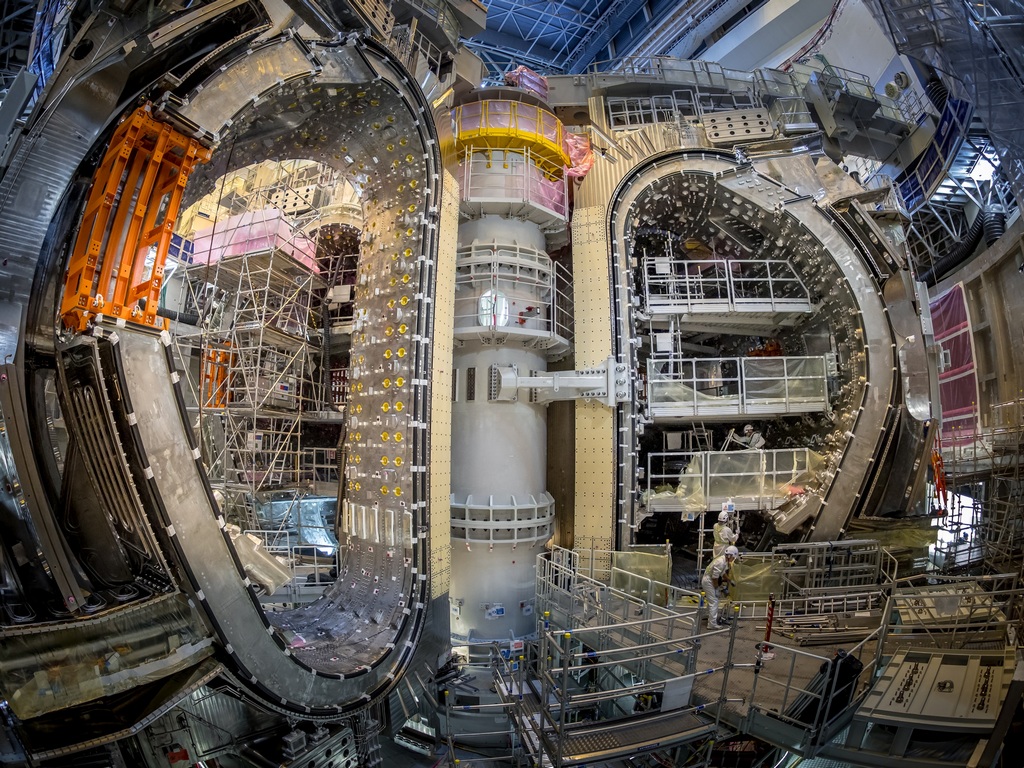
The Ministry of Science and Higher Education has published an updated Polish Roadmap for Research Infrastructures, which now includes ITER. The application for this international research infrastructure to be included on the Roadmap was submitted by the Institute of Plasma Physics and Laser Microfusion (IPPLM), which coordinates the Scientific and Industrial Centre for New Energy Technologies (CeNTE). ITER was listed under the area of "Engineering and Energy".
The ITER experimental fusion reactor, located at Cadarache in France, is one of the key projects in global fusion research. The project aims to demonstrate the feasibility of using deuterium-tritium fusion as a basis for future energy production. ITER is designed to produce and sustain high-temperature plasma in which the ratio of fusion power produced to the power supplied to heat the plasma reaches Q ≥ 10. The project will also enable the integration and testing of technologies required for future fusion reactors. Achieving the scientific and technological objectives of the ITER project is intended to enable the construction of a demonstration fusion power plant capable of generating electricity.
The updated Polish Roadmap for Research Infrastructures currently includes 165 strategic research infrastructures. Their inclusion on the Roadmap reflects recognition of their research potential.
Source: Ministry of Science and Higher Education, IPPLM
Photo: Credit © ITER Organization, http://www.iter.org/
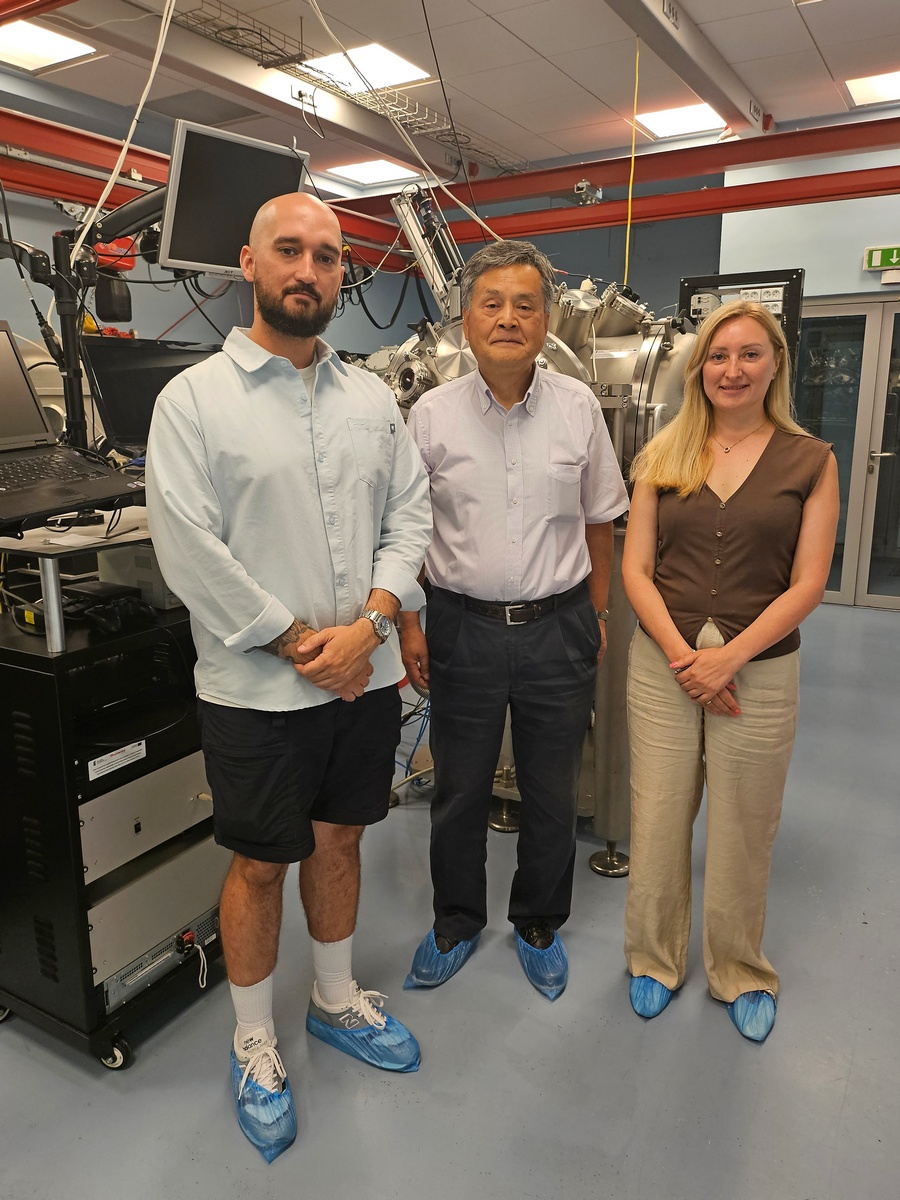 On 30 July 2026, the Institute of Plasma Physics and Laser Microfusion (IPPLM) welcomed Prof. Toshimori Sekine, affiliated with the Center for High Pressure Science and Technology Advanced Research (HPSTAR) in Shanghai and the Graduate School of Engineering at The University of Osaka.
Prof. Sekine is a specialist in the behaviour of materials under shock-wave loading and the application of shock compression to materials science and Earth and planetary science. His research output includes numerous scientific publications, books and patents. He also has extensive experience in experiments involving laser-generated shock waves, including those carried out at the GEKKO XII laser facility at The University of Osaka.
The visit provided an opportunity to review the existing scientific cooperation and discuss possible directions for its further development. Particular attention was given to the results of an experiment carried out in 2025 on the GEKKO XII laser, with the participation of IPPLM researchers. The participants reviewed the results and discussed the next steps. Prof. Sekine also received an overview of the Institute’s research activities, research infrastructure and technical capabilities.
During his visit, Prof. Sekine toured selected IPPLM laboratories. At the High Power Laser Laboratory, he saw the 10 TW femtosecond laser and its associated diagnostic systems. He then visited the PF-1000U facility, one of the world’s largest plasma focus devices, as well as the Laboratory of Plasma Research with Spectroscopic Methods.
Photo: Prof. Toshimori Sekine (centre) with Dr Hanna Marchenko and Dr Przemysław Tchórz, researchers from the High Power Laser Laboratory. © IPPLM
 In July 2026, the Institute of Plasma Physics and Laser Microfusion (IPPLM) signed an agreement with the Ministry of Science and Higher Education to implement the project "Fusion: Science Powering the Future" under the "Science Popularisation" module of the "Social Responsibility of Science III" programme. The Minister of Science and Higher Education awarded the Institute PLN 107,536 in funding for the project.
The two-year project aims to present the results of research and development work carried out at IPPLM in a clear and accessible way to a broad audience. It will include educational activities aimed at young people and adults, introducing them to plasma physics and nuclear fusion.
These activities will help raise public awareness of the importance of scientific research and the role of Polish researchers in advancing science and technology. They will also foster interest in the sciences among the younger generation.
The project is led by Dr Piotr Chmielewski.
Updates on the implementation of the project and planned events will be published on the Institute's website and IPPLM's social media channels.
The results of the first call for proposals under the "Social Responsibility of Science III" programme are available at the following link: www.gov.pl/web/nauka
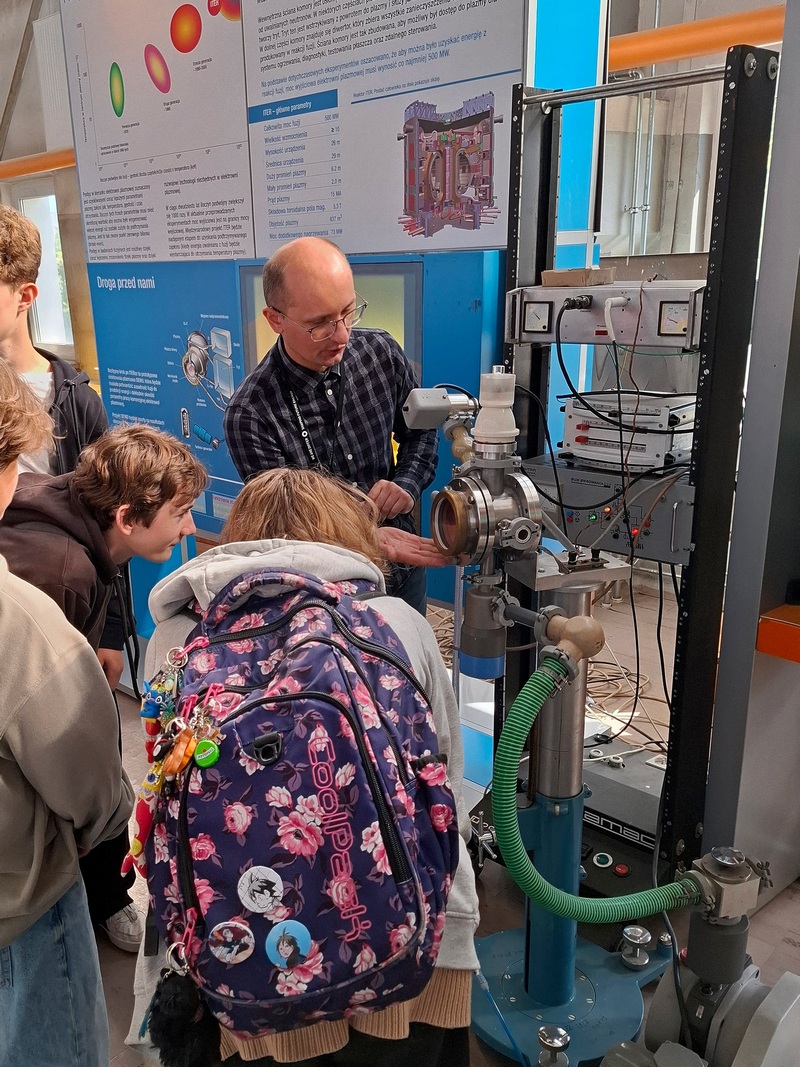 |
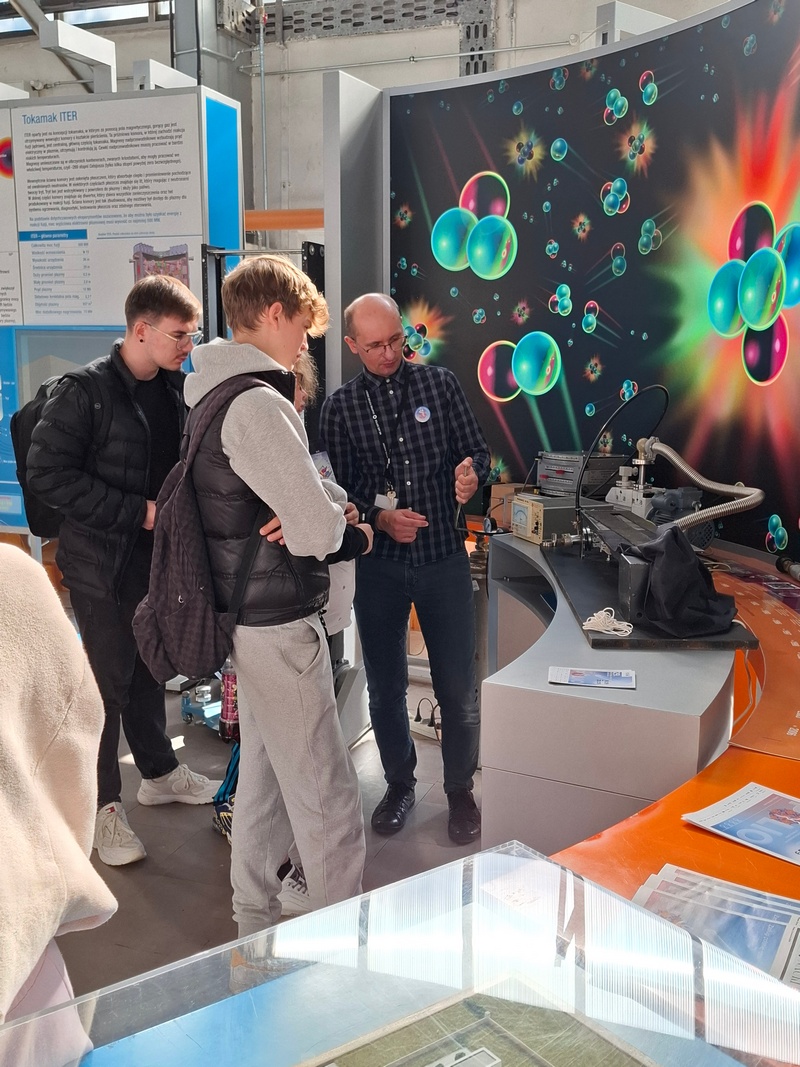 |
| Dr Piotr Chmielewski leading an educational session for secondary school students. Photos: IPPLM | |


nsp_133.JPG)


nsp_133.JPG)


 |
 |
 |
 |
 |
 |
 |
 |
Media


Research projects carried out at the IPPLM are funded by the Polish Ministry of Education and Science, the National Science Centre and by the European Commission within the framework of EUROfusion Consortium under grant agreement No 101052200. Financial support comes also from the International Atomic Energy Agency, European Space Agency and LaserLab Consortium as well as from the Fusion for Energy Agency.