





The Ministry of Science and Higher Education has published an updated Polish Roadmap for Research Infrastructures, which now includes ITER. The application for this international research infrastructure to be included on the Roadmap was submitted by the Institute of Plasma Physics and Laser Microfusion (IPPLM), which coordinates the Scientific and Industrial Centre for New Energy Technologies (CeNTE). ITER was listed under the area of "Engineering and Energy".
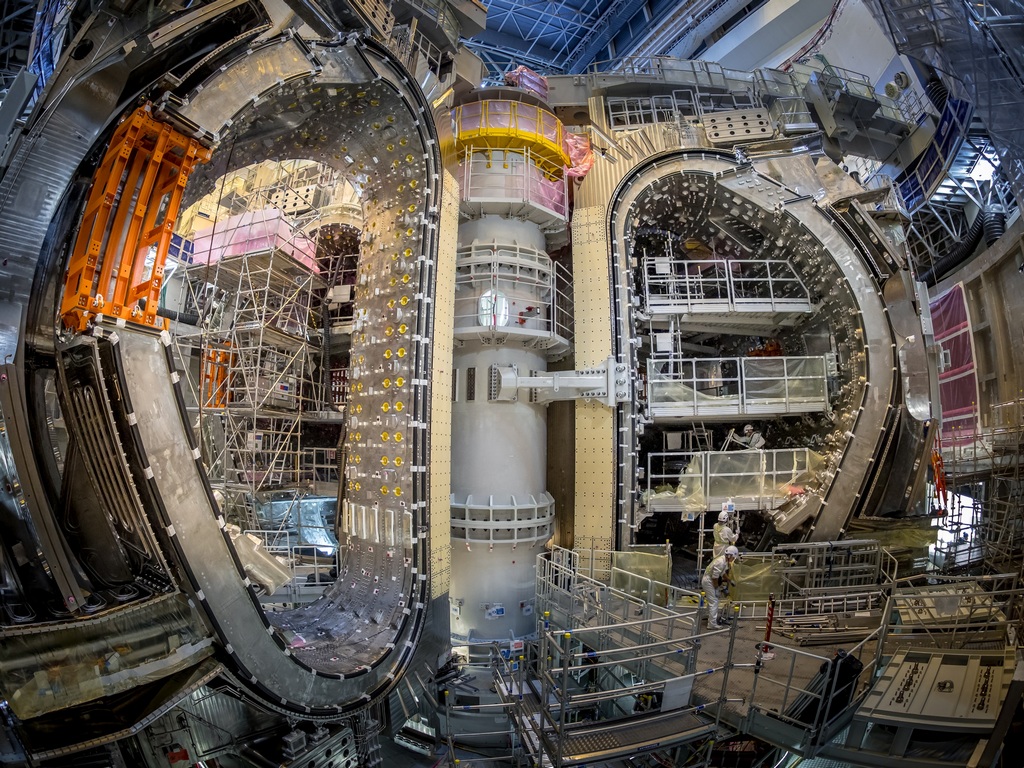
The ITER experimental fusion reactor, located at Cadarache in France, is one of the key projects in global fusion research. The project aims to demonstrate the feasibility of using deuterium-tritium fusion as a basis for future energy production. ITER is designed to produce and sustain high-temperature plasma in which the ratio of fusion power produced to the power supplied to heat the plasma reaches Q ≥ 10. The project will also enable the integration and testing of technologies required for future fusion reactors. Achieving the scientific and technological objectives of the ITER project is intended to enable the construction of a demonstration fusion power plant capable of generating electricity.
The updated Polish Roadmap for Research Infrastructures currently includes 165 strategic research infrastructures. Their inclusion on the Roadmap reflects recognition of their research potential.
Source: Ministry of Science and Higher Education, IPPLM
Photo: Credit © ITER Organization, http://www.iter.org/


nsp_133.JPG)


nsp_133.JPG)


