




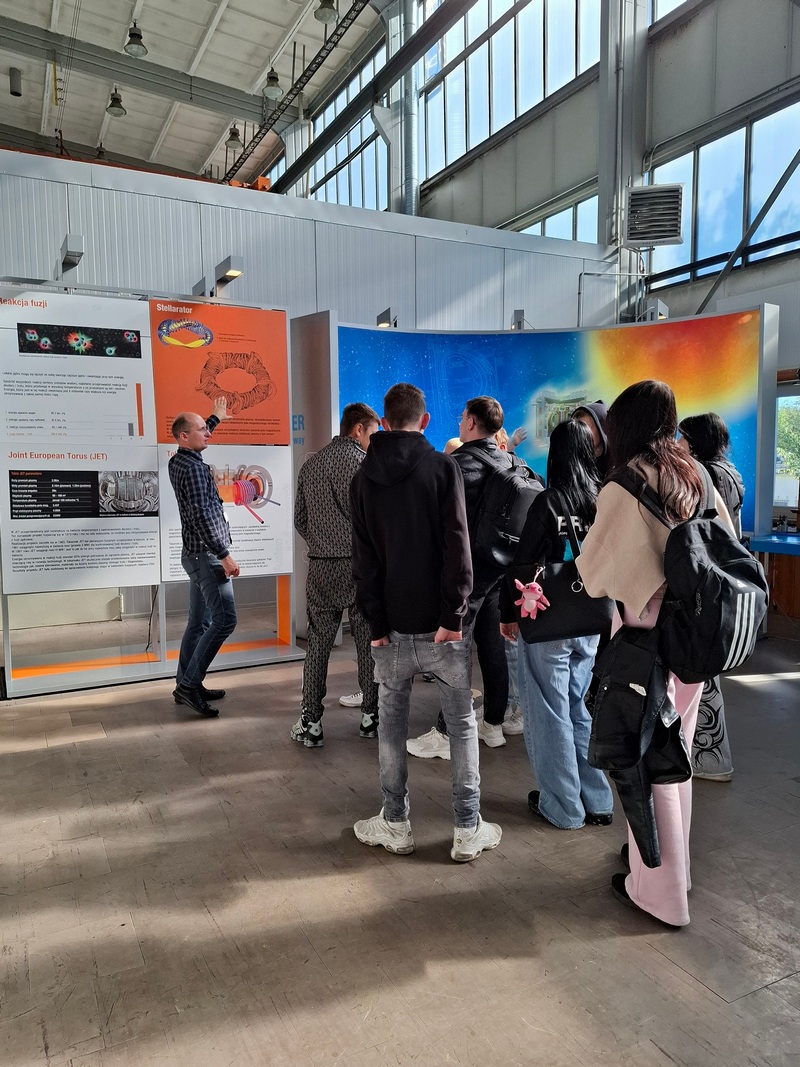
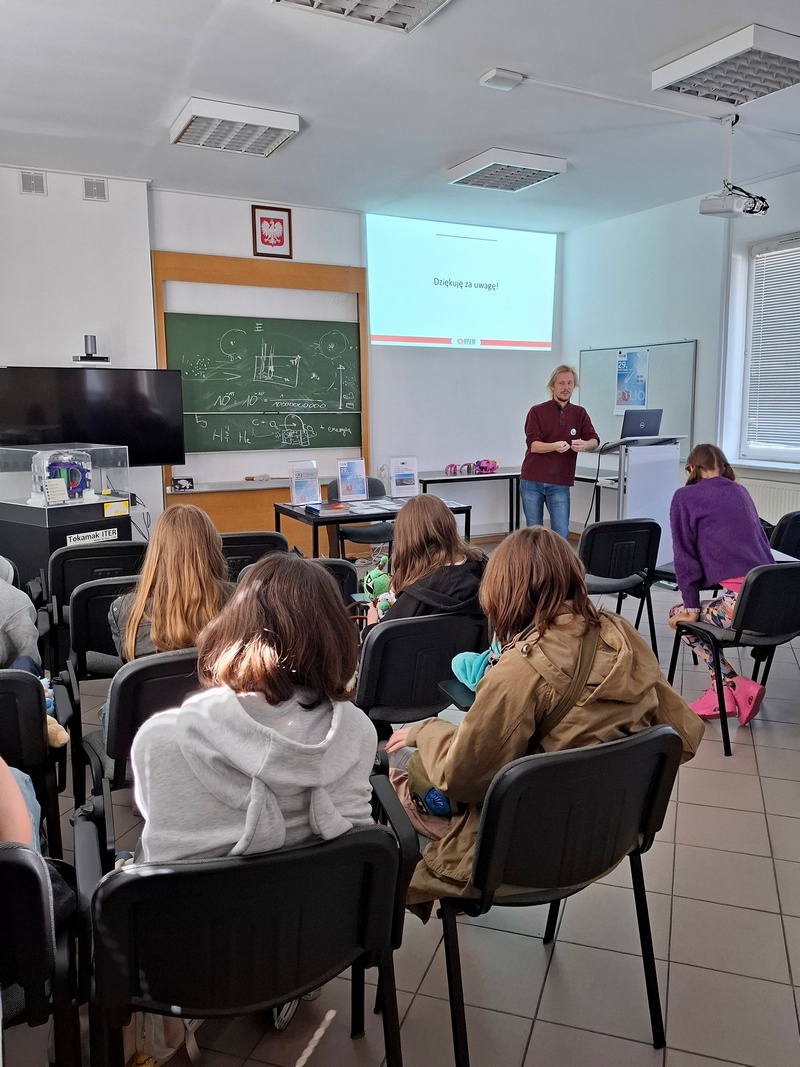
During the 29th Science Festival in Warsaw, held on 19–28 September 2025, researchers from the Institute of Plasma Physics and Laser Microfusion (IPPLM) conducted lessons for upper-grade primary school students. The sessions, held at the Institute’s premises, combined theory, demonstrations, and discussions, introducing young participants to the world of plasma and nuclear fusion.
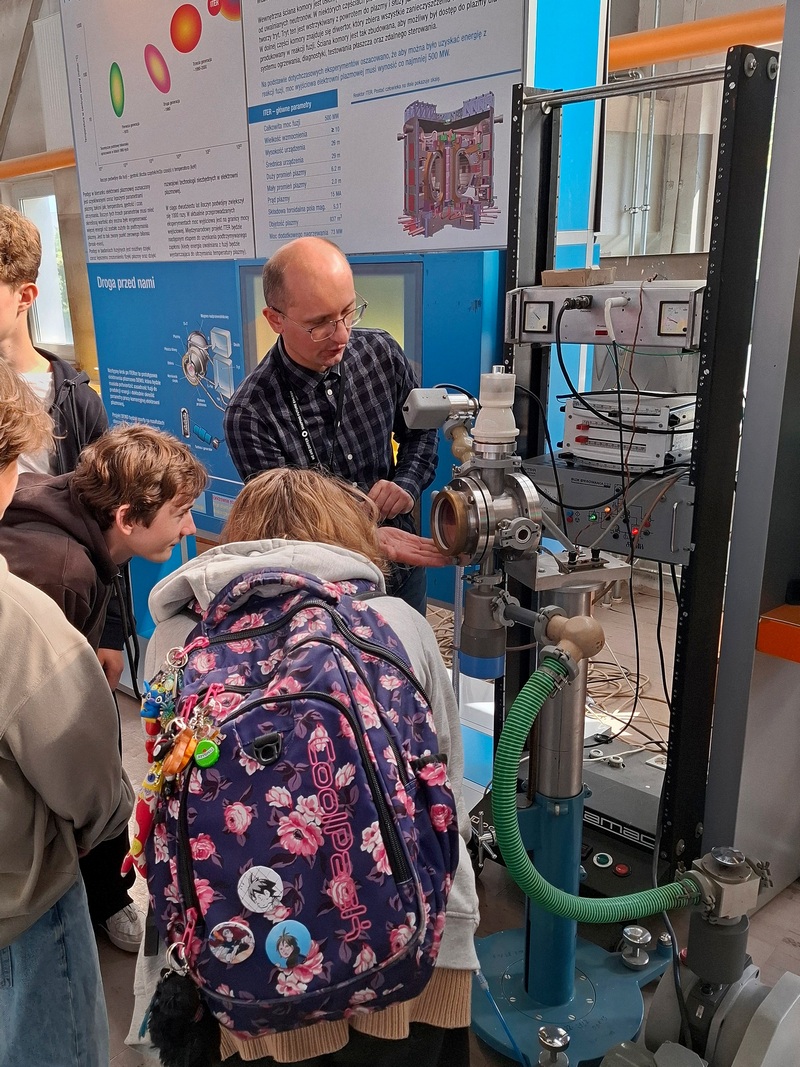
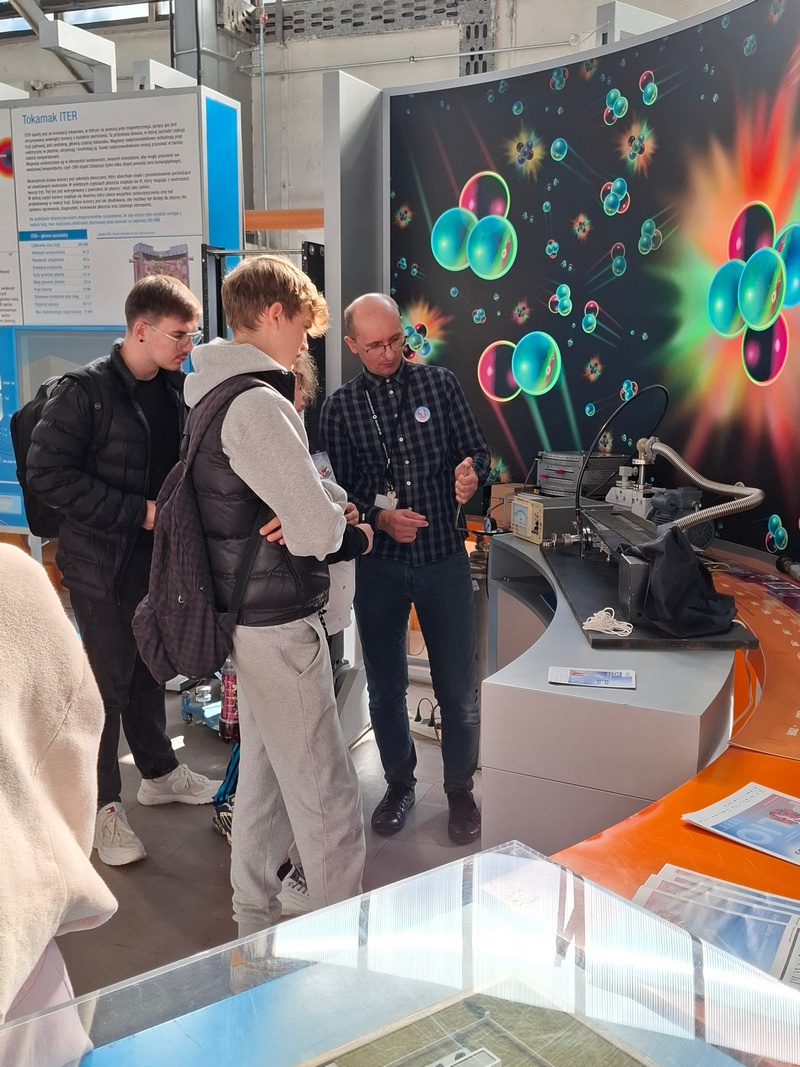
Dr Piotr Chmielewski led a class entitled "The Sun, the Aurora, Lightning and… a Fluorescent Lamp – Discovering Plasma", in which he presented plasma as the fourth state of matter, found both in the Universe and in our everyday surroundings. Students learned about the properties of plasma, such as electrical conductivity, light emission, and interaction with magnetic fields. Using examples like the aurora borealis, lightning, and the structure of the Sun, they explored how plasma occurs in nature. During the demonstration part, participants observed a glow discharge and the operation of a fusor-type fusion reactor, learning, among other things, about how gas pressure affects the discharge process. The session concluded with an educational game that reinforced the newly acquired knowledge.
Dr Krzysztof Gałązka conducted a class entitled "What’s This Nuclear Fusion All About?", designed as a discussion with elements of a lecture and live demonstrations. Students learned about various forms of energy, ways of generating and storing it, and the importance of electricity in everyday life. The fundamentals of nuclear fusion reactions and their potential as a future clean energy source were then explained. The discussion also addressed the advantages and technological challenges associated with sustaining fusion reactions on Earth. The class concluded with a visit to the laboratory, where students – like previous groups – observed glow discharges and the operation of the fusor.
The Warsaw Science Festival is a series of meetings with scientists who present the latest scientific achievements, research methods, and future challenges in an accessible way. The Festival’s programme covers a wide range of topics – from natural and exact sciences to medicine, the humanities, social sciences, culture, and the arts. Events take the form of debates, lectures, workshops, laboratory visits, exhibitions, excursions, and educational games. As part of the Festival, special lessons are also organised for school groups at all educational levels. The events are hosted by scientific, educational, and cultural institutions as well as academic societies and associations.
 |
 |
 |
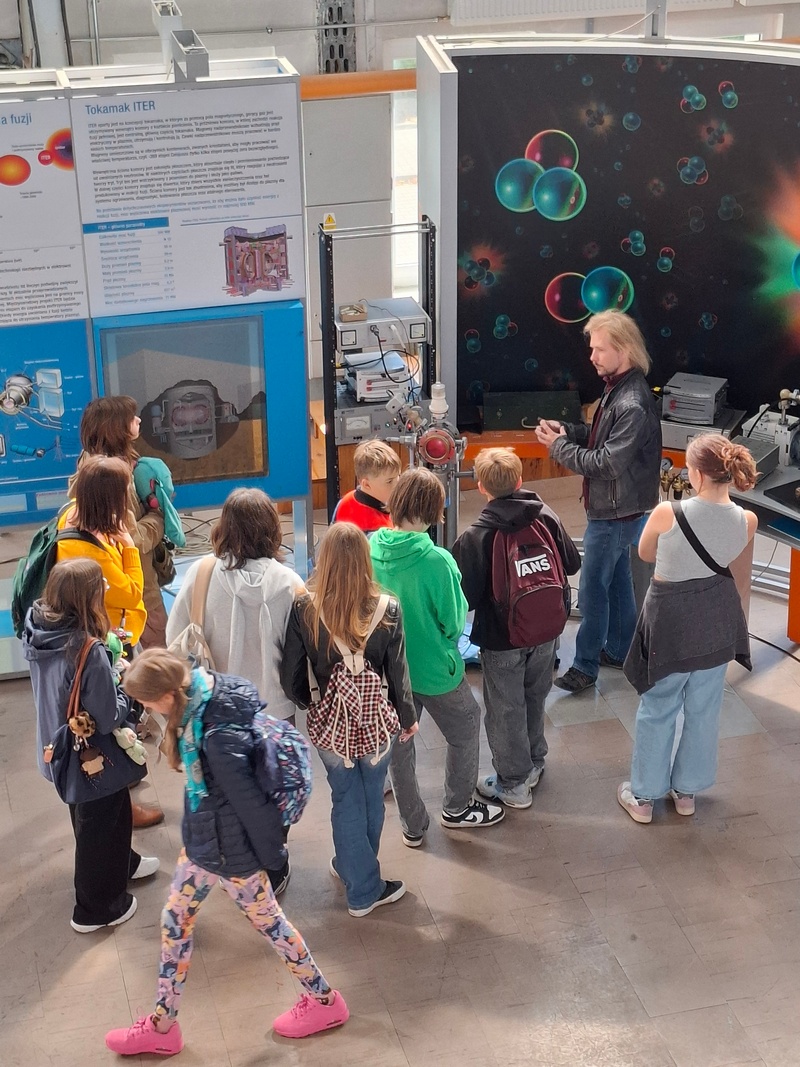 |
Photo: © IPPLM


nsp_133.JPG)


nsp_133.JPG)


