





Zestaw obrazów 2019
zdjecie1.jpg
zdjecie2.jpg
zdjecie3.jpg
zdjecie4.jpg
zdjecie5.jpg
zdjecie6.jpg
2019_1.JPG
2019_2.JPG
2019_4.JPG

Gallery
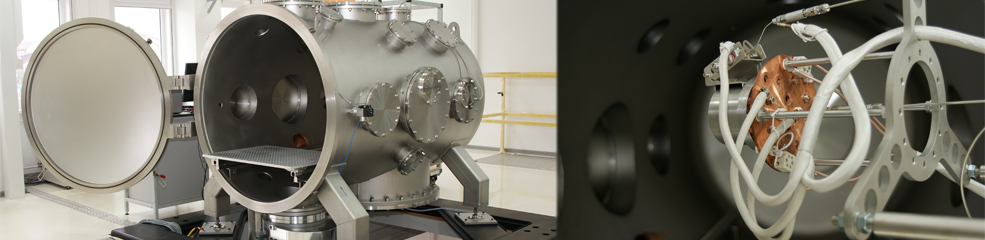
 The latest picture from the MAST-Upgrade project shows the UK fusion machine's largest magnetic coil being carefully positioned into the vacuum vessel.
This is the second of four poloidal field coils that will help confine the fusion fuel in a magnetic ‘cage' within the MAST-Upgrade device during experiments. The coils will keep the intensely hot fuel – in the form of a plasma – away from the walls of the steel vessel, and will provide the spherical plasma shape that physicists want to study in the device.
Now that the coil is safely installed, its magnetic centre will be aligned to the vessel axis to sub-millimetre accuracy.
“Aligning these coils is not easy, but since we put the first coil in we've refined the process and tweaked the tooling to speed things up,” comments Joe Milnes, MAST-Upgrade Project Leader. “This will help us meet our target of getting all four coils in the vessel early in the New Year – a significant build milestone on the way to the completion of the main vessel module.”
Source: CCFE
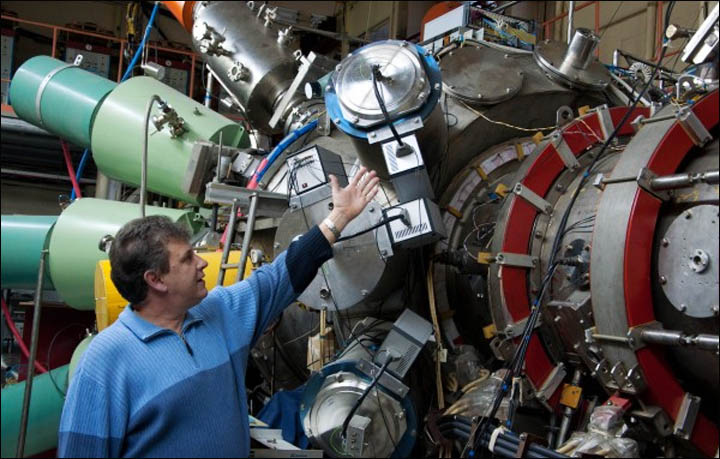 Scientists in Siberia are developing a pioneering new type of nuclear reactor using temperatures twice as hot as the sun that could create an energy of the future. Costing approximately 500 million roubles ($9.8 million), it is being built near Novosibirsk by the Budker Institute of Nuclear Physics and will allow the study of high energy plasma heated to to an incredible 30 million degrees Celsius to make power.
It is an experimental form of thermonuclear fusion, and it is initially hoped it could be harnessed to incinerate radioactive waste. But if successful, it could eventually pave the way for a new way of generating electricity. And since it uses hydrogen isotope deuterium - rather than the radioactive tritium - it is considered far less dangerous and gives out a lower output of energy.
Alexander Ivanov, the deputy director of the institute, said a working prototype of the new reactor will be constructed over the next few years. He told the Siberian Times: 'This will be a full-scale model of the reactor, which can be used for research or, for example, for the processing of radioactive waste. 'There are a lot of technologies to create such a complex. They are new and it takes some time to master them. All the problems with plasma physics that we will address are relevant to the global scientific community.'
Scientists at the Budker Institute have been experimenting with plasma physics for decades and last December managed a world record temperature of 4.5million degrees Celsius when heating hot plasma in an open quasi-stationary magnetic trap. Heated by a powerful source of microwave radiation, the plasma was confined for about ten milliseconds, enough time for it to create a neutron source for hybrid reactors. It is this process that the experts hope to develop further to create power. 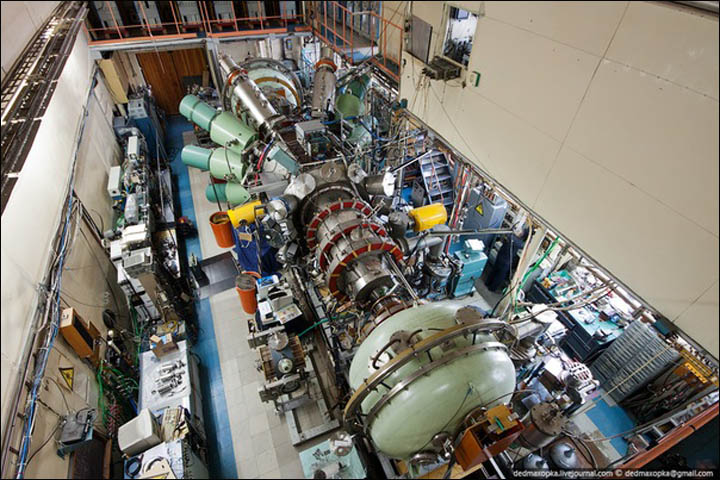
The idea of using plasma in controlled thermonuclear reactors actually dates back to the 1950s, when the institute's founder Gersh Budker proposed such a method. Since then the facility, in the scenic town of Akademgorodok, has become one of the world experts in studying its properties and its potential use in fusion reactors. They key problem in achieving thermonuclear fusion, however, is how to confine this extra hot plasma. Due to its high temperature it cannot be in direct contact with any solid material and has to be held in a vacuum. Using a mirrored gas dynamic trap, the scientists hope to control the plasma.
The new reactor - which has financial support from the Russian Science Foundation and the Ministry of Education - will have powerful radiation protection and allow the experts to study the properties of the substance in safe conditions. Deputy Director Yuri Tikhonov said: 'We will carry out only modelling experiments with the generation of electrons, but the reactions will match reality. 'We won't be generating electricity either but we just need to probe the reaction can occur and that the demanded plasma parameters can be achieved.'
His colleague, Dr Ivanov, said these parameters will be set at an incredible 10 million degrees Celsius, more than twice what was reached last December, with the hope of eventually reaching 30 million degrees. At its core the temperature of the sun is 15 million degrees Celsius, or about 27 million degrees Fahrenheit. He added: 'We hope to increase this temperature [of 10 million degrees] to double or triple that, so we will create a virtually pure reactor.'
The development comes at a time in which Russia is participating in a separate global project aimed at the creation of a new thermonuclear reactor. Known as ITER - the International Thermonuclear Experimental Reactor - aims to build the world's largest tokamak fusion facility in the south of France. Costing at least 607 billion roubles ($12.8 billion) it hopes to make the long-awaited transition to allow the use of plasma in the full-scale production of electricity. Following a series of delays and budget problems, completion of the reactor is expected in 2027 with funding from the United States, South Korea, China, Japan, India and the European Union as well as Russia.
The Budker facility is based in Akademgorodok, a satellite town south of Novosibirsk and home to some of the greatest scientific minds anywhere in Russia. The town was created in Soviet times to allow forward-thinking scientists from Moscow and St Petersburg to have a pleasant lifestyle, enabling them to work successfully. Set amid enchanting woodland, and close to the Ob Sea, it is now home to 32 institutes and researching centres, the Siberian branch of the Russian Academy of Sciences, and the Novosibirsk State University.
Source: The Siberian Times
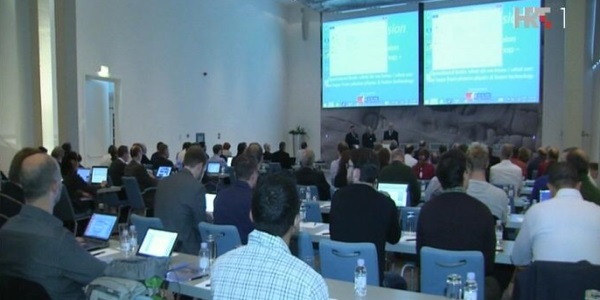 A three-day scientific conference on fusion began in Split on Monday, bringing together about a hundred experts from European Union countries.
The conference, called the European Fusion Programme Workshop, was organised by the Zagreb-based Rudjer Boskovic Institute and the University of Split Faculty of Electrical Engineering, Mechanical Engineering and Naval Architecture as part of the EUROfusion consortium which comprises institutes and universities from 29 countries.
"The purpose of the conference is to present the existing knowledge in the field of plasma and advanced materials, physics and technology at the start of a five-year period of joint research within the EUROfusion programme, which is financed by the EU with 850 million euros," Tonci Tadic, coordinator of the Croatian Fusion Research Unit and member of the Euratom Science and Technology Committee, said in his opening remarks.
Tadic said that the EU wanted to become the global centre of fusion energy and supporting technologies. "Fusion occupies an important place in the EU's energy strategy over the next 30 years," he said, adding that the conference would focus on issues relating to strategic planning of further fusion research in Europe, with special emphasis on operational limitations and challenges in fusion physics and technology.
Source: Dalje.com
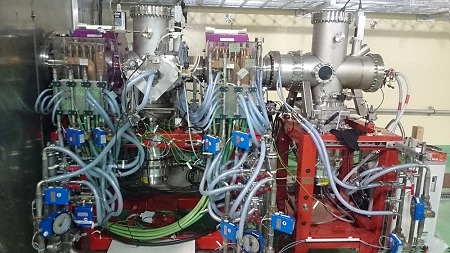 The International Fusion Materials Irradiation Facility (IFMIF) is one of the projects stemming from the Broader Approach Agreement, a partnership in fusion energy research between Europe and Japan. IFMIF is an accelerator-based neutron source that produces, using deuterium-lithium nuclear reactions, a large neutron flux similar to that expected at the first wall of a fusion reactor.
Two important milestones have recently been achieved at the Linear IFMIF Prototype Accelerator (LIPAc): the accomplishment of the first hydrogen plasma in the ionisation chamber and the first extraction of an ion beam (H+). In the case of LIPAC, the Japanese Atomic Energy Agency (JAEA) has been responsible for the procurement of the conventional systems, such as the accelerator building, the secondary cooling system, and the machine and personnel protection system. Europe’s contribution, coordinated by Fusion for Energy (F4E), has been delivered by the European countries voluntarily contributing to the BA. The LIPAC injector has been developed and manufactured by France’s Commissariat à l’Énergie Atomique et aux Énergies Alternatives (CEA) Saclay. It has been successfully installed in Rokkasho, Japan, and is now under commissioning.
The achievement of the first plasma and beam extraction has been an important achievement for the LIPAc team, including participating experts from France’s CEA, led by Raphael Gobin. After the accomplishment of the widely anticipated first plasma, extensively reported in Japanese media, within only two days, further commissioning allowed a proton beam of 100 keV and 100 mA to be obtained.
The prospects are now excellent to reach the target of extracting a current of 140 mA of 100 keV D+ ions in the forthcoming commissioning phase with deuterium.
Source: Fusion For Energy
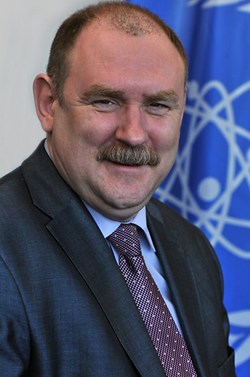 Alexander Victorovich Bychkov joined the International Atomic Energy Agency (IAEA) as Deputy Director General and Head of the Department of Nuclear Energy in February 2011. Before he joined the Agency, Mr Bychkov worked on molten salt chemistry, the chemistry and technology of actinides and nuclear fuel, and all aspects of fast reactor fuel cycles. At the recent IAEA Fusion Energy Conference in St. Petersburg, Newsline had the opportunity to talk to him about the Agency's involvement in fusion research and development.
Mr Bychkov, can it be said that nuclear fusion has been part of the IAEA's mission since the very beginning?
That is correct; the IAEA is proud to have played a constructive role in the history of nuclear fusion research. The Agency's motto "Atoms for Peace," coined by US President Dwight Eisenhower in his address to the UN General Assembly on 8 December 1953, has always had a special meaning for nuclear fusion: the obligation to work for the preservation of peace itself, and at the same time to work towards the peaceful use of nuclear fusion for the generation of energy.
The first Fusion Energy Conference (FEC) took place in 1961, in Salzburg, Austria. Seven years later, in 1968, the fusion community convened in Novosibirsk where some breaking news from the T3 Tokamak became part of fusion history. In 2014, for its 25th edition, the FEC returned to Russia, this time to St. Petersburg. What are your thoughts about this?
The 2014 FEC conference was only the second of 25 to take place in Russia. As you mentioned, at the 1968 conference in Novosibirsk some amazing results from the Russian T3 Tokamak (Kurchatov Institute) were presented—a confined plasma with electron energies up to 1 keV, corresponding to temperatures of more than 10 million degrees. This surprising and crucial result led to a global shift in nuclear fusion research towards the use of tokamaks. In Europe, this ultimately led to the design and construction of the Joint European Torus, JET, while in the US it led to the TFTR tokamak and in Japan to the JT60 tokamak. These machines, in turn, became the technological predecessors of today´s ITER Project.
And yes, St. Petersburg is a very special place for us Russians as it was the setting to three Russian revolutions: the revolution in 1905 and the uprisings in 1917 (to me these were three revolutions). So, perhaps we can see the 25th FEC conference as a symbolic event, where scientists and engineers met to talk about a technological revolution.
What is the IAEA's current involvement in fusion?
We are not in the position to play a leading role in the scientific and technical development, but we collect and distribute information and we facilitate collaboration. For example the FEC conference that the Agency organizes every two years is the largest of its kind. Likewise, we publish the leading journal on fusion, the Nuclear Fusion Journal, and offer an important resource to researchers, the FENDL database. We organize some research activities through our Coordinated Research Projects and carry out training activities, for example joint experiments at a tokamak—in particular for researchers from developing countries. We try to ensure that developing countries remain in touch with developments in fusion research by making sure that their researchers can participate in conferences and meetings.
Do you see interest from other nations to join the fusion community?
Yes, a number of developing countries attended the 25th FEC conference, such as Nigeria or Thailand, who as yet do not have fusion programs. These countries have an interest in fusion technology and, in view of the current effort to build up the educational level in many of these countries, some will join the fusion community sooner or later.
The IAEA is also very much engaged in activities for DEMO, the next step after ITER. How do you see the IAEA's role in this development effort?
Our Member States underline every year that fusion is considered as the future of nuclear power. While we do not yet consider fusion as a real part of the energy mix before 2050, it is part of our projections of nuclear power.
With regard to DEMO we are increasing our activities. We have started a new DEMO Workshop Series that brings together about 80 experts from around the world once a year. For the future we hope that the Agency can play a similar constructive role for DEMO as we have for ITER—even if DEMO will not be a single project, but rather a collection of projects. We do see it as part of our mandate to help make fusion power a reality.
Source: ITER


nsp_133.JPG)


nsp_133.JPG)


 |
 |
 |
 |
 |
 |
 |
 |
Media


Research projects carried out at the IPPLM are funded by the Polish Ministry of Education and Science, the National Science Centre and by the European Commission within the framework of EUROfusion Consortium under grant agreement No 101052200. Financial support comes also from the International Atomic Energy Agency, European Space Agency and LaserLab Consortium as well as from the Fusion for Energy Agency.