



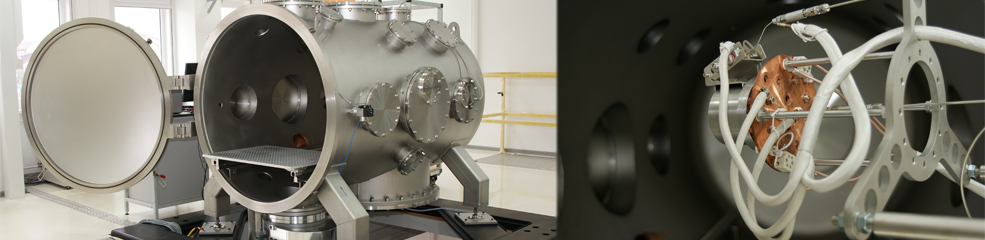


Zestaw obrazów 2019
zdjecie1.jpg
zdjecie2.jpg
zdjecie3.jpg
zdjecie4.jpg
zdjecie5.jpg
zdjecie6.jpg
2019_1.JPG
2019_2.JPG
2019_4.JPG

Gallery
 In fusion reactor designs, superconductors (which suffer no resistive power loss) are used to generate the magnetic fields that confine the 100 million degree C plasma. While increasing magnetic field strength offers potential ways to improve reactor performance, conventional low-temperature superconductors suffer dramatic drops in current carrying ability at high magnetic fields. Now, the emergence of high-temperature superconductors that can also operate at high magnetic fields opens a new, lower-cost path to fusion energy.
A typical measure of fusion plasma performance is called "plasma beta," which is the ratio of plasma pressure to magnetic field pressure. Achieving a very high beta--generating the required plasma pressure with low magnetic field--could help reduce the cost of the superconducting magnets used in a fusion reactor. For this reason, many visions of fusion reactors try to maximize plasma beta at moderate magnetic field strengths. Operation at higher beta, however, pushes the plasma up against many performance limits, making plasma stability a tricky business.
But plasma beta is not the only consideration. Another ratio, the size of the confined plasma compared to the ion gyroradius, also determines overall energy confinement and dictates plasma performance. (The ion gyroradius is the helical path ions are forced to follow in the magnetic field.) Increasing magnetic field strength decreases the ion gyroradius, which allows a reduction in the size of the fusion device with no loss of performance. This approach also lowers beta and the plasma operates farther away from stability limits, in a "safe zone."
While scientists have explored both of these paths to improving performance, the recent development of the so-called "high-temperature superconductors" opens a window for much higher magnetic fields, as the critical currents do not degrade rapidly, even at magnetic field values of 30 Tesla or higher. So these should really be called high-temperature, high-magnetic-field superconductors.
For tokamak design, the field strength limits are primarily determined by the maximum allowable stresses in the structural components holding the magnet together, and not by the intrinsic limits of the superconductors.
Even the most aggressive tokamak designs with conventional superconductor technology are limited to about 6 Tesla on-axis toroidal magnetic fields. By nearly doubling magnetic field strength, to about 10 Tesla on-axis, conceptual designs indicate that a tokamak approximately the physical size of the world's largest currently operating tokamak, JET, would be capable of producing 500 MW of fusion power, and even net electricity (Figure 1). High-temperature, high-magnetic-field superconductors can also make it possible to incorporate jointed magnetic coils into the reactor design, dramatically improving flexibility, and ultimately, maintainability for reactor systems.
While several physics and technology challenges remain to be solved, the world-wide experience from tokamak experiments provides the basis to support a new path of exploration into compact, power producing reactors using the newly available high-temperature, high-magnetic-field superconducting technology.
Source: American Physical Society via EurekAlert
 Johannes Schwemmer has been appointed Executive Director of Fusion for Energy, the European Joint Undertaking for ITER and the Development of Fusion Energy.
Joaquin Sánchez, Chair of the Fusion for Energy Governing Board, thanked all members for their collaboration in taking this important decision and congratulated Johannes Schwemmer on his new position. “We look forward to working with you and offering our guidance so that Europe honours its commitment in the various projects that aim to bring fusion energy closer” he stated.
"It is a great honour to be appointed Director of Fusion for Energy and to serve this organisation with leadership, loyalty and vision. I’m fully committed to managing effectively the European contribution to ITER, this unique global collaboration that has the ambition to make fusion a viable option for abundant and clean base load energy supply” Schwemmer said.
Johannes Schwemmer has been working in the fields of information, telecommunications and business technology for more than 25 years. He has a proven track record in international collaboration, project management and business strategy. He is currently a partner at Antevorte, a German consultancy specialising in performance management. Previously he worked for eight years at Unify GmbH & Co. KG, a global market leader in unified communication solutions present in 100 countries, where he held different positions as Vice-President for Global Project Management and Service Optimisation, and Vice-President for Global Training. Earlier in his career he worked at Siemens Business Services, as Vice-President for Risk Management and Strategic Alliances Management. He holds a European Joint Degree in Electrical Engineering from the University of Karlsruhe (KIT), Germany, in collaboration with the University of Essex, UK and ESIEE Paris, France.
The Director is appointed by Fusion for Energy’s Governing Board for a period of five years, once renewable up to five years. The appointment is made on the basis of a list of candidates proposed by the European Commission after an open competition, following a publication in the Official Journal of the European Communities.
Fusion for Energy
Fusion for Energy (F4E) is the European Union’s organisation for Europe’s contribution to ITER.
One of the main tasks of F4E is to work together with European industry, SMEs and research organisations to develop and provide a wide range of high technology components together with engineering, maintenance and support services for the ITER project.
F4E supports fusion R&D initiatives through the Broader Approach Agreement signed with Japan and prepares for the construction of demonstration fusion reactors (DEMO).
F4E was created by a decision of the Council of the European Union as an independent legal entity and was established in April 2007 for a period of 35 years. Its offices are in Barcelona, Spain.
www.fusionforenergy.europa.eu
ITER
ITER is a first-of-a-kind global collaboration. It will be the world's largest experimental fusion facility and is designed to demonstrate the scientific and technological feasibility of fusion power.
Fusion is the process which powers the sun and the stars. When light atomic nuclei fuse together to form heavier ones, a large amount of energy is released. Fusion research is aimed at developing a safe, limitless and environmentally responsible energy source.
Europe will contribute almost half of the costs of its construction, while the other six Members to this joint international venture (China, Japan, India, the Republic of Korea, the Russian Federation and the USA), will contribute equally to the rest. The site of the ITER project is in Cadarache, in the South of France.
www.iter.org/
Source: F4E
 The delivery of the first-ever European components to ITER has qualified as one of the key moments of the project carrying tremendous symbolic importance. It has been a turning point for Europe, the party with the largest contribution to the biggest scientific collaboration in the field of energy, paving the way for many more components to come.
To capture history in the making we filmed the arrival of the six water detritiation tanks that will be part of the ITER fuel cycle system. The contract awarded to Ensa builds on the expertise of Empresarios Agrupados and GEA as subcontractors. It has taken roughly 20 months for the six tanks to be designed and manufactured, whose cost has been in the range of 2 million EUR.
We interviewed representatives of F4E and Ensa, the Spanish company responsible for the design and manufacturing of the components, in order to learn more about the manufacturing process and their function in the machine. Alain Teissier, F4E’s Head for the ITER Cryoplant and Fuel Cycle, explains the importance of this achievement giving us some details about the works that have been carried out. Giovanni Piazza, F4E’s Technical Officer for the Tritium Plant, explains the process of the fusion reaction and role of the tanks during the fuel recovery phase. Josep Benet, F4E’s Technical Officer for the Tritium Plant, shows us the tanks and enters into more details about their dimensions and tolerances. On behalf of the contractors, David de Francisco, Ensa Project Engineer, elaborates on the technical challenges they faced and the importance of contributing to a project like ITER.
Source: F4E
 ITER director-general Bernard Bigot explains how he will strengthen leadership and management to refocus the project's aim of harnessing nuclear fusion. Ten years ago this month, China, the European Union, Japan, South Korea, Russia and the United States agreed on the location for the world's largest nuclear-fusion experiment: ITER, the International Thermonuclear Experimental Reactor, which they had decided to build jointly. India joined six months later. The project's aim is to fuse two isotopes of hydrogen — tritium and deuterium — to deliver a powerful, clean source of electricity. This requires the containment of plasma at temperatures ten times higher than the Sun's core.
Roughly €4-billion (US$4.4-billion) worth of construction contracts and €3 billion in manufacturing contracts worldwide are under way. The first large components are being delivered to the site at St-Paul-lez-Durance in southern France for assembly.
The project has been plagued by delays and difficulties. The seven ITER members are designing and manufacturing key components. When deadlines or standards are not met, the knock-on effects across the whole project can be dire. Late contracts for tools have kept one of the largest buildings — in which ring-shaped magnets up to 24 metres in diameter will be manufactured — inactive since its completion in December 2011. When problems arise, bickering ensues as to who should foot the bill.
I have been a privileged observer from the start, as the high representative for ITER in the host country, France. Because France itself is not a formal member of ITER — it contributes to the European Union budget for the project and to some basic site infrastructures — I, like many others, could only witness with frustration the slipping of the schedule despite the best efforts of the more than 2,000 dedicated people working on ITER.
Since becoming director-general of the ITER Organization, which manages the project, in March, I have realized that ITER's main problem has been the lack of a clearly defined authority to oversee the entire project. Having someone firmly in the driving seat, with the power to take decisions, is the key to success in any project. I have learned this over the course of my career — through building an innovative higher-education institute from scratch (École Normale Supérieure de Lyon) and as head of the French Alternative Energies and Atomic Energy Commission for 12 years.
Here, I set out my vision for ITER. The project must overcome its organizational problems so that it can deliver on its promise of taking a firm step towards harnessing an unlimited, continuous, safe and clean source of energy. These lessons apply to any major international collaboration.
A rocky transition
Since construction began on ITER five years ago, it has become increasingly apparent that the project's management structure is poorly adapted to the challenge of building a large, complex research facility.
Take the 8,000-tonne ITER vacuum vessel, the doughnut-shaped central component of the 'tokamak' reactor that houses the fusion reactions. Seven of its nine sectors are to be manufactured in Europe and two in South Korea, with each region or country taking responsibility for how they are sourced. Having two contractors is a risk, because each has its own manufacturing techniques; duplicating the processes that validate the quality and function of components, such as fabricating mock-ups, adds to the cost; and the tolerance margins that each contractor has adopted differ. Yet the ITER Organization is responsible for assembling the final vessel.
Any modification has a cascading impact on other components. This has generated an almost endless to-and-fro between the ITER Organization, procuring member countries and suppliers. This situation has already cost ITER tens of millions of euros.
People know there is a problem. A 2013 management-assessment report described the decision-making process at the ITER Organization as “ill-defined and poorly implemented”. The management structure has proved incapable of solving issues and responding to the project's needs, so accumulating technical difficulties have led to stalemates, misunderstandings and tension between staff around the world. These problems stem from how the organization was set up through an international treaty in 2007.
First, deputy director-generals from each member country or region were given responsibility for one large technical or administrative department of the ITER Organization. These managers also acted as official representatives for their nation or nations.
Second, the procurement of components, systems and buildings is split among the member states so that each could gain experience. The work is assigned according to the industrial capacities of members and a cost-sharing scheme that allocates 45.5% to the European Union (as the host) and just over 9% to each of the others. Each member has a procurement centre, called a domestic agency, that is legally and administratively independent from the central ITER Organization.
The organization is responsible for validating the design of the facility; compliance with safety regulations; coordination of manufacturing and quality control of the numerous components; their on-site assembly; and later, the operation of the facility.
Paperwork abounds. For each work package, the organization signs a procurement arrangement with the relevant domestic agency that details all technical specifications and management requirements. The domestic agency then launches a call for tender to select a company or consortium to do the work.
Such a system has benefits: procurements are shared widely, industries in member states develop, spin-offs are generated, jobs are created and specialists trained. Intellectual property generated by the project is shared. But it has become ever more obvious — as successive reports have pointed out — that the costs outweigh the benefits.
Team building
I accepted the job of director-general on the condition that the position was newly invested with full authority over the whole project. Authority and a radical redefinition of how the organization interacts with the domestic agencies are at the core of the action plan that I submitted to the ITER Council in January, before my formal appointment.
The domestic agencies will retain their distinct legal identity. But they will be integrated functionally and put on an equal footing with the departments in what we now call the ITER Organization Central Team, based in St-Paul-lez-Durance.
A new executive project board brings together the managers of the central team and the domestic agencies at least once a month, in person or by video conference. Disputes can be settled and decisions taken swiftly.
Technical issues — from construction to radioprotection and cryogenics — are handled by project teams of 20 to 50 people, depending on the scope. They comprise staff from the central team and domestic agencies on the basis of technical need, professional skills and experience. When necessary, representatives of contracting industries participate.
It is too late and costly to reverse decisions that have already been made — such as how the tokamak vacuum vessel is fabricated. Problems must be solved downstream; in April, the executive project board formed a joint ITER Organization and domestic agency project team to anticipate and overcome integration and assembly issues. Had this decision been taken earlier it would have saved time, money and frustration.
The ITER Organization and domestic agencies together employ 2,000 people. Changing how ITER is managed will alter its culture. I aim to foster an atmosphere in which each party or individual feels personally responsible for the whole project, not just their area of competence. One of my first actions after becoming director was to address the staff of each domestic agency. The most striking moment was in a video session with all four Asian agencies. For the first time, colleagues in Japan, India, South Korea and China saw the faces of their counterparts, changing the dynamic towards a shared global ambition.
I am also implementing a new type of mobility throughout the project. This will enable appropriate domestic-agency staff to be temporarily seconded to the ITER site, or central-team staff to be assigned to domestic agencies.
The ITER Council has agreed to this new organization. I am grateful for their strong support and the progress already made in solving technical issues and improving communication.
Discretionary fund
There is still much more to do. Authority requires the financial means to exercise it. I have asked for the creation of a reserve fund, to be put at my disposal. Each domestic agency will contribute, allowing me to take quick and efficient decisions to address issues as they arise. Terms of reference will be presented to the council in June for approval. The money will be drawn from the contributions of the ITER members in proportion to the amount they pay in.
In my experience of industrial projects, a reserve fund must comprise about 20% of fabrication costs over the duration of construction. In my view, it was naive not to establish such a fund much earlier in ITER's history.
Before the end of this year, I am expected to submit, along with all stakeholders, an updated, robust and reliable schedule to the ITER Council, and a cost and risk analysis. With renewed management and a streamlined organization, we are now ready to prepare for the assembly and commissioning phase, the step before fusion switches on.
Further delays and costs are inevitable. ITER will meet these challenges if it has the unanimous political support of the seven members, on the basis of the long-term value of fusion technology.
All of us at ITER have a huge, historic responsibility. The project may be the last chance we have this century to demonstrate that fusion is manageable.
Source: Nature
 Sustainable nuclear fusion has long been a dream for most scientists and energy experts alike. Clean, abundant, and economical, there have been many attempts to make it workable. Now, researchers at the University of Washington have stepped up their existing involvement in the fusion field with a $5.3 million Department of Energy grant to scale up their “Sheared Flow Stabilized Z-Pinch” fusion device.
Uri Shumlak, a professor in the department of aeronautics and astronautics, co-leads the project and explained that the Z-Pinch technique is smaller and cheaper than more conventional magnetic field coil-driven reactors. “The large size of the magnetic field coils drives up the cost,” he said. “In Z-Pinch, the plasma column is quite small. In order to get fusion, you scale up in the opposite direction, and get smaller.”
The small size and relative inexpensiveness helps in its possible applications, which can be both terrestrial and celestial. “The real interest of mine is in space propulsion,” he said. “Because it is a linear device, it fits better into a spacecraft.”
Michal Hughes, a fifth-year graduate student who has been working in the Z-Pinch lab, elaborates on the uses of the technique. “We can use this device both as a power plant and as propulsion,” he said. “That makes it easier to fly the mission and is potentially much more powerful than solar panels.”
However, there are problems to be overcome, chiefly the instability of the plasma. “The real challenge has been to find a configuration that is stable,” Shumlak said.
The team plans to build a new Z-Pinch device, which will be ready by summer 2016. It will be the third machine they’re building. “We built three machines,” said Elliot Claveau, a graduate student in aeronautics and astronautics who joined the lab in 2014. “The first was 16 years ago. Last year, we got the second machine.” He said the third machine will be 10 times as powerful as the present one and the lab will be running two machines at the same time.
This more powerful machine will be useful in giving the researchers a better understanding of what they’re studying. “For the second machine, we went past a million degrees,” Hughes said. “For the third machine, we’re looking to reach even higher temperatures, which will help us investigate different responses of the plasma.”
There have been a number of graduate and undergraduate students who have worked in the lab, including Hughes, who has been involved for six years. Shumlak is appreciative of the students’ contribution to the project. “This research has been made possible by dedicated undergraduate and graduate students,” he said. “There have been many students who’ve made significant contributions.”
The professor and the students are cautiously optimistic about the prospects of the research and its potential massive impact. “If everything turns out as expected, we should be able to get to a viable fusion reactor ready for commercial scale in 10-15 years,” Shumlak said.
The students are less reserved about the potential of the project. “The goal we have is the advancement of this field in general, because eventually if everything succeeds, the research is the first step in developing a cheap fusion reactor,” Claveau said. “This is potentially world changing, but we’re not there yet.”
Source: The Daily of the University of Washington


nsp_133.JPG)


nsp_133.JPG)


 |
 |
 |
 |
 |
 |
 |
 |
Media


Research projects carried out at the IPPLM are funded by the Polish Ministry of Education and Science, the National Science Centre and by the European Commission within the framework of EUROfusion Consortium under grant agreement No 101052200. Financial support comes also from the International Atomic Energy Agency, European Space Agency and LaserLab Consortium as well as from the Fusion for Energy Agency.