



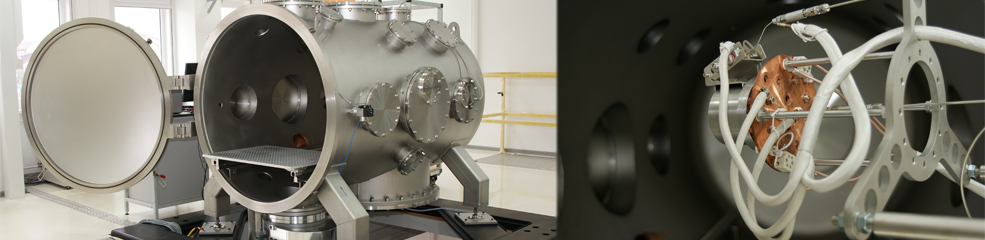


Zestaw obrazów 2019
zdjecie1.jpg
zdjecie2.jpg
zdjecie3.jpg
zdjecie4.jpg
zdjecie5.jpg
zdjecie6.jpg
2019_1.JPG
2019_2.JPG
2019_4.JPG


Światowe
 W październiku 2018 roku Nagrodę Nobla z fizyki otrzymali Arthur Ashkin oraz Gérard Mourou i Donna Strickland za badania w zakresie optyki wykorzystujące w przełomowy sposób światło generowane laserem.
Do Arthura Ashkina trafiła połowa nagrody za wykorzystanie wiązki laserowej jako pęsety do obserwacji i manipulowania bardzo małymi obiektami, takimi jak cząsteczki, molekuły, bakterie i wirusy bez ich uszkodzenia. Wiązka lasera podczerwonego może powodować przemieszczanie się małych obiektów w stronę centrum wiązki i tam ich utrzymywanie. Dzięki temu możliwe jest ich badanie i modyfikowanie.
Gérard Mourou i Donna Strickland otrzymali po 25% nagrody za opracowanie metody wzmacniania „świergoczących” impulsów laserowych zwanej CPA (chirped pulse amplification). W metodzie tej bardzo krótki impuls laserowy najpierw jest rozciągany w czasie w celu zmniejszenia jego mocy i wzmocnienia bez uszkadzania prętów wzmacniających. Następnie wydłużony i wzmocniony impuls jest optycznie komprymowany. Metoda CPA pozwala uzyskiwać impulsy laserowe o czasie trwania kilku femtosekund (10‑15 s). Można też osiągać gęstości mocy ponad 1022 W/cm2 po zogniskowaniu wiązki laserowej na plamce o średnicy ~0,01 mm. Lasery wielkiej mocy o ultrakrótkim impulsie są stosowane do badania rekordowo krótkich procesów w obszarze fizyki relatywistycznej, fizyki atomowej, biologii molekularnej i w mikrometrycznych technologiach materiałowych.
 Zasada działania metody CPA
Więcej informacji na stronie www.nobelprize.org
Ilustracja: Niklas Elmehed / Nobel Media
 Who would turn down an invitation to “fly to Mars” if representatives from ESA, NASA and Poland’s Space Industry Association acted as the captains on board? Imagine if your co-passengers were some of the most promising scientists, entrepreneurs, engineers and business developers working in Poland? It sounds like a-one-of-a-kind mission to Mars inviting experts to step to the unknown and use their skills to survive.
Science and technology breakthroughs have been woven in the fabric of Poland and its appetite for doing business makes it a perfect candidate for big science projects. For this reason, members of the big science community coming from F4E, CERN, the European Space Observatory (ESO) and the European Spalation Source (ESS) contributed to a two day-event, organised by the Wrocław Technology Park on 23-24 November, to explain the state of play of the various scientific collaborations and the business opportunities in each of them. A fine mix of keynote speeches, workshops, presentations, and business to business (B2B) meetings gave the possibility to at least 400 participants to receive updates and get in touch with those running the projects.
“By bringing together big science projects we help companies to learn more about the emerging technical needs, offer them incentives to export their know-how and make them think big” explains Leonardo Biagioni, F4E’s Head of Procurement. “The truth of the matter is that big projects are made of smaller ones and if a company has the skills it can surely find its way to participate. And this is what we are here to do” explains Benjamin Perier from F4E’s Market Intelligence Group. A number of companies expressed an interest in the ITER domains using robotics, aerospace technologies and the testing of new materials. For those who felt that they may not have the financial capital to target projects of such scale, a representative of the European Investment Bank (EIB) was there to present the different financial instruments that could trigger off investment and growth.
The value of gathering different projects under the same roof helps all parties to be more aware of who does what and how much they share in terms of business incentives and technology transfers. For those wishing to become more familiar with the universe of collaborative procurement for research infrastructures, a Big Science Business Forum is planned to take place on 26-28 February 2018 in Copenhagen.
To view some of the event’s highlights click here.
Source: fusionforenergy.europa.eu
 The Nobel Prize in Physics 2017 was divided, one half awarded to Rainer Weiss, the other half jointly to Barry C. Barish and Kip S. Thorne "for decisive contributions to the LIGO detector and the observation of gravitational waves".
POPULAR SCIENCE BACKGROUND
On 14 September 2015, the LIGO detectors in the USA saw space vibrate with gravitational waves for the very first time. Although the signal was extremely weak when it reached Earth, it is already promising a revolution in astrophysics. Gravitational waves are an entirely new way of following the most violent events in space and testing the limits of our knowledge. The gravitational waves that have now been observed were created in a ferocious collision between two black holes, more than a thousand million years ago. Albert Einstein was right again. A century had passed since gravitational waves were predicted by his general theory of relativity, but he had always been doubtful whether they could ever be captured.
LIGO, the Laser Interferometer Gravitational-Wave Observatory, is a collaborative project with over one thousand researchers from more than twenty countries. Together, they have realised a vision that is almost fifty years old. The 2017 Nobel Laureates have, with their enthusiasm and determination, each been invaluable to the success of LIGO. Pioneers Rainer Weiss and Kip S. Thorne, together with Barry C. Barish, the scientist and leader who brought the project to completion, have ensured that more than four decades of effort led to gravitational waves finally being observed.
Rumours began to circulate around five months before the international research group had finished refining its calculations, but they did not dare to announce their findings until 11 February 2016. The LIGO researchers set several records with their very first discovery; besides the first ever observation of gravitational waves, the entire course of events was the first indication that space contains medium-sized black holes of between 30 and 60 solar masses and that they can merge. For a short moment, the gravitational radiation from the colliding black holes was many times stronger than the collected light of all the stars in the visible universe.
Source: www.nobelprize.org
 More More | [ ] | 1810 kB |
 The plasma experiments in the Wendelstein 7-X fusion device at Max Planck Institute for Plasma Physics (IPP) in Greifswald have now been resumed after a 15-month conversion break. The ex
tension has made the device fit for higher heating power and longer pulses. This now allows experiments in which the optimised concept of Wendelstein 7-X can be tested. Wendelstein 7-X, the world’s largest fusion device of the stellarator type, is to investigate this type’s suitability for application in a power plant.
Besides new heating and measuring facilities, over 8,000 graphite wall tiles and ten divertor modules have been installed in the plasma vessel since March last year, i.e. the scheduled end of the first experimentation phase. This cladding is to protect the vessel walls and allow higher temperatures and plasma discharges lasting 10 seconds in forthcoming experiments.
A special function is exercised here by the ten sections of the divertor: As broad strips on the wall of the plasma vessel, the divertor tiles conform exactly to the twisting contour of the plasma edge. They thus protect especially those wall areas to which particles escaping from the edge of the plasma ring are specifically directed. Along with unwanted impurities the impinging particles are neutralised and pumped off. The divertor is thus an important tool for regulating the purity and density of the plasma.
The smaller predecessor, the Wendelstein 7-AS stellarator at IPP in Garching, had already yielded encouraging results in divertor tests. But not till the much larger successor, Wendelstein 7-X at Greifswald, did the geometry conditions come up to power plant size, particularly the ratio of the divertor area to the plasma volume. “We are therefore very excited that we are now able for the first time to investigate whether the divertor concept of an optimised stellarator can really work properly”, says Project Head Professor Thomas Klinger. These tests will play a major role: Many detailed investigations will carefully check how to guide the plasma and what magnetic field structures and heating and replenishing methods are most successful.
Newly enlisted measuring instruments will also allow observation of turbulence in the plasma for the first time: The small eddies entailed influence how successful magnetic confinement and thermal insulation of the hot plasma are, these being important parameters for a future power plant, because they determine the size of the plant and hence its economical merit. “We shall be able for the first time to check whether the promising predictions of theory for a completely optimised stellarator are correct. In comparison with previous devices, Wendelstein 7-X is expected to yield quite new, possibly even better, conditions”, says Thomas Klinger.
As all ten microwave transmitters for the microwave heating of the plasma are meanwhile ready for use, this will allow a higher energy throughput and plasmas of higher density. It will now be possible to raise the energy to 80 megajoules once all versions of the microwave heating have been tackled and tested, as compared with 4 megajoules in 2016. The rather low plasma density hitherto can now be more than doubled to attain values meeting power plant requirements.
This has significant consequences: First the density of the plasma has to be sufficient to allow electrons and ions to exchange energy effectively. Previously, the microwave heating had only been able to heat essentially just the electrons. Instead of hot electrons with 100 million degrees and cold ions with 10 million degrees as hitherto the electrons and ions in the new plasma will have almost equal temperatures of up to 70 million degrees. This should also enhance the thermal insulation of the plasma. Whereas it was hitherto just upper average in relation to the size of the device, the effect of optimising Wendelstein 7-X should now become visible: “It’s getting very exciting”, states Thomas Klinger.
Background
The objective of fusion research is to develop a power plant favourable to the climate and environment. Like the sun, it is to derive energy from fusion of atomic nuclei. As the fusion fire does not ignite till temperatures exceeding 100 million degrees are attained, the fuel, viz. a low-density hydrogen plasma, ought not to come into contact with cold vessel walls. Confined by magnetic fields, it levitates inside a vacuum chamber with hardly any contact.
The magnetic cage of Wendelstein 7-X is formed by a ring of 50 superconducting magnet coils about 3.5 metres high. Their special shapes are the result of sophisticated optimisation calculations. Although Wendelstein 7-X is not meant to produce energy, the device should prove that stellarators are suitable for power plants. For the first time the quality of the plasma confinement in a stellarator is to attain the level of competing devices of the tokamak type.
For this purpose, further stages of modification are being planned. For example, the graphite tiles of the divertor are to be replaced in a few years by carbon-fibre-reinforced carbon elements that are additionally water-cooled. This will allow discharges lasting up to 30 minutes in which it can be tested whether Wendelstein 7-X will achieve its optimisation targets in the long run: In this way the device is to demonstrate the essential advantage of stellarators, viz. their capability for continuous operation.
Source: http://www.ipp.mpg.de/4254576/08_17
 The scientist in charge of Europe’s drive to harness a revolutionary new form of energy has accused Theresa May of risking its development by putting up a “new political wall” between researchers. Professor Tony Donné said Brexit and the UK’s decision to withdraw from the EU’s atomic agency would mean a “strong negative impact” on ground-breaking nuclear fusion research.
UK and EU scientists are collaborating under his programme to be the first to make a major breakthrough on fusion technology, which mimics processes at the core of the sun and promises a new era of clean, safe and cheap energy.
Speaking exclusively to The Independent, Prof Donné said Brexit had “only losers in fusion research” and went on to put up a staunch defence of EU free movement as a way of harnessing the collective knowledge needed to make its success a reality. His intervention follows attacks from other scientists and doctors arguing withdrawal from the Euratom agency risks the UK’s power supply, life-saving cancer treatments and plans to make all cars on British roads electric. A survey of specialists said retaining links to the agency should be a high priority.
Prof Donné is the programme manager for EuroFusion, the umbrella organisation of Europe’s fusion research laboratories. He said: “Brexit has only losers, as it will have a strong negative impact on European, UK and international fusion research.” Currently nuclear reactors produce power by fission, splitting uranium atoms and harnessing the energy released to drive turbines and generate electricity. But scientists know it would be more efficient to actually force hydrogen atoms together through fusion, producing four times as much energy, with helium the only by-product, and removing the toxic waste created by fission.
At the international ITER project in France, EuroFusion and other scientists are trying to build a huge magnetic ring that can force heavy hydrogen isotopes to fuse together at temperatures up to 150 million degrees Celsius, for operation in 2025.
Prof Donné set out how fusion scientists during the Cold War helped inspire Ronald Reagan and Mikhail Gorbachev to start ITER and more recently brought Russian and Ukrainian academics together despite the problems between those countries. He said: “Unfortunately, almost at the same time when Ukraine became associate member of Euratom, Theresa May announced a new political wall, Brexit. “This causes a new hurdle for the fusion scientists as the United Kingdom is one of the key players in European and international fusion research.”
Days after immigration data revealed the number of EU nationals coming to the UK plummeted, he argued free movement is critical to gain and retain skilled scientists and engineers. One project Prof Donné claims is immediately threatened when the UK falls out of Euratom and the EU is the Joint European Torus scheme hosted in the UK at Culham near Oxford. JET, commissioned by Euratom, is Europe’s main ongoing nuclear fusion experiment and is integral research for making Iter a success in proving fusion energy can work on an industrial scale.
The decision to leave Euratom is believed to be largely driven by Ms May’s desire to remove the UK from all areas of jurisdiction of the European Court of Justice, which oversees the nuclear agency. But under pressure from MPs, including enough on the Conservative benches to cause an upset in the Commons, it has signalled a potential softening, emphasising a “strong, mutual interest” in ensuring the UK work closely with Euratom. Brexit Secretary David Davis has said that an “association agreement” may even be possible, but has been clear the UK will not sign up to any mechanism which gives the ECJ oversight over UK affairs. A Government spokesperson said: “We have been clear that we want the UK to remain the best place for science and innovation. As a key contributor to the EU’s nuclear fusion research programme, we will be working closely with our EU partners to ensure international collaboration in this field continues. “That’s why the Government has pledged to meet its fair share of funding for the JET project until the end of 2020, should the EU extend the contract to host the Oxfordshire-based JET facility beyond 2018.” But UK Atomic Energy Agency chair Professor Roger Cashmore has warned leaving Euratom will leave no framework for transporting nuclear materials between Britain and the EU, with a risk the UK could run out of fuel within two years – just as Britain increases its reliance on nuclear energy.
Professor Martin Freer, one of Britain’s leading nuclear physicists, told The Independent earlier this month the “shortsighted” decision to quit Euratom would also hit the UK’s nuclear-driven power supply, just as demand for electricity explodes due to a soaring number of battery-powered cars – the Government wants to ban all petrol cars by 2040. Martin McKee, professor of European public health at the London School of Hygiene and Tropical Medicine, warned in July that quitting would make it harder for the UK to access the isotopes for cancer treatments and medical imaging.
A survey of over 1,500 energy and nuclear specialists published by Prospect today showed 86 per cent thought keeping links with EU energy agreements is a high priority for Brexit negotiations, while 82 per cent called for the Government to opt to stay in Euratom or retain “associate membership”.
Source: Independent
Local News
- 1
- 2
- 3
- 4
- 5
IPPLM joins the Enterprise Europe Network
31-03-2026
On 23 March 2026, the Institute of Plasma Physics and Laser Microfusion (IPPLM) joined, with its technological offer, the group of entities affiliated with the Enterprise Europe Network (EEN), interested...
Read moreIPPLM as a co-creator of the exhibition "E = mc² – the formula that changed the world" at the National…
18-02-2026

On 16 February 2026, the official opening of two new permanent exhibitions took place at the National Museum of Technology in Warsaw. The Institute of Plasma Physics and Laser Microfusion...
Read moreIPPLM supports children and young people at the TPD "Helenów" Centre
22-12-2025

The Sylwester Kaliski Institute of Plasma Physics and Laser Microfusion (IPPLM) has for many years been actively engaged in initiatives supporting children and young people supported by the TPD "Helenów"...
Read moreIPPLM researchers took part in an experimental campaign on the GEKKO XII laser
20-11-2025

On 10–14 November 2025, a research team from the Sylwester Kaliski Institute of Plasma Physics and Laser Microfusion (IPPLM) – Prof. Katarzyna Batani, Dr Hanna Marchenko and Dr Agnieszka Zaraś-Szydłowska...
Read moreRegister for the 18th Kudowa Summer School on Plasma Physics!
07-11-2025

We invite you to take part in the 18th Kudowa Summer School "Towards Fusion Energy", which will be held on 8–12 June 2026 in Kudowa-Zdrój, Poland. The event is organised...
Read moreIPPLM participated in the second technical meeting within the DONES Con-P1 project
17-10-2025
The Institute of Plasma Physics and Laser Microfusion (IPPLM) took part in the second technical meeting held as part of the DONES Consolidation Phase 1 (DONES ConP1) project, co-financed by...
Read moreProf. Jan Badziak from IPPLM among the World’s Top 2% Scientists
15-10-2025
Prof. Jan Badziak, from the Department of Laser Plasma and Magnetized Dense Plasma Physics at the Institute of Plasma Physics and Laser Microfusion (IPPLM), has been included in the prestigious...
Read more29th Science Festival with the participation of IPPLM
10-10-2025

During the 29th Science Festival in Warsaw, held on 19–28 September 2025, researchers from the Institute of Plasma Physics and Laser Microfusion (IPPLM) conducted lessons for upper-grade primary school students. The...
Read morePLASMA 2025 and the 20th Anniversary of the Euratom–IPPLM Association – event summary
26-09-2025

From 15 to 19 September 2025, Warsaw hosted the international scientific conference PLASMA 2025 – International Conference on Research and Application of Plasmas, dedicated to plasma research, diagnostics, and applications....
Read moreWe bid farewell with deep sorrow to Professor Jerzy Wołowski
25-09-2025

It is with great sadness that we have received the news of the passing of Professor Jerzy Wołowski (1936–2025) an outstanding physicist, long-time employee of the Institute of Plasma Physics...
Read more20th anniversary of the Euratom–IPPLM Association (CeNTE): Celebrating two decades of fusion research coordination
16-09-2025

On 19 September 2025, during the PLASMA 2025 International Conference on Research, Diagnostics and Applications of Plasma in Warsaw, the IPPLM will mark 20th anniversary of the coordination of research on nuclear fusion...
Read moreIPPLM at the 49th Congress of Polish Physicists in Katowice
13-09-2025
During the 49th Congress of Polish Physicists, held from September 5–11, 2025, in Katowice, the Institute of Plasma Physics and Laser Microfusion (IPPLM) was represented both among the speakers and...
Read moreProf. Agata Chomiczewska appointed Deputy Director for Scientific Affairs at the IPPLM
03-09-2025

We are pleased to announce that the Minister of Energy, Mr. Miłosz Motyka, has appointed Dr. hab. Agata Chomiczewska to the position of Deputy Director for Scientific Affairs at the...
Read moreA historic milestone – the Scientific Council of the Institute confers the degree of habilitated doctor
10-07-2025
For the first time in the history of the Institute of Plasma Physics and Laser Microfusion (IPPLM), the Scientific Council has adopted a resolution to confer the degree of habilitated...
Read moreNew Board of the Plasma Physics Division of the European Physical Society
04-07-2025

In the first quarter of 2025, elections were held for the Board of the Plasma Physics Division of the European Physical Society (EPS Plasma Physics Division). Six candidates who received...
Read moreIPPLM researchers bring fusion expertise to 10th Central & Eastern Europe Nuclear Industry Congress 2025
12-06-2025
Researchers from the Institute of Plasma Physics and Laser Microfusion (IPPLM), Dr. Natalia Wendler and Dr. Paweł Gąsior, recently participated in a panel discussion at the 10th Central & Eastern...
Read moreIPPLM at the 3rd edition of the "Science for Society" Congress
29-05-2025

On 25-26 May 2025, the 3rd edition of the "Science for Society" Congress took place in the Large Hall of the Warsaw University of Technology. The aim of the event...
Read moreInvitation to the 3rd edition of the "Science for Society" Congress with the participation of IPPLM
22-05-2025

The 3rd edition of the "Science for Society" Congress will take place on 25–26 May 2025 at the Warsaw University of Technology. This unique event demonstrates that science is not...
Read moreJoin the 28th Science Picnic!
07-05-2025

The Institute of Plasma Physics and Laser Microfusion (IPPLM) invites you to its stand on Saturday, 10 May, during the 28th Science Picnic, organized by Polish Radio and the Copernicus...
Read moreCooperation agreement between the IPPLM and the National Museum of Technology
18-04-2025

On 17 April 2025, a cooperation agreement was signed between the National Museum of Technology (NMT) and the Institute of Plasma Physics and Laser Microfusion (IPPLM). The ceremonial meeting, attended by...
Read morePolish and French researchers join forces in research on nuclear fusion
31-03-2025

On 24-25 March 2025, a Polish-French meeting was held at the headquarters of the Institute of Nuclear Physics of the Polish Academy of Sciences (IFJ PAN) and the French Institute...
Read moreJoin us for the International Conference on Research and Application of Plasmas – PLASMA 2025!
13-03-2025

The Institute of Plasma Physics and Laser Microfusion (IPPLM) invites you to attend the PLASMA 2025 – International Conference on Research and Application of Plasmas, which will be held from...
Read moreExperimental research session in the Plasma-Focus PF1000U laboratory as part of the ICDMP collaboration
27-02-2025

On February 10–21, 2025, an experimental session was held in the Plasma-Focus PF-1000U laboratory, in which, in addition to the IPPLM team, a three-person team of researchers from the Prague...
Read moreLaser demonstration on JET detects fusion fuels
11-02-2025

Scientists and engineers from eight nations, including Poland, have carried out a project using lasers on the Joint European Torus (JET) to study fusion fuel retention. Laser Induced Breakdown Spectroscopy (LIBS),...
Read moreIPPLM employee nominated for the Personality of the Year title in the Science category
24-01-2025
Research and technical employee Mr. Olgierd Cichorek, M.Sc., from the Laboratory of Plasma Nudge for Satellites at the IPPLM has been nominated for the title of Personality of the Year...
Read moreWorld News
- 1
- 2
- 3
- 4
- 5
In Memoriam — Professor Francesco Romanelli
24-03-2026

The world of fusion research mourns the loss of Professor Francesco Romanelli, a visionary scientist whose work helped bring humanity closer to clean, limitless energy. Over four decades, he explored...
Read moreIgniting the future: Breakthroughs in inertial confinement Fusion
25-07-2025

In December 2022, the National Ignition Facility (NIF) at Lawrence Livermore National Laboratory (USA) marked a historic milestone in fusion science: an experiment produced 3.15 MJ of fusion energy from 2.05 MJ of laser...
Read moreWendelstein 7-X sets new fusion performance records
04-06-2025

On May 22, 2025, the Wendelstein 7-X (W7-X) stellarator at the Max Planck Institute for Plasma Physics (IPP) in Greifswald concluded its latest experimental campaign with a major success: a...
Read moreEuropean tokamak sets new fusion plasma record
20-02-2025

On February 12, 2025, the WEST tokamak, located at CEA Cadarache in southern France, set a new world record by sustaining fusion plasma for 1,337 seconds, or over 22 minutes....
Read moreDr. Gianfranco Federici appointed as the new EUROfusion Programme Manager
17-12-2024
At the 49th General Assembly held in Barcelona, December 2024, Dr. Gianfranco Federici was elected as the new Programme Manager of EUROfusion. He succeeds Prof. Ambrogio Fasoli, who will return...
Read moreEUROfusion and F4E join forces for Europe’s fusion future
16-12-2024

EUROfusion and Fusion for Energy (F4E) have signed a Memorandum of Understanding (MoU) to advance fusion research and development in Europe. This agreement reinforces cooperation in...
Read moreJohn J. Hopfield and Geoffrey E. Hinton awarded the 2024 Nobel Prize in Physics
08-10-2024

John J. Hopfield and Geoffrey E. Hinton have been awarded the 2024 Nobel Prize in Physics "for foundational discoveries and inventions that enable machine learning with artificial neural networks." The Nobel...
Read moreWendelstein 7-X begins new experimental campaign
10-09-2024

The Wendelstein 7-X, the world’s most advanced stellarator, is launching a new experimental campaign after a year of intensive maintenance and upgrades. This phase, known as OP2.2, begins on 10...
Read moreITER's New Project Baseline: A Robust Path to Fusion Energy Research
04-07-2024

On 3 July, ITER Director-General Pietro Barabaschi presented the new project baseline, under evaluation by the ITER Organization's governing body. This plan aims to ensure a robust start to scientific...
Read moreITER Council Presents Updated Project Baseline
21-06-2024

The ITER Council convened this week for its 34th meeting, where nearly 100 attendees reviewed significant updates to the project baseline. The proposed changes aim to optimize the overall project...
Read moreEurope and Japan celebrate breakthrough in paving the way for fusion energy
01-12-2023

The prospect of harnessing fusion energy is closer. The successful operation of JT-60SA, the most powerful experimental device to date, built by Europe and Japan, is a landmark achievement for...
Read moreFirst plasma was successfully generated at JT-60SA
26-10-2023

A momentous achievement in the field of nuclear fusion has been accomplished by a collaborative team of engineers from Europe and Japan. They have successfully generated tokamak plasma for the...
Read moreThe Nobel Prize in Physics 2023
03-10-2023
Pierre Agostini, Ferenc Krausz and Anne L’Huillier are the winners of this year's Nobel Prize in Physics. It was awarded "for experimental methods that generate attosecond pulses of light for...
Read moreUS Lab Replicates Fusion Ignition Breakthrough
08-08-2023
The US National Ignition Facility (NIF) has achieved fusion ignition once again, building on its landmark 2022 success. This achievement, powered by hydrogen within a diamond capsule, signifies a major...
Read moreNew Programme Manager Elect announced by EUROfusion
20-07-2023
Professor Ambrogio Fasoli became the new EUROfusion Programme Manager Elect. The decision was made by EUROfusion General Assembly at the meeting on 18 July 2023. His tenure will officially commence...
Read moreEUROfusion stands in solidarity with research in Ukraine
24-02-2023

Today, as we commemorate the anniversary of the invasion of Ukraine by Russia, the EUROfusion consortium stands in solidarity with our Ukrainian member and research colleagues. EUROfusion remains committed to supporting...
Read moreEight-minute production of plasma with gigajoule energy turnover at Wendelstein 7-X
23-02-2023

Another target has been achieved only recently by the W7-X researchers, namely they managed to acquire an energy turnover of 1.3 gigajoules in the device, which is 17 times higher...
Read moreThe Nobel Prize in Physics 2022
04-10-2022

Alain Aspect, John F. Clauser and Anton Zeilinger are the winners of this year's Nobel Prize in Physics. It was awarded “for experiments with entangled photons, establishing the violation of...
Read moreNew experiments for fusion energy record breaker JET
27-09-2022

A new wave of fusion energy experiments on UK Atomic Energy Authority’s record-breaking Joint European Torus (JET) started this month. EUROfusion researchers are using the famous JET machine to conduct a...
Read moreITER appoints new Director-General
21-09-2022
Pietro Barabaschi has become the next Director-General of the ITER Organization as a result of the unanimous choice of the Council from among finalist candidates. In the transition period Dr....
Read moreStarting power plant design
07-07-2022

At a livestreamed Horizon EUROfusion event in Brussels on 5 July 2022, EUROfusion celebrated the start of conceptual design activities for Europe's first demonstration fusion power plant DEMO. This first-of-a-kind...
Read moreCelebration of achieving a crucial assembly milestone in the ITER Project
17-05-2022

This month, we have witnessed the successful lifting and lowering into the machine well of the first sub-section of the ITER plasma chamber. The weight of the component is the...
Read moreBurning plasma achieved in inertial fusion at the National Ignition Facility
15-02-2022
Obtaining a burning plasma is a critical step towards self-sustaining fusion energy. A burning plasma is one in which the fusion reactions themselves are the primary source of heating in...
Read moreHistoric milestone reached by JET scientists
20-01-2022

Iconic fusion energy machine JET – which reaches controlled temperatures 10 times hotter than the core of the sun – completed its 100,000th live pulse last night. Weighing 2,800 tonnes, the...
Read moreHorizon Europe Grant Agreement signed
20-12-2021

15 December 2021 saw the EUROfusion consortium signing the Grant Agreement under Horizon Europe, the European Framework Programme from 2021 – 2027, in an aim to launch comprehensive R&D approach...
Read more |
 |
 |
 |
 |
 |
 |
 |
What we do
Our laboratories
Online seminars
| Thursday, 30 Apr 2026, godz. 13.00 Seminarium instytutowe: "Equation of State of Shock Compressed BN in the Megabar Pressure Range", dr hab. Katarzyna Batani, IFPiLM |


Research projects carried out at the IPPLM are funded by the Polish Ministry of Education and Science, the National Science Centre and by the European Commission within the framework of EUROfusion Consortium under grant agreement No 101052200. Financial support comes also from the International Atomic Energy Agency, European Space Agency and LaserLab Consortium as well as from the Fusion for Energy Agency.