



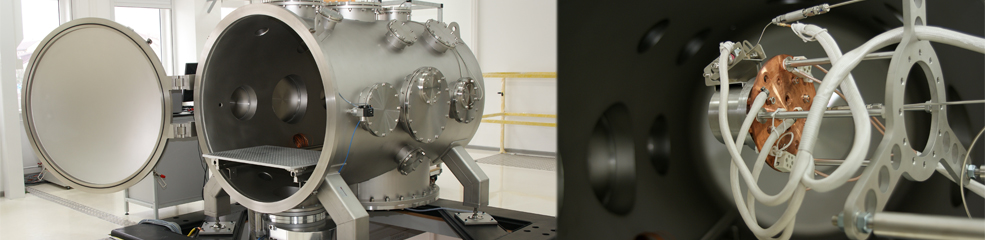


Zestaw obrazów 2019
zdjecie1.jpg
zdjecie2.jpg
zdjecie3.jpg
zdjecie4.jpg
zdjecie5.jpg
zdjecie6.jpg
2019_1.JPG
2019_2.JPG
2019_4.JPG

Gallery
 The lecture about the prominent and controversial character from the world of science, politics and army altogether – the Major General Professor and Engineer Sylwester Kaliski, the minister of science, higher education and technology, the rector of the Military University of Technology in Warsaw) – took place on 15 March 2017 in the Bemowo Cultural Centre within the cycle of historical meetings. Dr Paweł Brudek very honestly confronted facts and myths concerning the activity of Sylwester Kaliski. The research on controlled nuclear fusion started by Sylwester Kaliski are the fundament of research of the Institute of Plasma Physics and Laser Microfusion till today which made Poland a significant scientific partner in the development of fusion technologies worldwide.
"The Professor and general of the Polish Army Sylwester Kaliski (1925 – 1978) is a person that interestingly depicts huge social, technological and political changes happening in Poland after the World War II. Professor Kaliski identifies social promotion, career opportunity with the military, combining comprehensive interests as well as technical and scientific abilities with the acceptance of the Polish People’s Republic regime. The person of Sylwester Kaliski elevated to a range of myths connected with his huge role in Gierek’s Poland, (with emphasis on a popular experiment ‘Focus’ from 1973), alleged works on Polish nuclear weapon and – according to some – with unexplained circumstances of tragic death in a car accident in 1978. The meeting will be an attempt to organize popular knowledge on Sylwester Kaliski and the summary of his achievements 40 years after his establishment of the Institute of Plasma Physics and Laser Microfusion, the pioneer institution in the world of Polish science and technology’ – as we find out about the lecture from the announcement of the Bemowo Cultural Centre.
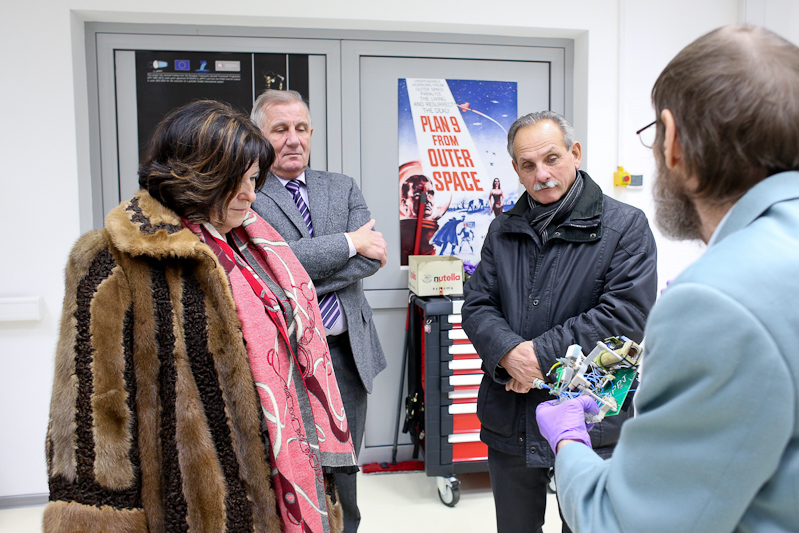 On 7th February 2017 the IPPLM Director had a pleasure to host the President of the NOT Federation of Engineering Associations Ewa Mańkiewicz-Cudny - the chief editor of the Technical Review together with her colleague Marek Bielski - a journalist of Technical Review and the chief editor of Devices for Energy magazine. The visit was organized so as to honor the long and fruitful cooperation between the institutions. What’s important, its date coincided with the jubilee period of two institutions – the celebration of 150 years of Technical Review and the 40 years of founding the Institute of Plasma Physics and Laser Microfusion.
While greeting the guests, the Director of IPPLM Andrzej Gałkowski underlined a significant contribution of Technical Review into the promotion of the Institute’s achievements in the field of plasma physics. Whle giving the welcome speech he expressed his acknowledgements for awarding Dr. Jacek Kurzyna with the title of Gold Engineer 2015; he also mentioned about the honoring of IPPLM by the Polish Federation of Engineering Associations with a commemorative plate and the best wishes of success and development for the Institute, as well as he underlined all other achievements in the implementation of the advanced technologies.
The visit traditionally started with the meeting with the managing Staff of the IPPLM, during which the professor Jerzy Wołowski presented the history and science contribution of the Institute into the development of research in plasma physics, nuclear fusion, satellite thrusters and related technologies. After the official part of the meeting there was time for presenting the scientific laboratories and equipment.
 The mechanism of strong gigahertz electromagnetic pulses has not been well-known yet.
When high energy peak-off laser pulse is focused on the target, there is often the emission of very strong electromagnetic pulse operating in the GHz frequency. Electric Fields connected with such impulse can reach the value of hundreds of kV/m near the target, which seriously hinders the data acquisition with the use of electronic measuring apparatus and may even lead to the destruction of such apparatus.
While taking into account that in the near future in Europe a few advanced laser systems with high instantaneous power and high beam power will start work – such as PETAL and APOLLON in France, ELI lasers in Czech Republic, Romania and Hungary, as well as VEGA laser in Salamanca – the problem of testing the nature of strong electromagnetic pulses emitted from laser plasma is a very urgent issue. It is necessary to make appropriate measurements with the use of currently available laser systems; creating theoretical models and numeric codes allowing to predict the strength of such impulses in various experimental conditions; and also establishing the techniques allowing the reduction of the strength of those impulses and limiting their harmful influence on the measurements.
For the acceleration of works towards this aim in March 2016 an informal meeting of the teams interested in this subject was organized. The meeting held in Warsaw on 20th January 2017 is the continuation and expanding the experience exchange started in 2016 in Bordeaux. The participants included the representatives of nearly all huge laser centers in Europe: CELIA (Bordeaux), RAL (Didcot), Imperial College (London), GSI (Darmstadt), ENEA (Frascati), CLPU (Salamanca), PALS (Prague), ELI-B (Dolni Brezany), ELI-NP (Magurele), ELI-ALPS (Szeged).
The organisers of the meeting were D. Batani and V. Tikhonchuk from CELIA as well as P. Rączka and M. Rosiński from IPPLM. More detailed information about the meeting is available on the website www.emp2017.ipplm.pl
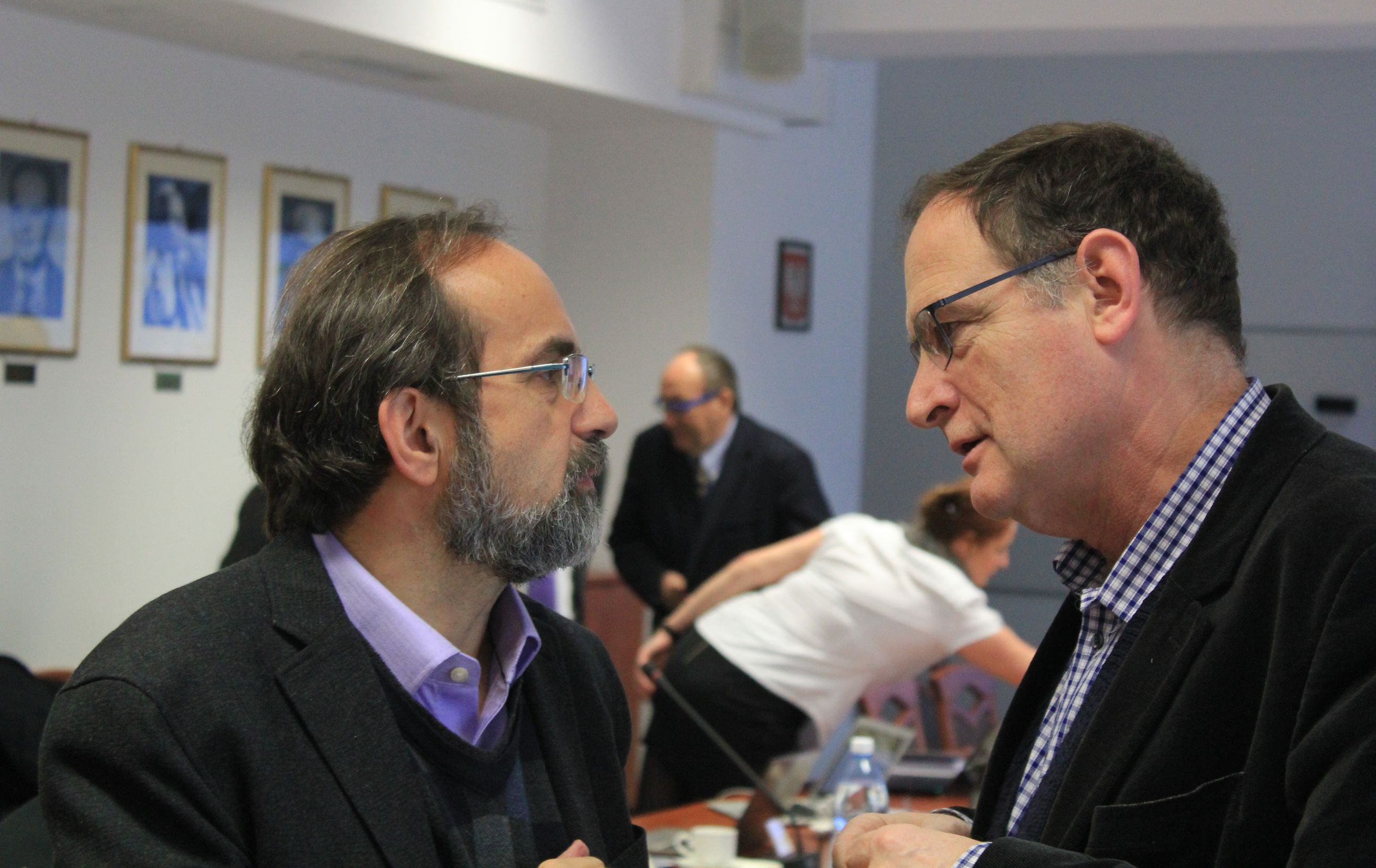 During 11-13 January 2017 Dr. Angel Ibarra, the manager of the research work package Early Neutron Source (WPENS), paid a visit to the Polish Institutes that are involved scientifically in these works. The Early Neutron Source work package deals with the preparation of project theories of the IFMIF-DONES Facility, a strong source of fast neutrons, in which the research and qualification of the resources used in fusion reactors will be conducted.
On 11 January 2017 dr. Ibarra was a guest of the Institute of Nuclear Physics of the Polish Academy of Science (IFJ PAN) in Cracow. During the meeting the progress of the works realized in IFJ PAN was discussed, especially the state of project works of the STUMM detector. On 12 January the meeting was continued in the National Center for Nuclear Research (NCBJ) in Świerk where was a discussion on the contribution of NCBJ into the Works concerning the Plant Systems, Test Systems and Accelerator Systems units into future DONES facility. On the next day the manager of the WPENS package talked to professor Roman Zagórski from the Institute of Plasma Physics and Laser Microfusion so as to summarize the results of the meetings in Poland and to discuss the scope of works for the project that will be fulfilled by Polish institutes in 2017.
 The 6th CeNTE Governing Board Meeting can be undoubtedly called a historic one. Despite regular points for discussion, there was one more that appeared in the agenda, it was concerning joining a new member to the Centre the Szczecin University. On that day the Szczecin University was represented by the dean of the Mathematics and Physics faculty Prof. Zbigniew Kondrad Czerski. After a brief but concise presentation of the Szczecin University’s achievements in the field of physics, the CeNTE Governing Board unanimously supported the efforts of the Szczecin University to join into the structure of the Centre. There was only a matter of signing appropriate contract left. After completing those formalities there will be 13 institutions from entire Poland in the Centre that will be working and fulfilling the projects in terms of nuclear fusion.
CeNTE (in polish: Centum naukowo-przemysłowe Nowe Technologie Energetyczne) is a polish consortium that conducts scientific works in the field of thermonuclear energy.
The 6th CeNTE Governing Board Meeting took place on 10 January 2017 in the headquarters of the main coordinator – the Sylwester Kaliski Institute of Plasma Physics and Laser Microfusion.


nsp_133.JPG)


nsp_133.JPG)


 |
 |
 |
 |
 |
 |
 |
 |
Media


Research projects carried out at the IPPLM are funded by the Polish Ministry of Education and Science, the National Science Centre and by the European Commission within the framework of EUROfusion Consortium under grant agreement No 101052200. Financial support comes also from the International Atomic Energy Agency, European Space Agency and LaserLab Consortium as well as from the Fusion for Energy Agency.