



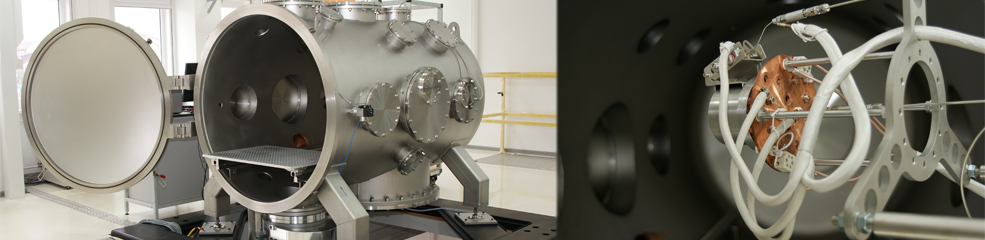


Zestaw obrazów 2019
zdjecie1.jpg
zdjecie2.jpg
zdjecie3.jpg
zdjecie4.jpg
zdjecie5.jpg
zdjecie6.jpg
2019_1.JPG
2019_2.JPG
2019_4.JPG

Gallery
 The Council adopted the European Atomic Energy Community (Euratom) programme for nuclear research and training activities (16463/13 + COR 1).
The new programme allows for the continuity of nuclear research activities carried out under the current Euratom programme, which expires at the end of 2013. It is a part of the EU's research and innovation framework programme "Horizon 2020" (16939/13).
A simplified access to research projects and the same rules for participation will apply as in Horizon 2020.
The Euratom programme comprises two types of actions:
1. Indirect actions
Indirect actions to cover fusion energy research and research on nuclear fission, safety and radiation protection.
The fusion energy research activities will also include some activities contributing to the achievement of the construction of ITER (International Thermonuclear Experimental Reactor), a major experimental facility to demonstrate the scientific and technical feasibility of fusion power. Even though, differently from the past, the EU contribution to ITER will be channelled through the joint undertaking for ITER "Fusion for Energy". The activities of that joint undertaking are regulated by a separate legislative act.
2. Direct actions
Direct actions for activities of the Joint Research Centre (http://ec.europa.eu/dgs/jrc/index.cfm) in the field of nuclear waste management, environmental impact, safety and security.
The nuclear fission research activities are in line with the objective of enhancing the safety of nuclear fission and other uses of radiation in industry and medicine.
The activities of the JRC cover customer‑driven scientific and technological support for the formulation, development, implementation and monitoring of the Union's policies, with an enhanced focus on safety and security research. The JRC works as an independent reference centre of science and technology in the Union.
Euratom programmes are limited by the Euratom treaty to five years, whereas the general framework programmes for research and innovation last for seven years.
The budget of the Euratom programme is set at 1.6 billion euros in current prices for the years 2014 to 2018. Added to the global budget in Horizon 2020, makes Horizon 2020 the world's largest research programme reaching nearly a total investment of 80 billion euros.
The Euratom programme will continue to contribute to the implementation of the "Innovation Union" strategy, by enhancing competition for scientific excellence and accelerating the deployment of key innovations in the nuclear energy field, notably in fusion and nuclear safety, and will contribute to tackling energy and climate change challenges. In this way it will underpin the creation of an European Research Area.
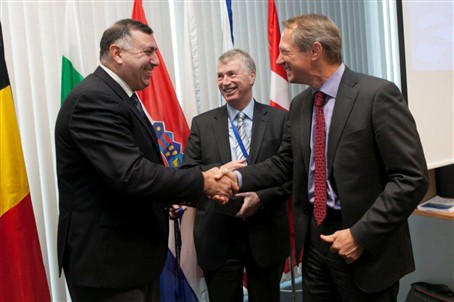 Fusion for Energy (F4E) welcomed a new addition to the family this week. Following its accession to the European Union on 1 July 2013, Croatia attended this week’s meeting of F4E’s Governing Board for the first time. Joining the existing 27 EU Member States, Switzerland and the European Commission, Croatia becomes the 30th member of F4E. “We are very pleased that Croatia is being represented at the Governing Board and that Croatian industry and research organisations are already expressing interest in working with F4E” said Mr Stuart Ward, Chair of F4E’s Governing Board.
Professor Henrik Bindslev, who has served as F4E’s Director since January 2013, informed the Governing Board about progress with the construction of the international ITER fusion energy project, for which Europe is the largest contributor. “We are making steady progress and establishing close partnerships with industries from all corners of Europe to make ITER a reality”, said Professor Bindslev. He added that “We started pouring concrete at the beginning of December for the foundations of the building which will house the ITER fusion device – this is another important milestone”. “We have also made excellent progress with the fabrication of the superconducting magnets” he added.
Among the most important decisions taken this week, the Governing Board adopted F4E’s work programme for 2014 and the associated budget of almost EUR 900 million, the vast majority of which will be used to finance contracts and grants with European industry and research organisations related to the construction of ITER. Mindful of the importance of staying within the overall European budget for ITER construction, the Governing Board approved reductions in areas of F4E’s longer-term programme that do not directly impact on its international obligations towards the ITER project.
The Governing Board also approved a number of amendments to the founding statutes of F4E. In addition to the assignment of voting rights to Croatia, the amendments will optimise the responsibilities of the committees that supervise F4E and allow for more durable, long-term partnerships with European fusion research laboratories who have, thanks to the European fusion programme, built up much of the expertise needed to make ITER a success.
Finally, the Governing Board welcomed the progress being made by F4E to reinforce its partnerships with industry and European fusion research laboratories. Professor Bindslev noted that “We have been listening attentively to industry and I am confident that we have made a number of improvements that will ensure that working on ITER with F4E does not only present exciting scientific and technical challenges but also attractive commercial opportunities”.
The summary of decisions and output documents from the Governing Board meeting are accessible here.
Background
The Governing Board is responsible for the supervision of F4E in the implementation of its activities. It makes recommendations and takes decisions on a wide range of matters, such as adopting the financial regulation and its implementing rules, adopting the annual work programmes and budgets, approving the annual accounts and annual activity reports, as well as adopting rules on industrial policy, intellectual property rights and the dissemination of information in agreement with the European Commission. Each member of F4E is represented in the Governing Board by two representatives, one of which has scientific or technical expertise in the areas related to its activities. For further information, consult our webpage.
Source: F4E
 Last month European Fusion researchers received good news from Brussels. After months of negotiations between the European Parliament and the European Commission the research and innovation budget was agreed on. EFDA and JET Leader, Francesco Romanelli, was pleased with the support being shown to the present European fusion programme “We have been working hard to shape the programme to the requirements of Horizon 2020. Despite some cuts to the proposed budget in the EFDA Roadmap to the realisation of fusion energy the approval of the EU fusion budget has marked a crucial milestone. We can now build our activities in Horizon 2020 on solid ground.”
Of great importance for European Fusion Laboratories in general and for the Joint European Torus, JET, in particular was the news that, within the research budget, funds were sufficient for a vibrant programme of activities, including the strong support of JET to ITER.
And if a demonstration of the crucial importance of JET was needed, it came, also last week, from the ITER Council. They announced that ITER would start with the same inner wall material as in JET. The decision will save ITER several hundred million Euros and was a direct consequence of successful experiments with the ITER-like wall in JET in recent years.
Lorne Horton, Head of the JET Department in EFDA commented: ‘The ITER Organization is continuously requesting support, knowing that the experiment has unique capabilities and a highly trained and experienced staff at their disposal. We want ITER to deliver what it is being built for.’
Source: EFDA
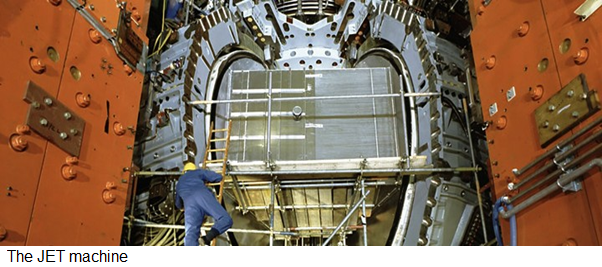 News stories riddled with firm words about the controversies surrounding the process of fracking have recently been at the forefront of discussion in energy production circles. As a source of power it has come under large amounts of scrutiny due to its potential to pollute water supplies and cause earthquakes, and because of its perpetuation of the obsession with clinging on to fossil fuels – more information on which can be found here.
But over-shadowed by the fracking dispute are some promising and far more bold initiatives taking place to achieve the goal of providing energy in a post-fossil fuel world, initiatives that have subsequently been somewhat relegated to the side-lines of public attention.
Obviously there are the famous front-runners: wind power, hydropower, and solar power are among the best known.
The problem with these lies in the scale on which each process needs to be undertaken to produce the energy required. Giant wind farms erected in the sea and endless carpets of solar panels may not be a future some people will want to be a part of.
So if not these and if not fracking (or any other fossil fuel based process), what else? Well, some very talented and ambitious researchers are now trying to use a scaled-down version of the process that powers the sun to provide the world with a new energy source for the future – this is known as nuclear fusion.
According to the EFDA (European Fusion Development Agreement), demand for energy worldwide may quadruple by 2100, meaning that a high-yield, long-lived, and stable source of energy needs to be established. It is likely that fracking and other current methods of fossil fuel usage will not be able to cope with this increase, not to mention them being finite nature – other renewables such as solar power may not be up to the challenge either.
In response to this, projects like JET (Oxfordshire, UK) and ITER (St Paul-lez-Durance, France) now harbour (or will harbour in ITER’s case) giant nuclear fusion reactors, with the aim of utilising them to try and draw energy from fusion reactions (these will be discussed below).
But why is fusion a better future for energy? What do JET and ITER actually do? To answer this, Inlec spoke to a number of experts in involved in nuclear fusion – they’re busy people and we are very grateful for their input to this article.
Nuclear Fusion: what is it?
Existing Projects
The commercial use of nuclear fusion as a viable energy source is no longer an idea locked in the realms of science fiction. For years now projects have been underway to harness this power and overcome the technological difficulties that surround fusion power. As mentioned earlier, two of the world’s major centres for nuclear fusion lie in the UK and France: JET and ITER.
JET:
JET is a UK based experimental fusion project located at Culham Centre for Fusion Energy. Its fusion reactor (tokomak) is currently the biggest in the world, although this will not be the case once its colossal successor ITER is built (see below).
Construction on JET started in 1977 and it was completed and opened in 1984 – its major milestone came when it played host to the world’s first controlled release of fusion energy in November 1991. Today, JET still conducts extensive fusion research.
To get an insider’s look at work on JET, Inlec spoke to Duarte Borba, JET’S Senior Advisor:

Duarte Borba: Senior Advisor at JET
- Q: What advances has JET made in recent years towards the goal of producing energy from nuclear fusion?
A: One key aspect for the successful development of Fusion Power is the materials choice for the interior of the device, i.e. the materials that will face the harsh conditions near the very high temperature fusion plasma. The use of very powerful magnetic fields keeps the fusion plasma from contacting directly the walls, but this containment is not perfect and some of the energy escapes leading to the erosion of the plasma facing components.
The materials selected to be used in the next step fusion device ITER are Tungsten and Beryllium; and JET has been doing key experiments with this precise mixture of materials in preparation of the operation of ITER. These experiments have been very successful, and the recent results have been very important in supporting the choice of materials to be used in ITER.
- Q: What are the technological difficulties surrounding work with nuclear fusion?
A: Fusion relevant conditions have been demonstrated on JET, and a significant amount of fusion power has been produced (>16 MW). However, the process needs to be more efficient, for it to produce more energy than the energy required to achieve the conditions for fusion to occur. For this, a more powerful magnetic field and a larger device is required. This is the main objective of the ITER experiment, under construction in southern France, together with the demonstration of the required technologies to sustain net energy production (>500 MW) for long periods of time (1000 s).
- Q: Are there are any political barriers you have to cross in doing research like this?
A: Fusion research is strongly supported worldwide and it is being carried out in an international collaborative framework. The ITER project is an international collaboration involving all countries in the EU and Switzerland, together with China, Russia, South Korea, Japan, India and the United States.
- Q: In your opinion, how long will it take for nuclear fusion to become useable as an energy source for the world?
A: The aim is to build the first fusion power plant in the 2030s, which would produce electricity by 2050. The European Commission’s new Framework Programme for Research and Innovation (Horizon 2020) has just been agreed and includes the resources to implement the R&D roadmap for achieving the 2050 target. If all goes according to plan, during the second half of this century fusion will become one of the world’s major sources of energy.
ITER:
ITER is a current project being undertaken in the south of France to build the largest tokomak on the planet, with a view to actually using it as a genuine producer of energy to be made available to the public. This will be done by using the heat produced by the fusion reaction (mentioned earlier) to create steam, which will in turn power turbines and provide us with energy. Michel Claessens, Head of ITER Communications, told us more:

Michel Claessens: ITER’s Head of Communications
- Q: The ITER project looks very exciting for the future of energy – how is it progressing to date?
A: ITER will be the biggest fusion reactor on Earth. Here in St Paul-lez-Durance (80 km from Marseille, in France), the ITER project is now transitioning to full construction. There is an increasing pace of construction activities at the ITER site and good progress in the manufacturing of the reactor components and supporting systems, currently underway in all the ITER Members. Major contracts have been placed and many leading industries are now involved in the project; the first delivery of large components is expected on site in the third quarter of 2014. The end of the buildings construction is scheduled for 2020.
- Q: How is ITER different to previous nuclear fusion efforts, for example JET?
A: ITER will be the biggest fusion reactor on Earth, about 10 times bigger (in volume) than JET. And also ITER is the first fusion reactor specifically designed and built to produce energy. It is expected that ITER will produce 10 times the energy injected in the machine
- Q: There seems to have been some delays and difficulties in building the site for ITER; why is that? What have the major delays or difficulties been caused by?
A: For a project of such unprecedented nature and scale, involving worldwide cooperation and billions of euros of expenditure, challenges to the schedule along the way can be expected.
The ITER Organization has identified the following impediments to optimal schedule performance: delays in the signature of agreements and contracts, lengthy design review and design change processes, and complex approval procedures for nuclear components.
It is also true that the earthquake and tsunami in Japan on 11 March 2011 has affected some of the installations producing components for ITER. In particular, the buildings for superconducting magnet test equipment and neutral beam test equipment were seriously damaged. In its initial assessment, the Japanese government estimated at one year the delay in its contribution of key components.
- Q: In your opinion, how long will it take for nuclear fusion to become useable as an energy source for the world?
A: According to current plans and research, it is expected that fusion could become a commercial energy source around 2050.
Source: inlec.com
W dniu 29 września b.r. w LLNL w Kalifornii uzyskano bardzo ważny wynik eksperymentalny w badaniach kontrolowanej syntezy termojądrowej (fuzji) realizowanej za pomocą lasera wielkiej mocy i energii.
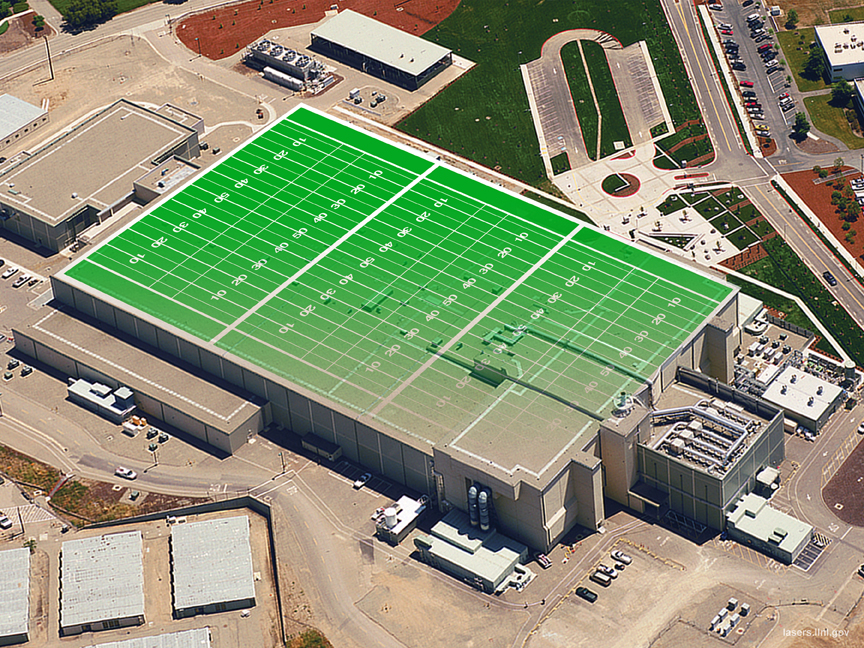
Widok laboratorium NIF w LLNL z lotu ptaka. LLNL Photo Gallery.
W eksperymentach realizowanych ostatnio w LLNL wykorzystany jest największy na świecie 192-wiązkowy laser NIF (National Ignition Facility) generujący impulsy o energii ~1.80 MJ i czasie trwania kilku nanosekund (moc impulsu wynosi do ~400 TW). Wiązki lasera NIF o długość fali 351 nm (nadfiolet) są symetrycznie wprowadzane przez otworki w ”denkach” złotej tarczy-cylinderka (zwanego hohlraum target) o wymiarach: długość ~10 mm średnica – 4-5 mm. Wiązki laserowe wchodzą do cylinderka pod różnymi kątami i oddziałują z jego wewnętrznymi ściankami generując intensywne miękkie promieniowanie rentgenowskie. W centrum cylindra znajduje się cienkościenna kulka o średnicy ~2 mm wykonana z plastiku, albo innych lekkich materiałów. Na wewnętrznej ściance kulki znajduje się warstwa zamrożonej mieszaniny cięższych izotopów wodoru - deuteru (D) i trytu (T). Intensywne promieniowanie rentgenowskie oddziałując z powierzchnią kulki-tarczy powoduje gwałtowną jonizację i odparowanie (ablację) warstwy powierzchniowej kulki skutkujące implozję warstwy wewnętrznej pokrytej „lodem” DT (efekt „rakietowy”). W wyniku kompresji i grzania plazma w centrum kulki DT osiąga setki g/cm3 a temperatura przekracza kilkadziesiąt milionów stopni Kelvina. W tych warunkach zachodzą reakcje syntezy (fuzji) jąder izotopów wodoru, głównie najbardziej prawdopodobna reakcja D+T z emisją wysokoenergetycznych cząstek alfa i neutronów.
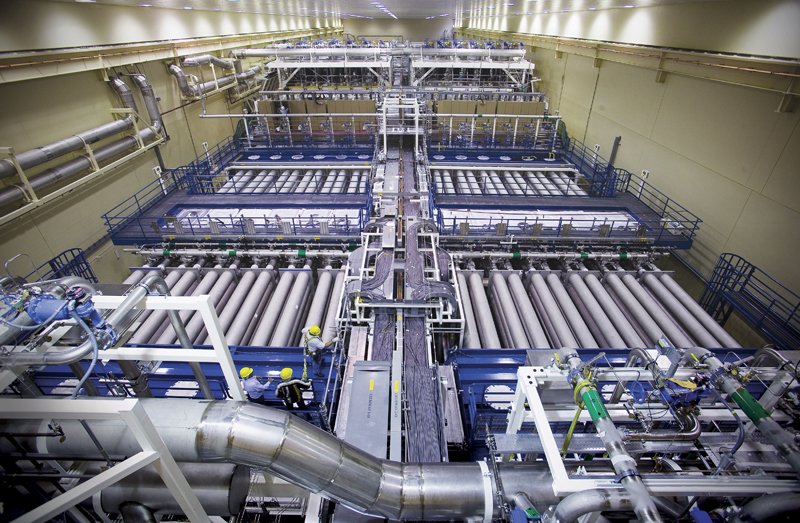
Fragment lasera NIF. LLNL Photo Gallery.
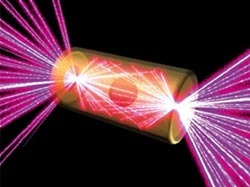
Schemat oddziaływania wiązek lasera NIF z wewnętrznymi ściankami złotego cylinderka (hohlraum target) z kulką zawierającą paliwo DT. LLNL Photo Gallery.
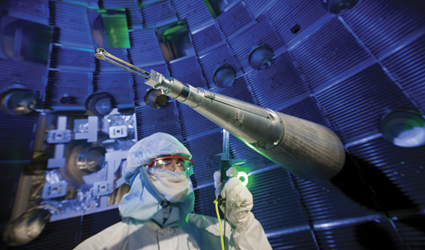
Wnętrze komory eksperymentalnej przy laserze NIF z urządzeniem do ustawiania tarczy w ognisku wiązek laserowych. LLNL Photo Gallery.
W ostatnio wykonanym w LLNL eksperymencie uzyskano rekordową generację ~5x10¹⁵ neutronów o całkowitej energii ~14 kJ. Stwierdzono, że wydzielona energia termojądrowa była większa od energii pierwotnie dostarczonej przez promieniowanie rentgenowskie do paliwa DT. Bardzo ważnym rezultatem tego eksperymentu było potwierdzenie przewidywań modeli teoretycznych, co stanowiło problem we wcześniejszych badaniach na układzie NIF. Pokazany wynik ostatnich badań wykonanych w LLNL jest bardzo ważnym osiągnięciem na drodze do efektywnej produkcji energii w wyniku fuzji inicjowanej laserem. Następnym krokiem będzie zwiększenie wzmocnienia energetycznego w skomprymowanym, gorącym paliwie DT w wyniku przekazu do tego paliwa energii cząstek alfa produkowanych w reakcji syntezy D+T. Informacje o ostatnim eksperymencie wykonanym w LLNL można znaleźć na stronie internetowej: http://www.bbc.co.uk/news/science-environment-24429621.
Opanowanie kontrolowanej syntezy termojądrowej (fuzji) dla przyszłej produkcji energii elektrycznej jest obecnie jednym z najważniejszych zadań światowej nauki i technologii. Realizacja tego zadania wiąże się z szybkim wzrostem zapotrzebowania na energię elektryczną i koniecznością radykalnego ograniczenia energetyki wykorzystującej paliwa kopalne. Stosowanie odnawialnych źródeł energii jest mało wydajne w skali globalnej i wiąże się z ingerencją w środowisko naturalne. Energetyka termojądrowa w przeciwieństwie do energetyki jądrowej nie łączy się z produkcją dużej ilości długożyciowych odpadów radioaktywnych i z możliwością katastrofalnego rozprzestrzenienia się materiałów radioaktywnych. Do wytwarzania energii w wyniku fuzji izotopów wodoru D i T wykorzystuje się deuter, który znajduje się w dużych ilościach w wodzie, i tryt produkowany w reakcji neutronów z łatwo dostępnym litem.
Reakcje fuzji w gorącej i bardzo gęstej, krótkożyciowej plazmie wytwarzanej laserem, jak to ma miejsce w układzie NIF, zachodzi bez stosowania zewnętrznych układów do utrzymania plazmy. Reakcja ta zachodzi przy jedynie inercyjnym utrzymaniem paliwa DT. Metoda taka jest nazywana Inertial Confinement Fusion - ICF. Programy dotyczące opracowania fuzji ICF realizowane są także w Europie (projekt HiPER) i w Japonii (projekt FIREX). Inną metodą opanowania efektywnej produkcji energii fuzji, bardziej rozpowszechnioną niż ICF, jest zastosowanie pól magnetycznych w toroidalnych pułapkach typu tokamak albo stellarator służących do odpowiednio długiego utrzymania bardzo gorącej i rzadkiej plazmy. Czas utrzymania plazmy, jej temperatura i gęstość powinny umożliwić uzyskanie energii fuzji przewyższającej energię dostarczaną do tych układów przez zewnętrzne strumienie cząstek i mikrofal. Metoda ta nazywana jest Magnetic Confinement Fusion - MCF). W ramach międzynarodowego projektu ITER w południowej Francji jest obecnie budowany przez Unię Europejską, St. Zjed. Am. Pn., Japonię, Chiny, Republikę Korei, Kanadę i Indie wielki tokamak jako fuzyjny reaktor eksperymentalny.
Instytut Fizyki Plazmy i Laserowej Mikrosyntezy jest wiodącym w Polsce ośrodkiem naukowym realizującym prace dotyczące fuzji w ramach projektów europejskich zarówno w wersji ICF jak i MCF. Informację o badaniach realizowanych w IFPiLM można znaleźć na stronie www.ifpilm.pl.


nsp_133.JPG)


nsp_133.JPG)


 |
 |
 |
 |
 |
 |
 |
 |
Media


Research projects carried out at the IPPLM are funded by the Polish Ministry of Education and Science, the National Science Centre and by the European Commission within the framework of EUROfusion Consortium under grant agreement No 101052200. Financial support comes also from the International Atomic Energy Agency, European Space Agency and LaserLab Consortium as well as from the Fusion for Energy Agency.