



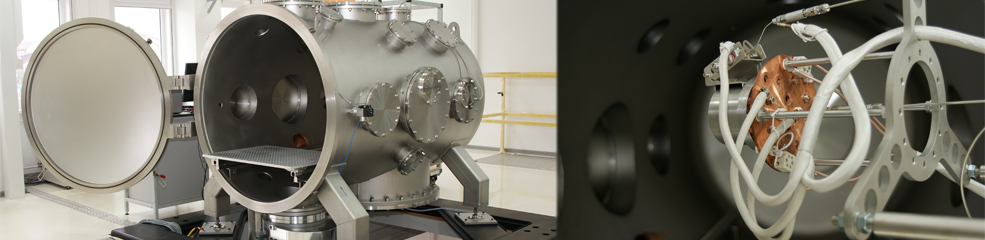


 The first ITER diagnostic components to be supplied by F4E – five Continuous External Rogowski (CER) coils – were delivered to the ITER site earlier this week and acceptance testing of these items by ITER IO was concluded successfully on 7 March 2017.
The CER coils are to be located outside the ITER vacuum vessel, within the cases of three Toroidal Field (TF) coils. Their purpose is to measure the total electric current flowing in the ITER plasma, a key measurement required for plasma control that also has relevance for safety. By contrast to other common methods of measuring the plasma current, the Rogowski method works with a single sensor, resulting in very high reliability, despite the cryogenic temperatures, high vacuum and mechanical stresses it will be subjected to during operation of the TF coils.
Each CER coil is a flexible, cylindrical structure, measuring approximately 40 metres in length and 12 millimetres in diameter. A special groove will be made in the TF coil cases to house these coils. The ends of the CER coils, emerging from the TF coils, will be housed in protective steel structures that have also been supplied by F4E.
The CER coils have been manufactured by two companies Axon (France), which supplied the electrical parts of the system, and Sgenia (Spain), which supplied the mechanical parts.
The coils will shortly be transported to Japan by ITER IO, for installation in the TF coils by the Japanese Domestic Agency for ITER, with F4E’s support. Once the TF coils have been installed on the ITER machine, F4E will commission the CER coils for use during first plasma operations.
Source: F4E


nsp_133.JPG)


nsp_133.JPG)


