



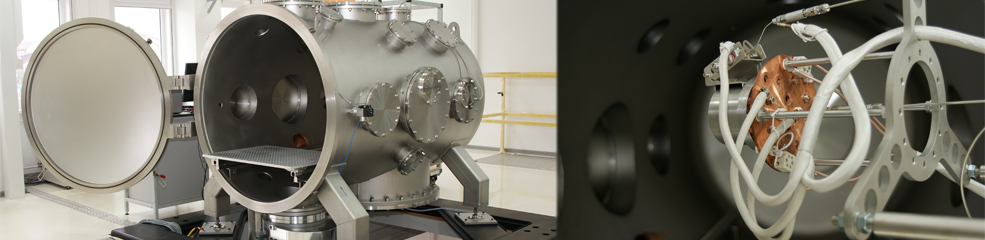


 As of 1 January 2017, Ukraine became part of the EUROfusion consortium. The Ukrainian signatory is the Kharkov Institute for Physics and Technology (KIPT) and it will coordinate the fusion research in seven national universities and research institutes.
Ukrainian fusion infrastructure is currently equipped with stellarators Uragan-2M and Uragan-3M and plasma accelerators QSPA Kh-50 and QSPA-M. The Research Unit includes competences are complementary to those already existing in the EUROfusion consortium. “Ukraine has a particular strong expertise in a number of fields, including plasma facing components, materials, stellarator research and diagnostics,” says EUROfusion Programme Manager Tony Donné.
Head of the Ukrainian Research Unit Igor Garkusha, hopes that with the signing of the EUROfusion agreement Ukrainian researchers will have more participation in JET programmes, as well as in research at other leading fusion facilities in Europe, including the Wendelstein 7-X stellarator. He is also keen on students benefiting from EUROfusion’s Education and Training programmes. “Joining EUROfusion and establishment of Ukrainian Research Unit is an important milestone for our fusion community and we expect further fruitful joint work within EUROfusion Roadmap,” he says.
Source: EUROfusion


nsp_133.JPG)


nsp_133.JPG)


