



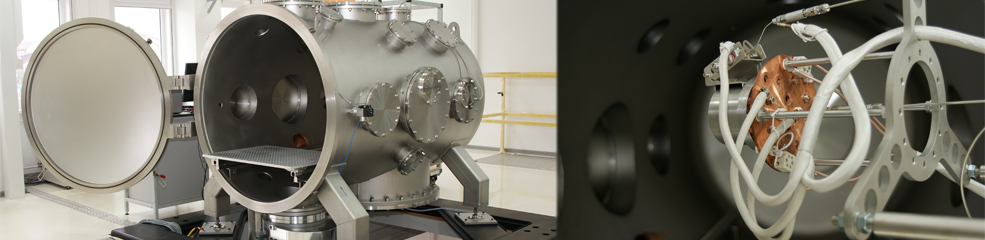


 Defrosting the freezer is one of those summer tasks that everyone has to do, and JET is no exception. Its “freezer” is set of panels that make up the cryo pump, a crucial part of the system that keeps the inside of the JET vessel at an extremely low vacuum. Over the course of 11 months of experiments quite a build up of frozen material forms, so one of the first jobs to perform now that experiments have finished is to warm up the cryo panels, and melt the frost deposits.
But it’s more than just a chore, the material that has accumulated on the panels tells a story about what has been going on in JET’s plasma chamber. This means that as soon as experiments ceased the Active Gas Handling team swung into action, working round-the-clock shifts to capture and analyse the gases being released as the cryo pumps warmed up. Most of it of course will be the deuterium fuel, but there will be other constituents used in the experiments, for example argon or nitrogen, or maybe even carbon or tritium from previous experimental campaigns.
There will also be combinations of all the above species. Hydrocarbons are well known at JET – in fact they are one of the reason that carbon was replaced in the vessel by the ITER-Like Wall. The recent experiments using nitrogen seeding may well lead to the formation of ammonia (a compound of nitrogen and hydrogen) so its collection will also be under scrutiny.
Every substance will have a story to tell about the processes that happen in a plasma at 100 million degrees, and so the analysis in the next couple of months will create another piece in the jigsaw of fusion energy research.
Source: EFDA


nsp_133.JPG)


nsp_133.JPG)


