





A momentous achievement in the field of nuclear fusion has been accomplished by a collaborative team of engineers from Europe and Japan. They have successfully generated tokamak plasma for the first time within JT-60SA, the most substantial experimental fusion device to date utilizing magnetic confinement.
JT-60SA, often referred to as ITER's satellite tokamak project, emerged as a result of the Broader Approach (BA) Agreement between Europe and Japan. The facility is hosted at QST, Japan's National Institutes for Quantum Science and Technology, located in Naka.
The primary mission of JT-60SA is to facilitate research supporting ITER in achieving its technological objectives, providing essential insights for the transition from ITER to DEMO reactors, and offering experts an opportunity to develop new skills.
In the coming weeks, intensive further investigation and testing will continue to evaluate this groundbreaking achievement. The culmination of these efforts will be celebrated on 1 December during the official inauguration of the newly constructed fusion research facility in Naka, where delegates from Japan and Europe will be present.
 |
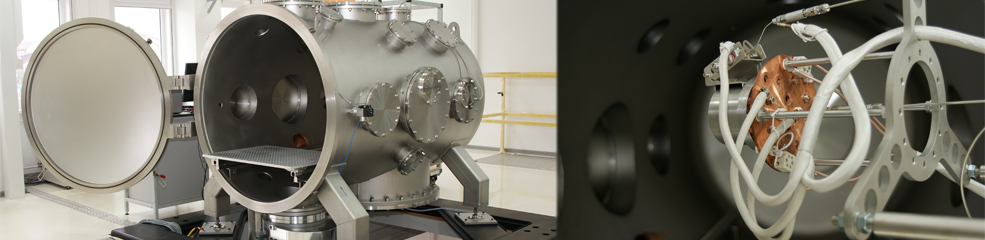
| View of JT-60SA device. © JT-60SA |
Source: Fusion For Energy


nsp_133.JPG)


nsp_133.JPG)


