




In order to qualify for operation, the ITER conductors must undergo extensive testing.
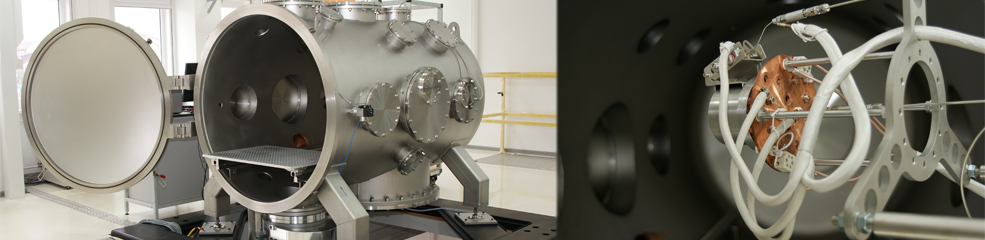
Beginning in 2007, the ITER Domestic Agencies involved in conductor procurement (China, the Republic of Korea, EU, Japan, Russian Federation, USA) submitted samples to a dedicated European testing facility: the SULTAN installation, located at the Paul Scherrer Institute (PSI) in Villigen, Switzerland, operated by the Centre de Recherches en Physique des Plasmas of the École Polytechnique Fédérale de Lausanne.
The SULTAN (SUpraLeiter Test ANlage) facility was originally built in the 1980s to test high field conductors for the NEXT European Tokamak project. It was modified as a conductor test facility before the start of the ITER Engineering Design Activities (EDA) in 1993 and since then has been used to test many conductors, including those for the ITER model coils in the late 1990s.
SULTAN is the only facility worldwide capable of testing the niobium-tin (Nb3Sn) and niobium-titanium (NbTi) conductors that will be used in ITER. In SULTAN, conductor samples are exposed to magnetic fields, current intensity and temperature conditions that are equivalent to those of the ITER operational environment.
Until now, contracts for conductor testing in SULTAN were directly concluded by the ITER Domestic Agencies.
In order to ensure continuity the ITER Organization, acting on behalf of the ITER Domestic Agencies involved in conductor procurement and the École Polytechnique Fédérale de Lausanne, has signed a three-year service contract that guarantees the availability of the facility.
Through this contract, which will enter into force on 1 May 2012, the ITER Organization becomes the primary user of the SULTAN facility.
Source: ITERnewsline


nsp_133.JPG)


nsp_133.JPG)


