





 Another target has been achieved only recently by the W7-X researchers, namely they managed to acquire an energy turnover of 1.3 gigajoules in the device, which is 17 times higher than before the conversion. As it is pointed out by Prof. Dr. Thomas Klinger, head of the Stellarator Transport and Dynamics Division at the Max Planck Institute for Plasma Physics (IPP) in Greifswald, higher energy values are more attainable than in the past. At the same time it is important not to inflict any damage to the device itself.
The equipment playing crucial role at Wendelstein 7-X are heat-resistant divertor baffle plates enabling to dissipate largest heat flows. Among the plasma heating components it was the electron microwave heating system which was particularly important. The energy turnover of 1.3 gigajoule was achieved with an average heating power of 2.7 megawatts and the discharge itself lasted 480 seconds. In the past the heating power was much lower and the duration constituted 100 seconds.
In the future, the researchers plan to keep plasma stable for an hour with increasing the energy turnover to 18 gigajoules.
For more information about the record values achieved please visit: www.ipp.mpg.de
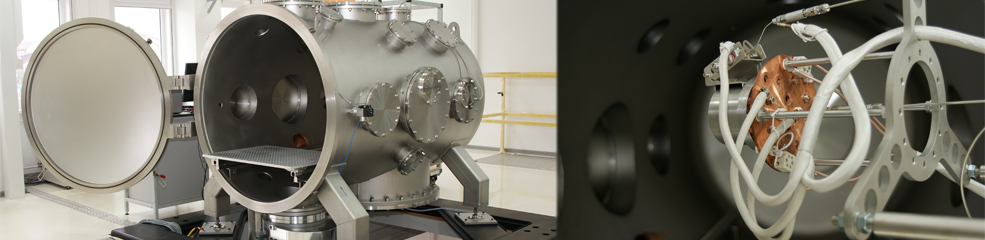
Photo: IPP, J. Hosan. View into the plasma vessel of Wendelstein 7-X


nsp_133.JPG)


nsp_133.JPG)


