



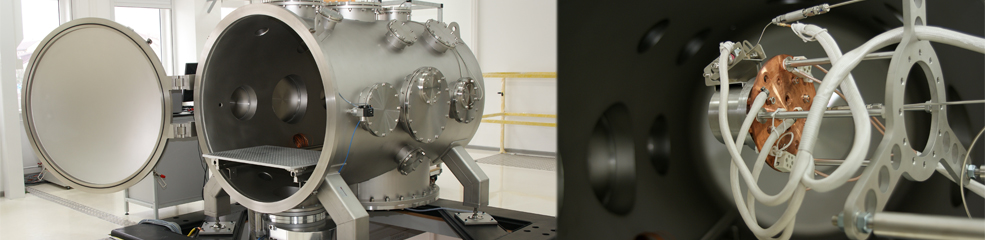


We are pleased to celebrate an important step in international scientific cooperation: the successful delivery of the advanced Divertor Vacuum Ultra Violet (DivVUV) spectrometer system for the JT-60SA tokamak in Naka, Japan.
The delivery of the DivVUV system is the result of several years of international cooperation between research institutions within the EUROfusion consortium. The Institute of Plasma Physics and Laser Microfusion was also involved in the implementation of the project, providing vacuum hardware and CCD detector cameras.
The DivVUV spectrometer is an advanced diagnostic tool that will be used to monitor plasma impurities and study the physics of the divertor. The divertor is a specially designed part of the tokamak that controls the removal of energy and impurities from the plasma, while being exposed to some of the highest thermal loads in the entire device.
The DivVUV system will enable 1D imaging of the divertor region and will allow researchers to analyse radiation from selected parts of this region in two spectral ranges: 10–48 nm and 44–125 nm. This diagnostic will be of significant importance, among other things, for studies on power exhaust and plasma detachment in the divertor region, which are key issues for future fusion reactors such as ITER.
More information is available in the article on the EUROfusion website: https://euro-fusion.org


nsp_133.JPG)


nsp_133.JPG)


