



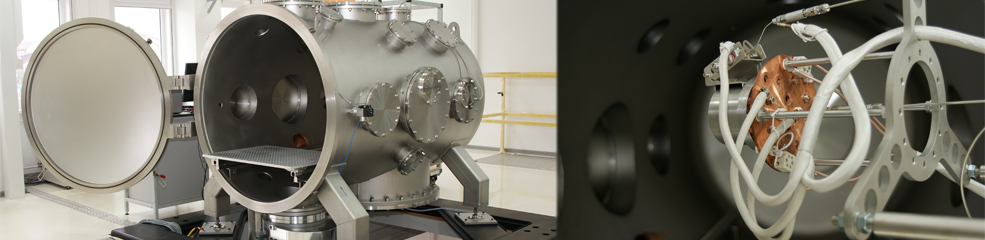


On 17 and 18 December 2022, the International Centre for Dense Magnetised Plasmas (ICDMP) organised the International Workshop and Expert Meeting on Dense Magnetised Plasmas 2022 in a remote format, with participants presenting the latest research results on dense magnetised plasma problems obtained in their laboratories. The workshop was attended by 25 participants from 18 countries, who listened to seven presentations:
- Sing Lee, "Next Generation Pulsed Power Fusion Drivers" – Institute for Plasma Focus Studies, Australia; INTI International University, Malaysia
- R.S. Rawat, "Plasma focus: A novel facility for plasma nanotechnology and fusion relevant material testing" – Nanyang Technological University, Singapore
- Leopoldo Soto, "Plasma Physics in Small Experimental Devices for Fundamental Research, Energy, Biomedicine, Matter and Nanosatellites" – Comisión Chilena de Energía Nuclear, Chile
- Mohamad Akel, "X-ray emission from the tin target using the plasma focus" – Atomic Energy Commission, Syria
- Pavel Kubeš, "Characteristics of ordered structures on dense plasma focus" – Czech Technical University in Prague, Czech Republic
- S.K.H. Auluck and A.B. Blagoev, "Significance of Poloidal Magnetic Flux Emission in the Dense Plasma Focus" – ICDMP; Faculty of Physics at the University of Sofia, Bulgaria
- M. Roshan, "Plasma Focus Ion beams" – Iran
The results of the research conducted in 2022 at the PF-1000U Laboratory (IPPLM) were presented by Prof. Pavel Kubeš of the Czech Technical University in Prague on behalf of the international team.
The ICDMP (International Centre for Dense Magnetized Plasmas) has been operating at the IPPLM since 1999. As part of the Centre's activities, the Institute organises annually a specialised Workshop and Expert Meeting on Dense Magnetized Plasmas and a meeting of the International Scientific Council of the ICDMP.

Photo: © IFPiLM


nsp_133.JPG)


nsp_133.JPG)


